

Steve Morse spent twenty-eight years as the guitarist for Deep Purple, longer than any other player to hold that chair, including Ritchie Blackmore himself.
Steve Morse built his reputation long before Deep Purple ever called, founding the fusion powerhouse Dixie Dregs and later joining Kansas, but it was his 1994 arrival in Deep Purple that introduced his playing to millions of hard rock fans worldwide.

Photo credit: Wikimedia Commons
📋 Table of Contents [+]
Steve Morse Early Life and the Path to Guitar
Steve Morse was born on July 28, 1954, in Hamilton, Ohio.
His family relocated first to Tennessee and then to Ypsilanti, Michigan, before settling in Augusta, Georgia, where Morse spent his teenage years.
Morse was familiar with piano and clarinet as a child, but the guitar became his true instrument once he discovered it.
While attending the Academy of Richmond County, Morse met bassist Andy West and the two began playing together, an early partnership that would define the next decade of his career.
Morse was expelled from high school in the tenth grade after refusing to cut his hair, an incident that unexpectedly opened the door to early college enrollment.
He completed his final year of high school at a Catholic school and then headed to the University of Miami School of Music, studying alongside future stars like Pat Metheny and Jaco Pastorius.
That environment at the University of Miami sharpened the technical range that would later define Steve Morse as a player equally comfortable in rock, jazz, bluegrass, and classical styles.
Founding the Dixie Dregs
After graduating, Morse and Andy West officially formed the Dixie Dregs, an instrumental fusion band built on the ideas they had developed since high school.
The Dixie Dregs signed with Capricorn Records in 1976, and their debut album Free Fall established Morse as a serious new voice in jazz fusion guitar.
He wrote all eleven tracks on that debut, a level of compositional control that was unusual for a guitarist still in his early twenties.
The band’s sound blended southern rock swagger with jazz complexity, a combination that never sold in massive numbers but earned deep respect among musicians.
Guitar Player magazine readers voted Morse “Best Overall Guitarist” for five consecutive years in the early 1980s, a run so dominant that the magazine eventually retired him into its Guitar Player Hall of Fame to give other players a chance.
That honor placed him alongside only Steve Howe of Yes and Eric Johnson, a small and exclusive club of guitarists recognized for sustained excellence.
💡 Did You Know?
Steve Morse’s custom “FrankenTele” guitar combined a Fender Telecaster body, a Stratocaster neck, and a twelve-string Gibson trapeze tailpiece, and he played it throughout his years with the Dixie Dregs and into the 1980s.
The Steve Morse Band and a Career Built on Versatility
When the Dixie Dregs disbanded in 1983 after their contract obligations to Arista Records ended, Morse formed the Steve Morse Band with bassist Jerry Peek and drummer Rod Morgenstein.
The group released The Introduction in 1984 and Stand Up in 1985, records that brought in guest players like Eric Johnson, Peter Frampton, and Albert Lee.
Steve Morse toured Germany extensively with this lineup, running guitar clinics between shows and building a reputation as both a performer and a teacher.
Later editions of the Steve Morse Band added bassist Dave LaRue and drummer Van Romaine, a rhythm section that would follow Morse through much of the rest of his career.
The band’s sound moved fluidly between hard rock, Celtic melody, and jazz improvisation, refusing to settle into any single genre.
A Brief but Notable Run with Kansas
In the mid-1980s, Steve Morse joined the progressive rock band Kansas, stepping in during a period of lineup changes.
He co-wrote “All I Wanted,” one of the band’s last major radio hits, showing that his songwriting could work inside someone else’s established sound as easily as his own.
Morse’s stint with Kansas was short, but it added another credit to a resume that already stretched across fusion, hard rock, and southern rock circles.
It also introduced him to a wider mainstream rock audience years before Deep Purple came calling.
Steve Morse Joins Deep Purple in 1994
Deep Purple had gone through a difficult stretch after Ritchie Blackmore’s second and final departure in 1993, with Joe Satriani briefly filling in on tour.
Steve Morse was asked to join permanently in 1994, taking on one of the most scrutinized guitar chairs in hard rock history.
Replacing Blackmore was never going to be simple, and Morse has said openly that some fans made their disapproval known during his early shows with the band.
He told Prog magazine that winning over any part of the audience took the first album and the first tour, and that he never won over everyone.
Despite the rocky start, Steve Morse settled into Deep Purple’s Mark VII lineup alongside Ian Gillan, Roger Glover, Ian Paice, and Jon Lord.
His first tour with the band, and the songs that had made them legends like Smoke on the Water and Highway Star, forced him to interpret Blackmore’s most iconic riffs night after night while still finding room for his own voice.
Purpendicular and the Sound Steve Morse Brought to the Band
Morse’s first studio album with Deep Purple, Purpendicular, arrived in 1996 and signaled a clear shift in the band’s sound.
Steve Morse brought more intricate arrangements and a wider harmonic vocabulary than the blues-rock foundation Blackmore had built.
Ritchie Blackmore himself later praised Morse’s ability, calling him an incredible player even while noting their very different approaches to the instrument.
The album was well received by critics and reintroduced Deep Purple to audiences who had drifted away during the lineup turmoil of the early 1990s.
Abandon followed in 1998, continuing the momentum of the Morse era and cementing his place as a full creative partner rather than a hired replacement.
Rapture of the Deep and the Peak of the Morse Years
By the time Rapture of the Deep arrived in 2005, Steve Morse had been in the band for over a decade and his fingerprints were all over its sound.
The album is widely regarded by fans and critics as one of the strongest records of the Morse era, blending heavy riffing with the melodic complexity he had honed since his Dixie Dregs days.
Deep Purple continued releasing new studio material through the 2000s and 2010s, including Now What?!, Infinite, and Whoosh!, all featuring Morse’s guitar work.
He recorded eight full studio albums with Deep Purple in total, more than any guitarist in the band’s history apart from Blackmore.
Steve Morse also appeared on the band’s 2021 covers record Turning to Crime, his final studio release with the group.
Flying Colors and Steve Morse’s Progressive Side
Even while touring heavily with Deep Purple, Steve Morse kept pursuing other projects that let him stretch further into progressive territory.
In 2011, he joined the supergroup Flying Colors alongside Neal Morse, Mike Portnoy, Dave LaRue, and Casey McPherson.
Flying Colors gave Steve Morse a creative outlet for denser, more experimental songwriting than Deep Purple’s format typically allowed.
The band released several albums together, and Morse has continued to point to Flying Colors as one of the projects that best reflects his natural musical instincts.
💡 Did You Know?
Steve Morse has held a commercial airline pilot’s license for years and has flown professionally between recording sessions and tours, a second career he still pursues today.
Caring for Janine and Leaving Deep Purple
In March 2022, Steve Morse announced a hiatus from Deep Purple after his wife, Janine, faced a serious medical crisis tied to cancer.
He initially hoped to rejoin the band once she recovered, and Irish guitarist Simon McBride stepped in to cover live shows in the meantime.
By July 2022, Morse made the decision permanent, ending his twenty-eight-year run as Deep Purple’s guitarist.
In his statement, he explained that Janine had been diagnosed with stage four aggressive cancer and that he needed to be with her rather than committing to long overseas tours.
Ian Gillan and the rest of the band publicly praised Morse’s devotion to his family during that period, and the split was handled with clear mutual respect.
Janine Morse passed away on February 4, 2024, after her long battle with cancer, and Steve shared a tribute to her on social media that reflected on their years together.
He has since said he has no regrets about stepping away from touring to be by her side.
Steve Morse Today: Triangulation and a Return to His Own Band
Since leaving Deep Purple, Steve Morse has returned his focus to the Steve Morse Band, working again with longtime collaborators Dave LaRue and Van Romaine.
In late 2025, the trio released Triangulation, their first Steve Morse Band studio record in sixteen years.
Steve Morse has discussed the record in interviews as a return to the instrumental fusion roots that first defined his career, before Deep Purple, Kansas, or Flying Colors.
He has also spoken candidly about playing through ongoing arthritis, which has forced him to adjust his technique from show to show.
Steve Morse continues to tour in support of Triangulation, running shorter, closer-to-home dates that fit the life he has built since 2022.
Awards, Grammy Nominations, and the Guitar Player Hall of Fame
Across his career, Steve Morse has earned seven Grammy nominations, a reflection of the range that runs through his solo work, the Dixie Dregs, and Deep Purple.
His five consecutive wins in Guitar Player’s Best Overall Guitarist reader poll remain one of the most dominant runs in the award’s history.
Guitarist John Petrucci of Dream Theater has repeatedly named Morse as a major influence on his own playing.
The late guitarist Shawn Lane also cited Morse as one of the most talented players of his generation.
These honors sit alongside his 28-year tenure in Deep Purple as the clearest evidence of how respected Steve Morse became among his peers.
Steve Morse’s Guitar Style and Lasting Legacy
Steve Morse has always resisted being boxed into one genre, moving comfortably between heavy metal, baroque-influenced classical lines, jazz improvisation, bluegrass, and country picking.
He is known for weaving natural harmonics into live improvisation, a technique he used often during Deep Purple’s extended live arrangements of songs like “Sometimes I Feel Like Screaming.”
His songwriting process, by his own description, starts on guitar or piano late at night, built around a single idea strong enough to sustain months of development.
That combination of technical command and genuine compositional patience is what separates Steve Morse from many of his flashier contemporaries.
For anyone tracing the full arc of Deep Purple’s guitar chair, from Ritchie Blackmore’s original fire to Simon McBride’s current tenure, Steve Morse remains the longest and, in many ways, the most quietly influential stretch of that story.
💡 Did You Know?
Steve Morse’s father was a minister and his mother a classical pianist, a household mix of discipline and melody that friends and biographers often point to when explaining his unusually wide musical range.
People Also Ask
Who is Steve Morse?
Steve Morse is an American guitarist born July 28, 1954, best known as the founder of the Dixie Dregs and as Deep Purple’s guitarist from 1994 to 2022. He also played with Kansas in the 1980s and is a member of the supergroup Flying Colors.
Why did Steve Morse leave Deep Purple?
Steve Morse left Deep Purple in July 2022 to care for his wife, Janine, who was battling stage four cancer. He had taken a hiatus in March 2022 and made the departure permanent that summer after concluding he could not commit to long overseas tours.
Who replaced Steve Morse in Deep Purple?
Irish guitarist Simon McBride replaced Steve Morse in Deep Purple, first filling in for live shows in 2022 and then officially joining the band. McBride made his studio debut with Deep Purple on their 2024 album =1.
Did Steve Morse replace Ritchie Blackmore in Deep Purple?
Yes, Steve Morse effectively took over Ritchie Blackmore’s role in Deep Purple in 1994, though Joe Satriani briefly filled the position on tour between the two. Morse went on to become the band’s longest-serving guitarist.
Is Steve Morse still alive?
Yes, Steve Morse is alive and continues to perform and record. He released Triangulation with the Steve Morse Band in late 2025 and toured in support of it.
Affiliate Disclosure: I am an Amazon affiliate and if you purchase through any amazon links on this site i may earn a small commission at no extra charge to you. This helps support classicrockartists.com and allows me to keep providing deep-dive content on the legends of rock. Thank you for your support!
As an Amazon Associate, I earn from qualifying purchases.
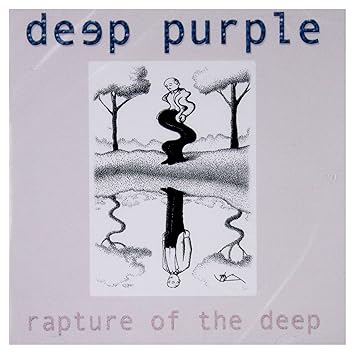
Rapture of the Deep
2005, 20th Anniversary 2CD
Widely seen as the peak of the Steve Morse studio era.
Deep, melodic guitar work throughout.

Perfect Strangers
1984, CD Remastered
The Mark II reunion album, essential Deep Purple history.
A key reference point for the band Morse later joined.

Machine Head
1972, CD
The Blackmore-era classic Morse had to follow.
Home of Smoke on the Water and Highway Star.

The Very Best of Deep Purple
Career-spanning compilation
Covers every era, including the full Morse years.
A great single-disc entry point for new fans.
You Might Also Like
Ozzy Osbourne: The Complete Story of the Prince of Darkness
Ozzy Osbourne built heavy metal from a Birmingham street corner and never looked back. This is the complete story of the Prince of Darkness.
Rob Halford: The Metal God, the Voice, and Fifty Years
Rob Halford built the template for heavy metal vocals across five decades with Judas Priest, from British Steel to Invincible Shield.
Bruce Dickinson: Iron Maiden’s Air Raid Siren, Life, Career and Legacy
Bruce Dickinson, vocalist, pilot, competitive fencer, author, broadcaster, and entrepreneur, stands as one of the most remarkable figures in rock.
Steve Morse’s story runs from a jazz-fusion prodigy in Augusta, Georgia, through the Dixie Dregs, Kansas, and twenty-eight defining years in Deep Purple, and it continues today with the Steve Morse Band.