

The Stroke by Billy Squier is one of the defining hard rock tracks of 1981, built on a guitar riff so direct and forceful that it still appears in arenas and film soundtracks today.
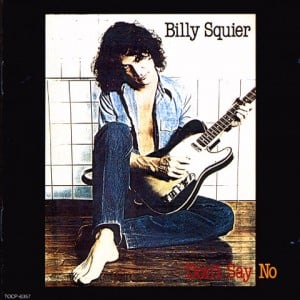
The track anchored Squier’s second studio album, Don’t Say No, which went on to sell over two million copies in the United States.
Affiliate Disclosure: As an Amazon Associate I earn from qualifying purchases. This helps support the site at no extra cost to you.
| Song | The Stroke |
| Artist | Billy Squier |
| Album | Don’t Say No (1981) |
| Written by | Billy Squier |
| Produced by | Reinhold Mack |
| Released | 1981 |
| Genre | Hard Rock |
| Record Label | Capitol Records |
| Chart Peak | #17 US Billboard Hot 100 |
Table of Contents
Background and Meaning
Billy Squier was born in Wellesley Hills, Massachusetts, and developed his guitar style in the Boston area before moving to New York to pursue a career as a solo artist.
He had previously fronted the band Piper before launching his solo career in 1980 with the album Tale of the Tape.
Don’t Say No was recorded in Munich with German producer Reinhold Mack, known for his work with Queen on tracks including “Flash” and “Another One Bites the Dust.”
The Stroke’s lyrics use an extended metaphor open to multiple interpretations, but Squier described the imagery as broadly about motivation, desire, and the hunger for recognition.
The track arrived at a moment when FM radio and album-oriented rock formats were fully embracing hard rock with melodic polish, and it found exactly the audience those formats had built.
Musical Composition of The Stroke
The opening guitar figure of The Stroke is built around a descending hard rock pattern that creates immediate tension before the vocals enter, establishing the song’s attitude in the first few seconds.
Squier plays all the guitars on the track himself, layering rhythm and lead parts into a dense but controlled sound that rewards close listening.
Drummer Bobby Chouinard drives the song with a steady, powerful backbeat that keeps the track moving without overpowering the guitar work.
Reinhold Mack’s production brings a clarity and punch to the recording that suited both arena speakers and FM radio with equal effectiveness.
The vocal melody sits squarely in the pocket of the rhythm, which makes the song immediately singable even on a first listen.
Chart Success and Impact
This hit reached number seventeen on the US Billboard Hot 100, giving Squier his biggest single chart performance and establishing his commercial presence across the country.
Don’t Say No reached number five on the US Billboard 200 album chart and was certified platinum, confirming Squier as a major album-oriented rock presence.
The song brought immediate radio airplay and positioned Squier as one of the new faces of American hard rock in the early 1980s alongside acts like Pat Benatar and Survivor.
MTV played the music video in heavy rotation during the channel’s early years, which helped drive album sales in a way that radio alone could not have managed.
The success of this song gave Squier significant momentum heading into his follow-up record, Emotions in Motion, which continued his commercial run into 1982.
Lasting Legacy of The Stroke
This track has appeared in dozens of film and television productions over the decades, valued for its immediate impact and the recognizable hard rock identity of its opening riff.
It remains a staple of classic rock radio formats and appears consistently on lists of the definitive guitar riffs of the 1980s.
Sports broadcasters and venue DJs have used The Stroke as a high-energy track at stadium and arena events across multiple sports for more than forty years.
Squier has credited the simplicity and directness of the riff as its greatest strength, noting that straightforward hard rock hooks tend to age better than more elaborate arrangements.
For anyone tracking the development of American hard rock in the early 1980s, this song stands as a prime example of how a single unforgettable guitar line can define an entire career.
Watch the Official Video
Frequently Asked Questions
FAQ
- Who wrote The Stroke?
-
Billy Squier wrote it, drawing on his background in New England rock and his experience with the band Piper before launching his solo career.
- Did the song chart highly?
-
The track reached number seventeen on the US Billboard Hot 100 in 1981, which remains Billy Squier’s highest-charting single.
- What album is this song from?
-
The song is from Don’t Say No, Billy Squier’s second studio album, recorded in Munich with producer Reinhold Mack and released in 1981 on Capitol Records.
- Why is The Stroke still well known today?
-
Its instantly recognizable guitar riff and decades of film, television, and sports placements have kept The Stroke in front of audiences who were not yet born when it was released.
- Who produced the song?
-
The Stroke was produced by Reinhold Mack, a Munich-based producer who also worked with Queen during the same period on tracks including Another One Bites the Dust.
You Might Also Like
Driven by one of the most copied guitar riffs in hard rock history, The Stroke by Billy Squier is the kind of track that makes an impression on first listen and never fully releases its hold.