

Danny Kirwan was a gifted guitarist and songwriter whose contributions to Fleetwood Mac during their transitional blues-rock period remain essential to understanding the band’s evolution.
Born in London in 1950, Kirwan joined Fleetwood Mac at just eighteen years old and immediately transformed their sound with his melodic sensibility and sophisticated guitar work.
His tenure with the band produced some of their most critically acclaimed albums of the late 1960s and early 1970s, including Then Play On and Kiln House.
Kirwan’s dual guitar interplay with Peter Green created a distinctive sound that set Fleetwood Mac apart from their British blues contemporaries.
Despite his undeniable talent, personal struggles and mental health challenges cut short what should have been a long and celebrated career.
His dismissal from Fleetwood Mac in 1972 marked the beginning of a tragic decline that saw him retreat from the music industry entirely.
Yet his influence on the band’s sound during a crucial developmental period cannot be overstated, and his work continues to be rediscovered by new generations of listeners.
This biography examines the life and career of a musician whose brilliance burned brightly but briefly, leaving behind a legacy that deserves far greater recognition than it has received.
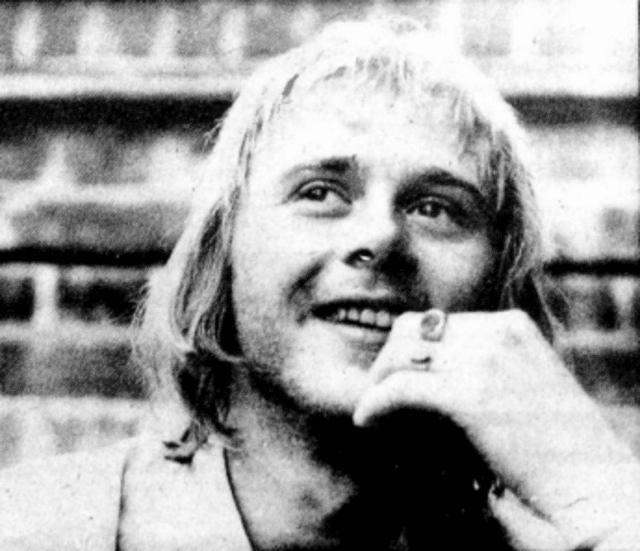
Table of Contents [Click to Expand]
Early Life and Musical Beginnings
Daniel David Kirwan was born on May 13, 1950, in Brixton, South London.
He grew up in a working-class neighborhood during the post-war years when London was rebuilding and rock and roll was beginning to transform British youth culture.
Kirwan showed an early aptitude for music and picked up the guitar as a teenager.
His influences included the American blues artists who were inspiring a generation of British musicians, as well as the emerging British blues boom bands.
By his mid-teens, Kirwan was already developing a distinctive playing style that combined blues authenticity with a more melodic, song-oriented approach.
More information about his early years can be found at Wikipedia.
Unlike many of his peers who favored aggressive, high-volume blues-rock, Kirwan gravitated toward subtlety and nuance in his guitar work.
This sensitivity would become his trademark and eventually catch the attention of one of Britain’s most important blues bands.
First Major Band or Breakthrough
Kirwan’s first significant musical venture was with a London-based band called Boilerhouse, which he formed with some school friends in the mid-1960s.
The group played the London club circuit, performing blues covers and developing their craft in the city’s vibrant music scene.
Boilerhouse never achieved commercial success or recorded any material, but they served as an important training ground for the young guitarist.
The band frequently played at venues where established acts also performed, giving Kirwan exposure to professional musicians.
It was at one of these London club performances that Peter Green, the guitarist and founder of Fleetwood Mac, first saw Kirwan play.
Green was immediately impressed by the teenager’s mature playing style and melodic sensibility.
In 1968, Green invited Kirwan to join Fleetwood Mac as a third guitarist, adding another dimension to the band’s sound.
At just eighteen years old, Kirwan became part of one of Britain’s most successful blues bands, joining Green, Mick Fleetwood, John McVie, and Jeremy Spencer.
This invitation would prove to be both the making and eventual breaking of Danny Kirwan’s career.
Danny Kirwan Peak Era
Kirwan’s first album with Fleetwood Mac was Then Play On, released in 1969.
The album marked a significant departure from the band’s earlier straight blues approach, incorporating more original compositions and sophisticated arrangements.
Kirwan contributed several songs to the album, including “Although the Sun Is Shining” and “One Sunny Day.”
His songwriting revealed a gift for melody and a more introspective lyrical approach than the band had previously explored.
The guitar interplay between Kirwan and Green on Then Play On created some of the most memorable moments in Fleetwood Mac’s early catalog.
Their dual guitar work was complementary rather than competitive, with each player occupying distinct sonic spaces.
Green’s playing tended toward the raw and emotional, while Kirwan brought a more refined and melodic sensibility.
This combination gave Fleetwood Mac a unique sound that distinguished them from other British blues bands of the era.
Then Play On became one of the band’s most successful albums in the UK, reaching the top ten on the charts.
The album’s success established Kirwan as an essential member of the band and a significant creative force.
However, the peak of this collaboration was short-lived, as Peter Green left Fleetwood Mac in 1970 due to his own personal struggles.
Green’s departure thrust Kirwan into a more prominent role within the band at just twenty years old.
The band’s next album, Kiln House, released in 1970, showcased Kirwan’s increased responsibilities.
He shared guitar and songwriting duties with Jeremy Spencer, creating a more rock-oriented sound than the band’s earlier blues work.
Kirwan’s contributions to Kiln House included “Station Man” and “Tell Me All the Things You Do.”
These songs demonstrated his growing confidence as a songwriter and his ability to craft memorable melodies.
The album received positive reviews and showed that Fleetwood Mac could survive the loss of their founding guitarist.
When Jeremy Spencer abruptly left the band in 1971 to join a religious group, Kirwan became the sole guitarist and primary creative force.
The band recruited Bob Welch as a second guitarist to share the workload.
The Kirwan-Welch lineup produced the album Future Games in 1971.
This album marked another stylistic shift for Fleetwood Mac, moving further away from blues toward a more atmospheric, jazz-influenced sound.
Kirwan’s title track “Future Games” showcased his ability to create extended instrumental passages with a dreamy, ethereal quality.
He also contributed “Woman of 1000 Years” and “Sometimes,” both of which highlighted his melodic guitar work and introspective songwriting.
The collaboration between Kirwan and Welch was productive but reportedly strained, as the two guitarists had different musical visions.
Despite the creative tensions, the band continued to tour and record throughout 1971 and into 1972.
Their next album, Bare Trees, was released in 1972 and would be Kirwan’s final studio album with Fleetwood Mac.
Kirwan contributed several standout tracks to Bare Trees, including “Dust” and “Danny’s Chant.”
“Dust” in particular is considered one of his finest compositions, featuring delicate guitar work and haunting vocals.
The song’s melancholic tone and introspective lyrics hinted at the personal struggles Kirwan was experiencing.
Bare Trees received strong reviews and demonstrated that Fleetwood Mac remained a vital creative force despite multiple lineup changes.
The album’s success, however, could not mask the growing tensions within the band.
Kirwan’s behavior had become increasingly erratic during the recording sessions and subsequent tour.
His perfectionism in the studio sometimes led to conflicts with other band members and producers.
On stage, he could be brilliant one night and withdrawn the next, creating uncertainty for both the band and audiences.
The relationship between Kirwan and the rest of the band, particularly Bob Welch, deteriorated throughout the Bare Trees tour.
Despite these challenges, Kirwan’s musical contributions during this period were substantial and helped shape the sound that would eventually lead to the band’s later success.
His work on these albums influenced the direction that Members of Fleetwood Mac would take in subsequent years, even after his departure.
The melodic sensibility and attention to arrangement that Kirwan brought to Fleetwood Mac can be heard in the band’s later work, including their most successful period.
While the lineup that created Rumours by Fleetwood Mac was entirely different, the foundation for that success was built in part during Kirwan’s tenure.
Danny Kirwan Career Challenges and Personal Struggles
In August 1972, during a tour of the United States, Kirwan’s behavior reached a breaking point.
After a show in Los Angeles, he reportedly had a physical altercation with Bob Welch and smashed his guitar.
The following night, he refused to go on stage, leaving the band to perform without him.
Mick Fleetwood made the difficult decision to fire Kirwan immediately, sending him back to England.
Kirwan was just twenty-two years old when his time with Fleetwood Mac ended.
The dismissal was devastating for the young guitarist, who had spent his formative musical years with the band.
After leaving Fleetwood Mac, Kirwan attempted to launch a solo career.
He released his first solo album, Second Chapter, in 1975.
The album showcased his songwriting and multi-instrumental abilities, as he played most of the instruments himself.
Despite its quality, Second Chapter received little promotion and failed to chart.
He followed it with Midnight in San Juan in 1976 and Hello There Big Boy! in 1979.
Both albums demonstrated his continued musical abilities but suffered from poor distribution and lack of commercial success.
The failure of his solo career to gain traction took a severe toll on Kirwan’s mental health.
He struggled with alcoholism and what appeared to be mental health issues, though he never publicly discussed any specific diagnosis.
By the early 1980s, Kirwan had largely withdrawn from the music industry.
He lived in various locations around London, often in difficult circumstances.
Former bandmates and friends occasionally tried to help him, but Kirwan remained largely isolated.
Unlike the interpersonal conflicts that inspired songs like Go Your Own Way (1977), Kirwan’s struggles were more internal and solitary.
He spent several decades living in poverty and obscurity, a tragic fate for someone who had contributed so much to one of rock’s most successful bands.
Later Career and Revival
Kirwan never returned to professional music after the early 1980s.
He lived quietly in London, largely forgotten by the music industry and the public.
In 1993, a benefit concert was organized to help Kirwan, who was reportedly homeless at the time.
The event raised some money but did not lead to any musical comeback.
Kirwan declined to attend the benefit or participate in any way.
In 1998, Fleetwood Mac was inducted into the Rock and Roll Hall of Fame.
Kirwan was eligible for induction as a member of the band but did not attend the ceremony.
Mick Fleetwood accepted on behalf of all the early members who were not present.
Throughout the 2000s, Kirwan remained out of the public eye, with only occasional reports about his whereabouts.
Some music journalists and fans attempted to locate him for interviews, but he consistently refused all contact.
In the years before his death, a small but dedicated group of fans worked to keep his musical legacy alive.
His solo albums were reissued on CD, introducing his work to a new generation of listeners.
Music critics began to reassess his contributions to Fleetwood Mac, recognizing his role in the band’s evolution.
Danny Kirwan died on June 8, 2018, in London at the age of sixty-eight.
Mick Fleetwood announced his death on social media, paying tribute to his former bandmate’s talent and contributions.
The announcement brought renewed attention to Kirwan’s work and sparked discussions about his overlooked legacy.
A video tribute can be viewed at YouTube.
Awards and Recognition
Kirwan was inducted into the Rock and Roll Hall of Fame in 1998 as a member of Fleetwood Mac.
This recognition acknowledged his contributions to the band during their crucial transitional period from blues to rock.
The albums he worked on with Fleetwood Mac, particularly Then Play On, are now considered classics of British rock.
Then Play On has been reissued multiple times and continues to receive critical acclaim decades after its release.
Music historians recognize Kirwan as an important figure in the development of Fleetwood Mac’s sound.
His guitar work influenced subsequent generations of British guitarists who admired his melodic approach.
While he never achieved the commercial success or recognition of later Fleetwood Mac members, his artistic contributions are increasingly valued by critics and musicians.
The reassessment of his work continues to grow, with many considering him one of the most underrated guitarists of his generation.
Essential Discography
- Then Play On (1969) – Kirwan’s first album with Fleetwood Mac, featuring his songwriting debut and dual guitar work with Peter Green.
- Kiln House (1970) – A transitional album showcasing Kirwan’s increased role after Green’s departure.
- Future Games (1971) – Features the atmospheric title track and marks the band’s shift toward a more melodic sound.
- Bare Trees (1972) – Kirwan’s final album with Fleetwood Mac, including his haunting composition “Dust.”
- Second Chapter (1975) – His debut solo album, showcasing his multi-instrumental talents.
- Midnight in San Juan (1976) – Second solo effort demonstrating his continued songwriting abilities.
- Hello There Big Boy! (1979) – His final solo album before withdrawing from music.
Frequently Asked Questions About Danny Kirwan
What happened to Danny Kirwan after leaving Fleetwood Mac?
After being fired from Fleetwood Mac in 1972, Kirwan attempted a solo career, releasing three albums between 1975 and 1979.
When these albums failed commercially, he withdrew from the music industry entirely.
He struggled with alcoholism and mental health issues, living in poverty in London for several decades.
He refused all attempts at contact from former bandmates, journalists, and fans until his death in 2018.
Why was Danny Kirwan fired from Fleetwood Mac?
Kirwan was fired during a 1972 US tour after his behavior became increasingly erratic.
He reportedly had a physical altercation with guitarist Bob Welch and destroyed his guitar.
The following night, he refused to perform, forcing the band to play without him.
Mick Fleetwood made the decision to dismiss him immediately and send him back to England.
What songs did Danny Kirwan write for Fleetwood Mac?
Kirwan wrote several notable songs for Fleetwood Mac, including “Although the Sun Is Shining” and “One Sunny Day” from Then Play On.
He contributed “Station Man” and “Tell Me All the Things You Do” to Kiln House.
His compositions for Future Games included the title track and “Woman of 1000 Years.”
On Bare Trees, he wrote “Dust” and “Danny’s Chant,” with “Dust” considered one of his finest works.
Was Danny Kirwan in the Rock and Roll Hall of Fame?
Yes, Kirwan was inducted into the Rock and Roll Hall of Fame in 1998 as a member of Fleetwood Mac.
He did not attend the induction ceremony.
Mick Fleetwood accepted the honor on behalf of all the early members who were not present.
The induction recognized his contributions during the band’s transitional period from blues to rock.
How did Danny Kirwan influence Fleetwood Mac’s sound?
Kirwan brought a more melodic and sophisticated approach to Fleetwood Mac’s music, moving them beyond straight blues.
His songwriting introduced more introspective lyrics and complex arrangements to the band’s repertoire.
His guitar work emphasized melody and atmosphere rather than raw blues power, influencing the band’s evolution.
This foundation helped pave the way for the more pop-oriented sound that would make the band internationally successful in later years, as heard in tracks featured on Fleetwood Mac Greatest Hits Songs.
The tragic story of Danny Kirwan serves as a reminder that immense talent does not guarantee lasting success or personal happiness, and his contributions to rock music deserve to be remembered alongside his more famous bandmates.