

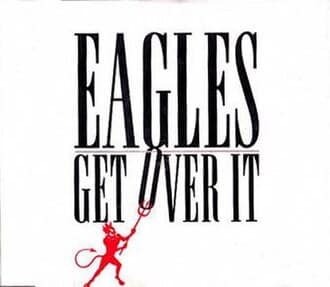
Get Over It by Eagles reached number one on the US Billboard Mainstream Rock Tracks chart in 1994 and became the lead single from Hell Freezes Over, the comeback album recorded from the band’s reunion after fourteen years of public acrimony.
Written by Don Henley and Glenn Frey, the song was a deliberate change in tone from the Eagles’ catalog, a satirical broadside against what Henley and Frey saw as a culture of victimhood and complaint, delivered with a hard rock energy that gave Get Over It an edge the band’s soft rock era had rarely attempted.
Affiliate Disclosure: As an Amazon Associate I earn from qualifying purchases. This helps support the site at no extra cost to you.
| Song | Get Over It |
| Artist | Eagles |
| Album | Hell Freezes Over (1994) |
| Written by | Don Henley, Glenn Frey |
| Produced by | Don Henley, Glenn Frey |
| Released | 1994 |
| Genre | Hard Rock, Classic Rock |
| Chart Peak | #1 US Mainstream Rock Tracks, #31 US Billboard Hot 100 |
Table of Contents
Background and History
The Eagles had disbanded in 1980 following years of internal tension between Don Henley, Glenn Frey, Joe Walsh, Timothy B. Schmit, and Don Felder, with Henley famously remarking that the band would reunite “when hell freezes over.”
The reunion materialized in 1994, prompted partly by the commercial and critical success of the Common Thread tribute album in 1993, which demonstrated that a new generation of country and rock listeners had strong interest in the Eagles catalog.
The band recorded new material and staged an HBO live special that became the basis for Hell Freezes Over, which combined new studio recordings with live performances of the band’s classic songs.
The title acknowledged Henley’s famous pronouncement with a wry self-awareness that suited the tone of the reunion, which was managed with more commercial calculation than the original band’s dissolution might have suggested was possible.
Get Over It and the Eagles Reunion
Get Over It was chosen as the lead single because its hard rock energy and satirical content represented a departure from the soft rock ballads most associated with the Eagles and signaled that the reunion was not simply a nostalgia exercise.
Henley and Frey wrote the song as a commentary on what they perceived as a pervasive culture of complaint and victimhood, directing its critique at lawyers, therapists, and the talk show culture of the early 1990s that they felt encouraged self-pity over self-reliance.
The lyric’s targets were broad enough to encompass anyone Henley and Frey saw as profiting from or indulging unnecessary suffering, and the song’s hard rock delivery gave those complaints an energy that the more polished Eagles recordings had not typically employed.
The decision to lead the reunion with a hard rock satire rather than a ballad or a new version of their familiar California sound reflected both Henley and Frey’s desire to assert that the band was returning on its own terms rather than simply delivering what the audience expected.
Get Over It established that the Eagles of 1994 were willing to engage with contemporary cultural debates in a way the original band had often avoided, though the song’s targets were broad enough that its specific cultural moment has aged somewhat differently than the recording itself.
Get Over It and the Recording Story
Get Over It opens with a hard rock guitar riff that immediately signaled a different sonic approach from the polished California rock most associated with the Eagles’ classic period.
Henley and Frey co-produced the track, maintaining tight control over a recording that needed to establish the reunion’s tone while also competing with the alternative and hard rock sounds that dominated rock radio in 1994.
The rhythm section drives the track with an urgency that suited the lyric’s impatience and gave the recording a contemporary rock energy that connected with formats the Eagles had not typically targeted in their original run.
Joe Walsh’s guitar work throughout the track added a harder edge than the band’s soft rock catalog suggested was part of their identity, reminding listeners that Walsh had brought a harder rock sensibility to the band when he joined in 1975.
The production placed Get Over It in the same mainstream rock landscape that classic rock acts were competing in against Nirvana‘s successors and the alternative rock wave, and the song’s chart success demonstrated that the Eagles could compete in that environment on their own terms.
Get Over It and the Charts
Get Over It reached number one on the US Billboard Mainstream Rock Tracks chart and number thirty-one on the Billboard Hot 100, a commercial performance that validated the reunion’s commercial viability and demonstrated that the Eagles could generate new hit material rather than simply performing their catalog.
Hell Freezes Over debuted at number one on the Billboard 200 and was certified six times platinum in the United States, a commercial achievement that exceeded what most observers had expected from a reunion album from a band that had been dormant for fourteen years.
The album’s chart success was driven by both the new studio recordings including Get Over It and the sustained commercial appeal of the live performances, which reminded a new generation of listeners what the Eagles catalog sounded like in performance.
The commercial momentum of Hell Freezes Over launched one of the most commercially successful touring operations in rock history, with the Eagles’ subsequent concert tours consistently ranking among the highest-grossing of any year they performed.
Lasting Legacy of Get Over It
Get Over It is the Eagles recording most associated with their 1994 reunion and the song that established what the band’s second commercial phase would sound like, harder and more satirically direct than the soft rock California sound of their classic period.
The song’s cultural critique of victim culture and the therapy industry has aged unevenly, with some listeners finding its targets dated and others finding its impatience with complaint culture still resonant, a range of responses that reflects the genuinely divisive cultural debates the lyric engaged with in 1994.
The reunion that Get Over It launched proved to be one of the most commercially durable in rock history, with the Eagles continuing to tour to massive audiences through the subsequent decades until Glenn Frey’s death in January 2016.
Frey’s death brought an end to the classic Eagles lineup, though Henley, Walsh, Schmit, and Felder subsequently continued performing and touring with Vince Gill and Frey’s son Deacon Frey, a continuation that acknowledged the band’s commercial durability while marking a genuine end to what Get Over It had represented.
More than thirty years after its release, Get Over It endures as the song that announced the Eagles were back and that the reunion would be conducted on the band’s own satirical, hard rock terms rather than as a nostalgic exercise in revisiting past glories.
Watch the Official Video
Frequently Asked Questions
FAQ
- What is Get Over It about?
- Don Henley and Glenn Frey wrote the song as a satirical critique of what they perceived as a 1990s culture of victimhood and complaint, directing its targets at lawyers, therapists, and the talk show culture that they felt encouraged self-pity over self-reliance. The lyric’s broad targets encompassed anyone they saw as profiting from or indulging unnecessary suffering, delivered with a hard rock energy that was more aggressive than most Eagles recordings.
- When did the Eagles reunite?
- The Eagles reunited in 1994 after fourteen years apart, prompted partly by the commercial success of the Common Thread tribute album in 1993. Don Henley had famously said the band would reunite “when hell freezes over,” and the reunion album’s title acknowledged that remark. The reunion produced new recordings including Get Over It alongside a live concert special that became the basis for the Hell Freezes Over album.
- What album is Get Over It from?
- The song appears on Hell Freezes Over, released in 1994 as the Eagles’ first studio recordings since their breakup in 1980. The album debuted at number one on the Billboard 200 and was certified six times platinum in the United States, exceeding commercial expectations for a reunion from a band that had been dormant for fourteen years.
- What happened to the Eagles after Glenn Frey died?
- Glenn Frey died in January 2016 from complications of rheumatoid arthritis and pneumonia, ending the classic Eagles lineup. Don Henley, Joe Walsh, Timothy B. Schmit, and Don Felder subsequently continued the band’s touring with Vince Gill and Deacon Frey, Glenn’s son, performing alongside the remaining original members. The band has continued touring under the Eagles name while acknowledging the irreplaceable nature of Frey’s role in the original group.
- Did Get Over It reach number one?
- Get Over It reached number one on the US Billboard Mainstream Rock Tracks chart and number thirty-one on the Billboard Hot 100, validating the reunion’s commercial viability and demonstrating that the Eagles could generate new hit material. The song’s chart success helped launch one of the most commercially successful touring operations in rock history, with the Eagles’ subsequent concert tours consistently ranking among the highest-grossing of any year they performed.
You Might Also Like
Written as a hard rock satire by two men who had spent fourteen years insisting they would never share a stage again, released to number one on the rock chart as proof that the reunion was real, and launched as the opening statement of one of the most commercially successful second acts in classic rock history, Get Over It stands as the Eagles recording that turned a famous joke about hell freezing over into the beginning of thirty more years of commercial dominance.