

The Fireball by Deep Purple album review covers a record that hit number 1 in the UK in 1971 and has spent fifty years being underestimated, sandwiched between two of the greatest hard rock albums ever made.

Affiliate Disclosure: I am an Amazon affiliate and if you purchase through any amazon links on this site i may earn a small commission at no extra charge to you.
📋 Table of Contents [+]
The Impossible Position: Following In Rock
Deep Purple went into the Fireball sessions carrying the full weight of what In Rock had been.
That album had peaked at number 4 in the UK, stayed in the charts for over a year, and redefined what British hard rock could sound like.
The demand it created was the problem: the band were now the hottest live act in the UK and Europe, booked constantly, leaving almost no time to write and record a proper follow-up.
Roger Glover suffered physical ailments from the relentless schedule.
Jon Lord was similarly worn down.
Ritchie Blackmore and Ian Gillan were already developing the personal tensions that would eventually end the Mark II lineup.
The band rented a house called The Hermitage in North Devon to try to write, but the sessions there were not productive, and Blackmore’s habit of holding seances and his midnight pranks, including smashing Glover’s door with an axe, did not help concentration.
Material was pieced together in fragments across nine months of recording squeezed between tour dates, a process that shaped every aspect of what Fireball became.
Fireball by Deep Purple Album Review: Recording Under Pressure
Recording took place across multiple studios between September 1970 and June 1971, primarily at De Lane Lea Studios and Olympic Studios in London, with additional sessions at The Hermitage in North Devon.
Martin Birch, who had engineered In Rock and become indispensable to the band’s sound, handled engineering duties again alongside Lou Austin and Alan O’Duffy.
The band self-produced the album as they had its predecessor.
Warner Bros. in the United States grew impatient waiting for the finished record, as the band had an American tour booked for July 1971.
That pressure influenced the final tracklist, with “Demon’s Eye” left off the US pressing in favor of “Strange Kind of Woman” to meet the deadline.
Blackmore later said the album was thrown together under managerial pressure, that the band were given no time to write properly, and that he had simply contributed ideas on the spur of the moment.
His bluntness about the record’s limitations is honest, but it also undersells what the band actually delivered under those constraints.
Strange Kind of Woman: The Single That Came First
“Strange Kind of Woman” was written at Welcombe Manor in Devon in December 1970 and recorded in January 1971, released as a single in February to keep the band visible while the album was still being assembled.
The boogie-driven track reached number 8 on the UK Singles Chart and number 1 in Denmark.
Its live incarnation became one of the most crowd-reactive moments in the Deep Purple setlist, with Gillan developing a call-and-response routine where he sang back Blackmore’s guitar riffs note for note.
The full story of that song is covered in our article on Deep Purple Strange Kind of Woman.
Despite being recorded during the Fireball sessions, “Strange Kind of Woman” was kept off the original UK album pressing entirely, appearing only on the US version in place of “Demon’s Eye.”
It was included on the 25th anniversary edition, which is the version most listeners know today.
Track-by-Track Review
The album opens with the title track, covered in detail in its own section below, and immediately establishes a different register from In Rock: faster, more precise, and built around Ian Paice’s drumming in a way the previous album was not.
“No No No” follows and makes no attempt to replicate the opener’s velocity, settling instead into a laid-back groove with slide guitar and a funky mid-section that surprised listeners expecting another all-out assault.
“Demon’s Eye” is a blues-rock shuffle built around one of Jon Lord’s most distinctive Hammond lines, hypnotic and melodic in equal measure, and was included on the UK pressing in place of “Strange Kind of Woman.”
“Anyone’s Daughter” is the track that divides opinion most sharply: a country-tinged, lyrically playful piece that has nothing in common with anything else on the album.
Blackmore wrote the chord structure trying to emulate country guitarist Albert Lee, and Jon Lord’s piano solo on the track is one of his finest individual moments on any Deep Purple record.
Gillan himself later described it as “a good bit of fun, but a mistake” to include on the album.
“The Mule” opens side two with tambourine and a hypnotic circular beat from Paice, building into an almost psychedelic instrumental section that became the vehicle for Paice’s extended drum solo on the Made in Japan live album.
“Fools” is eight minutes of slow-burn hard rock with a quiet, almost atmospheric introduction before the full band weight arrives, featuring a Blackmore guitar solo that sounds, in the words of one German review, like an electrically amplified violin.
The dark lyrical content, referencing flames and doomed psychopaths, gives the track a menace that the more straightforward rockers on the album do not attempt.
“No One Came” closes the album with a pounding riff and Gillan’s most autobiographical lyrics on the record, reflecting his anxiety about the band’s sudden superstardom and his fear that the audiences who had arrived for them could just as easily disappear.
The bass introduction from Glover is immediately distinctive, and Blackmore and Lord both deliver strong solo work before the track ends the album on a note that is simultaneously triumphant and uneasy.
Fireball by Deep Purple Album Review: The Title Track
The opening swoosh on the title track was not a synthesizer or a studio effect created from scratch.
According to Ian Gillan’s autobiography, the sound came from the studio’s heating system, recorded by assistant engineer Mike Thorne and suggested to Martin Birch by Roger Glover as the track’s opening texture.
What follows that swoosh is one of the most concentrated bursts of hard rock recorded in 1971: Paice using a double bass drum configuration, which required a full setup during the interval between the main set and encore on live dates, Blackmore’s riff cutting through at full velocity, and Gillan’s vocal entering immediately without any instrumental preamble.
The track runs under four minutes in its album version, edited slightly shorter for the single release, and was released as a UK single in October 1971, reaching number 15 on the UK Singles Chart and spending thirteen weeks in the Top 100.
Jon Lord later singled out Paice’s drumming on this track specifically as one of the album’s genuine highlights, a rare moment of praise from a band member who was otherwise critical of the record’s rushed production.
UK vs US: Two Different Albums
The original UK pressing of Fireball and the US version released by Warner Bros. are not the same album.
The UK pressing includes “Demon’s Eye” as the third track and does not include “Strange Kind of Woman,” which was reserved for single release in that market.
The US pressing replaces “Demon’s Eye” with “Strange Kind of Woman,” meaning American listeners on original vinyl heard a different version of the album entirely.
This created an unusual situation where listeners in different countries had genuinely different experiences of the record for twenty-five years until the anniversary edition collected both tracks.
The 2010 gold CD reissue by Audio Fidelity followed the original US track listing, restoring “Strange Kind of Woman” and omitting “Demon’s Eye.”
For most listeners today, the 25th anniversary edition with all tracks included is the definitive version of the album.
Chart Performance
Fireball reached number 1 on the UK Albums Chart in September 1971, making it the first of Deep Purple’s three UK chart-toppers.
It also hit number 1 in Germany, Austria, and Sweden.
In the United States it reached number 32 on the Billboard 200, a significant improvement on In Rock’s number 143 peak, reflecting better promotion from Warner Bros. and the groundwork laid by the In Rock World Tour.
In Canada the album reached number 24.
Despite selling over a million copies in the UK, the album has never received an official certification there, an anomaly that reflects the certification thresholds in place at the time of its release.
It did not stay in the UK charts as long as In Rock had, partly because Machine Head arrived the following year and pulled listener attention forward rather than backward.
What the Band Thought of Fireball
The band’s own assessment of this album is worth understanding because it shaped how the record was discussed for decades afterward.
Blackmore was the most critical, stating the album was thrown together under managerial pressure and that he had no real time to write properly.
He said the only tracks he considered genuinely good were the title track, “Strange Kind of Woman,” and “Fools.”
Jon Lord said the album “wanders slightly” and “goes to places that the band wasn’t expecting it to go to,” though he praised “No No No,” “Fools,” and Paice’s drumming on the title track.
Ian Gillan was the exception: he called Fireball his favorite Mark II studio album and described it in a 1974 interview as “the beginning of tremendous possibilities of expression,” praising its experimental and progressive qualities over the more direct assault of In Rock.
Most of the band have since distanced themselves from the album, which has contributed to its reputation as the weakest of the three consecutive Mark II records, a verdict that this album review considers largely unfair.
Who Fireball Influenced
Whatever the band thought of it, Fireball reached a generation of musicians at exactly the right moment and left a measurable mark.
Yngwie Malmsteen stated on That Metal Show in 2011 that his elder sister had given him the album when he was eight years old, and that it “changed everything” for him.
Lars Ulrich of Metallica said he purchased Fireball within twelve hours of his father taking him to a Deep Purple concert in Copenhagen in 1973, and credited both the concert and the album with sparking his interest in hard rock music.
Michael Monroe of Hanoi Rocks described it as the first album he ever bought and one of the first he ever heard alongside Led Zeppelin II, calling it a major influence on his decision to pursue a rock career.
King Diamond also cited Fireball as the first studio album he purchased as a teenager and an important influence on his future work.
The pattern is consistent: Fireball reached the right people at the right age and redirected careers.
The 25th Anniversary Edition
EMI released the 25th Anniversary Edition of Fireball in 1996, remastered by Roger Glover, adding nine bonus tracks to the original seven.
The bonus material includes the outtakes “Freedom” and “Slow Train,” remixed versions of “Strange Kind of Woman,” “Demon’s Eye,” and “No One Came,” a studio instrumental take of the title track, and the “Noise Abatement Society Tapes,” a piece of studio tomfoolery recorded during the sessions.
“Freedom” and “Slow Train” in particular reveal material that would have strengthened the album had there been time to develop it properly.
“Slow Train” is described by critics as more progressive than anything that made the final cut, a slow-burn track with alternating solos from Blackmore and Lord.
The anniversary edition is packaged in a card box with a twenty-eight page book containing photographs and the album’s production history, and remains the recommended purchase for anyone approaching the record for the first time.
Fireball by Deep Purple Album Review: Legacy
The legacy of Fireball is complicated by where it sits in the Deep Purple catalog.
Any album placed between In Rock and Machine Head was going to suffer by comparison, and the band’s own dismissiveness about the record compounded that problem for decades.
What Fireball actually is, heard on its own terms, is one of the most musically diverse records Deep Purple ever made: a hard rock album with country elements, psychedelic textures, blues shuffles, extended instrumentals, and a title track that influenced the development of speed metal.
The tracklist is uneven, and Blackmore was right that the band were not at their most focused.
But “Fools,” “No One Came,” the title track, and “Strange Kind of Woman” are as good as anything on the albums that flank it, and the breadth of what the band attempted here is more interesting than the concentrated attack of In Rock.
The full picture of this era is in our Deep Purple in Rock album review and our Deep Purple Fireball song article, which covers the title track in detail.
Final Verdict
The Fireball by Deep Purple album review arrives at a verdict that diverges from the band’s own assessment: this is a very good album made under difficult conditions by musicians who were exhausted and under pressure, and it deserves better than the footnote status it has been given.
It is not In Rock.
It is not Machine Head.
It is not trying to be either of those records, and that is precisely what makes it interesting.
The experimental range on display, from the country detour of “Anyone’s Daughter” to the slow menace of “Fools” to the flat-out velocity of the title track, shows a band that was capable of more than one mode and was willing to explore that range even when it did not always land.
Ian Gillan called it his favorite Mark II studio album for a reason.
Fifty years on, the Fireball by Deep Purple album stands as the most underrated entry in one of rock’s greatest three-album runs.
People Also Ask
What is the Fireball album by Deep Purple?
Fireball is the fifth studio album by Deep Purple, released in July 1971 in the US and September 1971 in the UK. It was the second studio album recorded by the classic Mark II lineup of Ritchie Blackmore, Ian Gillan, Roger Glover, Jon Lord, and Ian Paice. Recorded across multiple London studios between September 1970 and June 1971, it reached number 1 on the UK Albums Chart and number 32 on the US Billboard 200.
Is Deep Purple’s Fireball a good album?
Yes, though it is frequently underrated because it sits between In Rock and Machine Head in the catalog. Fireball is more experimental and stylistically varied than either of those records, which divided opinion at the time and contributed to the band’s own mixed feelings about it. Ian Gillan called it his favorite Mark II studio album. Yngwie Malmsteen, Lars Ulrich, and King Diamond all cited it as a major early influence. The title track, “Fools,” “No One Came,” and “Strange Kind of Woman” are among the finest tracks in the Deep Purple catalog.
Why are the US and UK versions of Fireball different?
The UK pressing includes “Demon’s Eye” as the third track and omits “Strange Kind of Woman,” which was released as a standalone single in that market. The US pressing replaces “Demon’s Eye” with “Strange Kind of Woman” to meet Warner Bros.’ deadline for a July release ahead of the band’s American tour. The 25th anniversary edition from 1996 includes both tracks and is the recommended version for new listeners.
Which musicians were influenced by Fireball?
Yngwie Malmsteen received the album from his sister when he was eight and said it changed everything for him. Lars Ulrich of Metallica bought it within twelve hours of seeing Deep Purple live for the first time in 1973 and credited it with sparking his interest in hard rock. Michael Monroe of Hanoi Rocks described it as the first album he ever bought. King Diamond also cited it as the first studio album he purchased as a teenager.
Which version of Fireball should I buy?
The 25th Anniversary Edition from 1996 is the recommended purchase. It includes all seven original tracks plus nine bonus tracks including the outtakes “Freedom” and “Slow Train,” remixed versions of key tracks, and both “Strange Kind of Woman” and “Demon’s Eye” regardless of which market’s original pressing you would have heard. It comes packaged with a twenty-eight page booklet covering the album’s history.
Watch: Fireball by Deep Purple
The Mark II lineup at full force in 1971, the year Fireball topped the UK charts.
Shop Deep Purple Albums
Affiliate Disclosure: I am an Amazon affiliate and if you purchase through any amazon links on this site i may earn a small commission at no extra charge to you. This helps support classicrockartists.com and allows me to keep providing deep-dive content on the legends of rock. Thank you for your support!
As an Amazon Associate, I earn from qualifying purchases.
Fireball (1971)
25th Anniversary Edition CD
Includes Strange Kind of Woman, Freedom, Slow Train and six more bonus tracks.
The definitive version of Deep Purple’s most underrated Mark II album.

Deep Purple in Rock (1970)
25th Anniversary Edition CD
The album that preceded Fireball and redefined British hard rock.
Contains Child in Time, Speed King, and the full In Rock World Tour setlist.

Machine Head (1972)
The album that followed Fireball
Contains Smoke on the Water, Highway Star, and Space Truckin.
The commercial and critical peak of the Mark II era.

The Very Best of Deep Purple
Compilation spanning the full career
Includes Strange Kind of Woman alongside all the essential hits.
The best single-disc entry point for new listeners exploring the full catalog.
You Might Also Like
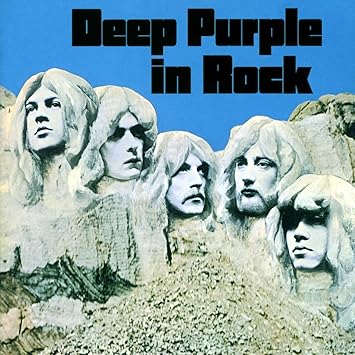
Deep Purple in Rock — Album Review
The 1970 landmark that Fireball had to follow: seven tracks that helped define heavy metal and launched the Mark II era.
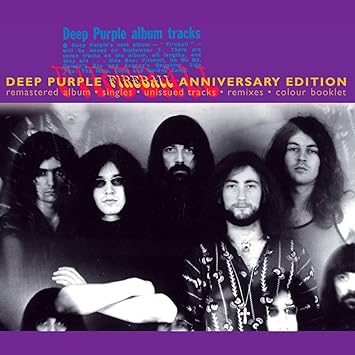
Deep Purple Fireball: The Song
The full story of the title track: how the opening swoosh came from a heating system and why Paice’s double-kick drumming changed rock music.
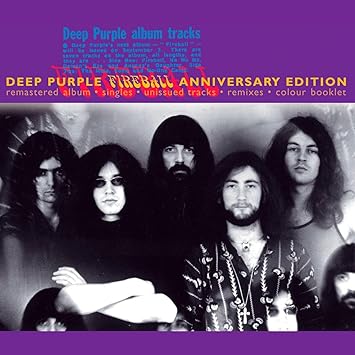
Deep Purple Strange Kind of Woman
The Fireball-era single that became a live staple for fifty years, featuring Gillan’s legendary call-and-response with Blackmore’s guitar.

Members of Deep Purple
Every lineup from Mark I through to the current band, with the full story of the changes that shaped fifty-plus years of Deep Purple history.
The Fireball by Deep Purple album review ends with a recommendation: stop treating this record as a stepping stone between two classics and start listening to it as the ambitious, experimental, genuinely great album it actually is.