

The Deep Purple in Rock album review begins with a simple fact: when this record landed in June 1970, it did not sound like anything that existed before it.

Affiliate Disclosure: I am an Amazon affiliate and if you purchase through any amazon links on this site i may earn a small commission at no extra charge to you.
📋 Table of Contents [+]
The Lineup Change That Made In Rock Possible
By mid-1969, Ritchie Blackmore, Jon Lord, and Ian Paice had decided the band needed to go heavier.
The Mark I lineup, which had given Deep Purple their American breakthrough with “Hush” and a run of psych-influenced albums, was not the vehicle for where the three instrumentalists wanted to go.
Rod Evans and Nick Simper were let go in June 1969.
Ian Gillan and Roger Glover, who had been playing together in a band called Episode Six, were brought in as replacements.
The decision was partly inspired by hearing Led Zeppelin and recognizing that hard rock could be taken further and harder than anyone had yet taken it.
The new Mark II lineup’s first recorded output was not a studio album but the live Concerto for Group and Orchestra, a classical work composed by Jon Lord and performed with the Royal Philharmonic Orchestra in September 1969.
That record showed what Lord could do when he crossed orchestral arrangements with rock instrumentation.
Deep Purple in Rock was the deliberate corrective: the title itself was a statement of intent, chosen specifically to make clear the band was a rock group, not an orchestral one.
Deep Purple in Rock Album Review: Recording the Album
Work on the album began in October 1969 at IBC Studios in London and continued through April 1970 at De Lane Lea Studios and Abbey Road Studios, all fitted in around an intensive touring schedule.
The band rehearsed the new material at Hanwell Community Centre, introducing songs into the live show to test how they worked on stage before committing them to tape.
Every track on In Rock is credited to all five band members, the first Deep Purple album where that was true.
The band produced the record themselves, though they made heavy use of the engineers at each session, particularly Martin Birch, who was brought in for the De Lane Lea sessions and became the key figure in shaping the album’s sound.
Birch’s aim was to capture the live sound of the band in the room on tape, and the VU meters running in the red throughout the sessions was not an accident but a deliberate aesthetic choice.
Roger Glover later remastered and expanded the album for its 25th anniversary edition in 1995, adding bonus tracks including “Black Night,” “Jam Stew,” and remixes of “Flight of the Rat” and “Speed King.”
The Sound: Loud, Heavy, and Deliberately in the Red
The core sonic identity of Deep Purple in Rock is the interplay between Ritchie Blackmore’s guitar and Jon Lord’s Hammond organ, both pushed to the edge of distortion and locked into a dynamic where neither instrument yields to the other.
Blackmore ran his Marshall amplifiers cranked to full saturation, generating the natural overdrive that gives tracks like “Speed King” and “Flight of the Rat” their particular ferocity.
Lord matched him on the organ, treating the Hammond not as a supporting instrument but as a second lead voice capable of going as heavy and aggressive as any guitar.
Ian Gillan’s vocals added a third dimension that neither band could have predicted: a high-range screamer with the control to move from near-spoken verses to full-throat wails without any of it sounding theatrical or forced.
Ian Paice and Roger Glover held the rhythm section together with a locked precision that gave Blackmore and Lord the platform to escalate without the whole structure coming apart.
The result is a record that sounds both composed and barely contained: structured enough to function as songs, volatile enough to feel like it could detonate at any moment.
Track-by-Track Review
“Speed King” opens the album with over a minute of untitled instrumental buildup known as “Woffle” before detonating into one of the most aggressive rock tracks recorded to that point in 1970.
Gillan’s lyrics borrowed phrases from Little Richard songs including “Good Golly Miss Molly” and “Tutti Frutti,” stitched together into a pre-punk rant over Blackmore’s riffing and Lord’s organ.
The first studio take had Lord playing piano rather than organ; the piano version was eventually released as a B-side in the Netherlands, but the organ version is the one that matters.
“Bloodsucker” is a more measured rocker by comparison, recorded at De Lane Lea and finished at Abbey Road, featuring the kind of Gillan screams that would become one of the most recognizable sounds in British hard rock.
The track was re-recorded twenty-eight years later with Steve Morse on guitar and retitled “Bludsucker” for the 1998 album Abandon.
“Child in Time” occupies the entirety of side one’s remaining space, running over ten minutes, and is covered in depth in its own section below.
“Flight of the Rat” opens side two with chugging guitar riffing and some of Lord’s most aggressive organ lines on the record, building through an extended jam section where both instruments push into near-thrash territory that predated that genre by at least a decade.
“Into the Fire” is a hard-driving rocker that has remained a recurring presence in Deep Purple’s live sets across multiple decades, built on a riff that hits with the directness of a statement rather than an invitation.
“Living Wreck” keeps the momentum locked in place with a grooved rhythm section and a track structure that gives Paice room to drive the song from underneath.
“Hard Lovin’ Man” closes the original album at full throttle, derived from a Glover bass riff developed as a jam, featuring what some critics have called one of the first galloping guitar riffs in rock history.
Deep Purple in Rock Album Review: Child in Time
No Deep Purple in Rock album review can give “Child in Time” the space it deserves in a single paragraph, but the essentials are these.
The song grew from Jon Lord playing the organ introduction to “Bombay Calling” by It’s a Beautiful Day during rehearsals at Hanwell.
Ian Gillan had never heard the original song and built his own lyrics on top of the melody, writing about the Cold War and the threat of nuclear conflict because, as he later said, the music reflected the mood of the moment.
The structure of the track moves from a near-silent, jazzy organ introduction through building verse sections to a galloping central section where Blackmore plays one of his most controlled and melodic solos before the track returns to its opening atmosphere for a final escalation of Gillan’s vocal range.
Blackmore used a Gibson guitar rather than his usual Fender Stratocaster on “Child in Time,” the jazz-influenced tone better suited to the track’s dynamics.
Gillan’s vocal performance in the final section, where he ascends through a series of wails that grow increasingly extreme before the track resolves, is one of the documented peaks of British rock singing in 1970.
The song has accumulated over 115 million streams on Spotify, making it one of the most-streamed tracks in the Deep Purple catalog and the fourth most-streamed overall behind “Smoke on the Water,” Highway Star, and “Perfect Strangers.”
A significantly remixed version was used throughout the first trailer for the fifth and final season of the Netflix series Stranger Things in July 2025, introducing the track to an entirely new generation of listeners.
Black Night: The Single That Was Never on the Album
After completing the album, the band’s management expressed concern that there was no obvious hit single in the track listing.
The band booked De Lane Lea in early May 1970 and were tasked with writing and recording a commercial-sounding song from scratch.
After struggling to find a direction, Blackmore started playing the riff from Ricky Nelson’s arrangement of “Summertime,” and the band built the rest of the structure around it through improvisation.
Gillan later said he tried to write the most deliberately banal lyrics he could think of.
The result was “Black Night,” released as a non-album single on the same day as the album, June 5, 1970.
It reached number 2 on the UK Singles Chart, becoming the band’s first major UK hit and the track that introduced Deep Purple to a British pop audience who had not yet heard the heavier material on the album itself.
The 25th anniversary edition of the album includes two versions of “Black Night” as bonus tracks.
Chart Performance and Reception
Deep Purple in Rock peaked at number 4 on the UK Albums Chart and remained in the charts for sixty-eight weeks, running through the entire period until the follow-up album Fireball was ready.
In Germany it reached number 1, contributing to a European breakthrough that established the band as a major international act.
In Canada it reached number 9.
The United States was a different story: the album peaked at number 143 on the Billboard 200, underperforming badly compared to the Mark I era where “Hush” had reached number 4 on the Hot 100.
The American label situation was unstable at the time, with Tetragrammaton having gone bankrupt and Warner Bros. having acquired the contract, meaning promotion in the US was limited during the album’s launch period.
Critical reception in the UK was positive on release, with Record Mirror describing it as “a stunningly good album” and NME praising both the material and Gillan’s vocal performance on “Child in Time” specifically.
The band supported the record with the In Rock World Tour, a fifteen-month run that established Deep Purple as a live force in Europe and built the audience that Machine Head would later convert into global superstardom.
The Mount Rushmore Cover
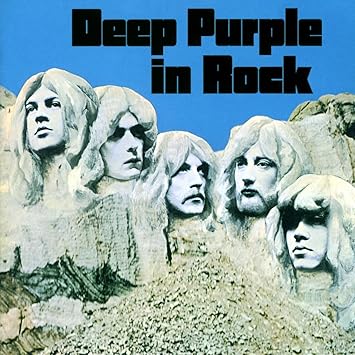
The original gatefold sleeve features the five members of the Mark II lineup carved into a rock face in direct imitation of the style of Mount Rushmore, presented in full color on a textured stone background.
The image was designed by Edwards Coletta Productions and immediately communicated that this band considered itself at the level of monuments rather than fashions.
It is one of the most recognizable album covers in British rock history and was entirely in keeping with the album’s deliberate ambition.
The inner gatefold on original UK pressings included full lyrics and black-and-white photographs of each band member individually.
The US release of the album cut Blackmore’s opening guitar intro to “Speed King,” a decision the band had no part in and which was not corrected on standard US pressings until the 25th anniversary edition restored the full version.
Production: Martin Birch and the Live Sound
Martin Birch’s contribution to Deep Purple in Rock cannot be overstated in any honest album review.
He was brought in for the De Lane Lea sessions on “Hard Lovin’ Man” and impressed the band so thoroughly that they kept him for the remainder of the recordings.
The original LP credits him as a “catalyst” rather than simply an engineer, an acknowledgment that his role went beyond technical execution.
Birch went on to engineer and produce every Deep Purple studio album through Come Taste the Band in 1975, then became one of the defining producers of British heavy metal in the late 1970s and 1980s, working with Black Sabbath, Iron Maiden, and Whitesnake among others.
His approach on In Rock, capturing the live room sound with the VU meters pinned in the red, set the template for how hard rock was recorded for the decade that followed.
Legacy: How In Rock Helped Invent Heavy Metal
Canadian rock journalist Martin Popoff wrote that Deep Purple in Rock, along with Black Sabbath’s Paranoid and Uriah Heep’s debut, collectively invented heavy metal in 1970.
That assessment has become a near-consensus position among historians of the genre, even though Deep Purple themselves always rejected the heavy metal label, preferring to describe themselves as a hard rock band with jazz, blues, and classical influences.
Popoff further noted that In Rock remained the sharpest and most insistently metallic Deep Purple record for fourteen years, until Perfect Strangers matched it in 1984.
Ritchie Blackmore has named it as one of his two favorite albums from his time with the band, alongside Machine Head.
The album’s influence on what came after it is measurable in specific ways: “Flight of the Rat” is proto-thrash metal at least a decade before that scene emerged as a recognized genre; “Child in Time” established the ten-minute rock epic as a format that hundreds of bands would spend the following decade attempting to replicate; and the Blackmore-Lord interplay model became the template for guitar-and-keyboard hard rock that still shows up in the DNA of bands recording today.
The full picture of how this album fits into the band’s catalog is covered in our article on Deep Purple Child in Time and in the broader overview at Members of Deep Purple.
Final Verdict
The Deep Purple in Rock album review ends with the same conclusion that fifty-five years of listening have produced: this is one of the ten most important rock albums ever made, regardless of genre or era.
It is not a perfect record in the sense of being polished or immaculate.
It is perfect in the sense that everything on it is exactly what it needs to be, executed by five musicians who had just figured out together what they were capable of and decided to find out how far they could push it.
Speed King opens the door at full velocity.
Child in Time walks through it at its own pace and arrives somewhere no rock band had been before.
The tracks in between are among the finest hard rock recordings of 1970.
If you own one Deep Purple album, it should be Machine Head.
If you own two, the second one is Deep Purple in Rock.
People Also Ask
What is Deep Purple in Rock?
Deep Purple in Rock is the fourth studio album by Deep Purple, released on June 5, 1970.
It was the first studio album recorded by the Mark II lineup of Ritchie Blackmore, Ian Gillan, Roger Glover, Jon Lord, and Ian Paice.
The album marked a deliberate shift to a heavier, louder sound and became the band’s breakthrough record in Europe, peaking at number 4 on the UK Albums Chart and remaining in the charts for sixty-eight weeks.
How did Deep Purple in Rock chart?
The album peaked at number 4 in the UK, number 1 in Germany, and number 9 in Canada.
In the United States it reached only number 143 on the Billboard 200, significantly underperforming due to limited promotion from the band’s new US label Warner Bros.
The accompanying non-album single “Black Night” reached number 2 on the UK Singles Chart on the same day the album was released.
Who played on Deep Purple in Rock?
The album features the classic Mark II lineup: Ritchie Blackmore on guitar, Ian Gillan on vocals, Roger Glover on bass, Jon Lord on organ and keyboards, and Ian Paice on drums.
The band produced the album themselves, with engineer Martin Birch playing a key creative role, particularly on the De Lane Lea sessions.
Birch was credited on the original LP as a “catalyst” rather than simply an engineer.
Is Deep Purple in Rock the best Deep Purple album?
It is one of two albums most frequently cited as Deep Purple’s finest, alongside Machine Head from 1972.
Ritchie Blackmore has named both as his favorites from his time with the band.
In Rock is generally regarded as the more historically significant record because it represented the moment the band fully transformed into the lineup and sound that defined their legacy.
What inspired “Child in Time”?
Jon Lord began playing the organ introduction to “Bombay Calling” by It’s a Beautiful Day during rehearsals at Hanwell, and the band built the arrangement around it.
Ian Gillan had never heard the original song and wrote his own lyrics inspired by Cold War tensions and the threat of nuclear conflict.
Blackmore played a Gibson guitar on the track rather than his usual Fender Stratocaster, and the final recorded version runs over ten minutes.
Watch: Deep Purple in Rock
The Mark II lineup performing at the peak of the In Rock era remains some of the most powerful live footage in British rock history.
Shop Deep Purple Albums
Affiliate Disclosure: I am an Amazon affiliate and if you purchase through any amazon links on this site i may earn a small commission at no extra charge to you. This helps support classicrockartists.com and allows me to keep providing deep-dive content on the legends of rock. Thank you for your support!
As an Amazon Associate, I earn from qualifying purchases.
Deep Purple in Rock (1970)
25th Anniversary Edition CD
Includes Black Night and bonus tracks from the original sessions.
The definitive version of the album that launched the Mark II era.

Machine Head (1972)
The commercial peak of the Mark II era
Contains Smoke on the Water, Highway Star, and Space Truckin.
Blackmore’s other pick as his favorite Deep Purple album.

Fireball (1971)
25th Anniversary Edition CD
The direct follow-up to In Rock, hit number 1 in the UK.
Contains Strange Kind of Woman and the thunderous title track.

The Very Best of Deep Purple
Compilation spanning the full career
Includes Child in Time and tracks from every major era.
The ideal starting point for anyone new to the full Deep Purple catalog.
You Might Also Like
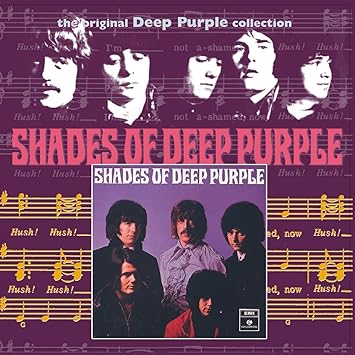
Shades of Deep Purple — Album Review
The 1968 debut that launched Deep Purple in America and contained the seeds of everything the Mark II lineup would go on to do.
Deep Purple Child in Time
The full story of the ten-minute epic that showcased Ian Gillan’s vocal range and became one of the band’s most enduring tracks.
Machine Head — Album Review
The 1972 follow-up that became Deep Purple’s commercial peak and produced two of the most recognizable songs in rock history.
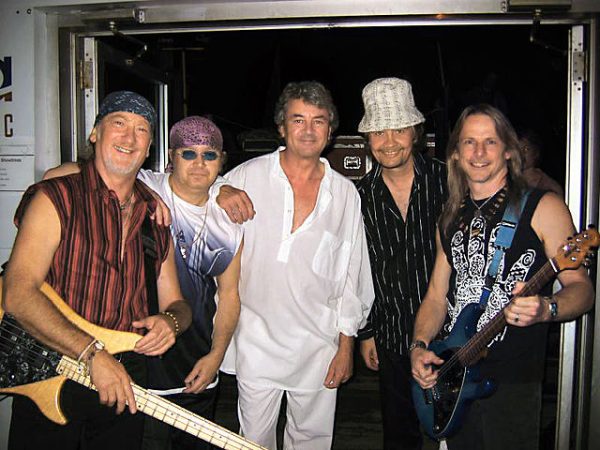
Members of Deep Purple
Every lineup from Mark I through to the current band, with the full story of the changes that shaped fifty-plus years of Deep Purple history.
The Deep Purple in Rock album review closes with the only verdict that fifty-five years of evidence supports: this record helped invent the music that followed it, and that is a distinction very few albums in any genre can honestly claim.