
The Shades of Deep Purple album review starts where Deep Purple itself started: a three-day recording session in May 1968 that launched one of the most important bands in rock history.

Affiliate Disclosure: I am an Amazon affiliate and if you purchase through any amazon links on this site i may earn a small commission at no extra charge to you.
📋 Table of Contents [+]
How Deep Purple Came Together
The band that would become Deep Purple did not exist in any recognizable form until late 1967.
Former Searchers drummer Chris Curtis had an idea for a rotating collective he called Roundabout, and he recruited Jon Lord and Ritchie Blackmore as its first members before losing interest and walking away from the project entirely.
That departure left Lord and Blackmore to build the band themselves.
They moved into Deeves Hall, a rented farmhouse near the village of South Mimms in Hertfordshire, in late February 1968, where they continued auditioning singers while waiting for equipment to arrive.
Rod Evans, who had been fronting a club band called The Maze, won the audition for lead vocalist.
He brought his 19-year-old bandmate Ian Paice with him, and Blackmore recognized Paice from his own time in Hamburg and hired him on the spot.
Bassist Nick Simper, a friend of Lord’s, completed the lineup.
The band changed its name to Deep Purple during the recording sessions for this album, taking the name from a 1930s ballad that Blackmore’s grandmother used to sing.
Recording Shades of Deep Purple: Three Days at Pye Studios
The Shades of Deep Purple album review cannot ignore the conditions under which it was made: the entire record was cut in three days.
On May 11, 1968, the five-piece walked into Pye Studios at ATV House in London with producer Derek Lawrence and engineer Barry Ainsworth, and a four-track tape machine waiting for them.
The budget was small, the timeline tighter, and the band had barely been playing together for six weeks.
Everything was recorded live in one or two takes with minimal overdubs.
Day one covered “And the Address,” “Hey Joe,” “Hush,” and “Help!”
Day two produced “Love Help Me,” “I’m So Glad” with its classical prelude “Happiness,” and “Mandrake Root.”
Day three completed the album with “One More Rainy Day.”
As bassist Nick Simper later reflected in the album’s deluxe edition liner notes, the band had no option but to record the songs they had cobbled together for their first gigs, having only been together a matter of weeks.
The result is a record that sounds like a band playing live in a room, because that is exactly what it was.
The Mark I Lineup
This album documents the only lineup of Deep Purple that has never been reassembled: the Mark I configuration of Rod Evans, Ritchie Blackmore, Jon Lord, Nick Simper, and Ian Paice.
Evans was a capable, melodic singer with a smoother delivery than Ian Gillan, who would replace him in 1969.
His voice suited the more psychedelic and pop-leaning material on this record and the two albums that followed.
Blackmore was already developing the fluid, aggressive guitar style that would define the Mark II era, though it would take another two years and a lineup change for it to fully emerge.
Lord was the most experienced musician in the room, with a background in classical music and jazz that he brought to bear immediately on the organ arrangements.
Paice was nineteen years old and already the most precise drummer the band would ever have.
Simper’s bass work is solid throughout, locking in tightly with Paice and giving the rhythm section a density that belies how quickly the record was made.
The Mark I lineup recorded three albums before Evans and Simper were replaced, but this debut remains the clearest document of who they were before the heavier direction of the 1970s took over.
Shades of Deep Purple Track-by-Track Review
The album opens with “And the Address,” a Jon Lord and Ritchie Blackmore instrumental that announces the band’s core dynamic immediately: Lord’s organ rumbling in low registers before Blackmore’s guitar cuts across it with a whining lead.
There are no vocals on the track, which is an unusual choice for an opening cut, but it establishes the Lord-Blackmore axis as the engine at the center of everything.
“Hush” follows, and the difference in energy is immediate: it locks into a driving rhythm with Lord’s organ firing off in all directions and Evans delivering the vocal hook with real authority.
“One More Rainy Day” is a lighter, almost pop-flavored track with a bouncy bass line from Simper and crooning vocals from Evans, with Blackmore’s guitar largely in the background.
The “Prelude: Happiness/I’m So Glad” medley takes up the remainder of side one, featuring a dramatic instrumental section before resolving into Skip James’s blues standard with a tense, coiled energy that sounds nothing like Cream’s earlier version.
“Mandrake Root” opens side two and is the heaviest thing on the album: a bluesy psychedelic workout built on a riff that owes a debt to Jimi Hendrix but pushes into longer jam territory through Lord’s increasingly frantic organ runs.
The Beatles cover “Help!” is extended and rearranged almost beyond recognition, with a psychedelic treatment that gives it a weight the original never had.
“Love Help Me” is a straightforward pop-rock track with a wah-wah solo from Blackmore that arrives briefly and vanishes just as quickly.
The album closes with “Hey Joe,” running nearly eight minutes, taken at a slow burn rather than the urgent pace of Jimi Hendrix’s version, with Lord and Blackmore trading leads across an extended finale.
Shades of Deep Purple Album Review: Hush and the American Breakthrough
Of all the tracks on this record, “Hush” is the one that changed everything for Deep Purple.
The song was written by Joe South and had been recorded as a minor hit by Billy Joe Royal in 1967.
Deep Purple nearly did not record it: nobody had brought a copy of Royal’s version to the session, and it was Simper who phoned a friend named Rod Freeman to come down with his guitar and write out the chords and lyrics from memory.
The band themselves wanted “Help!” released as the lead single, but the label pushed for “Hush” instead.
That decision proved decisive.
Released in the United States in June 1968, the song peaked at number 4 on the Billboard Hot 100 and number 2 in Canada.
Jon Lord described the rhythm as having the feel of a samba, and that pulse, combined with the irresistible “na-na-na” vocal hook and Lord’s shrieking organ fills, gave rock radio exactly what it needed in the summer of 1968.
Rick Wakeman of Yes later cited hearing “Hush” in 1968 as the moment he first became aware of Jon Lord’s organ playing, describing it as so far ahead of its time that he immediately went out and bought the album.
The song has been a fixture of Deep Purple’s live set in some form ever since, making it one of the most enduring tracks in their entire catalog.
You can read the full story of the song in our dedicated article on Deep Purple Hush 1968.
Chart Performance and Reception
The album was released in the United States in July 1968 on Tetragrammaton Records and reached number 24 on the Billboard 200.
In Canada it climbed to number 19 on the RPM chart.
In the United Kingdom, where it was released in September 1968 on Parlophone, it sold very few copies and did not chart at all.
The contrast between the American and British reception defined the band’s early years: they were a phenomenon in North America and almost unknown at home.
Critical response at the time was limited, and the album was largely ignored by the UK music press.
Reassessment has been kinder, with later critics acknowledging that the album is a credible and energetic debut from a band that would soon become one of the most important acts in hard rock history.
Shades of Deep Purple has sold an estimated 4 to 5 million equivalent units over its lifetime, driven almost entirely by the lasting appeal of “Hush” drawing new listeners to the full album.
Production and Sound
Derek Lawrence’s production is lean and direct, which is partly a function of the budget and timeline but also reflects the recording approach of the era.
Everything was cut live to a four-track tape machine, which means the separation between instruments is limited and the performances are exactly what they were in the room that day.
The organ sits high in the mix throughout, which gives the album a character that separates it from most British rock of 1968.
Blackmore’s guitar has a raw, unprocessed quality that sounds closer to his influences in American blues and R&B than to the British Invasion acts of the years just before.
The 2000 EMI remastered CD edition, restored by Peter Mew at Abbey Road Studios, is the definitive version of the album, with bonus tracks from the April 1968 demo sessions and TV appearances not included on the original pressing.
A 2004 release called The Early Years included remixes from the four-track masters with the sound effects transitions removed, offering a cleaner listen at the cost of some of the original’s atmospheric character.
The Cover Versions: A Band Still Finding Its Voice
Four of the eight tracks on Shades of Deep Purple are cover versions, which tells you something about where the band was in May 1968.
They were not yet Deep Purple in the sense that the world would come to know them.
They were five musicians who had been playing together for six weeks, drawing on a live set built from songs audiences already recognized.
The covers they chose, “Hush,” “Help!,” “I’m So Glad,” and “Hey Joe,” are not treated as faithful recreations but as raw material to be rearranged and pushed further.
The Beatles’ “Help!” is slowed, stretched, and given a psychedelic texture that makes it sound like a different song.
“Hey Joe,” a track already associated with Jimi Hendrix’s explosive 1967 version, is taken at a slower pace and extended into an eight-minute closing statement.
The approach was directly influenced by Vanilla Fudge, the American band that had built their identity on heavy, dramatic reworkings of popular songs, and the debt is audible.
But there is something in Deep Purple’s versions that Vanilla Fudge never quite had: the Lord-Blackmore interplay that would go on to define an entire era of British hard rock.
The Originals: Seeds of What Was Coming
The four original compositions on the album are the most historically interesting tracks in this Shades of Deep Purple album review, because they point toward what Deep Purple would become.
“And the Address” is essentially a blueprint: Lord and Blackmore trading ideas over Paice’s driving rhythm, no vocals, no compromise.
It was significant enough that the band revisited it more than fifty years later on their 2020 album Whoosh, with Ian Paice the only musician present on both versions.
“Mandrake Root” is the other track worth isolating as a marker of things to come.
It runs nearly six minutes and spends most of that time in extended jam territory, with Lord’s organ escalating in intensity through the second half in a way that anticipates the live improvisations the Mark II lineup would make their signature on stage.
“One More Rainy Day” and “Love Help Me” are lighter contributions, but they demonstrate that the band could write melodic, radio-ready material when they wanted to, a flexibility that served them throughout their career.
The US Tour That Followed
The success of “Hush” gave Deep Purple an American audience before they had played a single US date.
In October 1968, they flew to the United States and opened for Cream on that band’s farewell tour, with their first shows at the Inglewood Forum in Los Angeles on October 18 and 19.
Cream were at the peak of their fame and their audiences were not a forgiving room for an unknown opening act.
Deep Purple held their own, partly because “Hush” had given them a chart hit that American audiences already knew, and partly because the live power of Lord and Blackmore together was immediately apparent to anyone in the room.
The band went on to play festivals, bars, and television appearances across the country, including sets on Playboy After Dark and even The Dating Game.
That first US run established the band’s live reputation and laid the groundwork for the deeper American success that would come when the Mark II lineup released Smoke on the Water and the Machine Head album in 1972.
Legacy: Why Shades of Deep Purple Still Matters
It is easy to dismiss Shades of Deep Purple as a historical curiosity, a debut album by a band that had not yet become the band.
That reading misses the point.
The album matters because it contains the DNA of everything Deep Purple would do for the next decade and beyond.
Lord’s organ dominance, Blackmore’s aggressive lead style, Paice’s precision at the kit, the interplay between two virtuosos who pushed each other toward more extreme territory every time they played together: all of it is audible here, in embryonic form, recorded in three days by a band that had barely met.
Jon Lord himself noted that the American label gave the band far greater freedom than any British company would have at that stage of their career, and that freedom, combined with the unexpected success of “Hush,” bought them the time and resources to develop into the group that made Deep Purple in Rock and Machine Head.
Without this album performing as well as it did in North America, the story of Deep Purple might have ended at the club level in 1969.
The full arc of the band, from the Mark I lineups through to the current lineup touring in 2026, runs directly through this three-day session at Pye Studios in the spring of 1968.
Final Verdict
This Shades of Deep Purple album review rates the record as an essential document rather than an essential listen in the way that Machine Head or Deep Purple in Rock are essential.
It is not the album you give someone who has never heard Deep Purple.
It is the album you go back to after you already know the band, to hear where it all started and to recognize, in those three days of raw, hurried recording, the outline of something that was about to become enormous.
The covers are confident and sometimes revelatory.
The originals are seeds that would flower into some of the most important rock music of the 1970s.
And “Hush” is, by any measure, one of the most perfectly constructed rock singles of 1968, a song that should not have worked as well as it did and still sounds alive more than fifty years later.
The Shades of Deep Purple album stands as the starting point of one of rock’s greatest careers, and no serious Deep Purple collection is complete without it.
People Also Ask
What is Shades of Deep Purple?
Shades of Deep Purple is the debut studio album by Deep Purple, released in July 1968 in the United States on Tetragrammaton Records and in September 1968 in the UK on Parlophone.
It was recorded over three days in May 1968 at Pye Studios in London by the original Mark I lineup of Rod Evans, Ritchie Blackmore, Jon Lord, Nick Simper, and Ian Paice.
The album contains four original songs and four rearranged cover versions.
How did Shades of Deep Purple chart?
The album reached number 24 on the US Billboard 200 and number 19 on the Canadian RPM chart.
It did not chart in the United Kingdom, where it sold very few copies and received little attention on release.
The success was driven largely by the single “Hush,” which peaked at number 4 on the Billboard Hot 100 and number 2 in Canada.
Who played on Shades of Deep Purple?
The album features the Mark I lineup: Rod Evans on lead vocals, Ritchie Blackmore on lead guitar, Jon Lord on organ and keyboards, Nick Simper on bass, and Ian Paice on drums.
It was produced by Derek Lawrence.
This lineup recorded three albums together before Evans and Simper were replaced by Ian Gillan and Roger Glover in 1969.
Is Shades of Deep Purple worth buying?
For Deep Purple fans, yes.
The album documents the very beginning of the band and contains the seeds of everything the Mark II lineup would go on to do.
The 2000 remastered CD edition includes bonus demo tracks and TV appearances that make it the most complete version available.
Casual listeners may find the cover-heavy tracklist uneven, but “Hush” and “Mandrake Root” alone justify the purchase.
How long did it take to record Shades of Deep Purple?
The album was recorded in three days: May 11, 12, and 13, 1968, at Pye Studios in London.
All backing tracks were recorded live with minimal overdubs, using a four-track tape machine.
The band had been playing together for approximately six weeks at the time of recording.
Watch: Shades of Deep Purple
The track “Hush” from this album became Deep Purple’s first major hit and remains a live staple to this day.
Shop Deep Purple Albums
Affiliate Disclosure: I am an Amazon affiliate and if you purchase through any amazon links on this site i may earn a small commission at no extra charge to you. This helps support classicrockartists.com and allows me to keep providing deep-dive content on the legends of rock. Thank you for your support!
As an Amazon Associate, I earn from qualifying purchases.
Shades of Deep Purple (1968)
The debut — remastered CD edition
Includes bonus demo tracks and TV appearances.
The essential starting point for any Deep Purple collection.

Deep Purple in Rock (1970)
Where the Mark II era began
Child in Time, Speed King, Black Night on one record.
The album that completed the transformation from psychedelia to hard rock.

Machine Head (1972)
The peak of the Mark II era
Smoke on the Water, Highway Star, Space Truckin.
The album that made Deep Purple a global force.

The Very Best of Deep Purple
Compilation spanning the full career
Includes Hush alongside all the essential hits.
The best entry point for new listeners exploring the full catalog.
You Might Also Like
Deep Purple in Rock — Album Review
The 1970 album that completed the transformation from psychedelia to hard rock and launched the Mark II era.
Machine Head by Deep Purple — Album Review
The 1972 album that contains Smoke on the Water and Highway Star, the twin pillars of the Deep Purple live set.
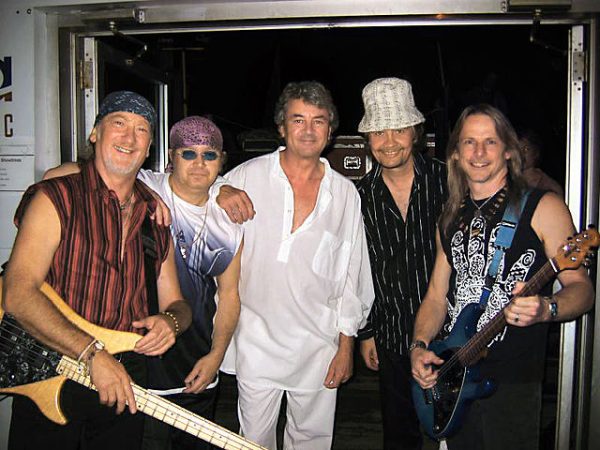
Members of Deep Purple
Every lineup from Mark I through to the current band, with the full story of the personnel changes that shaped their career.
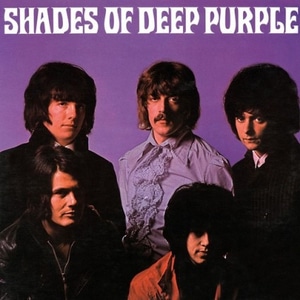
Deep Purple Hush 1968
The full story of the song that launched Deep Purple in America and still anchors their live set more than five decades later.
The Shades of Deep Purple album review ends where it must: with an acknowledgment that this record is not the band at their peak, but it is the band at their beginning, and no beginning in hard rock history was more consequential than this one.