

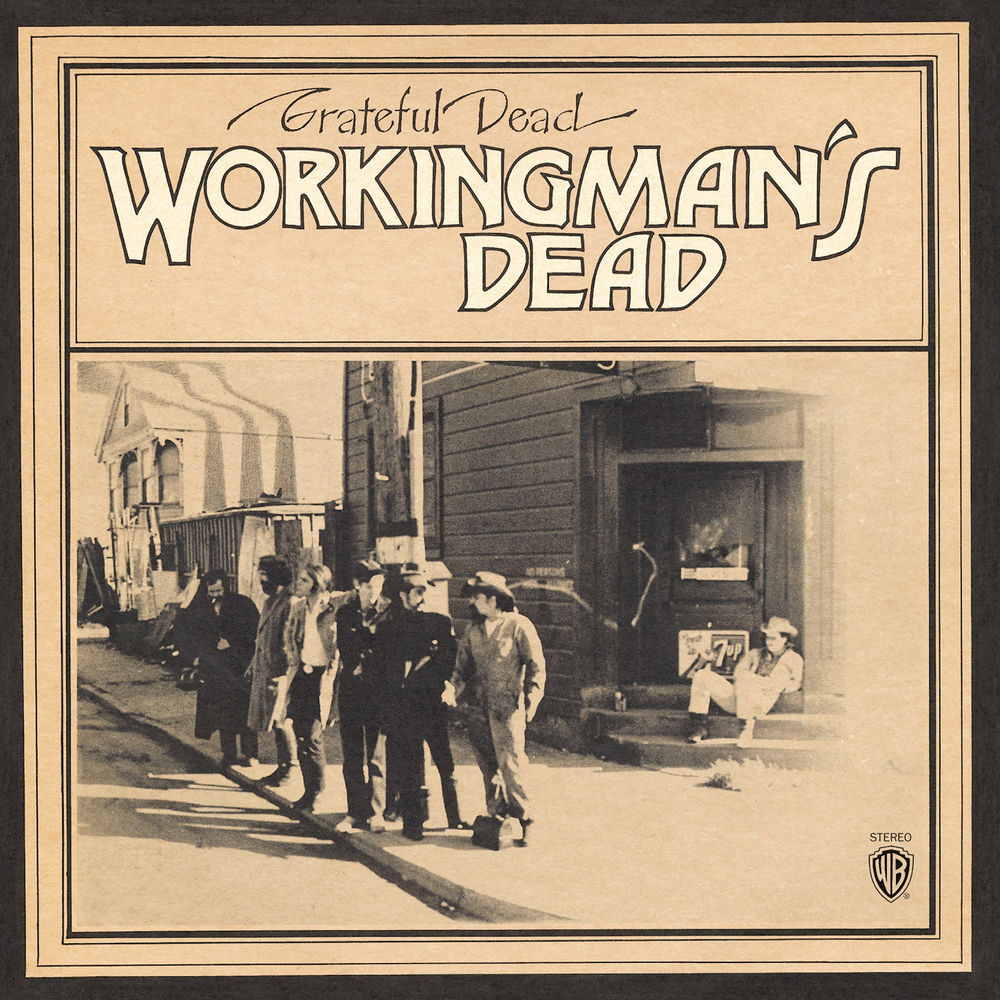
Casey Jones by the Grateful Dead was released in 1970 on the album Workingman’s Dead and became one of the band’s most commercially successful and widely recognized tracks, introducing the group to a broad mainstream audience that their earlier experimental recordings had not reached.
Affiliate Disclosure: I am an Amazon affiliate and if you purchase through any amazon links on this site i may earn a small commission at no extra charge to you.
Written by Jerry Garcia and Robert Hunter, the song tells the story of the legendary railroad engineer Casey Jones, whose determination to run his train on schedule became the subject of one of American folk music’s most enduring stories.
Produced by Bob Matthews and Betty Cantor, Casey Jones marked a significant shift toward tighter, more accessible songwriting that would define the Grateful Dead’s sound through the early 1970s.
| Song Title | Casey Jones |
| Artist | Grateful Dead |
| Album | Workingman’s Dead (1970) |
| Release Year | 1970 |
| Written By | Jerry Garcia, Robert Hunter |
| Producer | Bob Matthews, Betty Cantor |
| Label | Warner Bros. Records |
| Chart Peak | Did not chart as single |
Background and Meaning
The historical Casey Jones was a real railroad engineer named John Luther Jones who died in a train collision in 1900 while attempting to slow his locomotive to protect his passengers.
Hunter’s lyrics place the legendary figure in a new context, using the train as a central metaphor for momentum, ambition, and the consequences of pushing forward without caution.
Garcia’s melody draws on American country and folk traditions, giving the song a rootsy, approachable feel that contrasted sharply with the band’s more complex earlier recordings.
Workingman’s Dead as an album was deliberately stripped back compared to the Grateful Dead’s previous work, influenced in part by the harmony-focused recordings of Crosby, Stills and Nash.
Bob Weir, Phil Lesh, and Ron McKernan contribute vocal harmonies that reinforce the song’s connection to the acoustic folk and country sounds the band was exploring at the time.
Notable Lyrics
“Driving that train, high on cocaine / Casey Jones you better watch your speed.”
Hunter uses the image of the engineer at full throttle to convey reckless forward momentum, with the warning in the lyric reflecting both the physical danger of the train story and a broader message about the cost of unchecked speed.
“Trouble ahead, trouble behind / And you know that notion just crossed my mind.”
These lines capture the song’s central tension, the awareness of danger on both sides and the choice to press forward regardless, which mirrors the historical engineer’s final run.
Cultural Impact
It introduced the Grateful Dead to a much wider audience than they had previously reached, earning significant radio airplay and helping Workingman’s Dead become one of their best-selling records.
The song demonstrated that Garcia and Hunter were capable of writing tightly constructed, radio-friendly rock songs without sacrificing the character and storytelling depth that defined their best work.
Casey Jones became a concert staple, performed at hundreds of Grateful Dead shows over the following two decades, and it remains one of the most requested songs at tribute performances and Dead-related events today.
The track sits alongside Truckin’ as one of the two songs that most effectively represent the Grateful Dead’s accessible, song-oriented side to listeners who are new to their catalog.
Fun Facts
Workingman’s Dead was recorded in just three weeks, an unusually short timeframe for the band, and the tight schedule contributed to the album’s focused, economical sound.
Hunter wrote the lyrics in a concentrated session and later described the song as one of the more straightforwardly narrative pieces he produced for the band.
Garcia’s guitar playing on the track is notably restrained compared to his work on earlier albums, with every note serving the song’s forward momentum rather than exploring extended improvisation.
Why It Still Resonates
Casey Jones endures because it combines a genuinely compelling story with a melody and rhythm that make it immediately enjoyable, regardless of how familiar a listener is with the Grateful Dead.
The song’s themes of momentum, determination, and the fine line between confidence and recklessness are universal, connecting the old folk legend to experiences that feel entirely contemporary.
As one of the most approachable entries in the Grateful Dead’s catalog, Casey Jones continues to bring new listeners to a band whose full body of work rewards deep exploration.