

Here I Go Again Whitesnake is the song that turned a struggling British hard rock band into an American radio phenomenon.
David Coverdale and Bernie Marsden wrote it.
It first appeared as a minor UK hit in 1982.
Five years later it came back as a re-recorded single.
That version hit number one on the Billboard Hot 100 and became Whitesnake’s only US chart-topper.
This is the story of how one song survived a lineup collapse, a divorce, and a record label gamble to become one of the defining rock anthems of the 1980s.
Affiliate Disclosure: I am an Amazon affiliate and if you purchase through any amazon links on this site i may earn a small commission at no extra charge to you.
📋 Table of Contents [+]
⚡ Key Takeaways
- David Coverdale and Bernie Marsden wrote “Here I Go Again” in late 1981 about the breakdown of Coverdale’s first marriage.
- The original 1982 version on Saints & Sinners only reached number 34 on the UK Singles Chart.
- The re-recorded 1987 version hit number one on the Billboard Hot 100 on October 10, 1987, Whitesnake’s only US chart-topper.
- Model Tawny Kitaen starred in Marty Callner’s music video and later married David Coverdale in 1989.
- Bernie Marsden died on August 24, 2023, at age 72, still credited as co-writer on the song.
What Is Here I Go Again Whitesnake About?
Here I Go Again Whitesnake is a song about walking away from heartbreak.
David Coverdale wrote the lyrics while his first marriage to Julia Borkowski was falling apart.
The loneliness in the verses is real, not performed.
Most fans hear it as a triumphant anthem about self-reliance.
That reading comes from the soaring chorus and the line about being on his own.
Underneath the arena-sized production, though, it is a breakup song.
Coverdale wrote it as a man trying to convince himself he would be fine.
He has said the words came quickly once he sat down to write.
He channeled the exhaustion of a collapsing relationship into four short minutes.
Who Wrote Here I Go Again Whitesnake?
David Coverdale and guitarist Bernie Marsden wrote “Here I Go Again” together in late 1981.
Coverdale was in southern Portugal at the time.
The song reportedly came together in under an hour once he started writing.
Marsden built the earliest version as a simple two track demo.
He recorded it at his home in Buckingham.
The two men share the writing credit to this day.
That credit never changed, even after Marsden left the band in 1983.
Bernie Marsden died on August 24, 2023, at age 72.
He remained credited as co-writer on every version of the song, according to Bernie Marsden’s Wikipedia page.
Producer Martin Birch ran the original recording session.
Birch also worked with Ronnie James Dio in Rainbow around the same era.
The Original 1982 Version on Saints & Sinners
Whitesnake first released “Here I Go Again” on October 25, 1982, on the album Saints & Sinners.
That lineup featured David Coverdale on vocals.
Micky Moody and Bernie Marsden played guitars.
Neil Murray played bass and Ian Paice played drums.
Jon Lord added Hammond organ throughout the track.
The song was not released as a single in the United States at all in 1982.
In the UK it only reached number 34 on the Singles Chart.
It stayed on the chart for eleven weeks before fading.
It also charted modestly in Germany, peaking at number 51.
In Australia it peaked at number 53.
The original recording leaned harder into blues rock than the version most fans know today.
It was built around Jon Lord’s organ and a looser, more live feel.
Why Did Whitesnake Re-Record Here I Go Again in 1987?
Whitesnake re-recorded “Here I Go Again” because David Coverdale was dissatisfied with the original.
He wanted a version built for American radio.
Coverdale had already called Saints & Sinners a contractual obligation album.
He felt it was recorded under label pressure, not creative freedom.
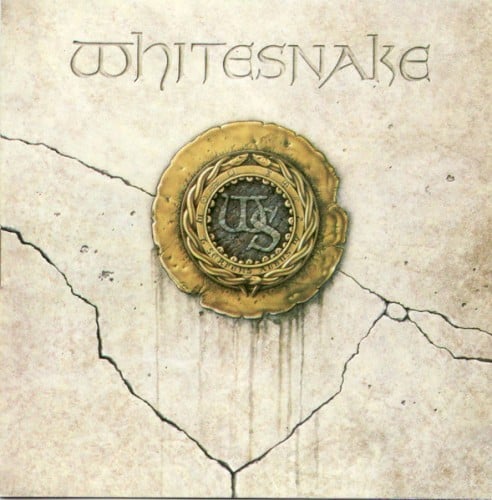
The band’s self-titled album came out in April 1987.
Several months later, Coverdale and Geffen Records agreed to remake the song as a single.
The new take opened with the verse riff instead of vocals over keyboards.
It leaned into a heavier, glossier production than the 1982 original.
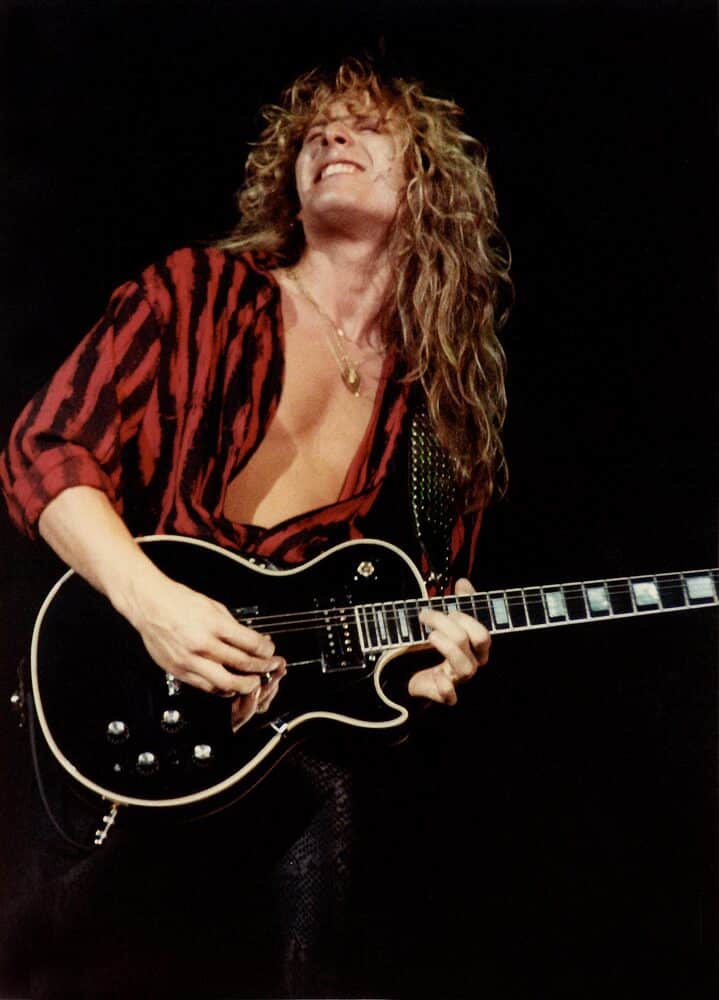
Guitarist John Sykes played rhythm guitar on the album track.
Adrian Vandenberg recorded a new guitar solo for the same version.
Neil Murray returned on bass for the re-recording.
Aynsley Dunbar played drums, with Don Airey and Bill Cuomo on keyboards.
A separate radio mix of the single used different session players entirely.
Denny Carmassi played drums, Dann Huff played guitar, and Mark Andes played bass on that mix.
That detail still surprises longtime fans who assume one lineup cut the whole thing.
Coverdale also changed one lyric for the new version.
He swapped the word “hobo” back to “drifter” to avoid any unintended reading.
How High Did Here I Go Again Whitesnake Chart?
Here I Go Again Whitesnake hit number one on the Billboard Hot 100 on October 10, 1987.
It remains the band’s only US number one single.
The single also topped Canada’s RPM Singles Chart on October 24, 1987.
In the UK, the re-released 1987 version climbed to number nine.
It reached that peak on November 28, 1987.
That was a huge jump from the original’s number 34 peak five years earlier.
It reached number four on the Billboard Mainstream Rock chart.
It hit number five on the Dutch Top 40 and number seven in Ireland.
New Zealand certified the single three times platinum.
That represents more than 90,000 units sold, according to Wikipedia’s chart data for the song.
In the UK, the British Phonographic Industry certified the 1982 version platinum for 600,000 units.
It certified the 1987 version silver for 200,000 units.
| Chart | 1982 Version | 1987 Version |
|---|---|---|
| US Billboard Hot 100 | Did not chart | No. 1 |
| UK Singles Chart | No. 34 | No. 9 |
| Canada (RPM) | Did not chart | No. 1 |
| Australia | No. 53 | Not listed |
Who Is the Woman in the Here I Go Again Whitesnake Video?
The woman in the Here I Go Again Whitesnake video is model and actress Tawny Kitaen.
She was filmed cartwheeling and dancing across the hoods of two Jaguars.
Director Marty Callner shot the 1987 video.
He paired performance footage of the band with Kitaen’s now iconic car sequence.
One Jaguar belonged to David Coverdale.
The other belonged to Callner himself, both parked hood to hood for the shoot.
Kitaen and Coverdale began dating around the time of the video.
They married in 1989, though the marriage ended in 1991.
MTV put the video into heavy rotation through 1987.
It became one of the defining images of the hair metal era.
The New York Times listed it among its “15 Essential Hair-Metal Videos” in a 2020 retrospective.
What Is the Legacy of Here I Go Again Whitesnake?
Here I Go Again Whitesnake is widely ranked among the defining rock singles of the 1980s.
VH1 placed it at number 17 on its “100 Greatest Songs of the ’80s” list in 2006.
A 2012 Rolling Stone readers’ poll ranked it number nine on its best hair metal songs list.
BMI gave the song a “5 Million Performances Award” in 2018.
BMI followed that with a “9 Million-Air Award” in 2024 for continued radio and streaming play.
The song has also drawn cover versions over the years.
Frash released a dance take in 1995, and Mandaryna released a pop version in 2004 that became a hit in Poland.
Nearly forty years after the 1987 re-recording, the song still closes out classic rock radio blocks.
It remains a fixture at karaoke nights across the country.
It is a cornerstone of the Whitesnake 1987 album.
It is the reason most casual fans know the band’s name at all.
Anyone exploring classic rock artists should hear both versions back to back.
That comparison shows how far a single re-recording can carry a career.
People Also Ask
What is the meaning behind “Here I Go Again” by Whitesnake?
“Here I Go Again” is about walking away from a broken relationship and choosing to move on alone, written by David Coverdale during the breakdown of his first marriage. Despite its anthemic, triumphant sound, the lyrics describe loneliness and uncertainty rather than victory. Coverdale wrote it quickly in late 1981 while processing the end of his marriage to Julia Borkowski.
Why are there two different versions of “Here I Go Again”?
Whitesnake released the song twice because the 1982 original, from Saints & Sinners, underperformed commercially and never charted in the United States. David Coverdale had the band re-record it in 1987 with a heavier, more radio friendly production for their self-titled album. The 1987 version became a worldwide hit, while the 1982 version remains a deeper cut known mainly to longtime fans.
Who played guitar on “Here I Go Again”?
Bernie Marsden and Micky Moody played guitar on the 1982 original recording. On the 1987 re-recording, John Sykes played rhythm guitar on the album track while Adrian Vandenberg recorded the guitar solo, and a separate radio single mix used session guitarist Dann Huff.
Was “Here I Go Again” Whitesnake’s only number one hit?
Yes, “Here I Go Again” is Whitesnake’s only single to reach number one on the Billboard Hot 100, hitting the top spot on October 10, 1987. It also reached number one on Canada’s RPM Singles Chart that same month. No other Whitesnake single has matched that chart position in the United States.
Who is the woman dancing on the cars in the “Here I Go Again” video?
The woman in the 1987 music video is Tawny Kitaen, a model and actress who danced and cartwheeled across two Jaguars parked hood to hood. Director Marty Callner cast Kitaen for the shoot, and she began a relationship with David Coverdale that led to their 1989 marriage. The video became one of the most recognized images of 1980s hard rock.
Watch the Here I Go Again Whitesnake Video
More Whitesnake Albums to Own

Whitesnake
1987
The self-titled album featuring the re-recorded “Here I Go Again.”
Also home to “Is This Love” and “Still of the Night.”

Saints & Sinners
1982
The original recording of “Here I Go Again,” blues rock roots and all.
Features the Marsden and Moody guitar lineup.

Slide It In
1984
The transitional album that set up Whitesnake’s American breakthrough.
John Sykes’ first full studio album with the band.

Slip of the Tongue
1989
The follow-up album, built on the momentum “Here I Go Again” created.
Steve Vai’s studio debut with Whitesnake.
You Might Also Like
Motley Crue: Kickstart My Heart (1989)
Another 1980s hard rock single built around a real-life near-death experience turned into arena-ready redemption.
Def Leppard: Pour Some Sugar on Me (1987)
Released the same year, it shows how radio-ready production reshaped hard rock’s biggest hits in 1987.
The Flame by Cheap Trick (1988)
A fellow number one power ballad from the same era, proving raw emotion could still top the charts.
When I See You Smile (1989): Bad English’s Power Ballad Hit
Another late-80s hard rock band that found its biggest chart success with a softer, more vulnerable single.
Here I Go Again Whitesnake stands as proof that a song does not have to succeed the first time to become iconic.
The 1982 version came and went with barely a ripple.
The 1987 re-recording turned it into the defining moment of David Coverdale’s career.
It remains a permanent fixture on classic rock radio.
Readers exploring more of the era’s biggest classic rock artists should give both versions a listen.
Read more about the band’s full history on the Members of Whitesnake page.
Revisit the song that started it all with Here I Go Again Whitesnake.
Last updated: September 9, 2026