

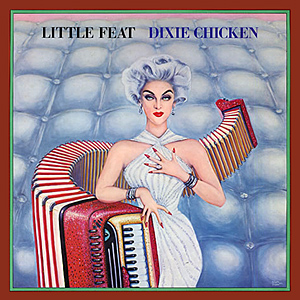
Dixie Chicken by Little Feat is one of the finest and most soulful pieces of American music from the 1970s, a blues-soaked New Orleans shuffle written by Lowell George and Martin Kibbee that has aged into a genuine classic.
Appearing on the band’s third studio album of the same name in 1973, the song became Little Feat’s most beloved recording even though it failed to chart as a single, building its reputation entirely through live performance, critical praise, and the devotion of a loyal audience.
Affiliate Disclosure: I am an Amazon affiliate and if you purchase through any amazon links on this site i may earn a small commission at no extra charge to you.
The song represents everything that made Little Feat unique, a band that combined Southern rock, New Orleans R&B, country, and California rock into a hybrid sound that belonged to no single tradition and was better than any of them in isolation.
| Song Title | Dixie Chicken |
| Artist | Little Feat |
| Album | Dixie Chicken (1973) |
| Released | 1973 (album track) |
| Written By | Lowell George, Martin Kibbee |
| Producer | Lowell George |
| Label | Warner Bros. Records |
| Chart Peak | Did not chart as a single; became a classic rock radio staple |
Table of Contents
- What Is Dixie Chicken About?
- The Vibe: Genre, Mood, and Search Intent
- Behind the Lyrics: The Story of Dixie Chicken
- Technical Corner: Instruments and Production
- Legacy and Charts: Why This Classic Still Matters
- Listener’s Note: A Personal Take
- Collector’s Corner: Own a Piece of Rock History
- Frequently Asked Questions About Dixie Chicken
What Is Dixie Chicken About?
The song is a blues narrative about a chance encounter in New Orleans, a man who meets a woman called the Dixie Chicken in a Memphis hotel and finds himself drawn into her world of easy pleasure and expensive consequence.
Lowell George and Martin Kibbee wrote the lyric in the tradition of the great blues cautionary tale, the story of a man seduced by something irresistible who ends up exactly where the story’s logic always promised he would.
The woman in the song is a force of nature rather than a character, embodying the pull of New Orleans itself, the city’s capacity to draw people in and transform them into something they did not plan to become.
The Vibe: Genre, Mood, and Search Intent
Dixie Chicken rolls on a New Orleans second-line shuffle groove that makes movement feel involuntary, the rhythm engaging the body before the mind has processed what is happening, which is exactly what the song’s lyric is describing.
- Genre: Blues Rock, Southern Rock, New Orleans R&B, Country Rock
- Mood: Soulful, Seductive, Laid-back
- Tempo: Midtempo shuffle (~100 BPM)
- Best For: Southern rock playlists, Americana collections, blues rock classics
- Similar To: Little Feat “Willin'”, Grateful Dead “Truckin'”, The Allman Brothers “Ramblin’ Man”
- Fans Also Search: Little Feat discography, Lowell George biography, New Orleans rock music
Behind the Lyrics: The Story of Dixie Chicken
Lowell George wrote it during the period when Little Feat were developing their distinctive hybrid sound in Los Angeles while drawing heavily on New Orleans musical traditions.
George was an obsessive student of Southern music in all its forms, from Zydeco to Delta blues to second-line brass band music, and the arrangements on this album reflect that depth of knowledge.
Martin Kibbee co-wrote the lyric with George, contributing to the story’s narrative structure and its balance of sensuality and consequence.
The third Little Feat album was produced by Lowell George himself, giving him complete creative control over the sound and allowing the band to record without the commercial pressure that had complicated their earlier releases.
The album was not a commercial success on release, failing to produce a chart single or a substantial hit album.
Little Feat’s reputation was built differently, through legendary live performances that attracted musicians and critics who heard something in the band that ordinary chart metrics could not measure.
This tune became the centrepiece of those live shows and gradually acquired the status of a classic rock standard through word of mouth and the devotion of musicians who covered it and named it as an influence.
Technical Corner: Instruments and Production
The shuffle groove of this track is built on Richie Hayward’s drumming, which channels the New Orleans second-line tradition with a looseness and swing unusual in a Los Angeles studio recording.
Roy Estrada’s bass lines follow the groove with a natural, conversational quality, leaving space around the notes that gives the rhythm its breathing room.
Lowell George’s slide guitar work on the track is some of the finest on any rock recording, using a glass bottleneck to produce lines that bend and sustain in ways a conventional fretting hand cannot achieve.
George’s guitar tone is warm and slightly compressed, sitting in the middle of the frequency range where it can be heard clearly without dominating the rhythm section or the keyboards.
Bill Payne’s piano and organ work gives the track its New Orleans character, playing the rolling, bluesy patterns that connect the song to the Crescent City tradition Lowell George was drawing on.
The horn arrangement adds to the New Orleans atmosphere without overwhelming the track’s more rock-oriented elements.
The production by Lowell George captures the band playing with a live ensemble feel, tracks bleeding together in a way that preserves the spontaneous quality of a great rehearsal performance.
Legacy and Charts: Why This Classic Still Matters
This classic did not chart as a single but became one of the most admired recordings in rock over the following decades, cited by musicians and critics as a model of how different American musical traditions could be combined without losing what made each of them special.
Lowell George’s slide guitar playing on the track has been cited as an influence by guitarists including Bonnie Raitt, who named him as one of her most important teachers.
Little Feat’s reputation as a live band was built substantially on live performances, which extended and transformed in concert into something different and larger than the studio recording could contain.
The song has been covered by artists across rock, country, and blues genres, and it appears on virtually every list of essential album tracks from the early 1970s.
After Lowell George’s death in 1979, the song became a tribute to his genius, a song that concentrated the best of what he brought to American music into seven minutes of irreplaceable recorded sound.
Rolling Stone and numerous rock publications have placed Lowell George among the greatest guitarists and songwriters of his generation, and Dixie Chicken is always the first song cited in support of that assessment.
Listener’s Note: A Personal Take
It is a song that sounds better the more you know about American music.
Heard with no context it is a great groove, soulful and rhythmically irresistible.
Heard knowing the New Orleans traditions it draws on, and the Little Feat approach to blending them, it becomes something genuinely remarkable.
Lowell George’s slide guitar is the sound that stays with you longest.
There is an expressiveness in his playing that feels personal rather than technical, each note the product of a specific intention rather than muscle memory.
The track is a reminder that the best rock and roll has always been a conversation between musical traditions, and that no single tradition was ever enough on its own.
Watch: Dixie Chicken by Little Feat
Collector’s Corner: Own a Piece of Rock History
Little Feat: Dixie Chicken (1973)
Own the album that gave the world this landmark track. Original Warner Bros. pressings and remastered editions available.
Frequently Asked Questions About Dixie Chicken
Who wrote Dixie Chicken?
It was written by Lowell George and Martin Kibbee of Little Feat. George also produced the album on which it appeared, his third studio release with the band.
What is Dixie Chicken about?
The song is a blues narrative about a man who encounters a seductive woman in New Orleans and becomes entangled in her world. The lyric follows the tradition of the blues cautionary tale, a story of temptation and its inevitable consequences.
Did Dixie Chicken chart?
No, it did not chart as a single and the album it came from was not a major commercial success at the time of release. Little Feat’s reputation was built through live performance and critical recognition rather than chart success.
What album is Dixie Chicken on?
This track is on Little Feat’s self-titled third album, released by Warner Bros. Records in 1973. The album is now considered one of the finest American rock recordings of the decade.
Who produced the album?
The album was produced by Lowell George, who produced the entire third Little Feat album. His production approach emphasised the band’s live ensemble feel and the New Orleans musical traditions that informed the recording.
What makes Lowell George’s guitar playing distinctive?
Lowell George was renowned for his slide guitar technique, using a glass bottleneck to produce notes with a singing, vocal quality that set him apart from most rock guitarists. His tone and phrasing on Dixie Chicken are considered among the finest examples of blues rock slide playing on record.
Why did Little Feat not achieve more commercial success?
Little Feat’s music was difficult to categorise and their sound was too eclectic for easy radio formatting. Their strengths, complex grooves, sophisticated arrangements, and Lowell George’s idiosyncratic writing, were precisely the qualities that made them hard to market to mainstream audiences.
Is the song still performed live?
Yes. The track remains a centrepiece of Little Feat’s live performances. The band has continued to perform after Lowell George’s death in 1979 with Bill Payne leading, and Dixie Chicken is always the song most closely associated with the band’s legacy.
You Might Also Like
The Allman Brothers Band: Ramblin’ Man (1973)
From the same year as Dixie Chicken, Ramblin’ Man shares its Southern roots and its gift for combining blues, country, and rock into something genuinely American and genuinely great.
Grateful Dead: Truckin’ (1970)
The Grateful Dead shared Little Feat’s audience and their love of road songs and American musical synthesis. Truckin’ and this track together define the spirit of early 1970s California rock with a Southern accent.
Carlos Santana: Oye Como Va (1970)
Like this track, Oye Como Va is the work of a band that treated musical tradition as raw material rather than constraint, creating something entirely their own from elements that had never been combined in quite that way before.
Decades on, Dixie Chicken by Little Feat endures as one of the greatest songs in classic rock history, a recording that has outlasted trends and generations to remain as vital and exciting as the day it was made.