

Members of Jefferson Airplane: Complete Story & Where Are They Now
From 1965 to today, the story of Jefferson Airplane members reads like a classic rock odyssey filled with revolutionary music, dramatic lineup changes, and the lasting impact of counterculture heroes.
Whether you’re curious about the original members, the additions that transformed their sound, or where these pioneers ended up, this complete guide reveals the full story behind one of music’s most influential classic rock bands.
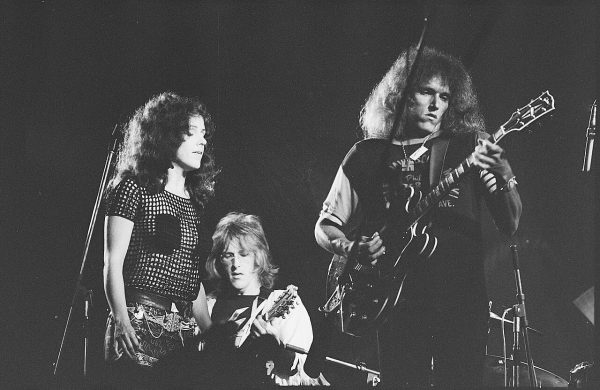
Image credit: Wikimedia Commons
📋 Table of Contents [+]
The Original Members of Jefferson Airplane
Balin recruited Paul Kantner as rhythm guitarist and vocalist, bringing together two visionaries who shared a passion for pushing musical boundaries.
The original members of Jefferson Airplane included lead guitarist Jorma Kaukonen, vocalist Signe Toly Anderson, bassist Bob Harvey, and drummer Jerry Peloquin.
This initial configuration lasted only weeks before the first changes began reshaping the band’s destiny.
💡 Did You Know?
The band’s name came from Jorma Kaukonen’s blues playing days when he was nicknamed “Blind Thomas Jefferson Airplane.” The quirky moniker would become synonymous with San Francisco’s psychedelic revolution.
Marty Balin’s Role in Formation
Before forming Jefferson Airplane, Balin had recorded two unsuccessful singles for Challenge Records and performed with the folk quartet The Town Criers from 1963 to 1964.
His vision for Jefferson Airplane was to create a folk-rock fusion that captured the energy sweeping through San Francisco’s music scene following the success of The Beatles and The Byrds.
Balin’s smooth vocal style and ballad-oriented songwriting would later create tension within the band as other members gravitated toward harder-edged psychedelic rock.
Early Musical Background of Key Members
Kaukonen had already established himself as a skilled fingerstyle guitarist in the blues tradition before joining Jefferson Airplane.
Jack Casady replaced original bassist Bob Harvey before the end of 1965, bringing his innovative approach to electric bass that would redefine the instrument’s role in rock music.
Skip Spence joined as drummer after Jerry Peloquin’s early departure, despite having no drumming experience; he would later found the legendary band Moby Grape after leaving Jefferson Airplane.
Signe Toly Anderson brought her folk purity and ethereal vocals to the band, discovered by Balin while singing at The Drinking Gourd bar in San Francisco.
🎸 Discover Jefferson Airplane’s Classic Albums 🎵
Experience the revolutionary sound that defined a generation. Check out our curated collection of essential Jefferson Airplane albums below! 🛒
🎤 Shop Classic Albums NowJefferson Airplane Lineup Changes Through the Years
The most pivotal change occurred in October 1966 when Grace Slick replaced Signe Anderson after she left to focus on motherhood.
Slick brought with her two songs that would become iconic anthems of the 1960s counterculture: “White Rabbit” and “Somebody to Love.”
Drummer Spencer Dryden had replaced Skip Spence in May 1966, completing the classic lineup that would be inducted into the Rock and Roll Hall of Fame in 1996.
💡 Did You Know?
Grace Slick wrote “White Rabbit” in just one hour while with her previous band, The Great Society. The song’s Spanish march tempo was inspired by Miles Davis and Gil Evans’ “Sketches of Spain” album, not Lewis Carroll’s Alice in Wonderland as many assume.
The Departure of Signe Anderson and Skip Spence
Her departure was amicable, driven by her desire to focus on her newborn daughter rather than the demanding touring schedule of a rising rock band.
Anderson’s ethereal folk vocals had helped establish the band’s initial sound, but her exit paved the way for a dramatic shift in the band’s musical direction.
Skip Spence, who had joined as drummer despite having no previous drumming experience, also left in 1966 to form Moby Grape, where he would showcase his true talents as a guitarist and songwriter.
His replacement, Spencer Dryden, brought a more aggressive and psychedelic approach to drumming that perfectly complemented the band’s evolving sound.
New Blood: Later Members Who Joined
Spencer Dryden’s Exit: In February 1970, Dryden was dismissed by unanimous vote of the other members due to political differences and burnout from years on what he called the “acid merry-go-round.”
Joey Covington replaced Dryden on drums, having previously contributed percussion to the 1969 album Volunteers.
Papa John Creach, a veteran jazz violinist, officially joined in October 1970, adding a unique dimension to Jefferson Airplane’s sound during their final years.
After Balin’s departure in April 1971, David Freiberg from Quicksilver Messenger Service joined for the Long John Silver tour as Balin’s replacement.
John Barbata replaced Covington in April 1972, becoming the final drummer for the original Jefferson Airplane before the band’s dissolution later that year.
Where Are the Members of Jefferson Airplane Today?
The band has suffered significant losses over the years, with several founding members passing away.
Spencer Dryden died from colon cancer in 2005, while both Paul Kantner and Signe Toly Anderson passed away on the same day, January 28, 2016, from a heart attack and COPD respectively.
Marty Balin, the band’s founder, died on September 27, 2018, leaving behind a profound musical legacy.
💡 Did You Know?
Jefferson Airplane was the only band to perform at all three iconic rock festivals of the 1960s: Monterey Pop, Woodstock, and Altamont. At Woodstock, they waited 17 hours to take the stage, finally performing at 7:00 AM on Sunday morning after partying hard throughout the night.
Grace Slick: Artistic Retirement in Malibu
The iconic vocalist lives by the ocean in Malibu, California, where she has pursued a successful career as a visual artist, focusing on painting and drawing.
Her reasoning for retirement was characteristically blunt: she felt distant from the rock world and believed performing past age 50 was inappropriate for a rock musician.
Slick struggled with alcohol dependency throughout the 1970s and early 1980s, leading to her temporary removal from Jefferson Starship in 1978 after a disastrous performance in Germany resulted in fans burning the stage.
She returned to music in 1981 after achieving sobriety and continued performing until her final retirement in 1990.
Recent appearances: In 2022, Slick made a rare public appearance for the unveiling of Jefferson Airplane’s star on the Hollywood Walk of Fame, demonstrating her lasting connection to the band’s legacy.
Throughout her career with Jefferson Airplane, Jefferson Starship, and Starship, Slick achieved multiple gold and platinum records and numerous Top 40 hits, cementing her status as one of rock’s pioneering women.
Jorma Kaukonen: Still Touring with Hot Tuna
Hot Tuna’s endurance: The side project Kaukonen formed with Jack Casady in 1969 has continued for an remarkable 55 years as of 2024, outlasting Jefferson Airplane by decades.
Kaukonen owns and operates Fur Peace Ranch, a guitar camp in eastern Ohio where he teaches guitar workshops and hosts intimate concerts, sharing his expertise with students from around the world.
His 2018 autobiography, Been So Long: My Life and Music, published by St. Martin’s Press, provides an intimate look at his journey through rock history.
Current touring schedule: As of January 2026, Kaukonen maintains an active performance schedule with shows booked throughout the United States, often performing both solo acoustic sets and electric performances with Hot Tuna.
Rolling Stone magazine ranked Kaukonen No. 54 on its list of “100 Greatest Guitarists,” recognizing his innovative fingerpicking style and blues mastery.
He endorses Martin Guitars, which released the Martin M-30 Jorma Kaukonen Custom Artist Edition in 2010, honoring his distinctive playing style.
Recent Hot Tuna performances showcase the original acoustic duo format with Kaukonen and Casady, demonstrating the chemistry that has sustained their partnership for over five decades.
Jack Casady: Bass Innovation Continues
Signature bass evolution: In August 2024, Epiphone released the Jack Casady Fretless Bass, marking a significant expansion of Casady’s signature instrument line.
The new fretless model represents years of experimentation to achieve superior electric tone combined with the response characteristics of an acoustic bass.
Design features: The Jack Casady Signature Bass features his custom-designed JCB-1 Low-Impedance Humbucker pickup and a three-position rotary impedance control, offering bassists unprecedented tonal versatility.
Casady continues touring extensively with Hot Tuna alongside his childhood friend Jorma Kaukonen, maintaining the musical partnership that began in 1958 in Washington, D.C.
His innovative bass playing liberated the instrument from its traditional rhythm section role, bringing it to the forefront of rock music with melodic lines and countermelodies.
Solo work: Casady released his solo album Dream Factor, featuring collaborations with Warren Haynes, Ivan Neville, and other acclaimed musicians, showcasing his signature sound across blues, rock, country, and funk influences.
The latest Hot Tuna album, Steady As She Goes, was recorded at Levon Helm’s studio with Grammy-winning producer Larry Campbell, capturing the energy of their legendary live performances.
Epiphone proudly maintains the longest signature artist partnership in its 150-year history with Casady, recognizing his enduring influence on bass guitar design and performance.
🎵 Complete Your Jefferson Airplane Collection 🎸
From psychedelic masterpieces to live recordings, explore the essential albums that defined an era. Get yours now! 🛒
🎤 Browse Albums BelowMusical Legacy of Jefferson Airplane Members
Jefferson Airplane became the first San Francisco-based band to land a major label contract, paving the way for other Bay Area acts.
Their 1967 album Surrealistic Pillow produced two Top Ten singles and drew hordes of fans to San Francisco’s Summer of Love pageantry.
Cultural impact: The band’s biting political lyrics and hallucinogenic titles made them important voices for social change during turbulent times.
Jefferson Airplane was inducted into the Rock and Roll Hall of Fame in 1996, with the ceremony featuring performances by the surviving members.
In 2016, the band received a Grammy Lifetime Achievement Award, recognizing their enduring influence on American music.
The U.S. Postal Service issued a commemorative stamp featuring Jefferson Airplane in 2024, cementing their place in American cultural history.
💡 Did You Know?
At the infamous Altamont Free Concert in December 1969, Marty Balin was knocked unconscious by a Hells Angel while trying to help a fan being harassed. The violent incident, which included the fatal stabbing of Meredith Hunter, marked a dark end to the idealistic 1960s and profoundly affected the band’s trajectory.
Songwriting Contributions by Each Member
Paul Kantner’s vision: Kantner explored science-fiction themes in his songwriting, beginning with “Have You Seen the Saucers?” and continuing through his solo work and Jefferson Starship material.
His 1970 album Blows Against the Empire is considered the first science-fiction concept album in rock history.
Marty Balin’s ballads: Balin contributed romantic, melody-driven songs that balanced the band’s harder psychedelic edge, including the Jefferson Starship hit “Miracles.”
Jorma Kaukonen’s blues: Kaukonen’s instrumental “Embryonic Journey” from Surrealistic Pillow showcased his acoustic fingerpicking mastery and became a guitar standard.
Collaborative magic: The interplay between Kantner, Slick, and Balin on vocals created the distinctive three-part harmonies that set Jefferson Airplane apart from contemporaries.
Songs like “Wooden Ships,” co-written by Kantner with David Crosby and Stephen Stills, demonstrated the band’s connections across the San Francisco music scene.
Post-Band Success Stories
Hot Tuna’s longevity: Kaukonen and Casady’s side project outlasted Jefferson Airplane by decades, releasing over 20 studio and live albums since 1970.
The acoustic duo configuration allowed them to explore blues, folk, and Americana traditions in depth, building a devoted following separate from Jefferson Airplane fans.
Starship’s 1980s hits: After Kantner’s departure, the band renamed itself Starship and scored three chart-topping hits: “We Built This City,” “Sara,” and “Nothing’s Gonna Stop Us Now.”
Grace Slick’s solo career: Her solo albums including Manhole, Dreams, and Welcome to the Wrecking Ball! showcased her artistic vision beyond the band context, with Dreams earning a Grammy nomination.
Paul Kantner’s continued leadership: After the 1989 reunion, Kantner launched a new version of Jefferson Starship in 1992 that continued performing until his death in 2016.
The current Jefferson Starship lineup, featuring David Freiberg, continues touring, keeping the band’s legacy alive for new generations.
Essential Jefferson Airplane Albums Featuring Different Lineups
🎸 JEFFERSON AIRPLANE ESSENTIAL ALBUMS 🎵

Jefferson Airplane Takes Off (1966)
The debut that started it all
Featuring: Marty Balin, Paul Kantner, Jorma Kaukonen, Signe Toly Anderson, Jack Casady, Skip Spence.
This album captures the band’s folk-rock roots before Grace Slick’s arrival transformed their sound.
While not as commercially successful as later releases, it established Jefferson Airplane as pioneers of the San Francisco sound.
The original lineup’s chemistry shines through on tracks that blend folk sensibilities with emerging psychedelic elements.

Surrealistic Pillow (1967)
The breakthrough masterpiece
Featuring: Marty Balin, Paul Kantner, Grace Slick, Jorma Kaukonen, Jack Casady, Spencer Dryden.
Grace Slick’s debut with Jefferson Airplane produced two Top 10 hits that defined the Summer of Love.
Her powerful vocals on “White Rabbit” and “Somebody to Love” catapulted the band to international stardom.
This album established Jefferson Airplane as leaders of the psychedelic revolution and remains their most influential work.

After Bathing At Baxter’s (1967)
Experimental psychedelia at its peak
Featuring: The classic lineup pushing boundaries.
This ambitious follow-up to Surrealistic Pillow showcased Jefferson Airplane at their most experimental.
Extended jams and suite-like song structures demonstrated the band’s growing musical confidence and willingness to challenge commercial expectations.
While less commercially successful than its predecessor, it remains a favorite among classic rock artists for its adventurous spirit.

Crown of Creation (1968)
Bittersweet brilliance emerges
Featuring: The band at their creative peak before fractures appeared.
Released as Haight-Ashbury’s idealism crumbled under commercialism and crime, this album reflected the counterculture’s dark underbelly.
Reaching No. 6 on the charts despite lacking hit singles, it showcased mature songwriting from all members.
The title track became an anthem while the album captured the end of the Summer of Love’s innocence.

Bless Its Pointed Little Head (1969)
Live power unleashed
Featuring: The classic lineup in peak live form.
Recorded at the Fillmore West and Fillmore East, this live album captures Jefferson Airplane’s raw concert energy.
Extended improvisations showcase Casady’s thundering bass and Kaukonen’s blistering guitar work alongside the band’s signature three-part harmonies.
Considered the best document of their live approach, it demonstrates why they were one of the era’s most powerful concert acts.

Long John Silver (1972)
The final chapter begins
Featuring: Paul Kantner, Grace Slick, Jorma Kaukonen, Jack Casady, John Barbata, Papa John Creach, David Freiberg.
Recorded without founding member Marty Balin, this album marked the end of Jefferson Airplane’s original run.
The fractured band delivered one final statement before splitting into Hot Tuna and what would become Jefferson Starship.
Despite internal tensions, it contains strong material that hints at future directions for the surviving members.
💫 Supporting Classic Rock Content: When you purchase through these links, you help support ClassicRockArtists.com at no additional cost to you. Every album purchase allows us to continue bringing you in-depth articles about your favorite classic rock artists and bands. Rock on! 🎸
Frequently Asked Questions About Jefferson Airplane Members
Who were the original members of Jefferson Airplane?
The original members of Jefferson Airplane formed in mid-1965 and included founder Marty Balin on vocals and rhythm guitar, Paul Kantner on rhythm guitar and vocals, Jorma Kaukonen on lead guitar and vocals, Signe Toly Anderson on vocals, Bob Harvey on bass, and Jerry Peloquin on drums.
This initial lineup lasted only a few weeks before personnel changes began, with Skip Spence replacing Peloquin and Jack Casady replacing Harvey by the end of 1965.
Are any members of Jefferson Airplane still alive?
Three members from Jefferson Airplane’s classic lineup remain alive as of January 2026: Grace Slick (age 86), Jorma Kaukonen (age 85), and Jack Casady (age 81).
The band has lost several members over the years: Spencer Dryden died in 2005, Paul Kantner and Signe Toly Anderson both passed away on January 28, 2016, and Marty Balin died in 2018.
What are the members of Jefferson Airplane doing now?
Grace Slick retired from music in 1990 and now lives in Malibu, California, where she focuses on visual art and painting.
Jorma Kaukonen and Jack Casady continue performing together as Hot Tuna, a musical partnership that has lasted over 55 years since 1969.
Kaukonen also operates Fur Peace Ranch, a guitar camp in Ohio, while Casady continues innovating with his signature Epiphone bass designs.
Both musicians maintain active touring schedules and released their latest album, Steady As She Goes, demonstrating their enduring musical chemistry.
Why did Marty Balin leave Jefferson Airplane?
Marty Balin officially left Jefferson Airplane in April 1971 due to multiple factors including long-standing ego clashes with Paul Kantner and Grace Slick, differing lifestyle choices, and creative disagreements.
As the band’s musical direction shifted away from his ballad-oriented compositions toward harder psychedelic rock, Balin felt increasingly marginalized.
Following the traumatic events at Altamont and Janis Joplin’s death, Balin pursued a healthier lifestyle through yoga and abstention from drugs and alcohol, further distancing him from other band members whose substance use continued.
The polarized Kantner/Slick and Kaukonen/Casady cliques left Balin as the odd man out despite his status as founder.
How many members did Jefferson Airplane have?
Jefferson Airplane had 14 official members throughout its existence from 1965 to 1972.
The most famous lineup, inducted into the Rock and Roll Hall of Fame, consisted of six members: Marty Balin, Paul Kantner, Grace Slick, Jorma Kaukonen, Jack Casady, and Spencer Dryden.
This classic configuration lasted from October 1966 to February 1970 and produced the band’s most successful and influential albums.
After 1970, additional members including Joey Covington, Papa John Creach, David Freiberg, and John Barbata joined before the band effectively disbanded in 1972.
🎸 Explore More Classic Rock Legends
Want to discover more about the artists who shaped rock history? Check out our comprehensive articles on other legendary bands:
Final Thoughts
The members of Jefferson Airplane created a revolutionary sound that continues to influence musicians today.
From their 1965 formation through lineup changes, legendary albums, and the eventual transition to Jefferson Starship and Hot Tuna, these classic rock artists left an indelible mark on music history.
With Grace Slick’s retirement, Jorma Kaukonen and Jack Casady remain the last members actively performing, keeping the spirit of Jefferson Airplane alive through Hot Tuna’s continued touring and recording.
Their legacy endures not just in the iconic songs that defined the 1960s counterculture, but in the way they expanded the boundaries of what rock music could be, inspiring countless musicians across generations.
📢 Affiliate Disclosure
This article contains affiliate links to Amazon. As an Amazon Associate, I earn from qualifying purchases at no additional cost to you. This helps support ClassicRockArtists.com and allows me to continue bringing you classic rock content. All album recommendations are based on their musical merit and historical significance.
📚 Sources
- Jefferson Airplane – Wikipedia
- List of Jefferson Airplane members – Wikipedia
- Jefferson Airplane Official Website
- Jefferson Airplane – Britannica
- Jorma Kaukonen Official Website
- Jack Casady Official Website
- Grace Slick Official Website
- Bethel Woods Center – Jefferson Airplane: 50 Years of Peace & Music
Last updated: January 2, 2026
🎵 Stay Connected with Classic Rock
Explore more articles about your favorite bands and discover the stories behind the music that shaped generations.
#Tags
#MembersOfJeffersonAirplane #JeffersonAirplaneMembers #ClassicRock #RockHistory #JeffersonAirplane #RockLegends #ClassicRockArtists #RockBands #MusicHistory #VintageRock #RockStars #60sMusic #RockBiography #ClassicRockBands #MusicLegends #RockIcon