

Tom Sawyer by Rush is one of the most electrifying opening tracks in rock history, a synthesis of progressive ambition and hard rock power that announced the Moving Pictures era with a synthesizer cascade and a Neil Peart drum entrance that stopped listeners in their tracks when the album was released in February 1981.
Released as the lead single from Moving Pictures, Tom Sawyer reached number 44 on the US Billboard Hot 100 but grew into something far greater than its chart position suggested, becoming one of classic rock’s most enduring anthems through relentless radio play and the devotion of fans who recognised in it something no other band was making.
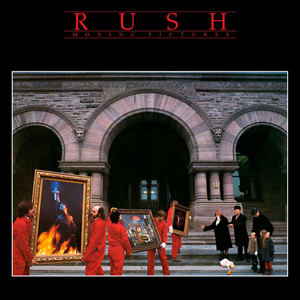
Affiliate Disclosure: I am an Amazon affiliate and if you purchase through any amazon links on this site i may earn a small commission at no extra charge to you.
Written by Geddy Lee, Alex Lifeson, Neil Peart, and lyricist Pye Dubois, Tom Sawyer represents the pinnacle of Rush’s creative confidence, a band that refused to simplify its music for commercial gain and built one of the most devoted fanbases in rock through sheer musical quality and ambition.
| Song Title | Tom Sawyer |
| Artist | Rush |
| Album | Moving Pictures (1981) |
| Released | 1981 (single) |
| Written By | Geddy Lee, Alex Lifeson, Neil Peart, Pye Dubois |
| Producer | Terry Brown, Rush |
| Label | Mercury Records |
| Chart Peak | #44 US Billboard Hot 100 |
Table of Contents
- What Is Tom Sawyer About?
- The Vibe: Genre, Mood, and Search Intent
- Behind the Lyrics: The Story of Tom Sawyer
- Technical Corner: Instruments and Production
- Legacy and Charts: Why This Classic Still Matters
- Listener’s Note: A Personal Take
- Watch: Tom Sawyer by Rush
- Collector’s Corner: Own a Piece of Rock History
- Frequently Asked Questions About Tom Sawyer
- You Might Also Like
What Is Tom Sawyer About?
Tom Sawyer is a philosophical portrait of the ideal modern individual, someone who refuses to be defined by others’ expectations or constrained by social convention, living entirely according to his own values in the face of a world that demands conformity.
The lyric draws on the spirit of Mark Twain’s fictional character while transforming him into a contemporary figure, a person of complete self-determination whose mind is not for rent to any god or government.
Neil Peart and Pye Dubois wrote the words as a statement about personal integrity and the courage required to live as an independent thinker, themes that resonated deeply with Rush’s fanbase of technically minded and philosophically inclined listeners.
The song does not tell a story in the conventional sense but presents a character study, a portrait of a type of consciousness rather than a narrative of events, which is one of the qualities that sets it apart from most rock songs of its era.
The Vibe: Genre, Mood, and Search Intent
The track opens with one of the most immediately recognisable synthesizer figures in rock, a cascading Oberheim synth sequence that distinguishes the track from every other hard rock record of its era before a note of guitar or bass has been heard.
- Genre: Progressive Rock, Hard Rock, Classic Rock
- Mood: Powerful, Philosophical, Electrifying
- Tempo: Midtempo with variable sections (~130 BPM)
- Best For: Progressive rock playlists, driving music, 1980s rock classics
- Similar To: Rush “Limelight”, Yes “Roundabout”, Led Zeppelin “Kashmir”
- Fans Also Search: Rush discography, Neil Peart drums, Moving Pictures album, Geddy Lee bass
Behind the Lyrics: The Story of Tom Sawyer
Tom Sawyer began as a poem written by Pye Dubois, a Canadian lyricist who had worked with Max Webster, a band that shared Rush’s Toronto rock scene in the late 1970s.
Neil Peart took Dubois’s original text and reworked it substantially, adding the philosophical precision and lyrical economy that had become his signature since joining Rush in 1974.
Geddy Lee and Alex Lifeson built the music around a riff that Lee had developed, incorporating the synthesizer opening that gave the track its futuristic character and distinguished it from anything Rush had recorded before.
The recording was made at Le Studio in Morin-Heights, Quebec, the facility that Rush used for several of their most important albums and which gave their recordings of this period a particular clarity and presence.
Moving Pictures was released in February 1981 and became Rush’s most commercially successful album, reaching the top five in both the US and the UK while topping the Canadian charts.
The album’s extraordinary reception established it as Rush’s signature recording, the track that most completely represented the band’s values and the first one cited whenever their legacy is discussed.
Technical Corner: Instruments and Production
The synthesizer introduction is played on an Oberheim OB-X polyphonic synthesizer by Geddy Lee, a figure so distinctive that it functions almost as a signature for both the song and the band.
Neil Peart’s drum performance is one of the most studied in rock, featuring patterns of rhythmic complexity that reward analysis while never losing the forward momentum that makes the song work as a physical experience.
Geddy Lee plays bass and Moog Taurus bass pedals simultaneously throughout the track, creating a low-frequency texture that gives the arrangement unusual heaviness without requiring a second player.
Alex Lifeson’s guitar work is characteristically precise and textured, building chord voicings and riff figures that complement the keyboard layers rather than competing with them for sonic space.
Terry Brown produced Moving Pictures with a transparent clarity that allowed every instrument to register distinctly, a significant achievement given the density of the arrangements and the simultaneous complexity of what each musician was doing.
The production captures Rush at a moment of complete technical mastery, a band that had spent a decade developing its collective abilities and arrived at the point where ambition and execution were perfectly matched.
Legacy and Charts: Why This Classic Still Matters
The track reached number 44 on the US Billboard Hot 100 in 1981, a chart performance that significantly understated its impact, given how consistently it has been played on classic rock radio in the four decades since.
The track has appeared in numerous films, television programmes, and video games, with its most prominent modern placement coming in Steven Spielberg’s 2018 film Ready Player One, which introduced it to a new generation of listeners.
Neil Peart’s extended drum sections in live performances became legendary over decades of touring, growing in complexity and duration and serving as one of the defining displays of drumming ability in rock history.
Rolling Stone ranked Peart among the greatest rock drummers of all time, and Tom Sawyer is consistently cited as the primary evidence for that assessment among the band’s recordings.
Rush was inducted into the Rock and Roll Hall of Fame in 2013, and Tom Sawyer featured prominently throughout the ceremony as the clearest expression of what distinguished the band from its contemporaries.
The track continues to attract new listeners through its presence in popular culture, and its combination of philosophical depth and musical power ensures it never sounds dated regardless of when it is encountered.
Listener’s Note: A Personal Take
What strikes me most after all these years of listening is how much is happening simultaneously and yet how coherent and purposeful the whole thing sounds.
Geddy Lee is playing bass lines and keyboard parts at the same time, Neil Peart is executing patterns of rhythmic complexity that most drummers could not follow, and Alex Lifeson is building guitar textures that support rather than compete with everything else in the arrangement.
None of this complexity feels self-indulgent because it serves the song’s philosophical declaration, a piece of music that argues by example that the disciplined development of individual skill can produce something genuinely irreplaceable.
The lyric says exactly what the music demonstrates, which is rarer than it should be in rock and roll.
Watch: Tom Sawyer by Rush
Collector’s Corner: Own a Piece of Rock History
Rush: Moving Pictures (1981)
Own the landmark album that gave the world Tom Sawyer. Original Mercury Records pressings, remastered editions, and anniversary releases available.
Frequently Asked Questions About Tom Sawyer
Who wrote Tom Sawyer?
Tom Sawyer was written by Geddy Lee, Alex Lifeson, Neil Peart, and lyricist Pye Dubois. Dubois wrote the original poem on which the lyric is based, and Peart reworked it into the philosophical statement that appears on the recording.
What is Tom Sawyer about?
Tom Sawyer is a portrait of the ideal modern individual, drawing on the spirit of Mark Twain’s character to describe someone who lives entirely by their own values and refuses to be constrained by social convention. The lyric explores themes of personal integrity and independent thought.
What album is Tom Sawyer on?
Tom Sawyer appears on Moving Pictures, Rush’s eighth studio album, released on Mercury Records in February 1981. Moving Pictures became Rush’s most commercially successful album, reaching the top five in both the US and the UK.
Did Tom Sawyer chart?
Tom Sawyer reached number 44 on the US Billboard Hot 100 in 1981, a modest chart performance that significantly underrepresented its cultural impact. The track became a cornerstone of classic rock radio and one of Rush’s most recognised recordings worldwide.
What synthesizer opens Tom Sawyer?
The opening synthesizer sequence is played on an Oberheim OB-X polyphonic synthesizer by Geddy Lee. The cascading figure that results is one of the most immediately recognisable synth passages in all of rock music.
Who produced Tom Sawyer?
Tom Sawyer was produced by Terry Brown and Rush. Brown had worked with the band since their early albums and was instrumental in developing the transparent, precise production style that characterises Moving Pictures.
Is Tom Sawyer still performed live?
Tom Sawyer has been performed at virtually every Rush concert since its release and remains the band’s signature live track. Neil Peart’s extended drum sections in live performances became one of the most celebrated features of any Rush show over four decades of touring.
What film featured Tom Sawyer prominently?
Tom Sawyer appeared prominently in Steven Spielberg’s 2018 film Ready Player One, introducing the song to a new generation of listeners and significantly boosting streaming numbers for Rush’s Moving Pictures album.
You Might Also Like
Rush: Limelight (1981)
From the same Moving Pictures album, Limelight shares its philosophical depth and musical precision, exploring the experience of fame and the tension between public performance and private identity.
Yes: Roundabout (1972)
The progressive rock landmark that proved technical complexity and popular appeal were not mutually exclusive, Roundabout and Tom Sawyer together define what progressive rock achieved at its highest level.
Led Zeppelin: Kashmir (1975)
The other great epic of 1970s rock that shared the song’s ambition and confidence in an audience capable of following music wherever it demanded, Kashmir is an essential companion to any appreciation of progressive hard rock.
Decades on, Tom Sawyer by Rush endures as one of the greatest songs in classic rock history, a recording that has outlasted trends and generations to remain as vital and exciting as the day it was made.