

1979 by The Smashing Pumpkins reached number twenty-four on the Billboard Hot 100 in 1996 and became one of the defining songs of the band’s commercial peak, setting itself apart from the heavier material on Mellon Collie and the Infinite Sadness with a hazy, drum-machine-driven texture that felt unlike anything else in the band’s catalog.
Written entirely by Billy Corgan and produced alongside Flood and Alan Moulder, the track built its emotional resonance on nostalgia rather than distortion, capturing the suspended quality of late adolescence before responsibility takes over.
Affiliate Disclosure: As an Amazon Associate I earn from qualifying purchases. This helps support the site at no extra cost to you.
| Song | 1979 |
| Artist | The Smashing Pumpkins |
| Album | Mellon Collie and the Infinite Sadness (1995) |
| Written by | Billy Corgan |
| Produced by | Flood, Alan Moulder, Billy Corgan |
| Released | 1995 |
| Genre | Alternative Rock, Dream Pop |
| Chart Peak | #12 UK Singles Chart, #24 US Billboard Hot 100 |
Table of Contents
Background and History
The Smashing Pumpkins formed in Chicago in 1988 and built their reputation on layered, distortion-heavy rock that combined guitar density with melodic accessibility.
By 1995, Billy Corgan had assembled a sprawling double album concept with Mellon Collie and the Infinite Sadness, a twenty-eight-track record divided into two halves representing dawn and dusk.
Most of the album leans into the band’s characteristic wall-of-guitars approach, making the inclusion of a drum-machine-driven, atmospheric track as a lead single an unexpected creative decision.
Corgan has described the year 1979 as representing a specific moment in his childhood: old enough to feel restless and aware, but not yet old enough to drive or leave, a state of motion without destination that defines early adolescence.
Drummer Jimmy Chamberlin plays on most of Mellon Collie, but 1979 relies on a programmed rhythm that removes the human pulse from the drumming, contributing to the song’s dreamlike quality.
1979 and the Recording Story
1979 opens with a sequenced synthesizer figure and a drum machine pattern that establishes the track’s lo-fi, suspended atmosphere before any melody appears.
Billy Corgan played the bass, guitar, and most of the instrumentation himself, a recording approach that gave the track a contained, self-contained quality distinct from the band’s usual collaborative arrangements.
Flood and Alan Moulder’s production kept the mix warm and compressed, giving the song a late-night quality that suited its subject matter of driving around in cars with no particular destination.
The vocal delivery is notably restrained for Corgan, who typically performed with more intensity and theatrical presence on the band’s heavier material.
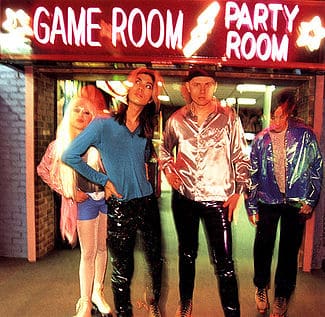
The music video, directed by Jonathan Dayton and Valerie Faris, reinforces the song’s aesthetic with footage of teenagers in cars at night, moving through suburban streets in a way that captures the mood of the song without illustrating its lyrics directly.
The contrast between this track and songs like “Bullet with Butterfly Wings” on the same album demonstrated that the band could operate across a wider emotional range than their earlier records had shown.
Billy Corgan has continued to discuss Mellon Collie as the album that defined the band’s peak, and 1979 remains the track he returns to most often as an example of what the record achieved at its most atmospheric.
1979 and Chart Performance
1979 reached number twelve on the UK Singles Chart and number twenty-four on the US Billboard Hot 100, performing well enough to sustain the album’s commercial momentum through its second single cycle.
Mellon Collie and the Infinite Sadness debuted at number one on the Billboard 200 and was certified ten times platinum in the United States, making it one of the best-selling albums of the decade.
The album won the Grammy Award for Best Alternative Music Album in 1996, placing the band at the center of alternative rock’s mainstream moment alongside Nirvana and R.E.M.
The song’s chart performance was modest compared to “Bullet with Butterfly Wings,” but its cultural footprint proved larger over time, becoming the track most associated with a specific emotional register the band captured uniquely.
Radio programmers placed it in heavier rotation than its chart peak suggested, and its presence on 90s compilation albums and playlists has kept it in consistent circulation for thirty years.
Lasting Legacy of 1979
1979 appears on virtually every compilation of essential 1990s alternative rock and is consistently cited as the song that best represents the band’s ability to work in a quieter emotional register.
Its use of programmed drums and lo-fi aesthetics placed it ahead of the indie rock production approach that would define much of the 2000s, making it a reference point for artists who wanted to capture suburban nostalgia in sonic form.
The song demonstrated that the Smashing Pumpkins were not simply a loud rock band, a quality that has kept their catalog relevant to listeners who might find the heavier material less accessible.
Its influence on dream pop and shoegaze-adjacent production is regularly cited by producers and artists working in those genres, who point to the drum machine pattern and warm compression as a template for a specific kind of nostalgic sound.
Alongside tracks like Wonderwall by Oasis and Losing My Religion by R.E.M., this track represents the moment when mid-90s alternative rock proved it could connect emotionally beyond the distortion and aggression that had defined its earlier commercial phase.
Three decades on, 1979 stands as the Smashing Pumpkins track most likely to bring back a specific, unnamed feeling to anyone who grew up in the 1990s, a measure of how precisely Billy Corgan captured something that resists more direct description.
Watch the Official Video
Frequently Asked Questions
FAQ
- Who wrote 1979?
- Billy Corgan wrote the song entirely by himself, also performing most of the instrumentation on the recording. The title refers to a specific year in his childhood that he associates with the feeling of restless early adolescence before adult responsibility begins.
- What album is it from?
- The song appears on Mellon Collie and the Infinite Sadness, the Smashing Pumpkins’ third studio album and a double record released in 1995. The album debuted at number one on the Billboard 200 and won the Grammy for Best Alternative Music Album.
- Why does it sound different from other Smashing Pumpkins songs?
- The track uses a programmed drum machine rather than live drumming from Jimmy Chamberlin, and Billy Corgan deliberately kept the production lo-fi and warm to match the song’s nostalgic subject matter, moving away from the band’s characteristic guitar-heavy sound.
- How did it perform on the charts?
- The song reached number twelve on the UK Singles Chart and number twenty-four on the US Billboard Hot 100, a strong performance for an atmospheric track on a double album that also contained more aggressive radio-ready singles.
- Who directed the music video?
- Jonathan Dayton and Valerie Faris directed the video, featuring footage of teenagers driving through suburban streets at night. The pair also directed several other Smashing Pumpkins videos during the Mellon Collie era.
You Might Also Like
Built on a drum machine pulse and Billy Corgan’s most restrained vocal performance, 1979 remains the Smashing Pumpkins track that captures the specific emotional texture of suspended adolescence most precisely, a song whose quiet power has outlasted most of the louder records that surrounded it.