

Stone Temple Pilots Lady Picture Show emerged in 1996 as a shimmering departure from the band’s grunge-heavy roots, showcasing a psychedelic glam rock sensibility that caught critics and fans off guard.
The track appeared on Tiny Music… Songs from the Vatican Gift Shop, an album that saw the band exploring the same sonic territory that Tumble in the Rough had hinted at two years earlier.
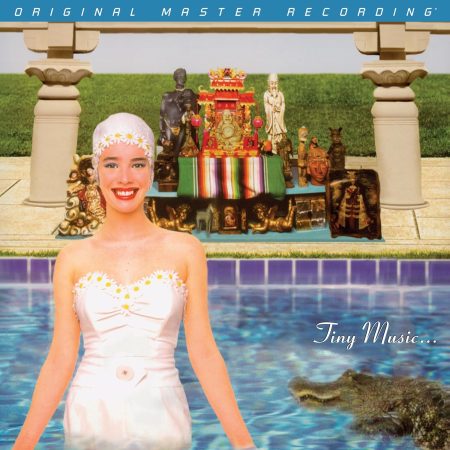
Stone Temple Pilots Lady Picture Show – Available on Amazon
Get Stone Temple Pilots Lady Picture Show (1996) on Amazon
Affiliate Disclosure: I am an Amazon affiliate and if you purchase through any Amazon links on this site I may earn a small commission at no extra charge to you. This helps support classicrockartists.com. Thank you for your support!
Quick Navigation
What is the meaning of Stone Temple Pilots Lady Picture Show?
The song explores themes of superficiality and the hollow nature of celebrity culture, with the “lady picture show” representing the manufactured images and personas that dominate media and entertainment, critiquing how society consumes and discards these carefully constructed illusions without recognizing the emptiness beneath the glamorous surface.
The Vibe: Genre, Mood, and Sound of Stone Temple Pilots Lady Picture Show
This track floats on a dreamy cloud of psychedelic rock with glam influences, creating an ethereal soundscape that feels both nostalgic and forward-thinking.
- Genre: Psychedelic rock, glam rock, alternative rock
- Mood: Dreamy, introspective, melancholic yet uplifting
- Tempo: Mid-tempo (approximately 92 BPM)
- Best For: Late-night drives, contemplative moments, vinyl listening sessions
- Similar To: T. Rex meets The Beatles‘ psychedelic era with a 90s alternative edge
Behind the Lyrics: The Story of Stone Temple Pilots Lady Picture Show
By 1996, Stone Temple Pilots had grown weary of being pigeonholed as just another grunge band.
Frontman Scott Weiland was diving deep into his love of 1970s glam rock, particularly David Bowie and Marc Bolan.
The band’s third album, Tiny Music… Songs from the Vatican Gift Shop, represented a conscious shift away from the heavy riffs that defined Stone Temple Pilots Sex Type Thing and toward a more experimental, melodic approach.
Weiland penned the lyrics during a period of personal turmoil, as his struggles with substance abuse were intensifying.
The “lady picture show” metaphor emerged from his observations of Hollywood’s obsession with image over substance.
He watched how the entertainment industry created and destroyed personas with equal efficiency.
The song’s narrator seems to be both participant and observer in this spectacle, simultaneously drawn to and repelled by the artifice.
Lines like “She’s a picture and you’re a photograph” suggest the difference between art and mere documentation, between substance and surface.
The band recorded the track during sessions at Southern Tracks Recording in Atlanta.
Producer Brendan O’Brien encouraged the band’s experimental impulses, allowing them to layer keyboards and unconventional guitar textures.
The album’s title itself reflected the band’s playful, irreverent attitude during this creative period.
According to various interviews, the Vatican Gift Shop reference came from the band’s fascination with religious kitsch and commercialized spirituality.
This thematic thread runs through Lady Picture Show, where spiritual emptiness masquerades as glamorous fulfillment.
The song’s bridge features Weiland’s falsetto reaching for something transcendent, a vocal technique he rarely employed on earlier albums.
This stylistic choice reinforced the track’s departure from the band’s established sound.
Technical Corner: The Gear Behind Stone Temple Pilots Lady Picture Show
Dean DeLeo Stone Temple Pilots guitarist crafted the song’s shimmering guitar tones using his signature Gibson Les Paul through a Marshall JCM800 head.
He employed a Electro-Harmonix Small Stone phaser to achieve the swirling, psychedelic textures that define the track’s sonic character.
The guitar work eschews the heavy distortion of earlier STP material in favor of cleaner, more articulate tones with subtle modulation effects.
Robert DeLeo Stone Temple Pilots bassist provided the melodic foundation with his Music Man StingRay bass, playing lines that function almost as a counter-melody to Weiland’s vocals.
His approach on this track demonstrates his jazz-influenced sensibility, with walking bass lines that add sophistication to the arrangement.
Robert also contributed keyboards to the recording, layering vintage organ sounds that evoke 1960s psychedelia.
Eric Kretz Stone Temple Pilots drummer played a Gretsch kit with a focus on groove rather than power, using brushes on certain sections to create a softer, more textured rhythmic bed.
His restraint on this track showcases his versatility beyond the thunderous approach heard on Stone Temple Pilots Vasoline.
Producer Brendan O’Brien utilized the studio’s Neve console to capture warm, analog tones that gave the track a vintage quality despite being recorded in the mid-1990s.
O’Brien’s production philosophy emphasized live performance energy, with minimal overdubs and a focus on capturing the band’s chemistry in real time.
The vocal chain featured a Neumann U87 microphone running through a vintage Universal Audio 1176 compressor.
Weiland’s layered harmonies were carefully arranged to create a choir-like effect during the chorus sections.
The mix placed the vocals slightly forward in the stereo field while allowing the instrumental elements to swirl around them in the panoramic space.
O’Brien added subtle tape saturation to give the entire recording a cohesive warmth that unified the diverse sonic elements.
Legacy and Charts: Why Stone Temple Pilots Lady Picture Show Still Matters
Lady Picture Show was released as the fourth single from Tiny Music… Songs from the Vatican Gift Shop in 1996.
The track reached number 10 on the Billboard Mainstream Rock Tracks chart, demonstrating the band’s ability to maintain commercial success while experimenting with their sound.
It peaked at number 11 on the Modern Rock Tracks chart, showing crossover appeal between rock radio formats.
The parent album achieved double platinum certification in the United States, selling over two million copies despite its departure from the grunge sound that had made the band famous.
In Canada, the album reached platinum status, and the single received significant airplay on alternative rock stations across the country.
The song’s influence can be heard in later alternative rock acts who blended psychedelic elements with modern production techniques.
Bands like The Dandy Warhols and The Brian Jonestown Massacre cited STP’s mid-period work as inspiration for their own retro-futuristic approaches.
The track appeared in several television shows during the late 1990s, though it never achieved the same level of mainstream media placement as the Interstate Love Song.
Music critics initially gave the song mixed reviews, with some praising the band’s evolution and others accusing them of abandoning their core sound.
Over time, however, Lady Picture Show has been reassessed as a bold artistic statement that showcased the band’s range and ambition.
The song remains a staple of STP’s live performances, often extended with improvisational sections that highlight the band’s musicianship.
Various tribute bands and cover artists have tackled the track, though few capture the delicate balance of psychedelia and rock that defines the original.
The song’s legacy lies in its demonstration that grunge-era bands could successfully evolve beyond the genre’s limitations without losing their identity.
It proved that Stone Temple Pilots were more than the sum of their influences, capable of synthesizing diverse musical traditions into something uniquely their own.
Listener’s Note: A Personal Take on Stone Temple Pilots Lady Picture Show
When I first heard this on vinyl in a friend’s basement in 1997, I was completely unprepared for how different it sounded from the STP I thought I knew.
The opening guitar shimmer came through the speakers like sunlight filtering through stained glass, immediately transporting me somewhere far from the heavy grunge I expected.
What struck me most was the space in the arrangement, the way each instrument had room to breathe and contribute its own melodic idea.
On headphones, the stereo panning reveals layers that casual listening might miss, particularly the subtle keyboard washes that drift in and out of the mix.
Weiland’s vocal performance here is among his most nuanced, eschewing the raw power of Stone Temple Pilots Creep for something more delicate and emotionally complex.
The moment at 2:34 when the bridge kicks in and his falsetto soars over the swirling guitars still gives me chills after hundreds of listens.
There’s a melancholy beauty to this track that reveals itself slowly, like a photograph developing in a darkroom.
The bass line deserves special mention for its melodic sophistication, functioning almost as a second lead instrument rather than mere rhythmic support.
I’ve played this song for friends who dismissed STP as derivative grunge, and it consistently changes their perception of what the band was capable of achieving.
The production holds up remarkably well nearly three decades later, sounding neither dated nor overly polished.
It’s the kind of track that rewards active listening, revealing new details with each spin.
On a proper turntable with decent speakers, the warmth of the analog recording becomes apparent, particularly in the midrange frequencies where Weiland’s voice sits.
This is music for contemplation rather than aggression, for introspection rather than rebellion.
You can watch the official video and hear the studio version at this YouTube link, though I still prefer the vinyl experience.
Affiliate Disclosure: I am an Amazon affiliate and if you purchase through any Amazon links on this site I may earn a small commission at no extra charge to you. This helps support classicrockartists.com and allows me to keep providing deep-dive content on the legends of rock. Thank you for your support!
Collector’s Corner: Own Stone Temple Pilots Lady Picture Show on Vinyl or CD
The original 1996 pressing of Tiny Music… Songs from the Vatican Gift Shop on vinyl has become increasingly sought after by collectors, particularly copies in near-mint condition with the original insert.
The album’s artwork and packaging reflect the psychedelic aesthetic that defines Lady Picture Show and the entire record.
Get Stone Temple Pilots Lady Picture Show (1996) on Amazon
Frequently Asked Questions About Stone Temple Pilots Lady Picture Show
What album is Lady Picture Show on?
Lady Picture Show appears on Stone Temple Pilots’ third studio album, Tiny Music… Songs from the Vatican Gift Shop, released on March 5, 1996.
The album marked a significant stylistic departure from the band’s earlier grunge-oriented sound.
It was the last STP album to feature the classic lineup before Scott Weiland’s personal struggles led to a temporary hiatus.
Who wrote Lady Picture Show?
The song was written collectively by all four members of Stone Temple Pilots: Scott Weiland, Dean DeLeo, Robert DeLeo, and Eric Kretz.
Weiland penned the lyrics while the DeLeo brothers crafted the musical arrangement.
This collaborative approach was typical of the band’s songwriting process throughout their career.
What genre is Lady Picture Show?
Lady Picture Show blends psychedelic rock with glam rock influences, incorporating elements of 1960s and 1970s classic rock.
The track features swirling guitar effects, melodic bass lines, and layered vocals that evoke artists like David Bowie and T. Rex.
It represents a significant departure from the alternative grunge sound that characterized the band’s earlier work.
Was Lady Picture Show a hit?
The song reached number 10 on the Billboard Mainstream Rock Tracks chart and number 11 on the Modern Rock Tracks chart in 1996.
While not as commercially successful as singles like Stone Temple Pilots Big Empty, it received substantial radio airplay on alternative and rock stations.
The track helped establish the band’s credibility as artists willing to take creative risks beyond their established formula.
You Might Also Like
Stone Temple Pilots Interstate Love Song (1994)
This earlier hit showcases the melodic sensibility that would fully blossom on Lady Picture Show two years later.
Stone Temple Pilots Wicked Garden (1992)
Hear where STP started with this debut single that established their heavy sound before the psychedelic evolution.
Stone Temple Pilots Tumble in the Rough (1994)
This Purple track foreshadowed the experimental direction that Lady Picture Show would take to its logical conclusion.
Stone Temple Pilots Lady Picture Show remains a testament to artistic evolution, proving that the best bands refuse to be confined by expectations or genre limitations.