

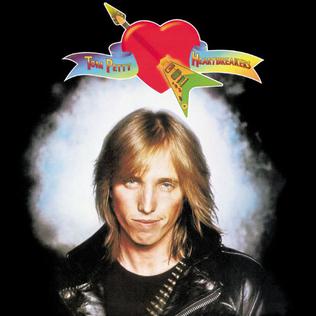
Breakdown by Tom Petty and the Heartbreakers is one of the most hypnotic and perfectly constructed rock songs of the 1970s, a track built on almost nothing and yet impossible to shake once it gets inside your head.
Released on the band’s self-titled debut album in 1976 on Shelter Records, Breakdown announced Tom Petty as a songwriter of rare instinct, someone who understood that restraint could be more powerful than any guitar solo.
Affiliate Disclosure: I am an Amazon affiliate and if you purchase through any amazon links on this site i may earn a small commission at no extra charge to you.
The track’s slow, coiled tension and Petty’s world-weary vocal made it an immediate standout, even if commercial success took a couple of years to catch up.
When it was re-released as a single in 1977 and then gained significant radio traction in 1978, it helped push the debut album to gold status and established the Heartbreakers as one of America’s most vital rock bands.
The song remains a cornerstone of Tom Petty’s catalogue and a textbook study in how silence and space can define a great rock recording.
Producer Denny Cordell and Tom Petty co-produced the debut together, and the chemistry between artist and producer is evident in every unhurried bar of this tune.
| Song Title | Breakdown |
| Artist | Tom Petty and the Heartbreakers |
| Album | Tom Petty and the Heartbreakers (1976) |
| Released | 1976 (album), 1977 (single) |
| Written By | Tom Petty |
| Producer | Denny Cordell, Tom Petty |
| Label | Shelter Records |
| Chart Peak | #40 US Billboard Hot 100 |
Table of Contents
- What Is Breakdown About?
- The Vibe: Genre, Mood, and Search Intent
- Behind the Lyrics: The Story of Breakdown
- Technical Corner: The Gear Behind Breakdown
- Legacy and Charts: Why Breakdown Still Matters
- Listener’s Note: A Personal Take on Breakdown
- Collector’s Corner: Own a Piece of Rock History
- Frequently Asked Questions About Breakdown
What Is Breakdown About?
It is a song about a relationship that has quietly fallen apart, told from the perspective of someone who is too tired to fight anymore and simply asks the other person to admit what they both already know.
Tom Petty wrote it with characteristic directness, keeping the lyric sparse and unsentimental, letting the mood of the music carry the emotional weight that the words deliberately hold back.
The word Breakdown itself functions as both a description of what is happening and a kind of exhausted resignation, a signal that the pretending is over.
The Vibe: Genre, Mood, and Search Intent
The groove moves at a slow, deliberate pace that feels less like a tempo and more like a state of mind, tightly wound but never hurried, with a guitar tone that buzzes just below the point of comfort.
- Genre: Heartland Rock, Classic Rock, Power Pop
- Mood: Tense, Weary, Resigned
- Tempo: Slow to midtempo (~80 BPM)
- Best For: Late-night listening, classic rock playlists, Tom Petty deep cuts
- Similar To: Tom Petty “American Girl”, Bob Seger “Night Moves”, Eagles “Peaceful Easy Feeling”
- Fans Also Search: Tom Petty Heartbreakers debut album, Breakdown live versions, Denny Cordell producer
Behind the Lyrics: The Story of Breakdown
Tom Petty wrote it during the early period when the Heartbreakers were developing their sound in Los Angeles after relocating from Gainesville, Florida.
The band had signed to Shelter Records, the label co-founded by Denny Cordell and Leon Russell, and were working on what would become their self-titled debut.
Petty was writing songs quickly during this period, and this song emerged from a straightforward observation about how relationships end not with confrontation but with quiet collapse.
The lyric is almost deliberately understated, which was already a Petty signature: say less, imply more.
When the debut album was released in November 1976, Breakdown stood out immediately as the track with the most commercial potential, but initial sales were modest.
The song gained real momentum only after the band toured relentlessly and radio began picking it up in 1977 and 1978, eventually sending the single to number 40 on the Billboard Hot 100.
For fans tracing the roots of American heartland rock, this tune sits at the origin point, the moment Tom Petty found the sound and the attitude he would carry through five decades of music.
Technical Corner: The Gear Behind Breakdown
The defining element is Mike Campbell’s guitar work, specifically the main riff, which is played on a Rickenbacker 12-string and run through a relatively clean amplifier setup that gives the tone its bright, slightly glassy character.
Campbell was already established as one of rock’s most tasteful lead guitarists, and his instinct on Breakdown was to use restraint as the primary tool.
The riff is simple enough to hum but executed with a control that makes it feel inevitable rather than repetitive.
Tom Petty played rhythm guitar and handled lead vocals, and his Fender Telecaster rhythm parts lock into the groove without ever overplaying.
The rhythm section of Stan Lynch on drums and Ron Blair on bass anchors the arrangement with deliberate economy, resisting the temptation to fill every gap.
Denny Cordell’s production philosophy on the debut was to capture the band live in the room as much as possible, and Breakdown benefits from that directness.
There is very little studio artifice in the recording, which is exactly why it sounds so honest and why it has aged so well.
Legacy and Charts: Why The Song Still Matters
This tune peaked at number 40 on the US Billboard Hot 100 in 1978, a modest chart position that does not reflect the song’s true cultural footprint.
It became one of the most played tracks on classic rock radio and helped build Tom Petty and the Heartbreakers’ reputation as a live band whose records captured something real.
The song has appeared in dozens of films and television shows over the decades, most famously in the 1986 film That Was Then, This Is Now, and its placement in American Gigolo helped bring the band to a wider audience in the late 1970s.
Tom Petty performed it live at virtually every concert throughout his career, often stretching it into an extended, hypnotic centerpiece.
The song also served as a calling card for the Heartbreakers’ tight, disciplined band dynamic, demonstrating that five musicians could create maximum tension through minimum means.
Rolling Stone consistently included it on lists of essential Tom Petty songs, and rock guitarists continue to cite Mike Campbell’s lead work as a model of restrained, purposeful playing.
Breakdown endures because it captures something universal in the plainest possible language, the quiet moment when something important finally stops working.
Listener’s Note: A Personal Take on This Song
There is a particular kind of quiet that settles into Breakdown about thirty seconds in, once the riff has established itself and Tom Petty’s voice enters, and it never quite leaves for the rest of the song.
That quality is rare.
Most classic rock from 1976 pushes, it wants to grab you by the collar and make sure you know it is there.
This tune does the opposite.
It creates a pocket and invites you into it, and once you are in, leaving feels like a bad idea.
What strikes me now is how much the song trusts the listener.
Petty does not explain the situation or dramatize it.
He states it flatly and lets the music do the grieving, which turns out to be far more effective than any amount of vocal theatrics could have been.
Watch: Breakdown by Tom Petty and the Heartbreakers
Collector’s Corner: Own a Piece of Rock History
Tom Petty and the Heartbreakers: Debut Album (1976)
Own the record that introduced the world to Breakdown. Original Shelter Records pressings, MCA reissues, and anniversary editions available.
Frequently Asked Questions About Breakdown
Who wrote Breakdown?
It was written by Tom Petty and appeared on the self-titled debut album by Tom Petty and the Heartbreakers, released on Shelter Records in November 1976.
What is Breakdown about?
This song is about a relationship that has silently fallen apart. The song’s narrator asks the other person to simply acknowledge what has already happened, describing the quiet resignation that comes at the end of something that cannot be saved.
How high did Breakdown chart?
It reached number 40 on the US Billboard Hot 100 in 1978. Although its chart peak was modest, the song became one of the most enduring tracks in Tom Petty’s catalogue and a staple of classic rock radio for decades.
Who produced Breakdown?
This tune was produced by Denny Cordell and Tom Petty. Cordell co-founded Shelter Records with Leon Russell and was known for his stripped-back, live-in-the-room production approach, which suited the honest, unadorned character of the song perfectly.
What guitar is used on this song?
Mike Campbell played the signature lead guitar riff on a Rickenbacker 12-string, contributing to the track’s bright, slightly metallic tone. Tom Petty played rhythm guitar on a Fender Telecaster. The combination gives the song its distinctive textured sound.
What album is Breakdown on?
It is on Tom Petty and the Heartbreakers’ self-titled debut album, released in November 1976 on Shelter Records. The album also contains American Girl and Rockin’ Around (With You), establishing the Heartbreakers as major forces in American rock.
Has Breakdown appeared in films or TV?
Yes. Breakdown has appeared in numerous films and television programmes. A notable early placement was in the 1980 film American Gigolo, which brought the Heartbreakers to a broader mainstream audience at a pivotal moment in the band’s rise to fame.
Did Tom Petty perform this tune live regularly?
Yes. Tom Petty performed Breakdown live at concerts throughout his entire career, from the early club shows in 1976 through to his final tours. It was a concert staple and one of the songs most closely associated with the Heartbreakers’ live reputation.
You Might Also Like
Tom Petty: American Girl (1976)
From the same debut album as Breakdown, American Girl is the other half of what made Tom Petty and the Heartbreakers an immediate classic rock force in 1976.
Eagles: Hotel California (1976)
Released the same year as Breakdown, Hotel California shared the same American rock landscape and the same instinct for building atmosphere through restrained, purposeful playing.
Bob Seger: Night Moves (1976)
Another 1976 heartland rock classic built on nostalgia and emotional honesty, Night Moves shares Breakdown’s ability to say something true in the simplest possible language.
Decades on, Breakdown by Tom Petty and the Heartbreakers remains one of the most quietly devastating songs in American rock, proof that knowing what to leave out is as important as knowing what to put in.