

Teach Your Children by Crosby, Stills, Nash and Young is one of the most warmly human songs in classic rock, a simple and profound message about the relationship between generations dressed in an arrangement so gentle it feels like a conversation rather than a performance.
Affiliate Disclosure: I am an Amazon affiliate and if you purchase through any amazon links on this site i may earn a small commission at no extra charge to you.
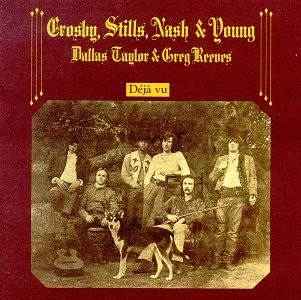
Released as a single in May 1970 from the landmark album Deja Vu, Teach Your Children became a top-twenty hit on the US Billboard Hot 100 and remains one of the most recognisable songs of the early 1970s folk rock movement.
The song features a pedal steel guitar part played by Jerry Garcia of the Grateful Dead, one of the most celebrated guest appearances in the history of classic rock recording.
Written by Graham Nash, Teach Your Children began as a poem he wrote years before Deja Vu, eventually finding its form as the album’s most accessible and emotionally direct track.
Produced by the band and Bill Halverson at Wally Heider Studios in San Francisco, the song captures the idealism and communal spirit of the era while carrying a message timeless enough to resonate in any decade.
| Song Title | Teach Your Children |
| Artist | Crosby, Stills, Nash and Young |
| Album | Deja Vu (1970) |
| Released | May 1970 (single) |
| Written By | Graham Nash |
| Producer | Bill Halverson, CSNY |
| Label | Atlantic Records |
| Chart Peak | #16 US Billboard Hot 100 |
| Notable Guest | Jerry Garcia (pedal steel guitar) |
Table of Contents
- What Is Teach Your Children About?
- The Vibe: Genre, Mood, and Search Intent
- Behind the Lyrics: The Story of Teach Your Children
- Technical Corner: The Gear Behind Teach Your Children
- Legacy and Charts: Why Teach Your Children Still Matters
- Listener’s Note: A Personal Take on Teach Your Children
- Collector’s Corner: Own a Piece of Rock History
- Frequently Asked Questions About Teach Your Children
What Is The Song About?
It is about the mutual responsibility between generations, specifically the idea that parents must pass down wisdom honestly and that children in turn must pass their own hard-won understanding back to those who raised them.
Graham Nash wrote the lyric with a gentleness that avoids preaching, framing the message as a loving exchange rather than a lecture.
The song captures the idealism of 1970 without being naive, acknowledging that the world is imperfect while insisting that honesty and love are still the right tools for navigating it.
The Vibe: Genre, Mood, and Search Intent
This tune moves at the unhurried pace of a Sunday morning, the acoustic guitar and pedal steel weaving together in a way that feels less like performance and more like the sound of a conversation between close friends.
- Genre: Folk Rock, Country Rock, Soft Rock
- Mood: Warm, Reflective, Hopeful
- Tempo: Midtempo (~88 BPM)
- Best For: Quiet evenings, folk rock playlists, songs about family and generations
- Similar To: Neil Young “Heart of Gold”, Cat Stevens “Wild World”, James Taylor “Fire and Rain”
- Fans Also Search: Crosby Stills Nash and Young Deja Vu album, Jerry Garcia pedal steel, Graham Nash songwriter
Behind the Lyrics: The Story Behind It
Graham Nash has said that the song began as a poem he wrote several years before CSNY came together, inspired partly by a Diane Arbus photograph of a child holding a toy hand grenade in Central Park.
That image suggested to Nash the weight that the adult world places on the young, and the lyric grew from that uncomfortable contrast between innocence and inherited burden.
By the time Deja Vu was being recorded at Wally Heider Studios in San Francisco in 1969 and early 1970, Nash had shaped the poem into a song with a direct, conversational melody perfectly suited to CSNY’s multi-part vocal style.
The four-part harmony on the chorus is among the most recognisable vocal blends in classic rock, with David Crosby, Nash, Stephen Stills, and Neil Young each contributing a distinct texture to the blend.
When Jerry Garcia of the Grateful Dead came in to add the pedal steel guitar part, he had only recently taught himself to play the instrument.
The part he played has since become one of the most admired pedal steel performances in rock history, notable for its restraint and its perfect fit within the song’s emotional register.
Technical Corner: The Gear Behind Teach Your Children
This tune is built on acoustic guitar parts played by Nash, Stills, and Young, layered carefully to create a warm, resonant bed of sound beneath the lead vocal.
Nash sang the main vocal melody, with the other three adding harmonies that were tracked separately and combined in the mix.
The pedal steel guitar played by Jerry Garcia is the most distinctive sound in the arrangement.
Garcia used a ZB Custom pedal steel guitar, running it with minimal processing to keep the tone clean and present.
His lines move between the vocal phrases with the ease of someone who has been playing the instrument for years, which makes it particularly remarkable that he was essentially a novice on the instrument at the time.
Producer Bill Halverson recorded the session with a clear priority on capturing the organic warmth of the acoustic instruments, keeping the reverb subtle and the overall treatment simple.
The mix places the vocals at the centre and slightly forward, with Garcia’s pedal steel floating above and around the arrangement like a second lead voice.
The result is one of the most beautifully balanced recordings of the early 1970s, a track where every element serves the song rather than the individual performer.
Legacy and Charts: Why This Song Still Matters
Teach Your Children was released as a single in May 1970 and peaked at number 16 on the US Billboard Hot 100.
It was one of three singles released from Deja Vu, alongside Woodstock and Ohio, giving the album an extraordinary run of chart success through the summer of 1970.
Deja Vu itself reached number one on the US album chart and has been certified quadruple platinum by the RIAA.
The song’s message proved remarkably durable.
It has been used in countless documentary films, educational programmes, and public service contexts, its lyric making it one of the rare pop songs that functions as genuine wisdom rather than sentiment.
This song has been covered by dozens of artists across folk, country, and pop genres, and it remains one of the most-played CSNY songs in any era.
Graham Nash has continued to perform it as a solo artist throughout his career, and the song regularly appears on lists of the greatest classic rock songs about family, parenthood, and human connection.
Its place in the CSNY catalogue is secure as the moment when a supergroup, often associated with electric guitars and political protest, showed it could also whisper something true.
Listener’s Note: A Personal Take on Teach Your Children
There are songs that hit you differently depending on where you are in life, and Teach Your Children is one of the most reliable examples of that phenomenon in all of classic rock.
Heard at twenty it sounds like gentle advice from a slightly older generation.
Heard at forty it lands as something more personal, a reminder of what you have inherited and what you are passing on.
What never changes is how good it sounds.
Jerry Garcia’s pedal steel line is one of those musical discoveries that, once you have noticed it, you can never stop hearing.
It drifts through the arrangement with such ease that it seems to have always been there, which is the surest sign of great playing.
Teach Your Children is a song that earns its warmth rather than demanding it, and that is a rarer quality than it might appear.
Watch: Teach Your Children by Crosby, Stills, Nash and Young
Collector’s Corner: Own a Piece of Rock History
Crosby, Stills, Nash and Young: Deja Vu (1970)
Own the album that gave the world Teach Your Children. Original Atlantic pressings, remastered editions, and half-speed master vinyl releases all available.
Frequently Asked Questions
Who wrote Teach Your Children?
The tune was written by Graham Nash. Nash has said the lyric began as a poem he wrote years before it became a song, partly inspired by a Diane Arbus photograph of a child in Central Park. It appeared on the CSNY album Deja Vu in 1970.
What is Teach Your Children about?
It is about the responsibility between generations, asking parents to share honest wisdom with their children and asking children to pass their own understanding back to those who raised them. The song frames this exchange as an act of love rather than obligation.
Who played pedal steel on the song?
Jerry Garcia of the Grateful Dead played the pedal steel guitar on the song. Garcia had only recently learned the instrument when he recorded the part, which makes his relaxed, assured performance on the track even more remarkable.
How high did Teach Your Children chart?
The song reached number 16 on the US Billboard Hot 100 in 1970. It was one of three successful singles released from the Deja Vu album, which itself reached number one on the US album chart.
Who produced Teach Your Children?
It was produced by Bill Halverson and Crosby, Stills, Nash and Young themselves. The session was recorded at Wally Heider Studios in San Francisco, and Halverson’s production approach prioritised the warmth of the acoustic instruments and the clarity of the four-part vocal harmonies.
What album is Teach Your Children on?
The tune is on Deja Vu, the debut studio album by Crosby, Stills, Nash and Young, released on Atlantic Records in March 1970. The album reached number one in the US and has been certified quadruple platinum by the RIAA.
Has Teach Your Children been covered by other artists?
Yes, it has been covered by numerous artists across folk, country, and pop genres since 1970. Its durable, universal message has made it one of the most frequently revisited songs from the CSNY catalogue by both professional artists and amateur musicians.
Is Graham Nash still performing Teach Your Children?
Yes. Graham Nash continues to perform this song as a solo artist at concerts and touring engagements. This tune has been a central part of his live repertoire throughout his solo career following the various reunions and separations of CSNY.
You Might Also Like
Neil Young: Heart of Gold (1972)
Neil Young’s solo breakthrough shares Teach Your Children’s gentle acoustic warmth and introspective spirit, making it an essential companion piece for fans of CSNY’s softer side.
Cat Stevens: Wild World (1970)
Released the same year as Teach Your Children, Wild World shares the same folk rock tenderness and the same instinct for saying something meaningful in the simplest possible way.
Grateful Dead: Casey Jones (1970)
From the same year and the same San Francisco scene, Casey Jones shows Jerry Garcia in his natural element, and hearing it alongside Teach Your Children gives a fuller picture of what made 1970 such a remarkable year for rock music.
Decades on, Teach Your Children by Crosby, Stills, Nash and Young remains one of the most genuinely wise songs in all of classic rock, a reminder that the best music does not just entertain but quietly teaches us how to live.