

Robert Calvert turned Hawkwind from a jam band into a science fiction concept machine.
He joined not as a guitarist or drummer, but as a poet.
Over eight years he wrote the band’s most famous lyrics and fronted its most theatrical tours.
He also left behind a solo catalog stranger than anything Hawkwind itself ever released.
This is the full story of Robert Calvert, from his birth in South Africa to his early death in 1988.
Affiliate Disclosure: I am an Amazon affiliate and if you purchase through any amazon links on this site i may earn a small commission at no extra charge to you.
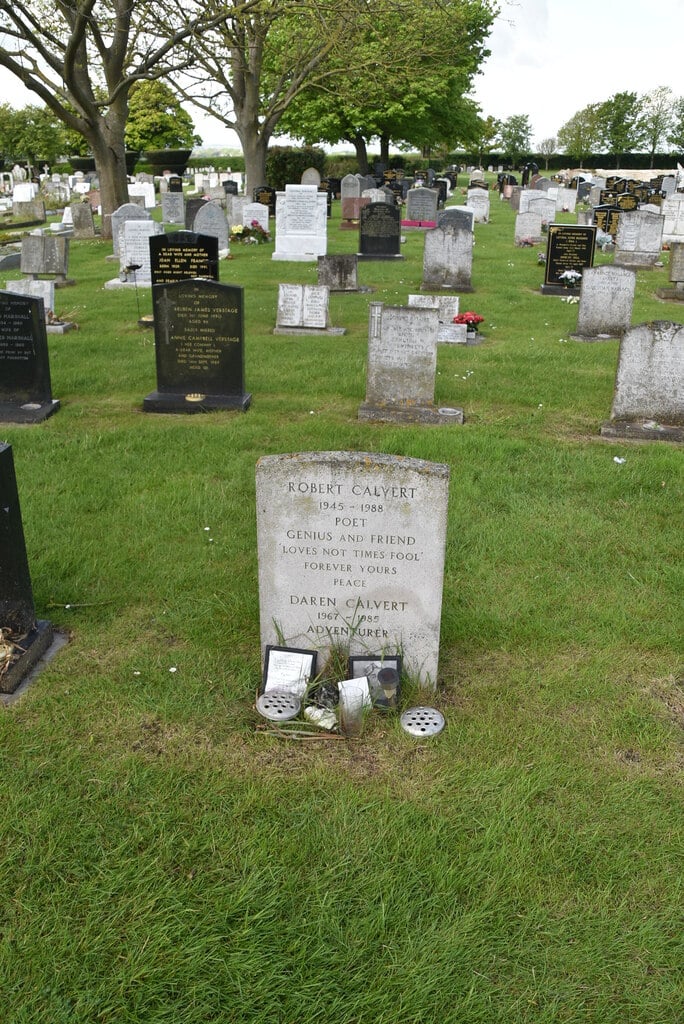
Image Credit: Photo by N Chadwick, CC BY-SA 2.0, via Wikimedia Commons.
📋 Table of Contents [+]
⚡ Key Takeaways
- Robert Newton Calvert was born March 9, 1945, in Pretoria, South Africa, and moved to England at age two.
- Robert Calvert co-wrote Hawkwind’s “Silver Machine,” a UK number 3 hit released June 9, 1972.
- Robert Calvert served as Hawkwind’s principal lead vocalist from 1975 to 1979, fronting the band on Quark, Strangeness and Charm.
- Robert Calvert released five solo albums, a novel, five plays, and two poetry collections outside Hawkwind.
- Robert Calvert died of a heart attack on August 14, 1988, in Ramsgate, England, at age 43.
Who Was Robert Calvert?
Robert Calvert was the lyricist, performance poet, and eventual lead vocalist who gave Hawkwind its science fiction identity.
Robert Newton Calvert was born on March 9, 1945, in Pretoria, South Africa.
His family moved to England when he was two years old.
He grew up between London and the seaside town of Margate, Kent.
He lived for a time at Arlington House in Margate.
He played trumpet in the Air Training Corps’ 438 Squadron band, reaching the rank of corporal.
He later studied in Canterbury before drifting into London’s psychedelic underground in the late 1960s.
Calvert contributed poetry to the science fiction magazine New Worlds and wrote for the underground paper Frendz.
Through New Worlds he befriended the novelist Michael Moorcock, a connection that shaped his lyric writing for years afterward.
In Margate he had already befriended a young Nik Turner, a friendship that would later pull him into Hawkwind.
How Did Robert Calvert Join Hawkwind?
Calvert joined Hawkwind in 1971 through his childhood friendship with founding member Nik Turner.
He first performed with the band on May 26, 1971, at the Seven Sisters Club in London.
He joined Hawkwind officially that October.
His role was unlike any other member’s: lyricist, performance poet, and occasional lead vocalist rather than a full-time instrumentalist.
He brought a background in street theatre, having founded the collective Street Dada Nihilismus in 1967.
He staged Hawkwind’s shows as science fiction performance art.
Calvert helped build the band’s recurring mythology of astronauts, ancient aliens, and dystopian near-futures.
That mythology still defines Hawkwind’s lyrics today.
Did Robert Calvert Sing on Silver Machine?
Calvert co-wrote Silver Machine and sang its original vocal, though his performance was replaced before release.
“Silver Machine” was released as a single on June 9, 1972.
It reached number 3 on the UK Singles Chart.
The commercial single is built from a live recording taped at London’s Roundhouse.
Calvert’s original vocal track was overdubbed in the studio by bassist Lemmy Kilmister.
The swap made Lemmy the voice most fans associate with the song.
Calvert wrote the lyrics and performed the song live at the Roundhouse.
“Silver Machine” remains Hawkwind’s highest-charting single and the song most credited with breaking the band into the UK mainstream.
How Did Calvert Direct the Space Ritual Tour?
Calvert directed the staging and concept behind Hawkwind’s 1972 to 1973 Space Ritual tour.
He built the show around the idea of the band as starfarers in suspended animation.
Calvert narrated a science fiction voyage between songs.
Critics and band members alike have called the Space Ritual tour the artistic zenith of Hawkwind’s early 1970s lineup.
Calvert also wrote the text for “The Hawkwind Log,” a booklet included with the band’s 1971 album In Search of Space.
The booklet extended his science fiction concepts onto the printed page.
Why Did Calvert Leave Hawkwind the First Time?
Calvert stepped away from Hawkwind for roughly two years starting around 1973.
The gap let him focus on his own solo work.
The pressures of touring and his developing mental health struggles both contributed to the break.
Hawkwind’s lineup kept evolving without him during that time.
During his absence, Calvert returned as a guest contributor to write and sing Hawkwind’s “Urban Guerrilla” single.
That single is described in more detail below.
💡 Did You Know?
As a young man, Robert Calvert hoped to become a fighter pilot, an ambition he never fulfilled.
That fascination with military aviation later resurfaced in his solo concept album about fighter jets.
What Was Calvert’s First Solo Album?
Calvert’s first solo album was Captain Lockheed and the Starfighters, released in 1974.
The concept album satirized the real-world Lockheed bribery scandal.
In that scandal, the aerospace company paid foreign officials to buy its faulty F-104 Starfighter jets.
Brian Eno, fresh off his early Roxy Music years, contributed synthesizer to the record.
The album let Calvert combine his poetry, dark satire, and interest in aviation.
It became a single, fully realized concept piece.
He followed it in 1975 with Lucky Leif and the Longships, another Eno-produced concept album.
This one examined the Norse discovery of North America.
That same year, Calvert won a Capital Radio poetry competition with his piece “Circle Line.”
What Happened to Urban Guerrilla?
“Urban Guerrilla” was a Hawkwind single that Calvert wrote and sang lead vocals on, released July 27, 1973.
It reached number 39 on the UK Singles Chart before Hawkwind’s management withdrew it after just three weeks.
The single’s release coincided with an IRA bombing campaign in London.
The BBC refused to play a song with “guerrilla” in the title.
Management pulled the record rather than risk any appearance of profiting from the violence.
“Urban Guerrilla” stood as Hawkwind’s only studio recording to feature a Calvert lead vocal before his return.
He would return as the band’s full-time frontman two years later.
Why Did Robert Calvert Rejoin Hawkwind as Frontman?
Calvert rejoined Hawkwind in 1975, this time as the band’s principal lead vocalist rather than a part-time contributor.
The role suited his stage background.
It let him front the band’s science fiction theatrics as a performer instead of directing from the sidelines.
He remained Hawkwind’s frontman through 1979, the longest continuous stretch of his time in the band.
In 1977, Hawkwind appeared on Marc Bolan’s television series Marc, with Calvert as the band’s featured vocalist.
What Was Calvert’s Defining Hawkwind Album?
Quark, Strangeness and Charm, released in June 1977, is widely considered the defining album of Calvert’s frontman years.
The title track name-checks physicist Albert Einstein and plays on particle physics terminology for its central hook.
Calvert’s witty, literate lyrics gave the record a sharper, more theatrical edge than Hawkwind’s earlier, more improvisational albums.
The album is often cited by fans as the high point of the Calvert-fronted era of the band.
💡 Did You Know?
Calvert once attacked a bandmate onstage with a real sword mid-song, dressed in a witch’s hat and cape.
It was part of the theatrical chaos he brought to Hawkwind’s live shows.
Why Did Calvert Leave Hawkwind Again?
Calvert left Hawkwind for the final time in 1979, ending his run as frontman.
He shifted his focus to prose and released Hype in 1981, a novel about the music industry.
The novel came with a companion album of the same name.
The novel let Calvert turn his years of observing the music business into satire.
It mirrored the concept-album approach of his earlier solo records.
He kept releasing solo music through the 1980s, issuing Freq in 1985 and Test-Tube Conceived in 1986.
What Plays and Poetry Did Calvert Write?
Calvert wrote five stage plays and published two collections of poetry over the course of his career.
His 1976 play The Stars That Play With Laughing Sam’s Dice dramatized the life of guitarist Jimi Hendrix.
He followed it with Mirror Mirror in 1978, continuing his interest in blending theatre with rock subject matter.
Calvert published his final poetry collection, The Earth Ritual, in 1987, a year before his death.
Across his career he produced five solo albums, a novel, five plays, and two books of poetry.
That full tally comes from AllMusic’s discography of his work.
💡 Did You Know?
Beyond Hawkwind, Robert Calvert collaborated with musicians including Arthur Brown, Jim Capaldi, and Vivian Stanshall.
He also worked alongside members of Nektar and Amon Duul II over the course of his career.
Did Calvert Struggle With Mental Health?
Calvert lived with bipolar disorder throughout his adult life.
The condition shaped both his art and his relationships within the band.
He once described himself as “hypo-manic,” and his mood swings could turn his stage performances erratic and unpredictable.
At one point during his career he was institutionalized under the UK’s Mental Health Act.
The condition strained his friendships with bandmates.
It also fueled the manic, theatrical energy that made his live performances memorable.
How Did Robert Calvert Die?
Robert Calvert died of a heart attack on August 14, 1988, in Ramsgate, England, at age 43.
He collapsed while approaching a disconnected pay phone outside a cafe called the Corner House.
Calvert was buried at Minster Cemetery in Minster-in-Thanet, Kent, not far from where he grew up.
His gravestone is engraved with a line from Shakespeare’s Sonnet 116: “Love’s not Time’s fool.”
What Is Robert Calvert’s Legacy in Rock Music?
Calvert’s legacy rests on how completely he fused poetry, satire, and theatre into a working rock band.
He gave Hawkwind the science fiction mythology and literary ambition that still separates the band from its space rock peers today.
In 2007, guitarist Dave Brock and the collective Spirits Burning released The Brock/Calvert Project.
The record reworked Calvert’s unused lyrics and poetry into new music nearly two decades after his death.
Calvert is remembered less as a conventional rock frontman than as a multimedia artist.
He simply happened to front a rock band.
People Also Ask
Who was Robert Calvert of Hawkwind?
Robert Calvert was a South African-born poet, playwright, and vocalist who served as Hawkwind’s lyricist and eventual frontman between 1971 and 1979.
Born March 9, 1945, in Pretoria, he co-wrote the band’s biggest hit, “Silver Machine,” and directed the Space Ritual stage show.
He later fronted the band on albums like Quark, Strangeness and Charm.
Did Robert Calvert sing on Silver Machine?
Calvert sang the original live vocal on “Silver Machine” at a Roundhouse concert in 1972.
That vocal was replaced in the studio before release.
Bassist Lemmy Kilmister overdubbed the vocal heard on the commercial single, which reached number 3 on the UK charts.
Calvert still co-wrote every lyric on the track.
How did Robert Calvert die?
Robert Calvert died of a heart attack on August 14, 1988, in Ramsgate, England, at age 43.
He collapsed near a disconnected pay phone outside a local cafe and was buried at Minster Cemetery in Kent.
What solo albums did Robert Calvert release?
Robert Calvert released five solo albums: Captain Lockheed and the Starfighters (1974), Lucky Leif and the Longships (1975), Hype (1981), Freq (1985), and Test-Tube Conceived (1986).
His first two solo records were produced with contributions from Brian Eno and built around satirical concept-album narratives.
Why did Robert Calvert leave Hawkwind?
Robert Calvert left Hawkwind twice, first around 1973 amid touring pressure and health struggles.
He left again, permanently, in 1979 to focus on solo prose and music.
His bipolar disorder made touring and band relationships increasingly difficult.
By 1979 he had shifted his creative energy toward the novel and album Hype.
Watch Robert Calvert Perform Live
This recording of “Captain Lockheed and the Starfighters: The Aerospaceage Inferno” captures Calvert’s theatrical delivery.
It shows his solo work outside the Hawkwind lineup.
Essential Hawkwind Albums Featuring Robert Calvert
These four Hawkwind albums span the years Calvert spent as the band’s poet and frontman.
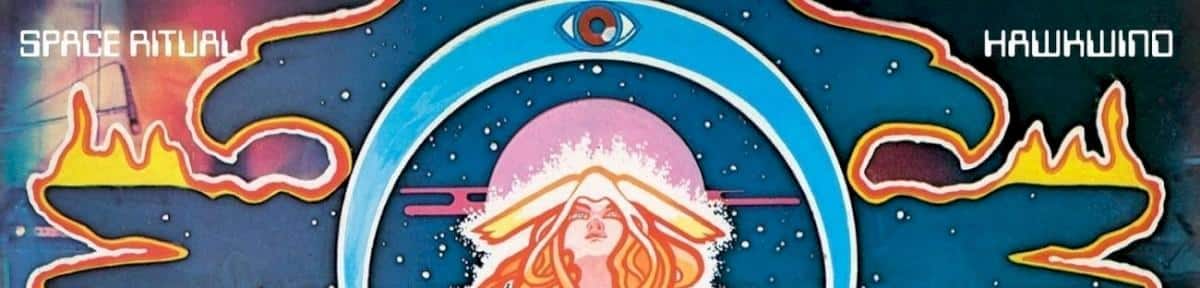
Space Ritual
1973 live album
Captures the tour Calvert directed and narrated.
Widely regarded as the definitive Hawkwind live document.
🛒 Check Price on Amazon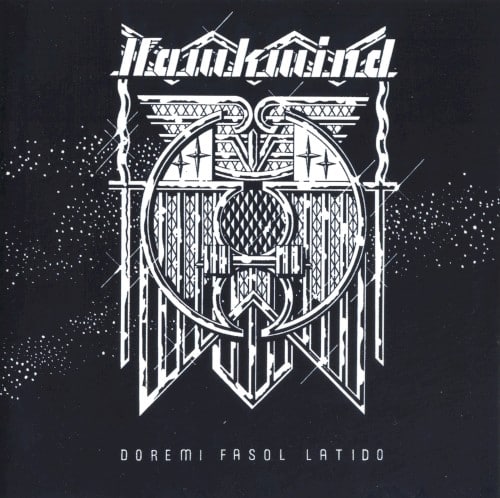
Doremi Fasol Latido
1972 studio album
Reissues include “Urban Guerrilla,” Calvert’s early lead vocal.
Recorded with Lemmy Kilmister on bass.
🛒 Check Price on Amazon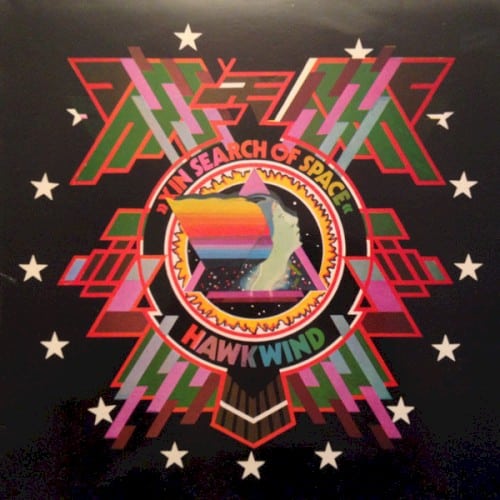
In Search of Space
1971 studio album
Includes the Hawkwind Log booklet Calvert co-wrote.
Barney Bubbles’ die-cut sleeve remains iconic.
🛒 Check Price on Amazon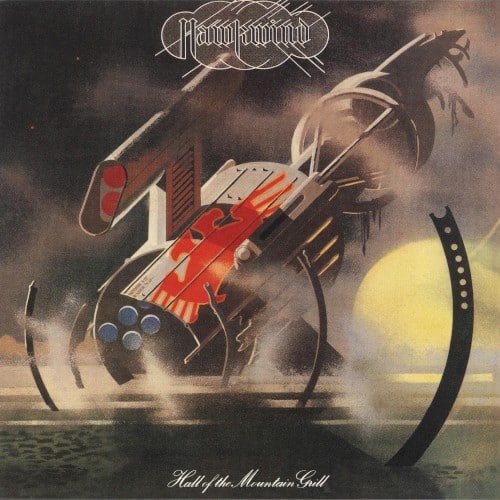
Hall of the Mountain Grill
1974 studio album
Released during Calvert’s years away from the band.
Shows the sound Calvert would return to front in 1975.
🛒 Check Price on AmazonYou Might Also Like
Brock co-founded Hawkwind with Nik Turner and led the band through every Calvert era.
Hawkwind: Doremi Fasol Latido Album Review
This 1972 album carries the reissue-only “Urban Guerrilla” track, Calvert’s first Hawkwind lead vocal.
Hawkwind: In Search of Space Album Review
The album booklet that first let Calvert extend his science fiction writing beyond the stage.
The full lineup history hub covering every era of the band Calvert helped define.
Robert Calvert never fit neatly into the role of rock frontman, and that was exactly the point.
He turned Hawkwind’s stage into a science fiction theatre and wrote its most enduring lyrics.
He left behind a body of solo work that still rewards discovery.
Last updated: September 1, 2026.
Nearly four decades after his death, Robert Calvert’s fingerprints remain all over Hawkwind’s mythology.