

The Power of Love by Huey Lewis and the News reached number one on the Billboard Hot 100 in 1985 and became the defining rock anthem of the Back to the Future era.
Written by Huey Lewis, guitarist Chris Hayes, and saxophonist Johnny Colla, the track was created at the request of director Robert Zemeckis for his 1985 film and gave the band their biggest commercial hit.
Affiliate Disclosure: As an Amazon Associate I earn from qualifying purchases. This helps support the site at no extra cost to you.
Zemeckis approached the band after listening to their 1983 album Sports and deciding their energetic, radio-friendly sound was right for the tone he wanted to establish from the film’s opening moments.
The song went on to earn the band a Grammy nomination and became so closely associated with the film that the two have rarely been separated in cultural memory since.
| Detail | Info |
|---|---|
| Artist | Huey Lewis and the News |
| Song | The Power of Love |
| Year | 1985 |
| Written by | Huey Lewis, Chris Hayes, Johnny Colla |
| Produced by | Huey Lewis and the News, Bob Clearmountain |
| Lead Vocals | Huey Lewis |
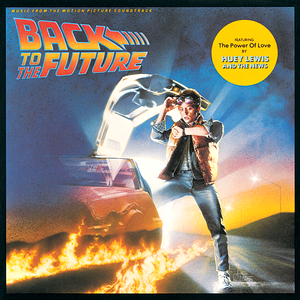
| Album | Back to the Future Original Soundtrack |
| Peak Chart Position | #1 Billboard Hot 100 |
| Genre | Rock, Power Pop, New Wave |
Table of Contents
What Is “The Power of Love” About?
The lyric describes the feeling of falling in love as something overwhelming and unstoppable, a force that arrives without warning and changes everything in its path.
The central idea is that love, once felt, operates as a kind of power over the person experiencing it: irrational, all-consuming, and ultimately joyful despite the disruption it causes.
Huey Lewis has said the song needed to communicate its meaning in the first few seconds of being heard, since it was designed to work as a film-opening statement rather than something to be unpacked gradually.
The writing was quick, shaped in part by the deadline from Zemeckis, and that urgency is audible in the track’s forward momentum and direct lyrical approach.
The Back to the Future Connection
Robert Zemeckis had originally approached other artists for the film’s music but settled on Huey Lewis and the News after hearing Sports and deciding they had exactly the right combination of rock energy and pop appeal.
In the film, the song plays during the opening sequence as Marty McFly goes about his morning, establishing the 1985 setting and the character’s personality before a single word of dialogue is spoken.
The choice proved ideal: the track’s confident, upbeat momentum set the film’s tone perfectly and created an association between the two that has never faded.
In a famous in-joke, Huey Lewis himself appears briefly in the film as a teacher who turns away the band’s audition, declaring it too loud.
Writing the Song
Huey Lewis, Chris Hayes, and Johnny Colla wrote the song with the film’s brief in mind: the track needed energy, immediacy, and a chorus that could anchor a cinematic opening.
Hayes contributed the central guitar riff, which provided the track with its muscular, driving backbone.
Colla added saxophone work that gave the song a slightly soulful texture beneath the rock surface, consistent with the band’s broad stylistic range.
Lewis shaped the lyric and melody around the idea of love as an irresistible physical and emotional force, keeping the writing concise and anthemic throughout.
Bob Clearmountain and the Production
Bob Clearmountain, who produced the record alongside the band, was one of the most sought-after mixing engineers in rock at the time, having worked with Bruce Springsteen, Bryan Adams, and The Rolling Stones.
His approach brought a crisp, radio-ready quality to the recording that suited both the band’s live energy and the commercial requirements of a film tie-in single.
The production is clean and immediate, with every element serving the forward drive of the track rather than adding complexity for its own sake.
Clearmountain’s handling of the guitar and horn arrangement in particular gave the track a physicality that carried well across cinema sound systems as well as car radios.
Chart Performance
“The Power of Love” entered the Billboard Hot 100 in June 1985 and reached number one in July, where it remained for two weeks.
The single also reached number nine on the UK Singles Chart, giving the band their strongest UK chart performance to that point.
The song was certified platinum in the United States and appeared on the Back to the Future Original Soundtrack, which also reached the top ten on the Billboard 200.
The track was later included on the band’s 1986 studio album Fore!, extending its commercial life beyond the film’s run.
The Music Video
The music video for “The Power of Love” intercuts performance footage of the band with clips from Back to the Future, making the film’s visual world and the song inseparable from the moment of release.
The video received heavy rotation on MTV throughout the summer of 1985 and helped sustain the single’s momentum over a longer chart run than most summer hits of the era.
The combination of the film’s box office success and the video’s visibility created a feedback loop that kept the song in public consciousness well into the autumn.
Grammy Nomination and Recognition
“The Power of Love” earned Huey Lewis and the News a Grammy nomination for Best Pop Performance by a Duo or Group with Vocal at the 1986 Grammy Awards.
The track was also nominated for an Academy Award for Best Original Song, making it one of the few rock songs to receive recognition from both the recording and film industries in the same year.
The Academy Award nomination was ultimately unsuccessful, but the recognition confirmed the song’s standing beyond its commercial performance alone.
Critical Reception and Legacy
Critics at the time noted the song as a perfect example of how rock music could serve a narrative cinematic context without losing its character as a standalone listening experience.
In subsequent decades, the track has appeared on multiple greatest-songs-of-the-decade lists and remains one of the most played 1985 rock singles on classic rock radio formats.
Its association with Back to the Future means it is also one of the most contextually recognisable songs of the era, heard by anyone who has seen the film regardless of whether they sought it out as a music fan.
Why “The Power of Love” Still Matters
The song endures because it accomplished something genuinely difficult: it worked as a film-opening statement, a standalone rock single, and a piece of music tied to a specific cultural moment, and it succeeded at all three simultaneously.
Huey Lewis, Chris Hayes, and Johnny Colla wrote a track that was exactly as good as the moment it was placed in required, and that precision is what separates lasting tie-in songs from forgettable ones.
Nearly forty years on, hearing “The Power of Love” still brings the film’s opening sequence back without effort, which is the highest compliment a song in that position can receive.
Frequently Asked Questions
Who wrote “The Power of Love”?
Huey Lewis, Chris Hayes, and Johnny Colla wrote the song at the request of director Robert Zemeckis for the film Back to the Future.
Did “The Power of Love” reach number one?
Yes. The track spent two weeks at number one on the Billboard Hot 100 in July 1985.
What album is “The Power of Love” on?
It appeared on the Back to the Future Original Soundtrack (1985) and was later included on the band’s studio album Fore! (1986).
Was “The Power of Love” nominated for an Oscar?
Yes. The song received an Academy Award nomination for Best Original Song at the 1986 Academy Awards.
Who produced “The Power of Love”?
The track was produced by Huey Lewis and the News and Bob Clearmountain.
You Might Also Like
Almost forty years after it was written in a hurry for a film nobody knew would become a cultural institution, The Power of Love by Huey Lewis and the News remains one of the most joyful and well-constructed rock singles of the 1980s.