

Song 2 by Blur reached number two on the UK Singles Chart in 1997 and became the band’s most internationally recognized recording despite running just under two minutes, its “Woo-hoo” hook making it one of the most immediately identifiable moments in British rock.
Written by vocalist Damon Albarn and guitarist Graham Coxon and produced by Stephen Street, the track appeared on Blur’s self-titled fifth album and marked a deliberate shift away from the Britpop sound that had defined the band’s commercial peak toward an American lo-fi and noise-rock influence.
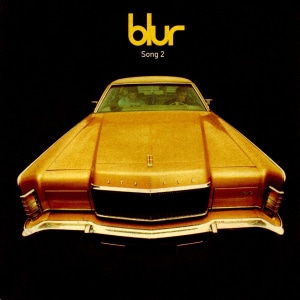
Affiliate Disclosure: As an Amazon Associate I earn from qualifying purchases. This helps support the site at no extra cost to you.
| Song | Song 2 |
| Artist | Blur |
| Album | Blur (1997) |
| Written by | Damon Albarn, Graham Coxon, Alex James, Dave Rowntree |
| Produced by | Stephen Street |
| Released | 1997 |
| Genre | Alternative Rock, Noise Rock, Lo-Fi |
| Chart Peak | #2 UK Singles Chart, #6 US Modern Rock |
Table of Contents
Background and History
Blur formed in London in 1988 and built their commercial peak through the Britpop era, with albums Parklife (1994) and The Great Escape (1995) establishing them as one of the defining British bands of the period.
The band’s rivalry with Oasis during the mid-1990s was the defining narrative of British pop culture for two or three years, and Blur’s victory in the so-called “battle of Britpop” chart race in August 1995 placed them at the commercial peak of that scene.
By 1996, Albarn and particularly Coxon had grown interested in American lo-fi and indie rock, drawn to the rawer, less polished approach of bands like Pavement and Sebadoh.
The self-titled album Blur was a conscious pivot away from the orchestrated, quintessentially English sound that had defined Parklife and The Great Escape, toward a more stripped, guitar-oriented approach.
Stephen Street, who had produced the band’s previous records including the Britpop-era albums, returned to produce the self-titled album and adapted his approach to the new sonic direction the band was pursuing.
The American Influence
Song 2 was the most commercially direct track on an album that was otherwise more experimental and less concerned with radio accessibility than Blur’s previous work.
Coxon’s guitar approach on the track draws explicitly from American noise rock, using feedback and distortion in a way that had more in common with Nirvana and Pixies than with anything Blur had previously recorded.
Albarn has said that the song was written quickly and almost as a joke about what American alternative rock sounded like from a British perspective, though the ironic origin did not prevent it from becoming genuinely effective within that idiom.
The song’s brevity, its refusal to extend beyond what was strictly necessary, also reflected the lo-fi ethos that Coxon was most interested in during this period.
That combination of American noise-rock influence and British compression produced something that connected with audiences on both sides of the Atlantic in a way that Blur’s more English-flavored Britpop recordings never had.
Song 2 and the Recording Story
The song opens with a clean guitar figure that lasts approximately ten seconds before Coxon’s distortion pedal engages, triggering the full-band entry and Albarn’s “Woo-hoo.”
The quiet-loud-quiet dynamic is one of the most compressed deployments of that approach in rock recording, collapsing what grunge bands typically stretched across three or four minutes into a single minute fifty-five.
Stephen Street’s production keeps the mix direct and uncluttered, letting the dynamic shift do the work that more elaborate arrangements would have needed many more elements to achieve.
Bassist Alex James and drummer Dave Rowntree play at their most physically direct on the track, with the rhythm section providing a locked-in foundation that the guitar distortion builds on rather than overwhelming.
The “Woo-hoo” vocal is simultaneously the track’s defining hook and its most consciously absurdist element, an acknowledgment that the track is operating in a register too compressed and too obviously constructed to be taken entirely seriously while still being completely effective.
Song 2 and the Charts
This tune reached number two on the UK Singles Chart, the highest commercial peak Blur achieved with a guitar-driven single during their career.
It reached number six on the US Modern Rock chart, the band’s best American alternative chart performance and a reflection of how cleanly the song translated to American radio formats that the band’s Britpop-era recordings had struggled to reach.
The Blur album peaked at number one in the UK and was certified platinum, a strong commercial performance for a record that had deliberately turned away from the formula that had made Parklife and The Great Escape massive sellers.
The song’s American performance demonstrated that Song 2‘s transatlantic reach exceeded anything in the band’s previous catalog, validating the stylistic shift on purely commercial terms alongside the critical reception it received.
Lasting Legacy
Song 2 is the Blur track most immediately recognized by listeners who are not already familiar with the band’s deeper catalog, and its “Woo-hoo” hook has become one of the most widely used sounds in sports broadcasting, advertising, and film worldwide.
The song has been licensed for use in more commercial contexts than virtually any other British rock recording of the 1990s, appearing in everything from American football broadcasts to video game soundtracks to car commercials across dozens of countries.
That ubiquity created a cultural presence that extends far beyond the alternative rock audience who followed Blur through their Britpop peak, reaching listeners who know the song entirely without knowing who recorded it.
Coxon’s guitar approach on the track influenced a generation of British indie bands who followed in the early 2000s, and the song’s compressed structure is frequently cited as an example of how to make a hook function with complete economy.
More than twenty-five years on, this song remains the most immediately legible entry point into Blur’s catalog and the recording that best demonstrates what the band was capable of when they abandoned the elaborate English character pieces of their commercial peak and simply played as loud and as briefly as possible.
Watch the Official Video
Frequently Asked Questions
FAQ
- Why is the song called Song 2?
- The working title stuck because the track was the second song the band worked on during the sessions for the self-titled album. The name also reflected the lo-fi, anti-commercial ethos the band was drawing on at the time, rejecting the kind of crafted, meaningful titles that had defined their Britpop-era releases.
- How long is Song 2?
- The song runs one minute and fifty-five seconds, making it one of the shortest tracks to reach the top five of the UK Singles Chart in the 1990s. The brevity was intentional, reflecting both the lo-fi influence Coxon was most interested in and the band’s desire to strip away everything that was not absolutely necessary.
- What influenced the sound of Song 2?
- Graham Coxon’s interest in American lo-fi and noise rock, particularly artists like Pavement and Sebadoh, was the primary influence. Damon Albarn has also said the song began partly as a somewhat ironic take on what American alternative rock sounded like from a British perspective, though it ended up being genuinely effective within that idiom.
- Why did Song 2 succeed in America when Britpop recordings had not?
- The song drew directly on American noise-rock and alternative influences rather than the specifically English cultural references that made Blur’s Britpop recordings difficult to translate internationally. American radio programmers and listeners recognized the sonic language because it was partly derived from their own music.
- Where has Song 2 been used commercially?
- The song has been licensed extensively across sports broadcasting, including American football, soccer, and hockey broadcasts worldwide; video game soundtracks including FIFA and various other titles; car commercials; and film trailers. The “Woo-hoo” hook is among the most frequently licensed moments in British rock history.
You Might Also Like
Two minutes of deliberately American-influenced noise-rock recorded by Britain’s most quintessentially English Britpop band, Song 2 remains Blur’s most globally recognized recording and the one that proved Graham Coxon’s distortion pedal could reach an audience that five albums of elaborately crafted English pop had not.