

No Woman No Cry by Bob Marley is one of the most comforting songs in popular music history.
Affiliate Disclosure: I am an Amazon affiliate and if you purchase through any amazon links on this site i may earn a small commission at no extra charge to you.
The studio version appeared on the 1974 album Natty Dread.
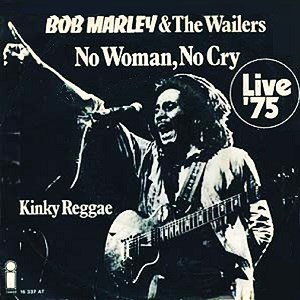
However, the most celebrated version is the live recording from the Lyceum Theatre in London, captured on July 17, 1975.
That live performance appeared on the album Live! and reached number 22 on the UK Singles Chart.
No Woman No Cry is officially credited to Vincent Ford, a longtime friend of Marley who ran a soup kitchen in Trenchtown.
In practice, Marley is widely believed to have written it himself.
| Song Title | No Woman No Cry |
|---|---|
| Artist | Bob Marley and the Wailers |
| Album | Natty Dread (1974) / Live! (1975) |
| Released | October 25, 1974 (studio); 1975 (live single) |
| Genre | Reggae, Roots Reggae |
| Label | Island Records, Tuff Gong |
| Writer | Vincent Ford (credited) |
| Producer | Bob Marley, Chris Blackwell, Steve Smith |
| Peak Chart | #22 UK (1975), #8 UK (1981 reissue) |
- What Is the Song About?
- The Vibe: Genre, Mood, and Feel
- Behind the Lyrics
- How It Was Made: The Sound and Production
- Legacy and Charts: Impact and Endurance
- A Listener’s Note
- Watch the Official Video
- Collector’s Corner
- Frequently Asked Questions
What Is No Woman No Cry About?
No Woman No Cry is a song of comfort and reassurance.
The phrase “no woman, nuh cry” comes from Jamaican patois and means “don’t cry, woman.”
It is not a dismissal of grief.
Rather, it is an act of tenderness toward someone in pain.
Marley sings to a woman in Trenchtown, the impoverished Kingston neighborhood where he grew up.
He recalls shared memories of cooking food, sitting by the fire, and watching the hypocrites move.
Furthermore, he assures her that everything will be alright.
The song holds a particular combination of sadness and hope.
It acknowledges hardship without surrendering to it.
For listeners around the world, that combination has made it one of the most universally recognized songs in reggae history.
The Vibe: Genre, Mood, and Feel
The song sits firmly in the roots reggae tradition.
The rhythm section drives the recording with a steady, unhurried pulse.
Notably, the live version from the Lyceum has an added warmth that the studio recording does not quite match.
The crowd’s presence gives the performance a communal quality.
It sounds like a gathering rather than a concert.
Marley’s vocal throughout is gentle and direct.
He does not perform grief or comfort.
Instead, he simply expresses both, and the simplicity is what makes the performance so affecting.
The organ lines add a church-like quality to the arrangement.
As a result, No Woman No Cry carries a spiritual weight that goes beyond any single faith or tradition.
Behind the Lyrics
The writing credit for No Woman No Cry belongs officially to Vincent Ford.
Ford ran a community soup kitchen in Trenchtown, where Marley spent part of his childhood.
However, most music historians believe Marley wrote the song himself.
The royalties reportedly helped Ford fund the soup kitchen for many years.
The lyric draws directly on Marley’s memories of Trenchtown life.
Indeed, the imagery of government yards, fire logs, and shared meals comes from specific personal experience.
The verse about watching the hypocrites move reflects a political awareness that runs through all of Marley’s best writing.
At the same time, No Woman No Cry never turns preachy or confrontational.
The political content is always secondary to the emotional content.
Consequently, the song reaches listeners who have no knowledge of its social context and still connects deeply.
How It Was Made: The Sound and Production
The studio version was produced by Bob Marley, Chris Blackwell, and Steve Smith for Island Records.
The Wailers recorded it during the sessions for Natty Dread in 1974.
Furthermore, the live version recorded at the Lyceum Theatre on July 17, 1975, became the more famous recording.
The Lyceum performance captured something that the studio recording did not.
The energy of the audience, the looseness of the band, and Marley’s vocal all combine there.
Chris Blackwell made the decision to release the live version as a single.
That decision proved correct.
The live recording’s organic quality gave No Woman No Cry a presence that matched its emotional content.
Moreover, the Lyceum performance became one of the most celebrated live recordings in reggae history.
It demonstrated that Marley’s music worked equally well in the intimate setting of a British concert hall as it did anywhere else.
Legacy and Charts: Impact and Endurance
The live version reached number 22 on the UK Singles Chart in 1975.
A 1981 reissue following Marley’s death climbed to number 8 in the UK.
However, chart positions do not fully describe the song’s impact.
No Woman No Cry became one of the primary vehicles by which reggae reached a global mainstream audience.
Its accessibility and emotional directness worked across cultural and linguistic barriers.
Furthermore, the song has been covered by artists across dozens of genres and generations.
Each version confirms the structural strength of the original composition.
In addition, the song appeared in the 1999 film Girl, Interrupted and numerous other productions.
It has been used in sporting events, humanitarian campaigns, and memorial tributes around the world.
Consequently, No Woman No Cry has become one of the most recognized pieces of music in the last fifty years of popular culture.
A Listener’s Note
The live Lyceum version rewards full attention rather than background listening.
The way the crowd responds to the opening chord is itself part of the experience.
Moreover, Marley’s vocal improvisation in the final section shows a performer completely at ease with his audience.
The song ends with no dramatic gesture, just a quiet fade, which is exactly right.
Watch the Official Video
Watch Bob Marley performing No Woman No Cry in this official video:
Collector’s Corner
Original pressings of No Woman No Cry on Island Records are sought after by collectors of reggae history.
In particular, the UK pressing from the 1975 live release carries the original Island label design.
Similarly, original vinyl copies of Live! in strong condition are consistently sought after as one of the defining live albums in popular music.
You Might Also Like
John Lennon’s vision of a world without division became one of the most performed and most debated songs in popular music history, combining a simple piano melody with a lyric that continues to provoke and inspire in equal measure.
Cat Stevens’s farewell to Pattie D’Arbanville combined genuine tenderness with honest acknowledgment of the world’s difficulty, a song that has resonated with every generation of listeners facing the end of something they valued.
Neil Young’s only US number one brought Nashville warmth and folk directness together in a song about searching for authenticity that became the defining recording of the early 1970s singer-songwriter tradition.
Frequently Asked Questions
What does No Woman No Cry mean?
No Woman No Cry comes from Jamaican patois and means “don’t cry, woman.” It is a phrase of comfort and reassurance, not a dismissal of emotion. The song addresses a woman in pain, recalls shared memories of life in Trenchtown, and assures her that everything will be alright. The tenderness of the message is what has made it connect with listeners across cultures and generations.
Who wrote the song?
The song is officially credited to Vincent Ford, a friend of Marley who ran a soup kitchen in Trenchtown. However, Bob Marley is widely believed to have written the song himself. The royalties from the song reportedly helped fund Ford’s community kitchen for many years, which may explain the writing credit arrangement.
Which version is more famous, the studio or the live recording?
The live version recorded at the Lyceum Theatre in London on July 17, 1975, is by far the most famous. It appeared on the album Live! and was released as a single that year. The Lyceum performance captured a warmth and communal energy that the studio version from Natty Dread (1974) does not replicate, and it became one of the defining live recordings in reggae history.
How did the song chart?
The live single reached number 22 on the UK Singles Chart in 1975. A 1981 reissue, released after Marley’s death in April of that year, reached number 8 in the UK. The song has continued to appear on charts periodically through reissues and streaming era charts, confirming its enduring popularity.
Where was the live version recorded?
The famous live version was recorded at the Lyceum Theatre in London on July 17, 1975. The Lyceum concerts were part of Marley’s European tour and represented the moment when he crossed from reggae cult figure to mainstream international artist. Chris Blackwell’s decision to release the Lyceum recording as a single proved transformative for Marley’s career in Britain.
Who produced the recording?
The studio version was produced by Bob Marley, Chris Blackwell, and Steve Smith. The live recording was produced by Blackwell and presented with minimal studio intervention, preserving the natural sound of the Lyceum performance. Blackwell’s light touch in production allowed the emotional content of the concert to come through without polish obscuring it.
What is Trenchtown and why does it matter?
Trenchtown is a neighborhood in Kingston, Jamaica, known for its poverty and its remarkable cultural output. It was where Bob Marley spent part of his youth and where the Jamaican music scene that produced reggae took shape. The lyric draws on specific memories of life there, including the government yards, cooking fires, and the community that sustained people through difficult times.
Why does the song endure as a classic?
No Woman No Cry endures because comfort never goes out of fashion. The song addresses a universal human experience, the need to be told that things will be alright, with a directness and warmth that transcends its specific cultural and geographic origin. Marley’s vocal performance in the live version communicates complete sincerity, and that sincerity is what listeners across generations and cultures have responded to for fifty years.
No Woman No Cry connects because it does one of the hardest things a song can do: it tells someone in pain that they are not alone, and it makes them believe it.