

Rick Vito is a guitarist and vocalist best known for his tenure with Fleetwood Mac during the late 1980s and early 1990s.
His blues-infused playing style brought a distinctive flavor to the legendary rock band during a transitional period.
Vito joined Fleetwood Mac in 1987 alongside Billy Burnette, filling the void left by Lindsey Buckingham’s departure.
Before his time with the Mac, he had already established himself as a respected session musician and solo artist.
His work spans collaborations with numerous artists across rock, blues, and country genres.
Vito’s guitar work is characterized by slide guitar mastery and a deep understanding of American roots music.
His contributions to Fleetwood Mac included both studio albums and extensive touring.
After leaving the band in 1991, he continued a prolific career as a solo artist and collaborator.
His legacy represents the intersection of blues tradition and classic rock excellence.
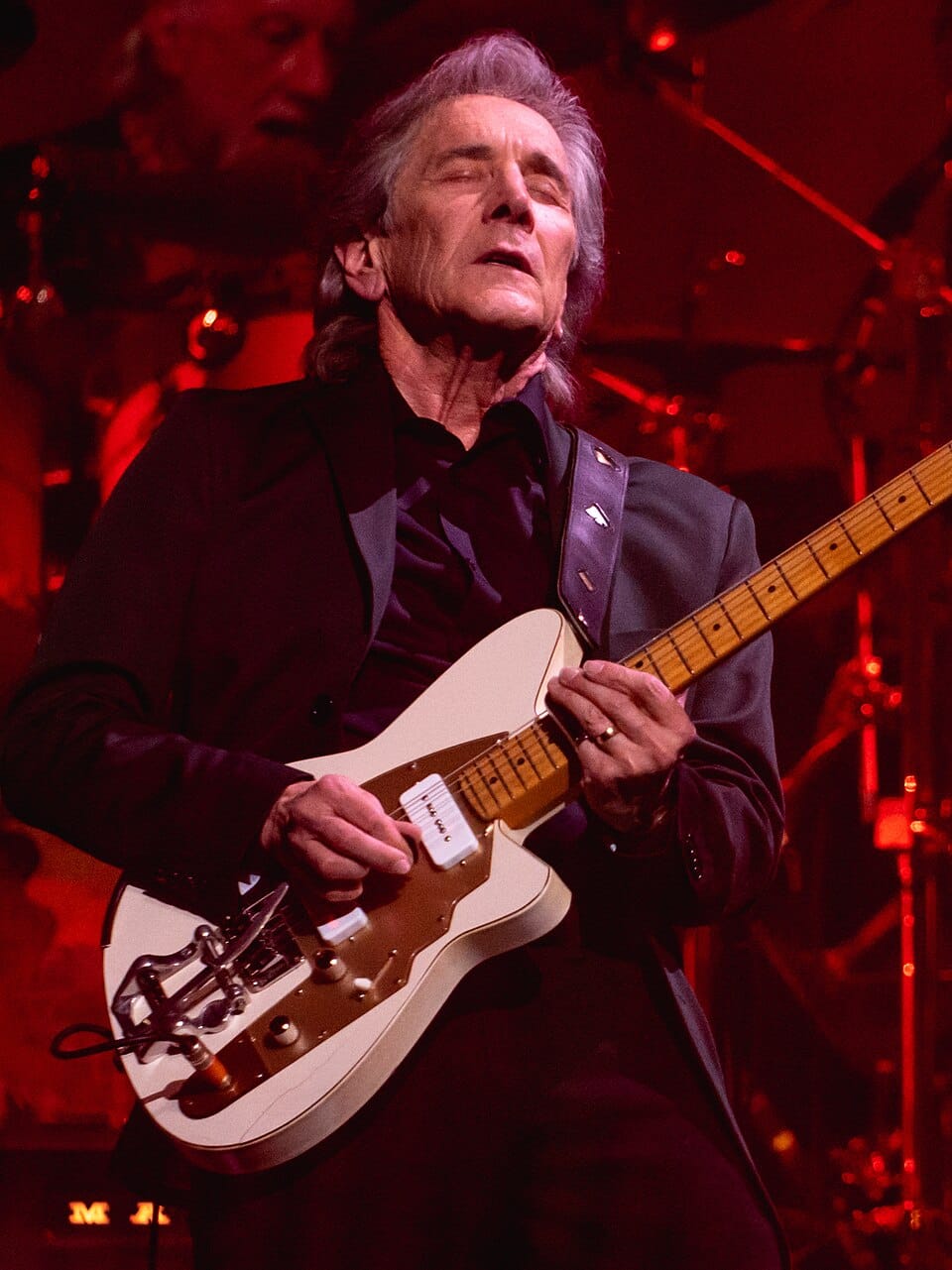
Table of Contents [Click to Expand]
Early Life and Musical Beginnings
Rick Vito was born on October 13, 1949, in Darby, Pennsylvania.
He grew up in a musical household where he was exposed to various styles from an early age.
His interest in guitar began during his childhood, and he quickly developed a passion for blues music.
Vito was particularly influenced by the sounds of Muddy Waters, Elmore James, and other Chicago blues legends.
He spent his teenage years honing his craft and studying the techniques of slide guitar masters.
By his late teens, Vito was performing in local bands around the Philadelphia area.
His dedication to authentic blues playing set him apart from many of his contemporaries.
According to biographical sources, he moved to Los Angeles in the 1970s to pursue professional opportunities.
The West Coast music scene offered him greater exposure to session work and collaboration possibilities.
His technical proficiency and versatility made him a sought-after guitarist in the studio environment.
First Major Band or Breakthrough
Vito’s first significant professional breakthrough came through session work in Los Angeles during the 1970s.
He worked with numerous artists, building a reputation for reliability and musical sensitivity.
One of his notable early collaborations was with Jackson Browne, contributing guitar work to several projects.
Rick Vito also worked with Bonnie Raitt, another artist deeply rooted in blues traditions.
His session credits expanded to include work with John Mayall, a legendary British blues musician.
Vito also collaborated with Roger McGuinn of The Byrds, showcasing his versatility across genres.
During this period, he released solo material that highlighted his blues guitar prowess.
His work caught the attention of established artists looking for authentic blues sensibility.
By the mid-1980s, Vito had become a respected figure in the Los Angeles music community.
His reputation for professionalism and musical depth would soon lead to his biggest opportunity.
Rick Vito Peak Era
Rick Vito’s peak era began in 1987 when he joined Fleetwood Mac, one of rock music’s most successful bands.
The invitation came after Lindsey Buckingham departed the group following years of creative tension.
Fleetwood Mac needed guitarists who could handle both the technical demands and the emotional depth of their catalog.
Vito joined alongside Billy Burnette, creating a dual-guitar lineup for the band.
This configuration represented a significant shift from the Buckingham-led sound that had defined the band’s most successful period.
The lineup included Stevie Nicks, Christine McVie, Mick Fleetwood, and John McVie.
Vito’s first major project with the band was the album Tango in the Night, though he joined after its recording.
He toured extensively in support of that album, performing classic tracks to audiences worldwide.
His slide guitar work brought a different texture to songs that fans had known for years.
The challenge of interpreting Buckingham’s intricate guitar parts required both technical skill and creative adaptation.
Rick Vito approached the material with respect while adding his own blues-influenced phrasing.
In 1990, Fleetwood Mac released Behind the Mask, the first studio album featuring Vito’s contributions.
The album showcased a more blues-oriented sound compared to the polished pop-rock of previous releases.
Vito co-wrote several tracks on the album, including contributions that highlighted his songwriting abilities.
The album received mixed reviews, with some critics appreciating the new direction while others missed the Buckingham era.
Behind the Mask achieved moderate commercial success but did not match the sales of earlier Fleetwood Mac albums.
The band’s touring schedule during this period was extensive, covering North America, Europe, and other international markets.
Vito’s performances were noted for their energy and his ability to connect with the band’s blues roots.
He brought authenticity to songs that required a rootsy, emotional guitar approach.
His work on stage included performing iconic tracks like Fleetwood Mac Go Your Own Way (1977), which demanded both precision and passion.
The band’s setlists also featured Fleetwood Mac Dreams, one of their most beloved songs.
Vito’s interpretation of these classics demonstrated his understanding of the band’s legacy.
He also performed Fleetwood Mac The Chain (1977), a track that showcased the band’s collective power.
During his time with the group, Vito witnessed the complex dynamics that had always characterized Fleetwood Mac.
The band’s history of interpersonal tensions and creative conflicts continued even with the new lineup.
Despite these challenges, Vito maintained professionalism and focused on delivering quality performances.
His contributions to the band are documented on his official website, which chronicles his career highlights.
The experience of working with such legendary musicians provided invaluable learning opportunities.
Vito absorbed insights from Mick Fleetwood’s distinctive drumming style and John McVie’s solid bass foundation.
He also collaborated closely with Stevie Nicks and Christine McVie, two of rock’s most accomplished songwriters.
The vocal harmonies and arrangements required careful attention to detail and musical sensitivity.
Vito’s blues background proved particularly valuable on tracks that drew from the band’s earlier, more blues-oriented material.
Fleetwood Mac’s catalog spans multiple eras, and understanding the complete history of Members of Fleetwood Mac provides context for Vito’s role.
His tenure represented one chapter in the band’s constantly evolving story.
The band’s commercial peak had occurred with Rumours by Fleetwood Mac, an album that set impossibly high standards.
Vito and Burnette faced the challenge of maintaining the band’s relevance in a changing musical landscape.
The late 1980s and early 1990s saw shifts in popular music tastes, with grunge and alternative rock gaining prominence.
Fleetwood Mac’s classic rock sound required adaptation to remain commercially viable.
Vito’s blues sensibility offered one avenue for keeping the music grounded and authentic.
His guitar tone was warmer and more organic compared to the heavily produced sounds of the 1980s.
This approach aligned with a broader trend toward roots music and Americana during the early 1990s.
The band’s live performances during this era are captured in various recordings and video footage available on platforms like YouTube.
These performances demonstrate Vito’s command of the guitar and his stage presence.
Rick Vito solos were characterized by melodic phrasing and emotional expression rather than technical showmanship.
This musical philosophy aligned well with Fleetwood Mac’s emphasis on song craft and emotional resonance.
Vito remained with Fleetwood Mac until 1991, when he decided to pursue other musical directions.
His departure was amicable, reflecting his desire to focus on solo work and other collaborations.
The experience had elevated his profile and established him as a guitarist capable of performing at the highest level.
Rick Vito Career Challenges and Personal Struggles
Rick Vito faced the inherent challenge of replacing a guitarist as distinctive as Lindsey Buckingham.
Buckingham’s unique fingerpicking style and production approach had defined Fleetwood Mac’s most successful era.
Fans and critics inevitably made comparisons, which created pressure on Vito and Burnette.
The commercial expectations for Fleetwood Mac albums were extraordinarily high given their previous success.
Behind the Mask did not achieve the sales figures of earlier releases, which some attributed to the lineup change.
Vito navigated these challenges by staying true to his musical identity rather than attempting to imitate Buckingham.
The music industry’s changing landscape in the early 1990s also presented obstacles for classic rock acts.
Maintaining relevance required balancing the band’s legacy with contemporary musical trends.
After leaving Fleetwood Mac, Vito faced the challenge of re-establishing his solo career.
The transition from a high-profile band to independent work required adjustment and perseverance.
Later Career and Revival
Following his departure from Fleetwood Mac, Vito returned to his roots in blues and Americana music.
He released several solo albums that showcased his guitar virtuosity and songwriting skills.
His solo work received critical acclaim within blues and roots music circles.
Vito continued to collaborate with various artists, lending his guitar expertise to numerous projects.
He worked with Maria Muldaur, contributing to her blues and folk recordings.
His session work remained in demand among artists seeking authentic blues guitar.
Vito also performed regularly at blues festivals and venues across the United States and internationally.
His live performances emphasized improvisation and connection with audiences.
He formed musical partnerships with other blues musicians, creating collaborative projects.
Vito’s dedication to preserving and advancing blues traditions earned him respect among purists.
He has continued recording and performing into the 2020s, maintaining an active musical presence.
His recent work explores various facets of American roots music, including country and rockabilly influences.
Vito’s career demonstrates longevity and commitment to musical authenticity.
His contributions to Fleetwood Mac Greatest Hits Songs remain part of his enduring legacy.
Awards and Recognition
Rick Vito’s work with Fleetwood Mac brought him recognition as part of one of rock’s most successful bands.
His contributions to Behind the Mask are documented in the band’s official discography.
Within blues music communities, Vito is recognized as a master of slide guitar technique.
His solo albums have received positive reviews in blues and roots music publications.
Vito’s reputation as a session musician reflects decades of professional excellence.
His influence extends to younger guitarists who study his approach to blues and slide guitar.
The respect he commands among fellow musicians speaks to his technical skill and musical integrity.
Essential Discography
- Behind the Mask (1990) – Fleetwood Mac studio album featuring Vito’s guitar work and songwriting contributions.
- King of Hearts (1992) – Solo album showcasing his blues guitar mastery and original compositions.
- Mojo Hand (1997) – Solo release emphasizing traditional blues styles and slide guitar techniques.
- Cadillac Man (2000) – Album blending blues, rock, and Americana influences.
- Crazy Heart (2006) – Solo work featuring original songs and blues interpretations.
- Lucky Devil (2010) – Album demonstrating his continued evolution as a blues artist.
Frequently Asked Questions About Rick Vito
When did Rick Vito join Fleetwood Mac?
Rick Vito joined Fleetwood Mac in 1987 following Lindsey Buckingham’s departure from the band.
He was brought in alongside Billy Burnette to fill the guitar role.
What albums did Rick Vito record with Fleetwood Mac?
Vito recorded the studio album Behind the Mask with Fleetwood Mac, released in 1990.
He also toured extensively with the band in support of Tango in the Night.
Why did Rick Vito leave Fleetwood Mac?
Vito left Fleetwood Mac in 1991 to pursue his solo career and other musical projects.
His departure was amicable and reflected his desire to focus on blues music.
What is Rick Vito known for musically?
Vito is known for his slide guitar expertise and deep understanding of blues traditions.
His playing style combines technical proficiency with emotional expression rooted in American roots music.
Is Rick Vito still performing?
Vito continues to perform and record music, maintaining an active presence in blues and roots music circles.
He regularly appears at festivals and venues dedicated to blues and Americana music.
Rick Vito remains a respected figure in blues and rock music, celebrated for his authentic approach to guitar playing and his contributions to one of rock’s most enduring bands.