

Released in April 1987, Fleetwood Mac Tango In The Night stands as the band’s final studio masterpiece featuring the classic Buckingham-Nicks lineup and their most commercially successful album since Rumours.
This polished collection of pop-rock perfection arrived at a pivotal moment when the band members were barely speaking to each other, yet somehow created their most cohesive and radio-friendly work in a decade.
The album spawned four top-twenty singles and sold over 15 million copies worldwide, proving that Fleetwood Mac could adapt to the synthesizer-driven sounds of the late 1980s without sacrificing their signature emotional depth.
What makes this record particularly remarkable is how it balanced Lindsey Buckingham’s increasingly experimental production techniques with the accessible songwriting that had defined the band since the Fleetwood Mac 1975 Album introduced the world to this legendary lineup.
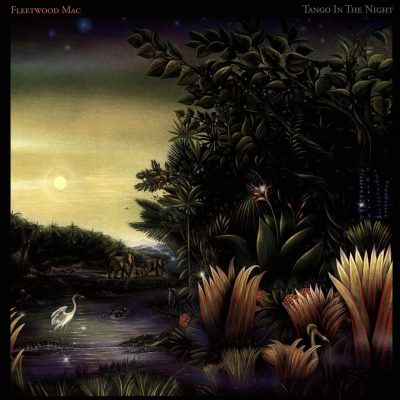
Fleetwood Mac Tango In The Night – Available on Amazon
Get Fleetwood Mac Tango in the Night on Vinyl or CD at Amazon
Affiliate Disclosure: I am an Amazon affiliate and if you purchase through any Amazon links on this site I may earn a small commission at no extra charge to you. This helps support classicrockartists.com. Thank you for your support!
Table of Contents
Overview of Fleetwood Mac Tango In The Night
Fleetwood Mac Tango In The Night represents the culmination of Lindsey Buckingham’s vision for a modern, production-heavy sound that could compete with the slick pop dominating MTV in the mid-1980s.
The album arrived five years after the commercially disappointing Fleetwood Mac Mirage Album, which had failed to recapture the magic of their 1970s peak despite containing several strong tracks.
By 1987, the musical landscape had shifted dramatically toward synthesizers, drum machines, and layered production techniques that seemed antithetical to the organic California rock sound Fleetwood Mac had pioneered.
Yet Buckingham embraced these new technologies with enthusiasm, spending countless hours in his home studio crafting intricate sonic landscapes that would form the foundation of the album.
The result was a record that sounded unmistakably contemporary while retaining the emotional authenticity and melodic sophistication that had always defined the band’s best work.
Stevie Nicks contributed three of her most commercially successful songs to the project, each one showcasing her mystical lyrical sensibility wrapped in radio-ready production.
Christine McVie delivered some of her finest compositions, proving that her gift for crafting perfect pop songs remained undiminished even as musical trends evolved around her.
The rhythm section of Mick Fleetwood and John McVie provided the steady foundation they had offered since the band’s blues-rock origins, adapting seamlessly to the programmed elements Buckingham introduced.
What distinguishes this album from other 1980s pop-rock records is the palpable tension and genuine emotion underlying even the most polished tracks.
The members of Fleetwood Mac were barely functioning as a unit by this point, with Buckingham in particular growing increasingly isolated and frustrated with the collaborative process.
This creative friction, paradoxically, fueled some of the most compelling performances on the record, as each member seemed determined to prove their continued relevance.
The album’s twelve tracks flow together with remarkable cohesion despite being recorded piecemeal over an extended period with minimal full-band interaction.
Buckingham’s production wizardry created a unified sonic palette that tied together diverse songwriting styles and emotional perspectives into a satisfying whole.
The cover art, featuring a surreal painting by Australian artist Brett-Livingstone Strong, perfectly captured the album’s blend of mystery, romance, and sophisticated pop sensibility.
Critics initially offered mixed reviews, with some praising the modern production while others lamented the departure from the band’s more organic earlier sound.
However, the record-buying public embraced the album immediately, sending it to the top of charts worldwide and establishing it as an essential entry in the Fleetwood Mac catalog.
Recording History and Production
The genesis of Fleetwood Mac Tango In The Night began in 1985 when Lindsey Buckingham started working on solo material in his home studio in Los Angeles.
Buckingham had become increasingly fascinated with the possibilities offered by new recording technologies, particularly the Fairlight CMI synthesizer and various digital effects processors.
He initially had no intention of creating a Fleetwood Mac album, preferring instead to explore his experimental impulses without the compromises required by band collaboration.
However, when Mick Fleetwood approached him about the band’s dire financial situation and the need for a new commercial album, Buckingham reluctantly agreed to transform his solo work into a group project.
According to detailed documentation of the sessions, much of the album was constructed through overdubbing rather than traditional band performances, with Buckingham often working alone for days at a time.
This unconventional approach allowed him unprecedented control over every sonic detail but also created tension with other band members who felt excluded from the creative process.
Stevie Nicks was particularly frustrated by the fragmented recording schedule, as she was simultaneously working on her solo career and found it difficult to connect with tracks that existed primarily as Buckingham’s electronic constructions.
Christine McVie proved more adaptable to the new methodology, working closely with Buckingham to develop her songs and trusting his production instincts even when they diverged from traditional band arrangements.
The recording process stretched across nearly two years, with sessions occurring sporadically as band members’ schedules and willingness to participate allowed.
Buckingham’s perfectionism reached new heights during these sessions, with some tracks undergoing dozens of revisions as he obsessively refined every element.
The producer credit went to Buckingham along with Richard Dashut, who had worked with the band since the Rumours by Fleetwood Mac sessions and understood how to navigate the complex interpersonal dynamics.
Dashut’s role became increasingly important as a mediator between Buckingham’s artistic vision and the other members’ desire for input and recognition.
The drum sounds on the album represent a particular point of innovation, blending Mick Fleetwood’s acoustic performances with electronic augmentation and samples to create a hybrid that sounded both human and mechanized.
Buckingham employed extensive use of the LinnDrum machine and other rhythm programming tools, layering them with Fleetwood’s playing to achieve a precision and power that acoustic drums alone couldn’t provide.
Guitar work on the album showcases Buckingham’s distinctive fingerpicking style enhanced by chorus effects, compression, and careful EQ that made his acoustic and electric parts shimmer with an almost otherworldly quality.
Vocal production received similar meticulous attention, with harmonies stacked and processed to create lush textures that supported the lead performances without overwhelming them.
The mixing process took place primarily at Village Recorder in Los Angeles, where Buckingham spent weeks balancing the dense arrangements and ensuring every element had its proper place in the stereo field.
By the time the album was completed in early 1987, Buckingham was physically and emotionally exhausted, having poured more of himself into this project than any previous Fleetwood Mac record.
The final product represented a remarkable achievement in studio craft, with a sonic sophistication that rivaled anything being produced in the pop world at that time.
However, the grueling process had taken its toll on band relationships, setting the stage for Buckingham’s departure shortly after the album’s release.
Track-by-Track Highlights of Fleetwood Mac Tango In The Night
The album opens with “Big Love,” a Buckingham tour de force that immediately establishes the record’s modern production aesthetic while maintaining an undeniable emotional urgency.
The track features Buckingham performing nearly every instrument himself, creating a dense tapestry of interlocking guitar parts, synthesizers, and programmed drums that builds to an explosive climax.
His vocal performance conveys a desperate intensity that cuts through the polished production, making the song feel both contemporary and timeless.
“Seven Wonders” follows as Stevie Nicks’ contribution to the album’s commercial appeal, with its mystical lyrics about ancient civilizations and romantic longing wrapped in shimmering production.
The song’s chorus soars with the kind of melodic grandeur that had made Nicks a star, while Buckingham’s production adds layers of synthesizer and guitar that give it a cinematic quality.
Sandy Stewart co-wrote the track with Nicks, bringing a fresh perspective that helped craft one of the album’s most immediately accessible moments.
“Everywhere” showcases Christine McVie at her absolute peak as a pop songwriter, delivering a melody so perfect and effortless that it seems to have always existed.
The track’s gentle groove and warm keyboard textures create an atmosphere of pure romantic optimism, offering a welcome contrast to some of the album’s darker emotional territory.
McVie’s vocal performance radiates genuine joy and affection, making the song an enduring favorite that has found new audiences through various media placements decades after its release.
“Caroline” returns to Buckingham’s more experimental impulses, with its stuttering rhythm and angular guitar work creating a sense of nervous energy and unresolved tension.
The song demonstrates his willingness to push against conventional pop structures even within the context of a commercially oriented album.
“Tango in the Night,” the album’s title track, offers one of Buckingham’s most atmospheric and mysterious compositions, with Spanish guitar flourishes and haunting synthesizer pads creating an exotic nocturnal mood.
The instrumental sections allow Buckingham to showcase his guitar virtuosity while maintaining the song’s dreamy, almost hallucinogenic quality.
“Mystic” finds Buckingham exploring darker psychological territory, with lyrics that hint at obsession and loss of control set against a propulsive, almost menacing musical backdrop.
The production on this track is particularly dense and claustrophobic, using compression and layering to create a sense of mounting pressure.
“Little Lies” became one of the album’s biggest commercial successes, with Christine McVie delivering another impeccable pop confection about romantic deception and self-delusion.
The song’s bouncing rhythm and bright keyboard hooks made it irresistible to radio programmers, while the lyrical content provided enough emotional substance to elevate it above typical 1980s pop fare.
McVie and Eddy Quintela co-wrote the track, with Quintela’s influence helping to craft the song’s distinctive Latin-tinged percussion elements.
“Family Man” tackles the theme of temptation and moral compromise with a funky, bass-driven groove that stands out from the album’s generally more ethereal textures.
Buckingham and Dashut co-wrote this track, creating a narrative about a man struggling to resist an affair while maintaining his domestic responsibilities.
“Welcome to the Room… Sara” provides Stevie Nicks with another showcase for her distinctive mystical persona, though the song’s somewhat convoluted structure and production make it one of the album’s more challenging moments.
The track references Nicks’ earlier song “Sara” while exploring themes of memory, loss, and the passage of time through her characteristically poetic but sometimes opaque lyrics.
“Isn’t It Midnight” offers a more straightforward rocker, with Christine McVie and Eddy Quintela crafting a song about nocturnal longing that benefits from a stronger rhythmic drive than many of the album’s other tracks.
The guitar work on this song has a sharper edge than elsewhere on the record, providing a welcome burst of energy in the album’s latter half.
“When I See You Again” finds Buckingham in a more tender and vulnerable mode, with acoustic guitar and gentle synthesizer pads supporting a vocal performance of remarkable emotional transparency.
The song’s production is relatively sparse by the album’s standards, allowing the melody and lyrics to take center stage without excessive embellishment.
The album closes with “You and I, Part II,” a brief instrumental coda that provides a gentle, contemplative conclusion to the record’s emotional journey.
This short piece features Buckingham’s delicate guitar work over subtle keyboard textures, creating a sense of peaceful resolution after the album’s various romantic dramas and psychological explorations.
Chart Performance of Fleetwood Mac Tango In The Night
Fleetwood Mac Tango In The Night achieved remarkable commercial success across multiple international markets, proving that the band remained a major commercial force a decade after their imperial phase.
In the United States, the album peaked at number seven on the Billboard 200 chart, eventually achieving triple platinum certification for sales exceeding three million copies.
While this represented strong performance, it fell short of the stratospheric heights reached by Rumours, which had spent 31 weeks at number one and sold over 20 million copies domestically.
The album performed even more impressively in the United Kingdom, where it reached number one and spent an astonishing 90 weeks on the charts.
British audiences embraced the record with particular enthusiasm, making it the band’s best-selling album in that market since Rumours and establishing it as a defining pop-rock statement of the late 1980s.
The album also topped charts in Australia, New Zealand, and several European countries, demonstrating Fleetwood Mac’s truly global appeal.
“Big Love” became the album’s first single, reaching number five on the Billboard Hot 100 and number nine in the UK, establishing the record’s commercial viability immediately.
The song’s success was particularly impressive given its unconventional structure and dense production, which could have alienated mainstream radio programmers seeking more straightforward pop fare.
“Seven Wonders” followed as the second single, reaching number 19 in the US and number 56 in the UK, performing better in America where Stevie Nicks maintained a particularly devoted following.
“Little Lies” became the album’s biggest commercial success in many markets, reaching number four on the Billboard Hot 100 and number five in the UK.
The song’s infectious melody and polished production made it a radio staple throughout 1987 and 1988, introducing Fleetwood Mac to a new generation of listeners who may have been too young to remember the band’s 1970s peak.
“Everywhere” achieved its greatest success in the UK, where it reached number four and became one of Christine McVie’s most beloved compositions.
The song has enjoyed remarkable longevity, appearing in numerous films, television shows, and commercials over the decades and experiencing a significant streaming resurgence in the 2010s.
“Family Man” was released as a single in some markets, though it achieved more modest chart success than the album’s other singles.
The album’s sustained chart performance throughout 1987 and into 1988 demonstrated remarkable staying power in an era when albums typically had much shorter commercial lifespans than in the 1970s.
By the end of its chart run, the album had sold over 15 million copies worldwide, making it one of the best-selling albums of 1987 and Fleetwood Mac’s most commercially successful release since Rumours.
The record’s success was particularly notable given the changing musical landscape of the late 1980s, when many classic rock acts struggled to maintain relevance against the rise of hip-hop, electronic dance music, and harder-edged alternative rock.
Critics who had initially offered lukewarm reviews began to reassess the album as its commercial success became undeniable and its influence on contemporary pop production became more apparent.
The album’s performance also vindicated Lindsey Buckingham’s controversial production approach, proving that his vision for a modern Fleetwood Mac sound could connect with audiences without alienating the band’s core fanbase.
Legacy and Cultural Impact
The legacy of Fleetwood Mac Tango In The Night extends far beyond its impressive commercial statistics, as the album has come to represent a masterclass in adapting classic rock sensibilities to contemporary production techniques.
In the decades since its release, the record has been recognized as one of the finest examples of 1980s pop-rock production, with Buckingham’s sonic innovations influencing countless producers and artists.
The album’s blend of organic songwriting and electronic enhancement created a template that many artists would follow, demonstrating that technological advancement and emotional authenticity need not be mutually exclusive.
For Fleetwood Mac, the album represented both a creative triumph and the beginning of the end for the classic lineup, as Buckingham’s departure shortly after its release fundamentally altered the band’s trajectory.
The grueling recording process and subsequent touring demands proved to be the final straw for Buckingham, who left the band in 1987 following a physical altercation with Mick Fleetwood.
This departure meant that Tango in the Night would stand as the last studio album featuring the Buckingham-Nicks-McVie lineup that had defined Fleetwood Mac’s most successful era.
The album’s influence can be heard in the work of numerous artists who emerged in the late 1980s and 1990s, particularly those seeking to balance pop accessibility with artistic ambition.
Bands like The Cranberries, Sixpence None the Richer, and later indie-pop acts have cited the album’s production and songwriting as significant influences on their own work.
The record’s most enduring songs have maintained a constant presence in popular culture, with “Everywhere” in particular experiencing multiple waves of renewed popularity through film and television placements.
A 2014 Chevrolet commercial featuring “Everywhere” introduced the song to a new generation, leading to a significant spike in streaming numbers and chart re-entries in several countries.
The album has been reissued multiple times in various formats, including expanded editions featuring demos, alternate versions, and previously unreleased tracks that provide insight into the creative process.
These reissues have allowed fans and critics to appreciate the meticulous craft that went into every aspect of the album’s creation, from initial songwriting through final mixing.
Music critics have increasingly recognized the album as a significant artistic achievement that deserves to be mentioned alongside the band’s more celebrated 1970s work.
While it may lack the raw emotional devastation of Rumours or the experimental ambition of the Fleetwood Mac Tusk Album, Tango in the Night offers its own unique pleasures and represents the band at their most sonically sophisticated.
The album’s success also demonstrated that heritage rock acts could remain commercially viable in the MTV era without completely abandoning their core identity or pandering to youth culture.
This lesson would prove valuable for numerous classic rock bands navigating the changing musical landscape of the late 1980s and early 1990s.
Fans can explore video performances and interviews from the era that capture the band at this pivotal moment in their history.
The album’s title track, while never released as a single, has become a fan favorite and represents some of Buckingham’s most evocative guitar work and atmospheric production.
Contemporary artists continue to cite the album as an influence, with its blend of emotional depth and sonic polish remaining relevant to musicians seeking to create commercially successful yet artistically substantial pop-rock.
Listener’s Note
When I first heard this album in the late 1980s, I was struck by how different it sounded from the Fleetwood Mac records I had grown up with on my parents’ turntable.
The synthesizers and drum machines initially seemed at odds with the organic, guitar-driven sound I associated with the band, and I wasn’t sure how to reconcile this sleek production with the raw emotion of their earlier work.
However, repeated listens revealed layers of complexity and emotional nuance that weren’t immediately apparent on first exposure.
I began to appreciate how Buckingham’s production choices actually enhanced rather than obscured the songwriting, creating sonic environments that perfectly complemented each track’s emotional content.
“Everywhere” became a particular favorite, with its effortless melody and warm production creating a feeling of pure romantic bliss that I found irresistible.
The song has accompanied me through various life stages, always managing to lift my spirits and remind me of the transformative power of a perfectly crafted pop song.
“Big Love” impressed me with its sheer ambition and intensity, demonstrating that Buckingham remained one of rock’s most innovative and uncompromising artists even when working within commercial constraints.
The way the song builds from its opening guitar figure to its explosive climax never fails to give me chills, regardless of how many times I’ve heard it.
Over the years, I’ve come to view this album as a bridge between the classic rock era and the modern pop landscape, demonstrating that artistic evolution doesn’t require abandoning the qualities that made an artist great in the first place.
The album rewards both casual listening and deep analysis, working equally well as background music for a dinner party or as the subject of focused, headphone-based study.
I particularly appreciate how the album balances the contributions of its three primary songwriters, giving each member space to shine while maintaining overall cohesion.
The knowledge that this would be the final album from this legendary lineup adds a bittersweet quality to the listening experience, making it feel like a farewell even as it looks toward the future.
Listening to the album now, I’m struck by how well it has aged compared to many other 1980s productions that sound hopelessly dated.
While certain sonic elements clearly place it in its era, the fundamental songwriting quality and emotional authenticity ensure that it remains engaging and relevant decades after its release.
For anyone exploring the Fleetwood Mac Greatest Hits Songs catalog, this album provides essential context for understanding the band’s evolution and enduring appeal.
Affiliate Disclosure: I am an Amazon affiliate and if you purchase through any Amazon links on this site I may earn a small commission at no extra charge to you. This helps support classicrockartists.com and allows me to keep providing deep-dive content on the legends of rock. Thank you for your support!
Collector’s Corner
For collectors and audiophiles, Fleetwood Mac Tango In The Night exists in numerous formats and editions, each offering different sonic characteristics and bonus content.
The original 1987 vinyl pressing remains highly sought after, particularly first pressings from the UK and US that were mastered before the loudness wars of the 1990s and 2000s.
These early vinyl editions often provide a warmer, more dynamic listening experience than later CD remasters, though they require proper playback equipment to fully appreciate.
The 2004 remastered CD edition added several bonus tracks including extended versions and B-sides that weren’t available on the original release.
A deluxe three-disc edition released in 2017 for the album’s 30th anniversary provided the most comprehensive look at the album’s creation, including demos, alternate takes, and live performances.
This expanded edition revealed fascinating insights into the songwriting and production process, including early versions of songs that evolved significantly before reaching their final form.
The album has also been released on high-resolution audio formats including SACD and 24-bit digital downloads for listeners seeking the ultimate in sound quality.
For those looking to add this essential album to their collection, Amazon offers various formats including vinyl, CD, and digital versions to suit different preferences and budgets.
The 2017 vinyl reissue provides an excellent option for those seeking the warmth of analog playback without the expense and uncertainty of hunting for original pressings.
Cassette versions of the album have also become collectible in recent years as the format has experienced an unexpected resurgence among younger listeners and nostalgic collectors.
Original promotional materials including posters, standees, and press kits from the album’s release campaign have become valuable collectibles for dedicated Fleetwood Mac fans.
The album’s distinctive cover art has been reproduced on various merchandise items over the years, from t-shirts to coffee mugs, allowing fans to display their appreciation for this classic record.
FAQ About Fleetwood Mac Tango In The Night
When was Fleetwood Mac Tango In The Night released?
Fleetwood Mac Tango In The Night was released on April 13, 1987, through Warner Bros. Records.
The album arrived five years after the band’s previous studio album, Mirage, marking their longest gap between releases at that point.
The extended recording period reflected both the meticulous production process and the band members’ various solo projects that competed for their time and attention.
Why did Lindsey Buckingham leave Fleetwood Mac after this album?
Lindsey Buckingham left Fleetwood Mac in 1987 due to creative exhaustion and interpersonal conflicts that had been building throughout the album’s creation and subsequent tour planning.
The final breaking point came when Buckingham refused to participate in a lengthy world tour, leading to a confrontation with Mick Fleetwood that reportedly became physical.
Buckingham felt that he had given everything he could to the band and needed to focus on his solo career and personal life rather than continuing the grueling cycle of Fleetwood Mac albums and tours.
His departure marked the end of the band’s most commercially successful era, though they would continue recording and touring with replacement guitarists.
What are the best songs on Fleetwood Mac Tango In The Night?
The standout tracks on Fleetwood Mac Tango In The Night include “Big Love,” “Little Lies,” “Everywhere,” and “Seven Wonders,” all of which became significant hits.
“Everywhere” has proven to be the album’s most enduring song, experiencing multiple waves of popularity through media placements and streaming discovery.
The title track “Tango in the Night” showcases Buckingham’s atmospheric production and guitar work, making it a favorite among musicians and serious fans despite never being released as a single.
“Big Love” demonstrates Buckingham’s ability to create complex, layered productions that still maintain emotional immediacy and commercial appeal.
How does Tango In The Night compare to Rumours?
Tango In The Night differs significantly from Rumours in production style and sonic approach, embracing 1980s technology where Rumours relied on organic, live-band performances.
While Rumours captured the raw emotion of the band’s interpersonal conflicts through relatively straightforward rock arrangements, Tango In The Night wrapped similar emotional content in sophisticated, layered production.
Rumours achieved greater commercial success and cultural impact, selling over 40 million copies worldwide compared to Tango’s 15 million, but both albums represent creative peaks for the band in their respective eras.
The songwriting quality on both albums is exceptional, though Rumours benefits from the intensity of the band members’ romantic entanglements during its creation, while Tango reflects more mature perspectives on love and loss.
You Might Also Like
Fleetwood Mac Dreams (1977)
Explore the story behind Stevie Nicks’ most iconic song and its unexpected 2020 viral resurgence that introduced a new generation to Fleetwood Mac’s timeless appeal.
Fleetwood Mac Go Your Own Way (1977)
Discover the raw emotion and creative tension behind Lindsey Buckingham’s breakup anthem that became one of the band’s most enduring classics.
Fleetwood Mac The Chain (1977)
Learn how all five band members contributed to creating the only Rumours track credited to the entire group, resulting in one of their most powerful performances.
The enduring appeal of Fleetwood Mac Tango In The Night lies in its successful marriage of timeless songwriting with innovative production techniques that captured the sound of its era while transcending temporal limitations.