

The Fleetwood Mac Mirage Album arrived in June 1982 as the band’s thirteenth studio release and their first since the experimental double album Tusk three years earlier.
After the commercial disappointment of Tusk, the band returned to the polished pop-rock sound that had made them superstars.
This album represented a conscious effort to recapture the magic of Rumours while navigating the personal and creative tensions that continued to define the band.
The result was a collection of songs that balanced accessibility with artistic ambition, proving that Fleetwood Mac could still dominate the charts without sacrificing their identity.
The album’s success reaffirmed the lineup that had transformed the band with Fleetwood Mac 1975 Album, bringing Lindsey Buckingham and Stevie Nicks into the fold.
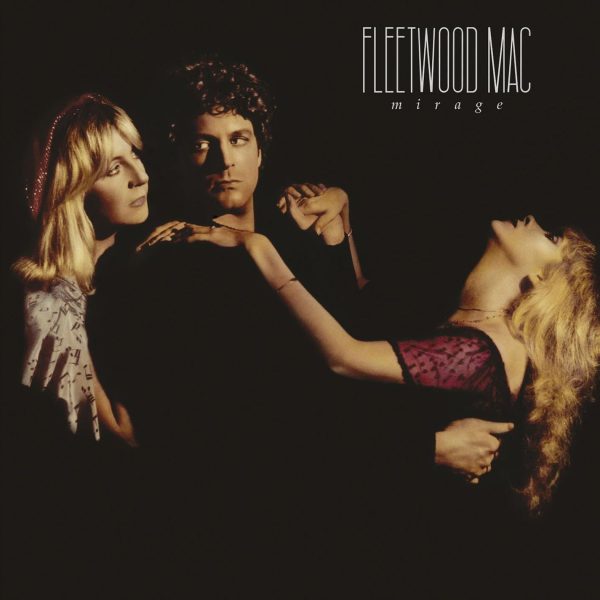
Fleetwood Mac Mirage Album – Available on Amazon
Get Fleetwood Mac Mirage Album on Vinyl or CD at Amazon
Affiliate Disclosure: I am an Amazon affiliate and if you purchase through any Amazon links on this site I may earn a small commission at no extra charge to you. This helps support classicrockartists.com. Thank you for your support!
Table of Contents
Overview of Fleetwood Mac Mirage Album
Mirage marked a strategic pivot for Fleetwood Mac after the divisive reception of Tusk.
Where Tusk had embraced experimental production and unconventional song structures, Mirage returned to the streamlined pop sensibility that had defined Rumours.
The album featured twelve tracks that showcased the songwriting talents of all three principal composers: Lindsey Buckingham, Stevie Nicks, and Christine McVie.
Each writer contributed four songs, creating a balanced representation of the band’s diverse creative voices.
The production emphasized clarity and radio-friendly arrangements, with Buckingham and Richard Dashut co-producing the sessions.
The album’s sonic palette drew heavily from the California soft rock tradition while incorporating contemporary production techniques of the early 1980s.
Synthesizers and drum machines appeared alongside traditional rock instrumentation, creating a sound that felt both familiar and modern.
The title “Mirage” reflected the illusory nature of the band’s public image versus their private turmoil.
Despite ongoing personal conflicts and substance abuse issues, the Members of Fleetwood Mac managed to create an album that sounded effortless and cohesive.
The cover artwork featured a simple, elegant design that contrasted with the elaborate packaging of Tusk.
This visual simplicity mirrored the musical approach, signaling a return to basics after years of experimentation.
Recording History and Production
Recording sessions for Mirage began in early 1981 at various studios in France and Los Angeles.
The band initially convened at Château d’Hérouville, a residential studio outside Paris where Elton John and David Bowie had previously recorded.
The French sessions proved challenging due to equipment issues and the band’s ongoing personal conflicts.
After several weeks in France, the band relocated to Los Angeles to complete the album at various studios including Record Plant and Village Recorder.
Lindsey Buckingham assumed primary production duties alongside longtime collaborator Richard Dashut.
Buckingham’s production approach emphasized vocal harmonies and layered guitar textures, creating a lush sonic environment.
The sessions stretched over more than a year, with the band working intermittently as members pursued solo projects and dealt with personal issues.
According to Wikipedia’s documentation of the album, the recording process was marked by the same interpersonal tensions that had characterized previous albums.
Stevie Nicks and Lindsey Buckingham’s romantic relationship had ended years earlier, but their creative partnership remained fraught with unresolved emotions.
Christine McVie had divorced bassist John McVie, adding another layer of complexity to the studio dynamics.
Despite these challenges, the band members maintained professional standards and delivered performances that masked their personal struggles.
Mick Fleetwood’s steady drumming provided the rhythmic foundation, while John McVie’s bass lines anchored the arrangements.
The production incorporated state-of-the-art technology for 1982, including digital reverb units and early synthesizers.
Buckingham experimented with drum programming on several tracks, blending electronic and acoustic percussion.
The vocal arrangements featured the intricate three-part harmonies that had become a Fleetwood Mac trademark.
Each songwriter brought fully formed compositions to the sessions, with minimal collaborative writing compared to earlier albums.
This approach reflected the band’s fractured relationships but also allowed each writer’s distinct voice to shine through.
Track-by-Track Highlights of Fleetwood Mac Mirage Album
“Love in Store” opens the album with Christine McVie’s upbeat pop sensibility.
The song features a bouncing rhythm and optimistic lyrics about new romance, setting a positive tone for the album.
McVie’s keyboard work drives the arrangement, while Buckingham’s guitar adds textural color.
“Can’t Go Back” showcases Lindsey Buckingham’s more experimental side within a pop framework.
The track builds from a sparse opening to a dense wall of guitars and vocals, demonstrating Buckingham’s production skills.
“That’s Alright” returns to Christine McVie’s songwriting, offering a mid-tempo reflection on acceptance and moving forward.
The song’s gentle groove and reassuring lyrics provide emotional balance to the album’s more intense moments.
“Book of Love” features Buckingham’s distinctive vocal phrasing and intricate guitar arrangements.
The song explores themes of romantic uncertainty with a nervous energy that builds throughout its duration.
The connection to earlier work like Fleetwood Mac Go Your Own Way (1977) is evident in Buckingham’s raw emotional delivery.
“Gypsy” stands as one of Stevie Nicks’ most beloved compositions and became the album’s second single.
The song reflects on Nicks’ bohemian past before joining Fleetwood Mac, evoking nostalgia for simpler times.
Its sweeping arrangement and memorable chorus made it an instant classic, and you can explore more about this track at Fleetwood Mac Gypsy (1982).
“Only Over You” returns to Christine McVie’s keyboard-driven pop, featuring one of the album’s catchiest melodies.
The song’s production emphasizes clarity and space, allowing McVie’s voice to take center stage.
“Empire State” showcases Buckingham’s ability to craft complex arrangements within a pop song structure.
The track features layered guitars and a driving rhythm that builds to an explosive climax.
“Straight Back” demonstrates Stevie Nicks’ mystical songwriting style with references to Welsh mythology and personal transformation.
The song’s dramatic arrangement features prominent synthesizers and Nicks’ distinctive vocal delivery.
“Hold Me” became the album’s lead single and biggest hit, a Christine McVie composition that perfectly captured the Mirage sound.
The song’s yearning lyrics and soaring chorus demonstrated McVie’s gift for crafting radio-friendly pop with emotional depth.
“Oh Diane” features Buckingham’s most aggressive guitar work on the album, with a driving rhythm and urgent vocals.
The song’s energy provides a contrast to the album’s more polished moments, showcasing the band’s rock credentials.
“Eyes of the World” closes the album with a Buckingham composition that looks outward at global concerns.
The song’s atmospheric production and thoughtful lyrics provide a contemplative ending to the album’s journey.
“Wish You Were Here” appears as a bonus track on some editions, featuring Nicks’ wistful reflection on absence and longing.
Chart Performance of Fleetwood Mac Mirage Album
Mirage debuted at number one on the Billboard 200 chart in July 1982, validating the band’s return to commercial form.
The album spent five weeks at the top position, demonstrating sustained public interest.
It remained on the charts for 18 weeks, eventually selling over two million copies in the United States alone.
The album achieved platinum certification from the RIAA, confirming its commercial success.
In the United Kingdom, Mirage reached number five on the UK Albums Chart, performing respectably but not matching the dominance of Rumours.
The album also charted strongly in Canada, Australia, and New Zealand, demonstrating Fleetwood Mac’s global appeal.
“Hold Me” became the album’s most successful single, reaching number four on the Billboard Hot 100.
The song’s success on adult contemporary radio helped drive album sales throughout the summer of 1982.
“Gypsy” followed as the second single, peaking at number 12 on the Billboard Hot 100.
The song became one of Stevie Nicks’ signature solo performances within the Fleetwood Mac catalog.
“Love in Store” was released as the third single, reaching number 22 on the Billboard Hot 100.
The song performed particularly well on adult contemporary formats, showcasing Christine McVie’s crossover appeal.
“Oh Diane” served as the fourth single in some markets, though it achieved more modest chart success.
The album’s commercial performance exceeded Warner Bros. Records’ expectations after the disappointing sales of Tusk.
Mirage proved that Fleetwood Mac could still compete in the rapidly changing musical landscape of the early 1980s.
The album’s success also demonstrated that audiences preferred the band’s more accessible sound over experimental ventures.
Legacy and Cultural Impact
Mirage occupies a unique position in the Fleetwood Mac discography as the last truly successful album by the classic lineup.
While subsequent releases would chart, none would match the commercial and critical success of the 1975-1982 period.
The album demonstrated that the band could adapt to changing musical trends without abandoning their core identity.
Critics at the time offered mixed reviews, with some praising the return to form while others found the album too safe after Tusk’s adventurousness.
Rolling Stone gave the album a positive review, noting the strong songwriting and polished production.
Over time, Mirage has been reassessed as a solid, professional effort that showcased the band’s strengths without breaking new ground.
The album’s influence can be heard in subsequent soft rock and adult contemporary artists who embraced similar production aesthetics.
Songs like “Gypsy” have become staples of classic rock radio, introducing new generations to the album.
You can explore the full album on YouTube’s official playlist, which has accumulated millions of streams.
The album’s legacy is intertwined with the broader narrative of Fleetwood Mac’s career arc.
It represented the end of an era, as the band would never again achieve the same level of creative cohesion.
Subsequent albums like Tango in the Night would achieve commercial success but lacked the unified vision of Mirage.
The album’s production techniques influenced the sound of 1980s pop rock, particularly the use of synthesizers alongside traditional rock instrumentation.
Mirage also marked the last time all five members would contribute equally to a Fleetwood Mac album before various departures and reunions.
The album’s themes of nostalgia, lost love, and moving forward resonated with audiences navigating their own transitions.
In retrospect, Mirage serves as a time capsule of early 1980s production values and songwriting sensibilities.
Listener’s Note
When I first heard this album in the summer of 1982, I was immediately struck by how different it sounded from Tusk.
Where Tusk had challenged listeners with its experimental approach, Mirage felt like reconnecting with an old friend.
The opening notes of “Love in Store” signaled that Fleetwood Mac was back in familiar territory, and I felt both relief and excitement.
As the album progressed, I appreciated how each songwriter’s personality came through clearly.
Christine McVie’s songs offered warmth and accessibility, while Stevie Nicks brought her characteristic mysticism and drama.
Lindsey Buckingham’s contributions provided edge and complexity, preventing the album from becoming too comfortable.
I remember playing “Gypsy” repeatedly, captivated by its nostalgic lyrics and sweeping arrangement.
The song transported me to a different time and place, demonstrating Nicks’ gift for creating vivid emotional landscapes.
“Hold Me” became my go-to song for long drives, its yearning chorus perfectly suited to highway contemplation.
Over the years, my appreciation for Mirage has deepened as I’ve recognized its craftsmanship and professionalism.
While it may not have the raw emotional power of Rumours by Fleetwood Mac, it offers its own rewards.
The album represents a band at the height of their technical abilities, even as personal relationships continued to fray.
I’ve come to see Mirage as a testament to the power of professionalism and dedication to craft.
These musicians set aside their differences to create something beautiful, and that achievement deserves recognition.
Listening to the album today, I’m transported back to 1982 while also hearing elements that remain timeless.
The production may sound dated in places, but the songwriting and performances transcend their era.
Affiliate Disclosure: I am an Amazon affiliate and if you purchase through any Amazon links on this site I may earn a small commission at no extra charge to you. This helps support classicrockartists.com and allows me to keep providing deep-dive content on the legends of rock. Thank you for your support!
Collector’s Corner
For collectors and fans looking to own Mirage, several formats offer different listening experiences.
The original vinyl pressing from 1982 provides the warmest sound, particularly for the album’s lush vocal harmonies.
Warner Bros. has reissued the album multiple times on CD, with various remastering efforts improving the sound quality.
The 2016 remaster offers the best digital sound, with enhanced clarity and dynamic range compared to earlier CD releases.
Some deluxe editions include bonus tracks and alternate versions, providing additional insight into the recording process.
The album is also available on all major streaming platforms, making it easily accessible to new listeners.
For the ultimate listening experience, I recommend the vinyl format, which captures the warmth of the original production.
You can find various editions of Mirage at competitive prices through online retailers.
Purchase Fleetwood Mac Mirage Album on Amazon to add this essential album to your collection.
Whether you’re a longtime fan or discovering Fleetwood Mac for the first time, Mirage deserves a place in your music library.
FAQ About Fleetwood Mac Mirage Album
When was Fleetwood Mac Mirage Album released?
Mirage was released on June 18, 1982, through Warner Bros. Records.
The album arrived three years after Tusk, marking the longest gap between Fleetwood Mac studio albums at that point.
The release timing positioned it for summer radio play, which helped drive its commercial success.
Who produced Fleetwood Mac Mirage Album?
Lindsey Buckingham and Richard Dashut served as co-producers for the album.
Buckingham had increasingly taken control of production duties since Rumours, shaping the band’s sound according to his vision.
Dashut had worked with the band since the mid-1970s and understood their creative process intimately.
Ken Caillat, who had co-produced Rumours and Tusk, was notably absent from the Mirage sessions.
What are the most popular songs from Fleetwood Mac Mirage Album?
“Hold Me” remains the album’s most commercially successful track, reaching number four on the Billboard Hot 100.
“Gypsy” has become the most enduring song from the album, frequently appearing on classic rock radio and streaming playlists.
“Love in Store” also achieved significant chart success and remains a fan favorite.
These three tracks represent the album’s commercial and artistic peaks, showcasing the diverse talents within the band.
How does Mirage compare to other Fleetwood Mac albums?
Mirage sits between the experimental Tusk and the massive commercial success of Rumours in terms of both sound and reception.
It lacks the raw emotional intensity of Rumours but offers more accessibility than Tusk’s avant-garde approach.
The album represents a mature, polished version of the Fleetwood Mac sound without the groundbreaking innovation of earlier releases.
Compared to later albums like Tango in the Night, Mirage feels more organic and less reliant on studio technology.
You Might Also Like
Fleetwood Mac Tusk Album
Explore the experimental double album that preceded Mirage and divided critics and fans alike.
Fleetwood Mac Greatest Hits Songs
Discover the essential tracks that define Fleetwood Mac’s legendary career across all eras.
Fleetwood Mac Dreams (1977)
Learn about Stevie Nicks’ most iconic song and its unexpected viral resurgence decades after release.
The Fleetwood Mac Mirage Album stands as a testament to the band’s ability to deliver polished, professional pop-rock even amid personal turmoil and changing musical landscapes.