

Carry On Wayward Son by Kansas is one of the defining recordings of American progressive rock, a track whose a cappella vocal introduction, Bach-influenced counterpoint, and the extraordinary musical range of its six-minute arrangement established it as a landmark of the genre and one of the most recognisable rock recordings of 1976.
Affiliate Disclosure: I am an Amazon affiliate and if you purchase through any amazon links on this site i may earn a small commission at no extra charge to you.
Written by Kerry Livgren and produced by Jeff Glixman, the track opens the album Leftoverture with a vocal-only passage before exploding into one of the most elaborately arranged hard rock performances of the era.
Carry On Wayward Son reached #11 on the US Billboard Hot 100 and helped drive Leftoverture to platinum certification, establishing Kansas as one of the foremost American progressive rock bands of the 1970s and demonstrating that the genre’s European sophistication could be matched by a band from Topeka, Kansas.
The recording has remained a fixture on classic rock radio for nearly fifty years, and its combination of hard rock energy, classical counterpoint, philosophical lyric, and the vocal and instrumental virtuosity of all six band members gives it an endurance that few recordings of the era can match.
| Song Title | Carry On Wayward Son |
| Artist | Kansas |
| Album | Leftoverture (1976) |
| Released | October 1976 |
| Written By | Kerry Livgren |
| Producer | Jeff Glixman |
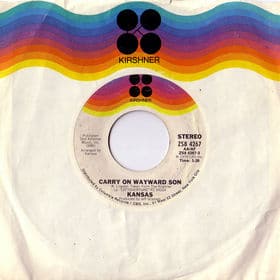
| Label | Kirshner Records |
| Chart Peak | #11 US Billboard Hot 100 |
What Is the Song About?
The song is about the spiritual and philosophical journey of someone who has lived a restless, searching life and is seeking peace and resolution after years of wandering and struggle.
Kerry Livgren wrote the lyric as a personal reflection on his own spiritual searching, and the “wayward son” of the title is a figure who has pursued knowledge and experience in many directions without finding the stillness he is seeking.
The lyric draws on the biblical parable of the Prodigal Son but extends it into a broader meditation on the human condition, on the desire for understanding, and on the possibility of eventual peace after a life of restless questioning.
Livgren was in a period of intensive philosophical and spiritual searching when he wrote the song, reading widely in Eastern and Western religious traditions, and this breadth of reference gives the lyric a depth that extends well beyond the standard rock song vocabulary.
The Vibe: Genre, Mood, and Search Intent
The recording opens with an a cappella vocal passage in which all the band members sing together in close harmony, a choice that immediately signals the track’s classical and choral influences and creates a moment of quiet before the full band erupts with the main guitar riff.
Robby Steinhardt‘s violin is woven throughout the arrangement, providing a melodic voice that bridges the gap between the track’s hard rock foundation and its classical aspirations.
- Genre: Progressive Rock, Hard Rock, Classic Rock
- Mood: Epic, Searching, Triumphant
- Tempo: Mid-tempo prog rock (~126 BPM)
- Best For: Classic rock playlists, progressive rock collections, 1970s rock deep dives
- Similar To: Rush “Tom Sawyer”, Yes “Roundabout”
- Fans Also Search: Kansas Leftoverture album, Kerry Livgren songwriting, Kansas violin rock
Behind the Lyrics: The Song’s Story
Livgren has described the writing of Carry On Wayward Son as arising from a period of personal crisis in which the questions the lyric addresses were ones he was genuinely grappling with rather than constructing as artistic material.
The musical structure of the recording reflects the lyric’s content: the a cappella opening suggests the vulnerability of someone asking questions without knowing the answers, while the hard rock riff that follows represents the energy and determination with which the wayward son pursues his journey.
According to the Wikipedia entry on the song, the Bach-influenced counterpoint sections drew on Livgren’s and keyboard player Steve Walsh‘s shared interest in classical music, and the arrangement was developed collaboratively by all six band members during rehearsals.
The decision to open Leftoverture with Carry On Wayward Son was deliberate: the track announces the album’s ambitions immediately and gives listeners a complete statement of what Kansas could do before the album unfolds its broader range.
For listeners exploring the American progressive rock tradition, this recording belongs alongside Rush’s 2112 and Styx’s The Grand Illusion as one of the recordings that demonstrated how far American bands could push the genre’s formal ambitions.
Technical Corner: Gear and Production
Kerry Livgren’s guitar work on the recording combines hard rock rhythm playing with classical-influenced melodic lines, requiring both the raw power needed for the riff sections and the precision needed for the contrapuntal passages.
Walsh’s vocal performance ranges from the intimate a cappella opening to full-power hard rock delivery in the chorus, and his ability to sustain both registers across the track’s six-minute running time demonstrates a vocal versatility that was unusual in rock of the period.
Steinhardt’s violin contributions are integrated into the arrangement rather than added as a novelty: the instrument functions as a melodic voice equal to the guitars and keyboards, and its presence gives the recording a sonic palette unavailable to bands without a classically trained string player.
Jeff Glixman’s production captured the complexity of the arrangement with remarkable clarity, giving each of the six instruments and the multi-part vocal harmonies their own space in a mix that could easily have become crowded.
Rich Williams‘s rhythm guitar and Dave Hope‘s bass provide the harmonic and rhythmic foundation that allows the more elaborately arranged elements to develop without losing structural coherence.
Legacy and Charts: Impact and Endurance
Carry On Wayward Son reached #11 on the US Billboard Hot 100 in late 1976 and was the commercial breakthrough that established Kansas as a nationally significant act after years of regional success.
The track’s endurance on classic rock radio has been extraordinary even by the standards of the 1970s: it has received consistent airplay for nearly five decades and has appeared on more “greatest rock songs” compilations than almost any other recording from the progressive rock genre.
The recording demonstrated that progressive rock’s classical influences and extended formal ambitions were not incompatible with commercial radio success, a lesson that influenced numerous American bands of the late 1970s and early 1980s.
Livgren’s subsequent spiritual journey from the philosophical searching of the song’s writing period to his eventual Christian conversion in 1979 added a layer of personal narrative to the recording’s legacy that has made it a point of reflection for many listeners.
It stands as one of the defining recordings of American progressive rock and one of the most enduring singles of 1976, a track whose ambition and execution have kept it relevant across generations of rock listeners.
Listener’s Note: A Personal Take
The a cappella opening is one of the great moments of theatrical anticipation in classic rock: the unaccompanied voices create a sense of vulnerability and solemnity that makes the entry of the full band feel like a release rather than simply a volume increase.
Walsh’s vocal is a tour de force of range and commitment: the ability to move from the delicate harmony of the opening through the hard rock power of the chorus and into the more philosophical passages without losing conviction or quality at any point is a genuinely remarkable achievement.
Steinhardt’s violin work is what most distinguishes the recording from its hard rock contemporaries: the instrument adds a melodic voice that the guitars and keyboards cannot replicate, and its presence throughout the arrangement gives the track a colour and sophistication that was unique in its era.
The contrapuntal guitar and keyboard passages mid-track are where the Bach influence is most audible, and Glixman’s production decision to give these sections the space they need rather than pushing them aside for more conventional rock elements reflects real confidence in the material.
It is a recording that rewards the kind of detailed listening that its makers clearly put into creating it: the more closely you attend to what is happening in any given moment, the more craft you discover in how the arrangement was built.
Watch: The Official Music Video
Watch Kansas performing the song in this official video:
Collector’s Corner: Own a Piece of Rock History
Kansas: Leftoverture (1976)
Own the platinum album that established Kansas as one of the foremost American progressive rock bands and launched one of the most ambitious careers in 1970s rock.
Original Kirshner Records pressings, remastered editions, and vinyl available.
Frequently Asked Questions
What is the song about?
The track is about a restless, spiritually searching person seeking peace after years of wandering and questioning. Kerry Livgren wrote the lyric as a personal reflection on his own philosophical journey, drawing on the biblical Prodigal Son parable and extending it into a broader meditation on the search for meaning and eventual peace.
Who wrote the song?
Carry On Wayward Son was written solely by Kerry Livgren, Kansas’s guitarist and primary songwriter. Livgren wrote it during a period of personal spiritual searching, and the philosophical content of the lyric reflects the genuine questions he was grappling with at the time of writing.
What is the a cappella opening?
The recording opens with all six band members singing in close harmony without any instrumental accompaniment, a moment of choral vulnerability before the full band enters with the main guitar riff. The a cappella passage reflects the Bach choral influences that run through the arrangement and creates one of the most effective moments of theatrical anticipation in classic rock.
Who are the members of Kansas on the recording?
The recording features Steve Walsh on lead vocals and keyboards, Kerry Livgren on guitar and keyboards, Rich Williams on guitar, Dave Hope on bass, Phil Ehart on drums, and Robby Steinhardt on violin and vocals. The six-member lineup with a dedicated violin player was unusual in rock and gave Kansas a distinctive sonic identity.
How did the track chart?
Carry On Wayward Son reached #11 on the US Billboard Hot 100 in 1976. The single’s success helped drive the Leftoverture album to platinum certification and established Kansas as one of the most commercially significant American progressive rock bands of the late 1970s.
What classical influences are in the recording?
The recording draws primarily on Bach’s contrapuntal writing style, with multiple melodic voices moving independently in the instrumental sections. Robby Steinhardt’s violin provides a classically trained string voice that carries the Bach influence most directly, while the contrapuntal guitar and keyboard passages in the mid-section reflect Livgren’s and Walsh’s shared interest in baroque counterpoint.
Who produced the recording?
Jeff Glixman produced the recording. His production approach captured the complexity of the six-instrument arrangement and multi-part vocal harmonies with remarkable clarity, giving each element its own space in a mix that could easily have become cluttered. Glixman went on to produce several subsequent Kansas albums.
What album is the song from?
Carry On Wayward Son is the opening track on Kansas’s fourth studio album Leftoverture, released on Kirshner Records in October 1976. The album reached #5 on the US Billboard 200 and was certified platinum, making it the commercial breakthrough that established Kansas as a nationally significant act.
You May Also Like
Yes: Roundabout (1971)
A British progressive rock landmark that shares the same classical influences, extended arrangement, and commitment to musical virtuosity over commercial simplicity.
Rush: Closer to the Heart (1977)
A Canadian progressive rock classic from the following year, sharing the same philosophical lyric, instrumental sophistication, and the same ability to combine complex arrangements with genuine commercial accessibility.
Styx: Come Sail Away (1977)
An American progressive rock epic from the same era, sharing the same combination of hard rock energy and classical musical ambition that defined the best American prog rock of the late 1970s.
Nearly fifty years after its release, Carry On Wayward Son retains every degree of the musical ambition, philosophical depth, and instrumental virtuosity that made it one of the most distinctive rock singles of 1976 and one of the recordings that most completely captures what American progressive rock could achieve at its best.