

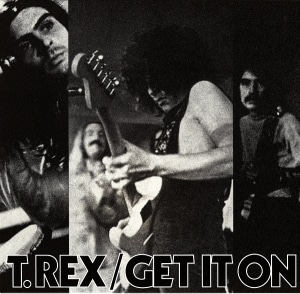
Bang a Gong (Get It On) (released in the US as Bang a Gong) by T. Rex is the defining glam rock single of 1971, a recording that combined Marc Bolan’s Chuck Berry-influenced riff, a remarkable set of session musicians, and a performance of complete conviction to produce one of the era’s most enduring tracks.
Affiliate Disclosure: I am an Amazon affiliate and if you purchase through any amazon links on this site i may earn a small commission at no extra charge to you.
Written by Marc Bolan and produced by Tony Visconti at Trident Studios in London, the recording featured piano by Rick Wakeman, saxophone by Ian McDonald of King Crimson, and backing vocals by Mark Volman and Howard Kaylan, formerly of The Turtles.
Get It On spent four weeks at number one on the UK Singles Chart beginning July 24, 1971, and reached #10 on the US Billboard Hot 100 in March 1972, where it was retitled Bang a Gong to avoid confusion with a song of the same name by the band Chase.
The recording contains an unscripted ad-lib from Chuck Berry’s “Little Queenie” in its fade, included by Bolan as a conscious acknowledgement of the rock and roll tradition from which the song so directly drew its energy and structure.
The track appeared on the Electric Warrior album (1971), widely regarded as the definitive T. Rex record and one of the most important albums in the history of British glam rock.
| Song Title | Get It On (Bang a Gong) |
| Artist | T. Rex |
| Album | Electric Warrior (1971) |
| Released | 2 July 1971 |
| Written By | Marc Bolan |
| Producer | Tony Visconti |
| Label | Fly Records (UK), Reprise Records (US) |
| Chart Peak | #1 UK (4 weeks), #10 US Billboard Hot 100 |
What Is the Song About?
Bang a Gong (Get It On) is a song about physical desire and the chemistry of attraction, its lyric operating in the tradition of Chuck Berry’s double-entendre rock and roll while adding Bolan’s characteristic mythological imagery and surrealist detail.
The verses describe an encounter through a series of image fragments rather than a conventional narrative, and the effect is of desire rendered as a series of sensory impressions rather than a story with a beginning and an end.
Bolan understood that the most effective rock and roll lyrics function through suggestion and energy rather than explicit statement, and this recording is one of the clearest demonstrations of that understanding in the genre’s history.
The chorus is an invitation and a declaration simultaneously, and its combination with the riff’s insistent forward momentum gives the song its particular quality of irresistible propulsion.
The Vibe: Genre, Mood, and Search Intent
Bang a Gong (Get It On) opens with Bolan’s guitar riff, a figure that Tony Visconti has confirmed draws directly from Chuck Berry’s “Little Queenie” chord changes, establishing the song’s rock and roll lineage in its first two bars.
Rick Wakeman’s piano adds a melodic layer that sits perfectly beneath Bolan’s vocal, and Ian McDonald’s saxophone contributions give the recording a texture that distinguishes it from a straightforward guitar rock track.
- Genre: Glam Rock, Hard Rock, Classic Rock
- Mood: Driving, Seductive, Celebratory
- Tempo: Mid-tempo boogie (~132 BPM)
- Best For: Glam rock playlists, 1970s rock collections, British rock history
- Similar To: David Bowie “Ziggy Stardust”, Sweet “Ballroom Blitz”
- Fans Also Search: T. Rex discography, Electric Warrior album, Marc Bolan guitar
Behind the Lyrics: The Song’s Story
Bolan had been developing the blues boogie style that characterises Get It On throughout 1970 and early 1971, and the song represented the fullest expression of the direction in which T. Rex had been moving since their transition from acoustic folk to electric rock.
Tony Visconti’s account of the recording session confirms that Bolan drew consciously from Chuck Berry’s repertoire: the chord changes are essentially those of “Little Queenie,” and Bolan’s inclusion of an actual Berry ad-lib in the fade was a deliberate act of homage.
According to the Wikipedia entry on Get It On, the remarkable session musicians assembled for the recording were not T. Rex’s regular live band but were brought in specifically for the Electric Warrior sessions to add orchestral and textural elements that Bolan’s live quartet could not provide.
The famous Top of the Pops performance in which Elton John was filmed appearing to play piano — while actually miming, since he did not play on the studio recording — became one of the defining television moments of early 1970s British pop.
For listeners exploring the foundations of British glam rock, this track stands alongside David Bowie’s work of the same period as one of the recordings that defined what the genre could be at its best.
Technical Corner: Gear and Production
Tony Visconti’s production approach on Electric Warrior was built around creating a sound that was simultaneously rooted in classic rock and roll and forward-looking enough to feel genuinely new in 1971.
Bolan’s guitar tone is warm and slightly compressed, with the Les Paul’s natural sustain given room to breathe by Visconti’s recording choices at Trident Studios, and the result is a sound that is simultaneously familiar and distinctive.
Rick Wakeman’s piano contribution is unobtrusive but essential: his glissandos and fills add a melodic texture that gives the recording a fullness that a pure guitar-bass-drums arrangement would not have provided.
Ian McDonald’s saxophone work, subtle and perfectly placed, adds a depth to the arrangement that acknowledges the song’s jazz and rhythm and blues roots without turning it into a genre exercise.
The inclusion of Mark Volman and Howard Kaylan’s backing vocals gave Bolan’s lead a harmonic support that reinforced the song’s pop elements while the instrumental arrangement maintained its rock energy.
Legacy and Charts: Impact and Endurance
Bang a Gong (Get It On) spent four consecutive weeks at number one on the UK Singles Chart beginning July 24, 1971, and its US chart performance of #10 the following year confirmed T. Rex’s international commercial breakthrough.
The Electric Warrior album reached #1 on the UK Albums Chart and was a critical and commercial landmark that established Bolan as one of the defining figures of early 1970s British rock.
The track’s influence on subsequent glam rock recordings is extensive: its combination of blues boogie guitar, theatrical vocal performance, and sophisticated session playing established a template that David Bowie, Sweet, Mott the Hoople, and Slade all drew from in different ways.
Its regular presence on classic rock radio across more than fifty years confirms an endurance that only the most genuinely effective recordings of the era have managed to sustain.
The track stands as one of the definitive recordings of the glam rock era and one of the most important British singles of the 1970s.
Listener’s Note: A Personal Take
There is a quality to the guitar riff that makes it impossible to hear without understanding immediately what kind of record this is: confident, rooted in rock and roll tradition, and completely committed to its own terms.
Bolan’s vocal is one of the great glam rock performances: slightly nasal, completely assured, and full of the self-mythologising energy that was his defining artistic characteristic.
The combination of Rick Wakeman’s piano, Ian McDonald’s saxophone, and Bolan’s guitar creates an arrangement that is denser and more sophisticated than a casual listening suggests: there is real musicianship in the construction of the track’s sound, not just attitude.
The Chuck Berry ad-lib at the fade is one of rock music’s great moments of self-awareness: a performer who knows exactly where his music comes from, acknowledging that debt openly and joyfully rather than pretending to have invented something from nothing.
It is a record that gets better on repeated listening, because the more closely you attend to the arrangement, the more clearly you can hear the intelligence and craft that went into making something that sounds this effortless.
Watch: The Official Music Video
Watch T. Rex performing the song in this official video:
Collector’s Corner: Own a Piece of Rock History
T. Rex: Electric Warrior (1971)
Own the landmark glam rock album that contains one of the era’s most celebrated recordings.
Original Fly Records and Reprise pressings, remastered editions, and vinyl available.
Frequently Asked Questions
Who wrote Bang a Gong (Get It On)?
Bang a Gong (Get It On) was written entirely by Marc Bolan. Tony Visconti, who produced the recording, has confirmed that the chord changes are drawn from Chuck Berry’s “Little Queenie,” which Bolan adapted and built upon to create his own composition.
What is Get It On about?
The song is about physical desire and attraction, its lyric operating in the tradition of Chuck Berry’s double-entendre rock and roll while adding Bolan’s characteristic surrealist imagery. The verses present desire through a series of image fragments rather than a conventional narrative.
How did Get It On chart?
The single reached #1 on the UK Singles Chart, where it remained for four weeks beginning July 24, 1971. In the US, retitled Bang a Gong (Get It On), it reached #10 on the Billboard Hot 100 in March 1972 and #12 on the Cash Box chart.
Why was the song retitled Bang a Gong in the US?
The song was retitled Bang a Gong for the US market to avoid confusion with a song called “Get It On” by the American band Chase, which had been released in 1971. The Reprise Records release retained the original title in parentheses.
Who played piano on the recording?
Rick Wakeman played piano on the recording, contributing glissandos and fills that give the track its textural depth. Wakeman was not a T. Rex band member but was brought in as a session musician for the Electric Warrior album sessions. He later became famous as the keyboardist of Yes.
What is the Chuck Berry connection in the song?
The song’s chord changes are drawn from Chuck Berry’s “Little Queenie,” as confirmed by producer Tony Visconti. Bolan also included an actual Berry lyric ad-lib in the fade of the recording as an explicit acknowledgement of his debt to the rock and roll tradition. The gesture is both homage and celebration.
Which album features the song?
The track appears on Electric Warrior, T. Rex’s fifth studio album, released on September 24, 1971 on Fly Records in the UK. The album reached #1 on the UK Albums Chart and is widely regarded as the definitive T. Rex recording.
Who performed the backing vocals?
The backing vocals were performed by Mark Volman and Howard Kaylan, formerly of The Turtles, who were working as session vocalists under the name Flo and Eddie at the time. Their contributions add a harmonic warmth that reinforces the song’s pop elements without softening its rock energy.
You May Also Like
David Essex: Rock On (1973)
A 1973 British glam pop recording that shares the same era and the same distinctive approach to production, featuring an unconventional sound that distinguished it from mainstream contemporary recordings.
Sweet: Ballroom Blitz (1973)
A fellow British glam rock classic from two years later that shares the same driving energy and the same commitment to making rock and roll sound simultaneously glamorous and completely committed.
Uriah Heep: Easy Livin’ (1972)
A 1972 British hard rock recording from the same year, sharing the same energy and commitment to maximum impact in minimum running time that characterises the best British rock of the period.
More than fifty years after its release, this recording retains every degree of the confidence and forward momentum that made it a landmark of British rock in 1971, and it continues to represent the high-water mark of what T. Rex and Marc Bolan achieved at their best.