Dr. Feelgood: How Mötley Crüe Conquered 1989
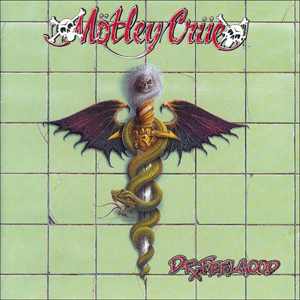
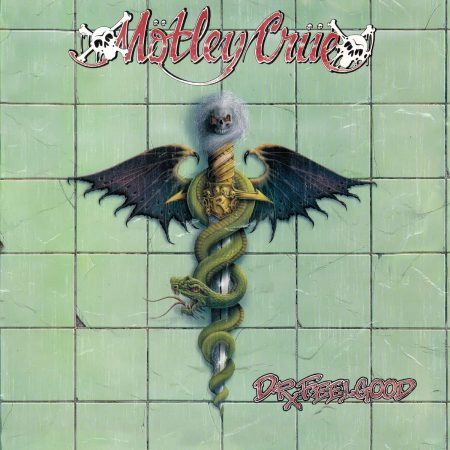
Dr. Feelgood arrived in September 1989 and ended any question about whether Mötley Crüe still belonged at the top of hard rock.
The band had spent most of 1988 in a crisis that nearly finished them: overdoses, rehab, a near-death experience for Nikki Sixx, and a collective reckoning that forced every member to get sober before they could write another note.
What they recorded on the other side of that reckoning was Dr. Feelgood, the title track and the most fully realized song of their career to that point.
The song hit radio like a band with something to prove, which is exactly what it was.
Quick Navigation
What Dr. Feelgood Is Really About
The character at the center of the song is a drug dealer, and the band wrote about him from the perspective of people who understood that world in detail.
The song presents the dealer not as a villain but as a seductive presence, a figure who offers escape and asks no questions.
Nikki Sixx constructed the lyric so that the listener could hear the pull of that offer without endorsing it.
There is a knowing quality to the writing that would not have existed if the band had still been using, because the song requires the writer to see the character from the outside.
Getting sober before recording did not soften the song; it gave it a precision that made it hit harder than anything Mötley Crüe had written in the years when they were living the lifestyle they described.
Vince Neil (full biography) delivered the vocal with a restraint that contrasted the swagger of the track, and the tension between the two made the recording work.
The song knows exactly what it is and plays it completely straight, which is what kept it from becoming a cartoon.
The Making of Dr. Feelgood in 1989
Producer Bob Rock was the key hire that changed how this record sounded.
Rock had built his reputation on the Vancouver scene and would go on to produce Metallica’s Black Album, but in 1989 his full attention went to making Mötley Crüe the most powerful version of themselves they had ever been on tape.
He pushed Mick Mars (full biography) toward a guitar tone that was cleaner and more controlled than the band had ever used, and the result gave every riff more room to breathe.
Tommy Lee (full biography) recorded his drum parts with a clarity that placed his performance front and center in the mix rather than burying it beneath distortion.
The sessions at Little Mountain Sound Studios in Vancouver ran longer than any previous Mötley Crüe record because the band, for the first time, approached the work with patience.
Sobriety gave them the ability to come back to a track the next day and hear it clearly, which changed how every decision was made.
The title track itself was tracked early in the sessions and set the tone for everything that followed.
Mötley Crüe’s Comeback After Rock Bottom
The full story of Mötley Crüe includes a period in the late 1980s that most bands would not have survived.
Nikki Sixx was clinically dead for two minutes following a heroin overdose in December 1987, a moment that became the origin story for Kickstart My Heart.
Tommy Lee entered rehab, Vince Neil (read about his recent comeback) followed, and the band collectively made the decision to record what became Dr. Feelgood without substances for the first time.
The paradox is that this decision, born from crisis, produced the most commercially and critically successful album of their career.
Critics who had written the band off as a spent force in the late 1980s had to reckon with a record that sounded more focused and more dangerous than anything the band had made when they were at their most chaotic.
Sobriety did not make Mötley Crüe soft; it made them precise, and Dr. Feelgood was the proof.
How the Dr. Feelgood Album Hit Number One
The Dr. Feelgood album debuted at number one on the Billboard 200 in September 1989, the first number one album of the band’s career.
The record was eventually certified six times platinum in the United States, making it the best-selling album Mötley Crüe ever released.
The title track performed strongly at rock radio and established the commercial foundation that allowed the album’s singles to build on each other throughout the fall and winter of 1989.
Kickstart My Heart followed as a second single and became one of the defining rock tracks of the year, but the title track had opened the door.
Radio programmers responded to the cleaner, more confident production that Bob Rock had brought to the record, and the consistency of the album meant it held its chart position for months rather than dropping after the initial release week.
The supporting tour sold out arenas across North America and Europe, and every night the title track opened the show with the same authority it projected on radio.
The Dr. Feelgood Music Video
The music video captured the band performing in a dark, industrial setting that matched the mood of the track without trying to illustrate the lyric literally.
Director Wayne Isham, who had shot the band’s earlier videos, kept the camera on the performances rather than constructing a narrative around the drug dealer character at the center of the song.
The decision served the song well, because the track’s power comes from the riff and the vocal rather than from any story that could be told in images.
MTV put the Dr. Feelgood video into regular rotation immediately, without the resistance the band had encountered with earlier clips.
The combination of the video’s intensity and the song’s radio presence created a feedback loop that drove album sales through the end of 1989 and into 1990.
Every time the clip aired, it reminded viewers who had not yet bought the album that they were missing something.
The Legacy of Dr. Feelgood
The record that shares the song’s name is regularly cited as one of the essential hard rock albums of the 1980s, appearing on lists of the decade’s best records nearly forty years after its release.
Dr. Feelgood arrived at the end of the decade and served as both a summary and a conclusion for the style of hard rock that had defined the Sunset Strip since the early 1980s.
Within two years, the musical landscape would shift dramatically with the arrival of grunge, and the era that produced this song would close.
The fact that Dr. Feelgood stands as the commercial peak of that era rather than a footnote is a direct result of how seriously the band and Bob Rock approached the record.
The internal conflicts that would later reshape Mötley Crüe were nowhere in evidence in 1989, and the album sounds like a band in full command of what it was doing.
The official Mötley Crüe site still presents Dr. Feelgood as a centerpiece of the band’s catalog, and the streaming numbers confirm that a new audience finds it every year.
Dr. Feelgood and Mötley Crüe in 2026
The song remains a permanent fixture in the band’s live set, and it carries the same weight now that it carried in arenas in 1989.
When the band launched the 2026 Carnival of Sins tour, the title track appeared in the set list in its original position near the peak of the show.
John 5 (full biography) brings the Mick Mars guitar parts to the live performance with the same precision that Bob Rock demanded in the studio in 1989.
The band’s 2026 television performance on American Idol introduced the song to an audience that was not born when it charted, and the reaction confirmed that it requires no historical context to land.
Dr. Feelgood works in 2026 for the same reason it worked in 1989: the riff is honest, the performance is direct, and the song refuses to explain itself to anyone.
Watch Dr. Feelgood Now
The official music video below captures the band at the peak of their powers, backed by one of the tightest productions of the hard rock era.
Turn it up and remember why Dr. Feelgood was the only number one that mattered in 1989.
Own Dr. Feelgood on Amazon
The album that put Mötley Crüe at number one and defined the final year of 1980s hard rock is available now.