

Geezer Butler is the reason Black Sabbath had something to say, and what he said changed rock music from the inside out.
Every bassist who ever cranked a wah pedal into a minor-key riff owes something to a kid from Aston, Birmingham, who taught himself bass guitar because Tony Iommi told him there was no room for another rhythm guitarist.
He became the heaviest, darkest lyricist in rock history almost by accident, and the lines he wrote about war, addiction, and the supernatural are still more honest than almost anything written in the decades since.
▼ Quick Navigation
- Who Is Geezer Butler?
- Geezer Butler’s Early Life in Aston, Birmingham
- How Geezer Butler Became the Black Sabbath Bassist
- Geezer Butler’s Lyrical Vision
- Geezer Butler’s Bass Style and Technique
- Black Sabbath: The Ozzy Era (1968-1979)
- Geezer Butler’s Side Projects
- Geezer Butler’s Memoir: Into the Void (2023)
- Geezer Butler at Back to the Beginning
- Where Is Geezer Butler Now?
- Geezer Butler’s Legacy
- Frequently Asked Questions About Geezer Butler
Who Is Geezer Butler?
Geezer Butler is the bassist and primary lyricist of Black Sabbath, the band widely credited with creating the template for heavy metal music.
Born Terence Michael Joseph Butler on July 17, 1949, in Aston, Birmingham, England, he is 76 years old as of 2026.
His nickname “Geezer” is straightforward British slang for a man or bloke, handed to him by schoolmates in Aston.
He has been married to Gloria Butler, who later went on to manage the Heaven and Hell reunion band, for decades.
He is a lifelong and devoted supporter of Aston Villa FC, a detail that would matter enormously on July 5, 2025.
What makes Geezer Butler unlike almost any other bassist in rock history is that he did two jobs at once and did both better than almost anyone else.
He held down the low end of the heaviest band on earth while simultaneously writing every word Ozzy Osbourne sang during the band’s most important decade.
For the full roster of musicians who passed through Black Sabbath, the complete members of Black Sabbath story covers every lineup change in depth.
Geezer Butler’s Early Life in Aston, Birmingham
Aston in the late 1940s and 1950s was an industrial neighborhood built around factories, foundries, and the kind of postwar working-class grit that produced some of Britain’s most creative minds.
Butler grew up in a Catholic household, part of the Irish immigrant community that had settled across Birmingham’s inner neighborhoods in large numbers.
The neighborhood shaped him in ways that would surface decades later in his lyrics: the noise, the poverty, the sense that life could grind you down unless you found something to believe in.
He attended school in Aston alongside Tony Iommi and Bill Ward, two of the boys who would eventually form the core of Black Sabbath with him and Ozzy Osbourne.
Music arrived as the one clear exit from a predetermined future of factory work and gray English winters.
His early listening was shaped by the British blues explosion, particularly bands like Cream and the work of Jack Bruce, who planted the idea that a bassist could be the most compelling voice in a room.
Geezer Butler absorbed everything the mid-1960s British music scene offered and started playing rhythm guitar in local groups before his instrument even settled into something permanent.
💡 Did You Know?
Before Butler ever wrote a lyric about the occult, his biggest literary influence was British horror novelist Dennis Wheatley, whose 1934 supernatural thriller “The Devil Rides Out” introduced a generation of English readers to Satanic ritual, black magic, and the occult.
Wheatley’s books were enormous bestsellers in postwar Britain, and Butler has cited them as a direct influence on the dark lyrical imagery that made Black Sabbath unique. The church bell, the apparition, the sense of supernatural dread in early Sabbath lyrics all trace back in part to those paperback pages.
How Geezer Butler Became the Black Sabbath Bassist
Geezer Butler did not start out as a bassist.
He was playing rhythm guitar in local Birmingham groups when he crossed paths with Tony Iommi, Bill Ward, and eventually Ozzy Osbourne.
The story of how he switched instruments is one of the most consequential pivots in rock history: Tony Iommi told him bluntly that the band did not need another guitarist.
Rather than walk away, Butler taught himself bass guitar specifically to remain in the group.
He had no formal training, no bass teacher, and no real model for what a heavy rock bassist should sound like beyond the instinct to follow Iommi’s riffs as closely as possible.
That instinct turned out to be the key.
Where most bands of the era used the bass to anchor the drums and stay out of the way, Butler pushed his instrument into the center of the sound.
He played bass lines in unison with Iommi’s guitar, doubling and thickening the riffs until the combined effect became something that had never been heard before in rock music.
The band went through several name changes, from Polka Tulk Blues Band to Earth to Black Sabbath, before settling on the name that would define the genre.
By the time they recorded their debut, Geezer Butler had transformed from a reluctant bassist into the most important low-end player in heavy music.
Geezer Butler’s Lyrical Vision
Geezer Butler wrote virtually every lyric Black Sabbath recorded during the Ozzy Osbourne era, a body of work that amounts to the founding text of heavy metal literature.
His influences were specific and deliberately dark: horror fiction, the occult writings of Aleister Crowley, social commentary on the Vietnam War, and his own personal encounters with the supernatural.
The encounter that produced the song “Black Sabbath” was not a metaphor.
Butler had been studying occultism and placed an Aleister Crowley book by his bed.
He woke in the night to see a black-robed apparition standing at the foot of the bed.
The figure vanished, the Crowley book was gone in the morning, and Butler never touched the occult again.
But he wrote down what he saw, gave it to Ozzy, and the result was one of the most unsettling opening tracks in rock history.
The song N.I.B. explored supernatural love and demonic obsession with a lyrical directness that most writers would not have risked.
“The Wizard” framed occult power through a wandering figure who heals and enchants, drawn as much from Tolkien as from Crowley.
Butler balanced the supernatural themes with ferocious political writing.
“War Pigs” is one of the most direct anti-war songs in rock, written while Vietnam was consuming a generation.
“Children of the Grave” pressed the same theme with apocalyptic urgency, placing the consequences of war squarely on the future.
“Hand of Doom” and “Snowblind” tackled heroin and cocaine with the authority of someone who had watched both drugs destroy people around him.
These were not metaphors or artistic postures.
They were reports from a world that most rock music in 1970 and 1971 was not willing to describe.
Butler gave Ozzy’s voice something to carry, and Ozzy carried it with everything he had.
Geezer Butler’s Bass Style and Technique
Geezer Butler is ranked 21st on Rolling Stone magazine’s list of the 50 Greatest Bassists of All Time, a placement that many rock historians consider too modest.
His most important technical innovation was the use of a wah-wah pedal on bass at a time when the effect was almost exclusively associated with guitar.
The bass solo on N.I.B. predates almost every other famous application of bass wah in rock and gave the instrument a vocal expressiveness that had not existed in that genre before.
He tuned down alongside Iommi, matching the guitarist’s detuned strings with equal drop in pitch on the bass, which gave the combined sound a physical weight that audiences felt in their chests before they heard it with their ears.
His approach to bass lines broke with the conventional rhythm section role of the era.
Most rock bassists in 1970 followed the kick drum and stayed close to root notes.
Butler followed the guitar riff instead, playing in unison with Iommi and creating what became known as a wall of sound, a technique that every doom metal, stoner rock, and sludge metal band has borrowed in the decades since.
He was not a flashy soloist in the traditional sense.
His power was architectural: he built rooms out of low frequencies that the rest of the music lived inside.
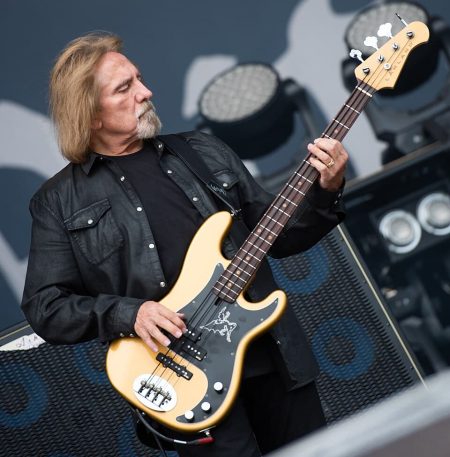
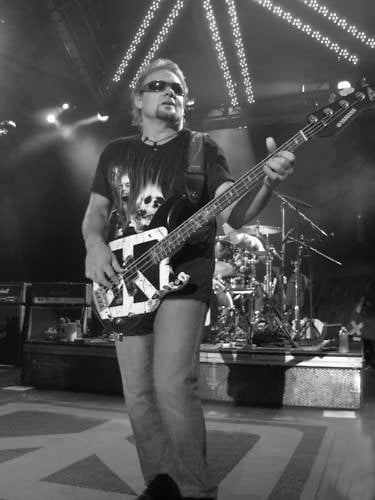
Geezer Butler’s thunderous bass work defined the sound of heavy metal.
💡 Did You Know?
Geezer Butler has been a committed vegetarian since the early 1970s, making him one of the first prominent musicians in heavy metal to adopt a plant-based diet.
While he was writing lyrics about war and darkness on stage, he was quietly refusing to eat meat offstage at a time when vegetarianism was extremely rare in rock circles. He has spoken about this in interviews over the years, noting it was a personal conviction rather than a public statement. It’s one of the many ways Butler defied the image that came with playing in the heaviest band on earth.
Black Sabbath: The Ozzy Era (1968-1979)
The eight studio albums Black Sabbath recorded with Ozzy Osbourne between 1970 and 1978 represent the most concentrated period of creativity in heavy metal history, and Geezer Butler played bass and wrote the words on every one of them.
The self-titled debut in 1970, covered in full at the Black Sabbath debut album story, arrived like a thunderclap in a year dominated by psychedelic folk and blues rock.
It introduced the tritone, the detuned strings, and the apparition narrative that would define the band’s early identity.
Paranoid, released later the same year, gave the world “War Pigs,” “Iron Man,” and the title track in a single 41-minute record.
It remains the album most listeners reach for first when they discover Black Sabbath, and Butler’s lyrics across those tracks cover three entirely different kinds of darkness without repeating a single idea.
Master of Reality (1971) pushed the tuning even lower and produced “Children of the Grave” and “Into the Void,” one of Butler’s most politically clear-eyed songs about mankind’s capacity for self-destruction.
Vol. 4 (1972) was written largely in Los Angeles under the influence of cocaine, and “Snowblind” named the drug directly in the title with a bluntness that made record executives nervous.
Sabbath Bloody Sabbath (1973) marked a tonal shift toward something more psychedelic and experimental, with orchestral arrangements appearing alongside the heavy riffs.
Sabotage (1975) was fueled by legal battles with their former management, and Butler’s lyrics on that album carry an anger that is barely contained.
Technical Ecstasy (1976) and Never Say Die (1978) showed the band stretching in directions that not all fans followed, with jazz influences and a looser structure replacing the monolithic riffs of the early records.
Ozzy was fired in 1979, and the Ozzy era of Black Sabbath ended with it, but the eight albums Butler had helped build remained the foundation everything else in heavy music was built on.
Geezer Butler’s Side Projects
Geezer Butler did not stop working when Black Sabbath’s first run ended.
He launched a solo band called G/Z/R in 1995 and released three albums under that name: Plastic Planet (1995), Black Science (1997), and Ohmwork (2005).
The G/Z/R records gave Butler a vehicle for heavier, more industrial-influenced material and showed that his bass writing had lost none of its aggression in the years after Sabbath.
In 2006, Geezer Butler reunited with Iommi, Vinny Appice, and Ronnie James Dio for the Heaven and Hell project, a continuation of the Dio-era Sabbath lineup that had originally recorded the classic album explored in the Heaven and Hell album story.
Heaven and Hell released “The Devil You Know” in 2009, an album that stood as one of the most powerful heavy metal records of that decade.
Ronnie James Dio passed away from stomach cancer in 2010, and the project ended with him.
In 2019, Butler formed Deadland Ritual with Matt Sorum from Guns N’ Roses, Steve Stevens from Billy Idol’s band, and vocalist Franky Perez.
The project showed a different side of Butler’s musical appetite, drawing on industrial and modern metal textures while keeping the low-end weight that had always defined his playing.
Black Sabbath performing live, with Geezer Butler anchoring the low end throughout the set.
💡 Did You Know?
When Metallica bassist Robert Trujillo was asked to name his single greatest influence, he placed Geezer Butler at the top.
Butler’s approach of tracking the guitar riff rather than the kick drum changed how the entire genre thought about bass guitar. His influence runs through Trujillo, Cliff Burton before him, Lemmy Kilmister’s approach on Motorhead records, and virtually every bassist who has ever played in a heavy band. His impact on heavy music bass is roughly equivalent to what Jimi Hendrix did for electric guitar.
Geezer Butler’s Memoir: Into the Void (2023)
Geezer Butler published his memoir, “Into the Void,” in 2023, giving fans and historians the account of his life and career in his own voice for the first time.
The title is drawn from the closing track on Master of Reality, one of the most Butler-inflected songs on that album, and the choice says something about which part of the Black Sabbath catalog he considers most personal.
The book covers the Birmingham beginnings in full, the formation of the band, the years of recording and touring, the internal tensions that eventually broke the Ozzy-era lineup, and the decades of activity and reunion that followed.
Butler spoke to Rolling Stone around the time of the memoir’s publication and made his position on performing entirely clear: “I don’t want to do anything anymore.”
The quote was widely reported and read by most observers as a definitive statement of retirement from live performance.
The memoir is required reading for anyone who wants to understand why Black Sabbath’s music hit as hard as it did, because Butler explains the sources for each lyric with a specificity that no biographer could replicate.
He writes about the apparition, the Crowley books, the Birmingham factories, the drug years on the road, and the strange position of being the man who wrote the words without ever standing at the front of the stage to sing them.
Geezer Butler at Back to the Beginning
Geezer Butler made an exception to his declared retirement on July 5, 2025, and the location of the concert made that exception inevitable.
Villa Park, the home stadium of Aston Villa Football Club, sits in Aston, the same neighborhood where Butler, Iommi, Ward, and Osbourne grew up, attended school, and wrote the songs that launched them into a world they could not have imagined from those streets.
Butler said before the show: “It’ll be the first time Black Sabbath has played in Aston since we used to live there, and where we wrote most of our first album.”
For him, this was not a nostalgia event.
It was a return to the specific coordinates where everything began.
Forty-two thousand fans filled Villa Park that night, three million more watched the livestream, and for the full account of what happened on that stage, the Back to the Beginning concert story covers it in detail.
After the main set, Geezer Butler joined the Foo Fighters on stage for a performance of “Paranoid,” one of the songs he had written over 50 years earlier in a Birmingham rehearsal room.
Ozzy Osbourne died 17 days later, on July 22, 2025, and Butler’s tribute made the weight of what that night had meant absolutely clear.
He wrote: “Goodbye dear friend, thanks for all those years. We had some great fun. 4 kids from Aston, who’d have thought, eh?”
The concert has since been documented in the Back to the Beginning concert film from Mercury Studios, which captures the evening in 100 minutes of edited footage.
Where Is Geezer Butler Now?
Geezer Butler is retired from performing as of 2026, living a private life focused on family following the loss of Ozzy Osbourne and the close of the Black Sabbath chapter.
He confirmed to Kerrang that Tony Iommi is working on a 2026 solo album with what he described as “a great singer from Sweden,” but Butler has not indicated any personal involvement in new music.
His retirement does not appear to be a pause.
It carries the quality of a decision made with full knowledge of what it means to close the chapter on something that defined his entire adult life.
He is 76 years old, his best friend of more than 60 years is gone, and the reunion that produced Back to the Beginning was described by everyone who witnessed it as the only proper ending the Black Sabbath story could have had.
Geezer Butler’s Legacy
Geezer Butler built something that outlasted every phase of his career and every shift in rock music’s commercial fortunes.
His ranking at 21st on Rolling Stone’s list of the 50 Greatest Bassists is a formal recognition, but the real measure of his legacy is in how completely his approach to bass guitar rewrote the possibilities of the instrument in heavy music.
Before Butler, rock bass followed the drums.
After Butler, heavy metal bass followed the riff, and that single change in direction created an entirely different architecture for how loud music is constructed.
His lyrical work adds a second dimension to that legacy.
He wrote about war, addiction, occultism, and social collapse with a poet’s precision and a working-class Birmingham kid’s direct refusal to dress anything up.
The words held up because they were true, and they were true because Butler experienced or witnessed most of what he described.
Younger metal generations, from doom to sludge to post-metal, continue to borrow his vocabulary and his sonic approach without always knowing the source.
Every record in the Black Sabbath albums in order carries his fingerprints at the low end and in the lyrics, and the combined weight of that catalog is as heavy today as it was when he recorded it.
As an Amazon Associate, I earn from qualifying purchases.
Geezer Butler: Books, Albums, and Solo Work on Amazon
Into the Void by Geezer Butler
The memoir every Sabbath fan needs
Butler’s own account of 50 years in the heaviest band on earth. Essential reading.
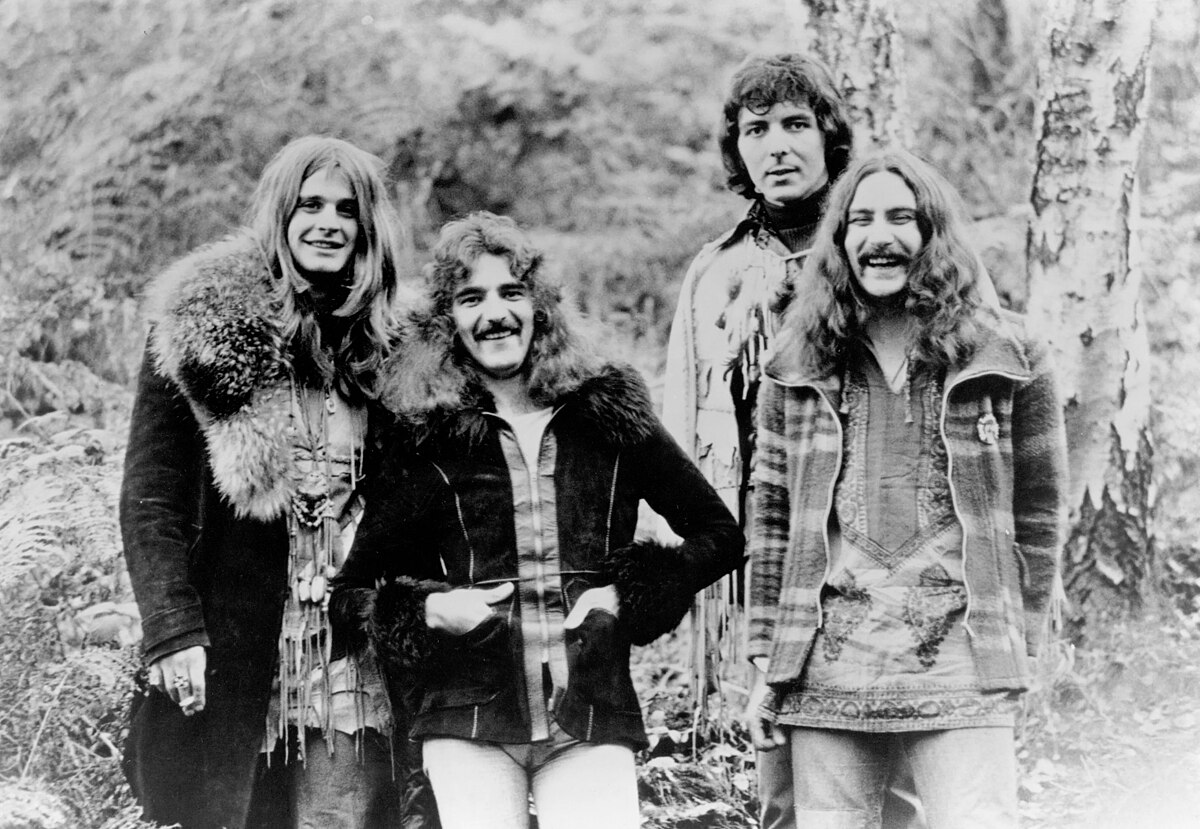
Black Sabbath: The Dio Years
Fan favorite compilation
The definitive collection from the Ronnie James Dio era of Black Sabbath. Butler at his heaviest.
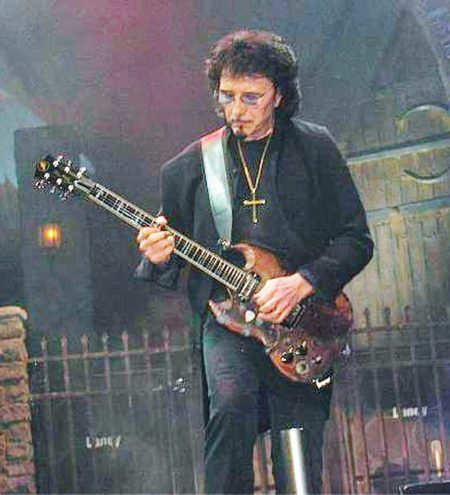
G/Z/R: Plastic Planet
Deeper cut for the devoted fan
Butler’s 1995 solo debut under the G/Z/R name. Heavier than anything on the radio and more focused than you expect.
Frequently Asked Questions About Geezer Butler
What is Geezer Butler’s real name?
His full legal name is Terence Michael Joseph Butler. The nickname “Geezer” is British slang for a man or bloke, and it was given to him by schoolmates growing up in Aston, Birmingham.
Did Geezer Butler write Black Sabbath’s lyrics?
Yes. Butler wrote virtually all of the lyrics on every Black Sabbath album recorded with Ozzy Osbourne, making him responsible for the words to “War Pigs,” “Paranoid,” “Iron Man,” “N.I.B.,” “Children of the Grave,” “Snowblind,” and dozens of other defining heavy metal songs.
Why did Geezer Butler switch from guitar to bass?
He was originally playing rhythm guitar in local Birmingham groups. When he joined what would become Black Sabbath, Tony Iommi told him the band had no need for another guitarist. Butler taught himself bass in order to stay in the group.
What is Geezer Butler’s memoir called?
His memoir is titled “Into the Void,” published in 2023. The title references the closing track from the 1971 album Master of Reality. It covers his full career from Birmingham to the final Black Sabbath shows.
Is Geezer Butler still performing?
No. He declared his retirement from performing, and the Back to the Beginning concert at Villa Park on July 5, 2025, appears to have been his final stage appearance. He confirmed to Kerrang after the show that he has no plans to return to performing.
What did Geezer Butler say about Ozzy Osbourne’s death?
Butler posted a tribute that read: “Goodbye dear friend, thanks for all those years. We had some great fun. 4 kids from Aston, who’d have thought, eh?” The message captured the entirety of what the partnership had been: lifelong friends from the same neighborhood who changed the world and knew it.
You Might Also Like

Few musicians in the history of rock have shaped both the sound and the language of a genre the way Geezer Butler did, and that dual legacy, bass pioneer and lyrical architect, is what makes him one of the most important figures heavy music has ever produced.