

Mike Campbell is one of rock music’s most respected and influential guitarists, known primarily for his four-decade partnership with Tom Petty and the Heartbreakers.
His distinctive guitar work has shaped countless hit songs and defined the sound of American rock from the late 1970s through the present day.
Beyond his work with the Heartbreakers, Campbell has collaborated with numerous legendary artists and contributed to some of the most memorable recordings in rock history.
In 2018, following the death of Tom Petty, Campbell joined Fleetwood Mac as lead guitarist, bringing his signature style to one of rock’s most iconic bands.
His career spans multiple generations, from the classic rock era through modern streaming platforms, demonstrating his enduring relevance and adaptability.
Campbell’s guitar collection is legendary among musicians, featuring rare vintage instruments that have become integral to his sonic identity.
Mike Campbell has also pursued his own musical vision through his band the Dirty Knobs, showcasing a rawer, more garage-rock oriented sound.
His influence extends beyond performance to songwriting and production, having co-written many of Tom Petty’s biggest hits.
Campbell’s approach to guitar playing emphasizes melody and texture over technical showmanship, creating memorable parts that serve the song.
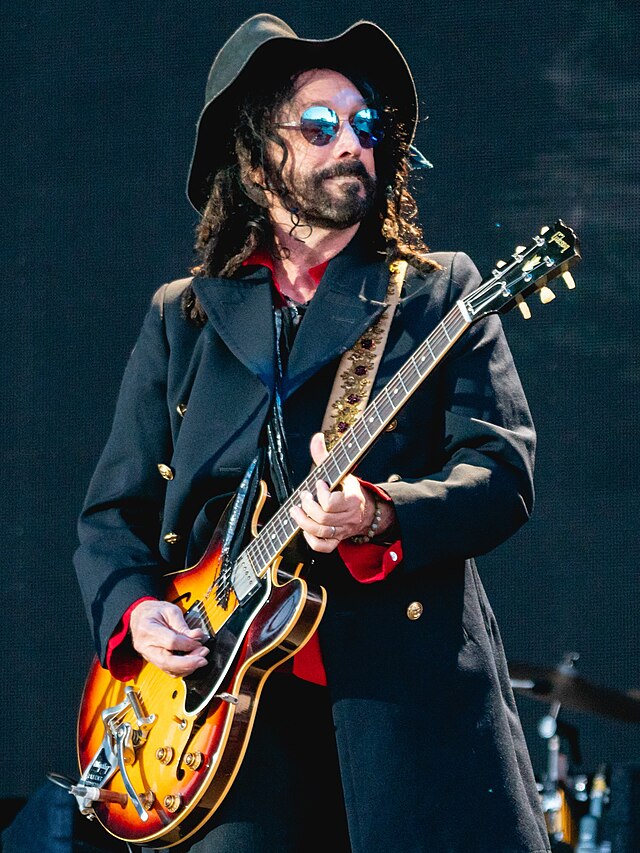
Table of Contents [Click to Expand]
Early Life and Musical Beginnings
Michael Wayne Campbell was born on February 1, 1950, in Panama City, Florida.
His family moved to Jacksonville, Florida, when he was young, where he spent most of his formative years.
Campbell received his first guitar as a teenager and quickly became obsessed with learning the instrument.
He was heavily influenced by the British Invasion bands, particularly the Beatles and the Rolling Stones.
American blues guitarists like B.B. King and Muddy Waters also shaped his developing style.
As detailed on his Wikipedia page, Campbell began playing in local bands during his high school years.
He attended Englewood High School in Jacksonville, where music became his primary focus.
During this period, he developed his skills playing covers of popular rock and blues songs at local venues.
Campbell’s dedication to the guitar was evident from an early age, practicing for hours each day.
He began collecting vintage guitars even as a young musician, a passion that would continue throughout his career.
First Major Band or Breakthrough
Mike Campbell met Tom Petty in the early 1970s through the Jacksonville music scene.
Petty was leading a band called Mudcrutch, which Campbell joined as a second guitarist.
Mudcrutch relocated to Los Angeles in 1974 to pursue a recording contract.
The band signed with Shelter Records but disbanded before releasing an album.
Following Mudcrutch’s breakup, Petty and Campbell decided to form a new band.
They recruited keyboardist Benmont Tench, another Mudcrutch alumnus.
Bassist Ron Blair and drummer Stan Lynch completed the original lineup.
This new group became Tom Petty and the Heartbreakers in 1976.
Their self-titled debut album was released in November 1976 on Shelter Records.
The album initially received modest attention in the United States but found success in the United Kingdom.
Campbell’s guitar work on tracks like “Breakdown” and “American Girl” established his melodic approach.
The band’s breakthrough came with their second album, “You’re Gonna Get It!” in 1978.
Campbell’s partnership with Petty as a songwriting team began to flourish during this period.
Mike Campbell Peak Era with Tom Petty
The late 1970s and 1980s represented the commercial and creative peak for Campbell with Tom Petty and the Heartbreakers.
The 1979 album “Damn the Torpedoes” became a massive commercial success, selling millions of copies.
Campbell co-wrote several tracks on the album, including “Here Comes My Girl” and “Refugee.”
His guitar solo on “Refugee” became one of his most recognizable contributions to rock music.
The album established the Heartbreakers as one of America’s premier rock bands.
Campbell’s guitar style combined elements of rock, folk, and blues into a distinctly American sound.
He favored vintage guitars, particularly his 1959 Fender Broadcaster, which became his signature instrument.
The 1981 album “Hard Promises” continued the band’s commercial momentum.
Campbell co-wrote “The Waiting” and “A Woman in Love,” both showcasing his melodic sensibility.
His ability to craft memorable guitar hooks became a defining characteristic of the Heartbreakers’ sound.
In 1985, Campbell played a crucial role in the album “Southern Accents.”
He co-wrote “Don’t Come Around Here No More,” which featured a distinctive Middle Eastern-influenced guitar riff.
The song became one of the band’s most innovative and commercially successful singles.
Campbell’s production contributions also grew during this period, helping shape the band’s studio sound.
The 1989 album “Full Moon Fever” marked a significant milestone in Campbell’s career.
Though credited as a Tom Petty solo album, Campbell played on every track and co-wrote several songs.
He co-wrote “Runnin’ Down a Dream,” which featured one of his most celebrated guitar performances.
The album also included “Free Fallin‘,” which Campbell co-wrote with Petty and Jeff Lynne.
Campbell’s jangly 12-string guitar work on “Free Fallin'” became iconic.
The song remains one of the most beloved tracks in Petty’s catalog.
Throughout the 1990s, Campbell continued as the Heartbreakers’ lead guitarist and primary collaborator with Petty.
The 1994 album “Wildflowers” is often considered one of the finest works of both Petty and Campbell.
Campbell co-wrote “You Don’t Know How It Feels” and contributed atmospheric guitar textures throughout the album.
His slide guitar work on “Wildflowers” demonstrated his versatility and emotional depth.
Mike Campbell also became known for his extensive work as a session musician and collaborator outside the Heartbreakers.
He contributed guitar work to albums by numerous artists across different genres.
His collaboration with Don Henley on “The Boys of Summer” resulted in one of the 1980s’ most distinctive guitar sounds.
Campbell co-wrote the song with Henley and created the haunting, synthesizer-like guitar tone that defined the track.
“The Boys of Summer” won the Grammy Award for Best Male Rock Vocal Performance in 1986.
Campbell’s guitar innovation on the track influenced countless musicians and producers.
He worked with Stevie Nicks on multiple occasions, contributing to her solo albums.
His guitar work appeared on Nicks’ albums throughout the 1980s and beyond.
Campbell also collaborated with Roy Orbison, Johnny Cash, and many other legendary artists.
His reputation as a reliable and creative session player grew throughout the 1980s and 1990s.
Campbell’s approach to guitar solos emphasized melody and emotion over technical complexity.
He often spoke about serving the song rather than showcasing virtuosity for its own sake.
This philosophy made his guitar parts memorable and accessible to listeners.
His use of vintage equipment, including rare amplifiers and effects pedals, contributed to his distinctive tone.
Campbell’s guitar collection grew to include hundreds of instruments, many of which he used on recordings.
He became known for matching specific guitars to specific songs, creating unique sonic signatures.
The 2000s saw Campbell continue his prolific work with the Heartbreakers.
The band released several albums and toured extensively throughout the decade.
Campbell’s songwriting partnership with Petty remained strong, producing new material that honored their classic sound while exploring new territory.
The 2010 album “Mojo” showcased a rawer, more blues-influenced sound.
Campbell’s guitar work on the album reflected his deep roots in American blues and rock traditions.
The band’s final studio album, “Hypnotic Eye,” was released in 2014.
It debuted at number one on the Billboard 200 chart, demonstrating the enduring appeal of Campbell and Petty’s collaboration.
Mike Campbell Career Challenges and Personal Struggles
The most significant challenge in Campbell’s career came with the sudden death of Tom Petty on October 2, 2017.
Petty died from an accidental drug overdose following the completion of the Heartbreakers’ 40th anniversary tour.
The loss devastated Campbell, who had worked alongside Petty for more than four decades.
Mike Campbell faced the challenge of continuing his musical career without his primary creative partner.
The Heartbreakers effectively ended with Petty’s death, closing a major chapter in Campbell’s life.
Campbell had to navigate grief while determining his next professional steps.
He chose to honor Petty’s memory by continuing to make music rather than retiring.
Throughout his career, Mike Campbell maintained a relatively private personal life, avoiding many of the pitfalls that affected other rock musicians.
He focused on his craft and family, staying out of tabloid headlines.
Later Career and Revival
In early 2018, Campbell received an unexpected opportunity that would define his post-Heartbreakers career.
Fleetwood Mac announced that Campbell would join the band as lead guitarist, replacing Lindsey Buckingham.
The connection between Campbell and the band had been established through his previous work with Stevie Nicks, one of the Members of Fleetwood Mac.
Mike Campbell joined alongside Neil Finn of Crowded House, creating a new lineup for the legendary band.
The announcement generated significant media attention and fan discussion.
Campbell approached the role with respect for Buckingham’s legacy while bringing his own musical identity.
Fleetwood Mac embarked on an extensive tour in 2018 and 2019 with Campbell in the lineup.
The tour was commercially successful, demonstrating that fans embraced the new configuration.
Campbell’s guitar work complemented the band’s classic material, including songs like Go Your Own Way (1977).
His performances of iconic tracks from Rumours received positive reviews from critics and audiences.
Campbell also pursued his own band, the Dirty Knobs, which he had formed years earlier as a side project.
The Dirty Knobs released their debut album “Wreckless Abandon” in 2020.
The album showcased a grittier, more garage-rock sound than his work with the Heartbreakers.
Campbell served as lead vocalist for the Dirty Knobs, a role he rarely assumed in his previous work.
The band’s sound reflected Campbell’s love of raw, unpolished rock and roll.
Information about the band can be found at their official website.
The Dirty Knobs released a second album, “External Combustion,” in 2022.
Mike Campbell toured with the Dirty Knobs, playing smaller venues than he had with the Heartbreakers or Fleetwood Mac.
These intimate shows allowed him to connect with audiences in a different way.
Campbell balanced his commitments between Fleetwood Mac and the Dirty Knobs throughout this period.
He remained active on social media, connecting with fans through his official Facebook page.
In 2026, Campbell and the Dirty Knobs continued touring, as detailed on Mike Campbell Tour information pages.
The band announced special acoustic performances, covered in Mike Campbell and the Dirty Knobs Announce Semi-Acoustic Tour.
These acoustic shows highlighted Campbell’s versatility and willingness to explore different musical formats.
Campbell’s later career demonstrated his resilience and continued passion for creating music.
Rather than resting on his considerable laurels, he pursued new creative challenges.
His work with Fleetwood Mac introduced him to new audiences while honoring the band’s legacy.
The Dirty Knobs allowed him to explore musical territory he couldn’t access in his previous projects.
Awards and Recognition
Mike Campbell was inducted into the Rock and Roll Hall of Fame in 2002 as a member of Tom Petty and the Heartbreakers.
The induction recognized the band’s significant contributions to American rock music over more than two decades.
Campbell received multiple Grammy nominations throughout his career for his work with the Heartbreakers.
His collaboration with Don Henley on “The Boys of Summer” earned Grammy recognition.
Campbell’s songwriting has been honored by various music industry organizations.
He is widely regarded by fellow musicians as one of rock’s most tasteful and melodic guitarists.
Guitar magazines have frequently featured Campbell in articles about tone, technique, and vintage instruments.
His influence on subsequent generations of guitarists is evident in countless interviews and tributes.
Campbell’s guitar work on numerous hit songs has earned him a place among rock’s most successful session musicians.
His contributions to the Heartbreakers’ catalog helped the band sell millions of albums worldwide.
Essential Discography
- Tom Petty and the Heartbreakers (1976) – The debut album that introduced Campbell’s melodic guitar style to the world.
- Damn the Torpedoes (1979) – Breakthrough album featuring Campbell’s co-writing and iconic guitar work on “Refugee.”
- Hard Promises (1981) – Continued the band’s commercial success with Campbell’s contributions to “The Waiting.”
- Southern Accents (1985) – Featured Campbell’s innovative guitar work on “Don’t Come Around Here No More.”
- Full Moon Fever (1989) – Tom Petty solo album with extensive Campbell involvement, including co-writing “Free Fallin'” and “Runnin’ Down a Dream.”
- Wildflowers (1994) – Critically acclaimed album showcasing Campbell’s atmospheric and emotional guitar textures.
- Mojo (2010) – Blues-influenced album highlighting Campbell’s roots in American music traditions.
- Hypnotic Eye (2014) – The Heartbreakers’ final studio album, debuting at number one on the Billboard 200.
- Wreckless Abandon (2020) – Debut album by Mike Campbell and the Dirty Knobs, showcasing a rawer rock sound.
- External Combustion (2022) – Second Dirty Knobs album, continuing Campbell’s exploration of garage rock.
Frequently Asked Questions About Mike Campbell
What is Mike Campbell’s connection to Fleetwood Mac?
Mike Campbell joined Fleetwood Mac as lead guitarist in 2018, replacing Lindsey Buckingham.
He had previously worked with Stevie Nicks on her solo projects, establishing a musical relationship that led to his recruitment.
Campbell toured extensively with Fleetwood Mac in 2018 and 2019, performing classic songs from the band’s catalog including tracks from their most celebrated albums.
His guitar work brought a new dimension to songs like Fleetwood Mac The Chain (1977) while respecting the original arrangements.
What guitars does Mike Campbell play?
Campbell is known for his extensive collection of vintage guitars, numbering in the hundreds.
His most famous instrument is a 1959 Fender Broadcaster, which he has used on countless recordings.
He also frequently plays various Fender Stratocasters, Telecasters, and Gibson Les Pauls.
Campbell matches specific guitars to specific songs, believing that different instruments have unique sonic characteristics.
Did Mike Campbell write songs with Tom Petty?
Campbell co-wrote many of Tom Petty’s biggest hits throughout their four-decade partnership.
Notable co-writes include “Refugee,” “Here Comes My Girl,” “The Waiting,” “Runnin’ Down a Dream,” and “Free Fallin’.”
Their songwriting partnership was one of the most successful in rock music history.
Campbell’s melodic sensibility complemented Petty’s lyrical storytelling perfectly.
What is the Dirty Knobs?
The Dirty Knobs is Mike Campbell’s own band, which he formed as a side project years before it became his primary focus.
The band plays a rawer, more garage-rock oriented style than the Heartbreakers.
Campbell serves as lead vocalist and guitarist for the group.
The Dirty Knobs have released two albums and tour regularly, allowing Campbell to explore different musical territory.
What songs did Mike Campbell play on for other artists?
Campbell co-wrote and played guitar on Don Henley’s “The Boys of Summer,” one of the 1980s’ most iconic songs.
He contributed guitar work to multiple Stevie Nicks solo albums throughout the 1980s and beyond.
Mike Campbell also worked with artists including Roy Orbison, Johnny Cash, and numerous other rock and country musicians.
His session work spans decades and demonstrates his versatility across different musical styles.
Mike Campbell remains an active and influential figure in rock music, continuing to perform and record while honoring his remarkable legacy as one of the genre’s most respected guitarists.