

The One I Love by R.E.M. is one of the most deliberately misread songs in 1980s rock.
It broke the band into the mainstream while concealing a lyric that meant something far darker than most listeners realised.
It reached number nine on the US Billboard Hot 100 in 1987, the band’s first top-ten hit.
Affiliate Disclosure: I am an Amazon affiliate and if you purchase through any amazon links on this site i may earn a small commission at no extra charge to you.
The song introduced millions of listeners to a group that had spent seven years building an audience on the American college circuit.
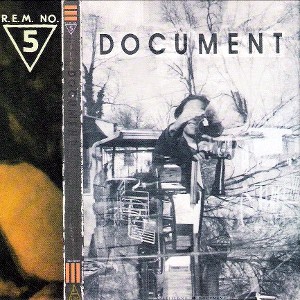
Written by Michael Stipe, Bill Berry, Peter Buck, and Mike Mills, the song came from the Document album.
It marked the moment R.E.M. stopped being a cult act and became a mainstream force.
Produced by Scott Litt and R.E.M., Document was the band’s fifth studio album and their first to achieve significant mainstream commercial success.
The track was the record’s commercial centrepiece and the song that changed the band’s trajectory permanently.
| Song Title | The One I Love |
| Artist | R.E.M. |
| Album | Document (1987) |
| Released | 1987 (single) |
| Written By | Bill Berry, Peter Buck, Mike Mills, Michael Stipe |
| Producer | Scott Litt, R.E.M. |
| Label | IRS Records |
| Chart Peak | #9 US Billboard Hot 100 |
Table of Contents
- What Is The One I Love About?
- The Vibe: Genre, Mood, and Search Intent
- Behind the Lyrics: The Story of The One I Love
- Technical Corner: Instruments and Production
- Legacy and Charts: Why This Classic Still Matters
- Listener’s Note: A Personal Take
- Watch: The One I Love by R.E.M.
- Collector’s Corner: Own a Piece of Rock History
- Frequently Asked Questions About The One I Love
- You Might Also Like
What Is The One I Love About?
This tune is not a love song.
Michael Stipe has made this clear in multiple interviews over the years.
The key line is “a simple prop to occupy my time.”
The song describes using another person to fill a void rather than genuinely connecting with them.
The addressee is disposable, a placeholder rather than a partner.
Stipe wrote the lyric with deliberate ambiguity, allowing listeners to hear it as romantic while encoding something colder underneath.
The strategy worked almost too well.
Radio programmers and audiences embraced it as a declaration of devotion.
R.E.M. found themselves with a hit built on a lyric that meant something quite different from what most people assumed.
The Vibe: Genre, Mood, and Search Intent
The song announces itself with a guitar riff of controlled aggression that sounds nothing like the band’s earlier jangly college-rock recordings.
- Genre: Alternative Rock, Post-Punk, College Rock
- Mood: Intense, Driving, Deceptively Dark
- Tempo: Midtempo (~130 BPM)
- Best For: 1980s alternative playlists, college rock collections, guitar-driven rock
- Similar To: R.E.M. “Losing My Religion”, The Replacements “Alex Chilton”, Husker Du “Makes No Sense at All”
- Fans Also Search: R.E.M. discography, Document album, Michael Stipe vocals, 1980s alternative rock
Behind the Lyrics: The Story
R.E.M. formed in Athens, Georgia, in 1980.
They spent the first half of the decade building a devoted following on the college circuit.
Their early albums on IRS Records established them as one of the defining acts of the American alternative rock movement.
Document was their fifth studio album and their most commercially assertive.
The band worked with Scott Litt for the first time on Document.
Litt helped them achieve a sound that retained their independent spirit while making it accessible to a wider audience.
It was chosen as the lead single and released in August 1987.
It entered the Billboard Hot 100 and climbed steadily, eventually reaching number nine.
That position marked the beginning of their mainstream crossover.
The irony was significant.
The recording that made R.E.M. famous was a critique of the kind of casual emotional use that pop music typically romanticised.
Most of the listeners who made it a hit never caught the darker meaning buried in the lyric.
Technical Corner: Instruments and Production
Peter Buck‘s guitar drives this tune with a riff built around descending power chords.
It is more aggressive than anything on R.E.M.’s earlier records.
The tone is bright and cutting, with a forward quality that suited the song’s harder character.
Mike Mills’s bass follows the guitar closely, reinforcing the riff rather than working against it.
Bill Berry’s drumming is straightforward and powerful throughout.
He drives the track without ornamentation, letting the guitar do the expressive work.
Michael Stipe’s vocal is confident and focused.
He delivers the lyric with the clarity of someone who knows exactly what it means, which is precisely what makes the song’s ambiguity so effective.
Scott Litt’s production gives it a directness that earlier R.E.M. recordings lacked.
The mix is clean, with the guitar prominent and the rhythm section providing a solid foundation.
The result is a recording that sounds both independent and radio-ready, a balance that defines the best alternative rock of its period.
Legacy and Charts: Why This Classic Still Matters
The song reached number nine on the US Billboard Hot 100 in 1987.
It was R.E.M.’s first top-ten single and the beginning of a decade of major commercial success.
Document reached number ten on the Billboard 200, their highest album chart position to that point.
The song demonstrated that alternative rock could crossover to mainstream radio without compromising its essential character.
Their success with it opened doors for a generation of American independent rock acts.
It showed that there was a mainstream audience for music that did not follow the conventions of 1980s pop and glam metal.
It is now understood as a pivotal moment in the history of American alternative rock.
It belongs to a small group of recordings that changed the direction of commercial music without their makers fully intending to.
It endures because the guitar riff is genuinely great and the deception at the centre of the lyric never quite loses its power to unsettle.
Listener’s Note: A Personal Take
This song requires careful listening in a specific way.
The first time you hear the lyric clearly, the song shifts.
What sounded like a declaration becomes something much colder.
Michael Stipe wrote it to work on both levels simultaneously, and it still does after nearly forty years.
That is a more sophisticated lyrical achievement than it initially appears.
Watch: The One I Love by R.E.M.
Collector’s Corner: Own a Piece of Rock History
R.E.M.: Document (1987)
Own the album that gave the world The One I Love.
Original IRS Records pressings and remastered editions available.
Frequently Asked Questions
Who wrote The One I Love?
The song was written by all four members of R.E.M.: Bill Berry, Peter Buck, Mike Mills, and Michael Stipe.
Stipe wrote the lyrics and has acknowledged the deliberately ambiguous meaning at the song’s core.
What is the song about?
It is about using someone as a placeholder rather than genuinely caring for them.
Michael Stipe has said the lyric describes emotional exploitation, not devotion, despite being widely heard as a love song.
How high did the song chart?
It reached number nine on the US Billboard Hot 100 in 1987.
It was R.E.M.’s first top-ten hit and the song that established them as a mainstream act.
What album is this classic on?
The song appears on Document, R.E.M.’s fifth studio album.
Released on IRS Records in August 1987, it was the band’s commercial breakthrough record.
Who produced this song?
It was produced by Scott Litt and R.E.M.
Litt brought a cleaner, more radio-friendly approach to the band’s sound while preserving the independent character that defined their earlier work.
Was this tune R.E.M.’s first big hit?
Yes.
It was R.E.M.’s first top-ten single in the United States and the record that moved them from cult status to mainstream recognition.
Did R.E.M. intend this tune to be a love song?
No.
Michael Stipe has been clear that it is not a romantic song.
The lyric describes using someone as a distraction rather than loving them, though the band allowed the ambiguity to stand when the song became a hit.
Is The song still performed live?
R.E.M. disbanded in 2011.
During their active years, that song was a consistent part of their live sets and one of the songs most requested by audiences who discovered the band through Document.
You Might Also Like
R.E.M.: Losing My Religion (1991)
The later R.E.M. classic that completed the band’s journey from college radio to global phenomenon.
Losing My Religion shows how far R.E.M. travelled from it while keeping the same habit of writing pop songs with darker meanings than they first appear to have.
Dire Straits: Money for Nothing (1985)
The other great 1980s guitar anthem that smuggled an uncomfortable perspective into a mainstream hit.
Both songs share a commitment to letting the guitar do the heavy lifting while the lyric works on more than one level.
The Rolling Stones: Start Me Up (1981)
The Stones’ early 1980s return to hard rock form, driven by a guitar riff of comparable directness and energy.
Start Me Up belongs to the same tradition of guitar-first rock that shaped the song’s distinctive character.
Decades on, The One I Love by R.E.M. endures as one of the greatest songs in classic rock history, a recording that has outlasted trends and generations to remain as vital and deceptively complex as the day it was made.