
Stone Temple Pilots Lounge Fly emerged in 1994 as one of the most underrated tracks from the band’s sophomore album Purple, showcasing a darker, more experimental side of the San Diego quartet.
While Stone Temple Pilots Interstate Love Song dominated radio airwaves that year, this deep cut revealed the band’s willingness to push beyond grunge conventions into psychedelic territory.
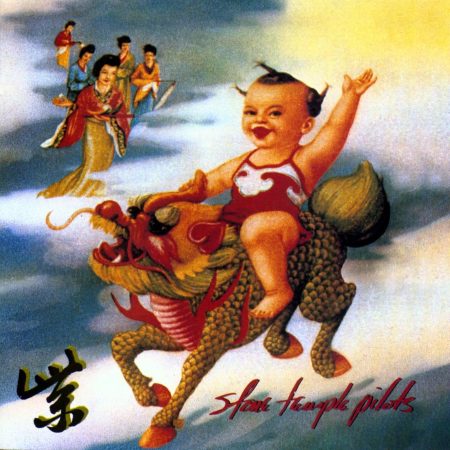
Stone Temple Pilots Lounge Fly – Available on Amazon
Get Stone Temple Pilots Lounge Fly (1994) on Amazon
Affiliate Disclosure: I am an Amazon affiliate and if you purchase through any Amazon links on this site I may earn a small commission at no extra charge to you. This helps support classicrockartists.com. Thank you for your support!
Quick Navigation
What is the meaning of Stone Temple Pilots Lounge Fly?
Stone Temple Pilots Lounge Fly explores themes of escapism and altered consciousness through surreal imagery and metaphor, with Scott Weiland’s lyrics painting a dreamlike narrative about seeking refuge from reality through various means, whether chemical or psychological, while the “lounge fly” itself represents a state of detached observation and floating disconnection from the world.
The Vibe: Genre, Mood, and Sound of Stone Temple Pilots Lounge Fly
This track blends psychedelic rock with alternative metal, creating a swirling sonic landscape that feels both hypnotic and unsettling.
- Genre: Psychedelic Alternative Rock with Grunge Elements
- Mood: Trippy, Introspective, Disorienting, Dreamlike
- Tempo: Mid-tempo with fluctuating dynamics
- Best For: Late-night listening sessions, introspective moments, exploring deeper album cuts
- Similar To: Early Pink Floyd meets Alice in Chains’ more experimental moments
Behind the Lyrics: The Story of Stone Temple Pilots Lounge Fly
The creation of Stone Temple Pilots Lounge Fly occurred during the Purple album sessions in 1994, a period when the band were determined to prove their artistic credibility beyond the grunge label.
Scott Weiland was already battling the substance abuse issues that would define much of his career, and those struggles seeped into the song’s hallucinogenic imagery.
The lyrics reference “sitting on a crowded train” and “watching all the people” with a detached, almost voyeuristic perspective.
This observer mentality reflects the dissociative state that often accompanies addiction and depression.
The band recorded Purple at Southern Tracks Recording in Atlanta, working with producer Brendan O’Brien, who had previously helmed records for Pearl Jam and Rage Against the Machine.
O’Brien encouraged the band to experiment with unconventional song structures and sonic textures, which is evident throughout the album.
While Vasoline became the album’s lead single with its straightforward hard rock approach, Lounge Fly represented the opposite end of the spectrum.
The track’s placement as the eighth song on Purple creates a moment of respite and reflection amid the album’s heavier moments.
Dean DeLeo’s guitar work incorporates Eastern-influenced scales and unconventional chord progressions that were unusual for mainstream rock in 1994.
The song’s title itself remains somewhat enigmatic, with band members offering varying interpretations over the years.
Some suggest it refers to a state of being, a mental space where one floats above reality like an insect in a smoky lounge.
Others have connected it to the experience of watching life pass by from a sedated or intoxicated perspective.
The Purple album arrived at a crucial moment for Stone Temple Pilots, who faced constant accusations of being derivative of other grunge acts.
Tracks like Stone Temple Pilots Lounge Fly helped establish their unique identity separate from the Seattle sound.
Technical Corner: The Gear Behind Stone Temple Pilots Lounge Fly
Dean DeLeo employed his signature Gibson Les Paul Standard through a Marshall JCM800 amplifier for the main guitar parts, creating the warm, saturated tone that anchors the track.
The psychedelic guitar effects were achieved using a combination of phaser and chorus pedals, likely an Electro-Harmonix Small Stone and a Boss CE-2 Chorus.
Robert DeLeo’s bass work on his Music Man StingRay provides a melodic counterpoint to the guitars, sitting prominently in the mix as was Brendan O’Brien’s production trademark.
Eric Kretz’s drum kit was a vintage Ludwig setup, recorded with close-miking techniques that captured both the punch and the ambient room sound.
O’Brien utilized the SSL 4000 E console at Southern Tracks to create separation between the instruments while maintaining a cohesive sonic picture.
Weiland’s vocals were recorded through a Neumann U87 microphone, with subtle reverb and delay effects adding to the dreamlike atmosphere.
The production technique involved layering multiple guitar tracks with slightly different tonal characteristics to create a swirling, three-dimensional soundscape.
O’Brien’s approach to the mix placed emphasis on dynamics, allowing the song to breathe and expand rather than maintaining constant intensity.
The use of tape saturation on the master bus gave the recording a warm, analog quality that distinguished it from the cleaner digital productions emerging in the mid-1990s.
Dean DeLeo’s guitar solo section incorporates a wah-wah pedal, possibly a Dunlop Cry Baby, used subtly to add vowel-like qualities to the notes.
Legacy and Charts: Why Stone Temple Pilots Lounge Fly Still Matters
Unlike the album’s singles, Lounge Fly was never released as a standalone single and therefore did not chart independently.
However, the Purple album itself reached number one on the Billboard 200 chart and achieved six-times platinum certification in the United States.
The album peaked at number 10 on the UK Albums Chart and reached number 2 in Canada, establishing Stone Temple Pilots as international rock stars.
The track became a fan favorite and a staple of the band’s deeper catalog, often discussed in online forums and fan communities as an underappreciated gem.
While Big Empty from the same era received more commercial attention, Lounge Fly demonstrated the band’s artistic range.
Stone Temple Pilots Lounge Fly has been covered by various tribute bands and featured in fan-created playlists celebrating the deeper cuts of 1990s alternative rock.
Music critics who initially dismissed Stone Temple Pilots as derivative later pointed to tracks like this as evidence of the band’s genuine creativity.
The influence of the song can be heard in later alternative rock acts who embraced psychedelic elements within heavy rock frameworks.
The track has appeared on various Stone Temple Pilots compilation albums and deluxe reissues of Purple over the years.
In retrospective reviews of the Purple album, music journalists frequently cite this song as evidence that the band was more than just another grunge act.
The song’s legacy lies not in chart performance but in its demonstration of artistic ambition during an era when alternative rock was becoming increasingly commercialized.
Listener’s Note: A Personal Take on Stone Temple Pilots Lounge Fly
When I first heard Stone Temple Pilots Lounge Fly on vinyl, spinning the Purple album late one night in my college apartment, the song stopped me in my tracks during what I thought would be just background music.
The moment when Dean DeLeo’s guitar enters with that phased, swirling tone around the 0:15 mark creates an immediate sense of disorientation that perfectly matches Weiland’s detached vocal delivery.
There’s something deeply unsettling yet beautiful about how the bass line moves independently of the guitar, creating a push-pull tension that never quite resolves.
I’ve always appreciated how the song doesn’t follow a traditional verse-chorus structure, instead flowing like a stream of consciousness.
The production allows you to hear every instrument clearly, yet they blend into this cohesive, hypnotic whole.
On headphones, you can catch subtle details like the way Weiland’s voice is panned slightly off-center during certain phrases, adding to the disorienting effect.
The guitar solo that emerges around the three-minute mark feels less like a traditional rock solo and more like a melodic conversation with the rhythm section.
What strikes me most is how the song manages to sound both dated to its era and somehow timeless, a quality shared by the best psychedelic rock across decades.
Listening to the official audio reveals nuances that get lost in compressed digital formats, particularly the warmth of the analog recording.
This track reminds me why I fell in love with album-oriented rock, where not every song needs to be a single to make an impact.
Affiliate Disclosure: I am an Amazon affiliate and if you purchase through any Amazon links on this site I may earn a small commission at no extra charge to you. This helps support classicrockartists.com and allows me to keep providing deep-dive content on the legends of rock. Thank you for your support!
Collector’s Corner: Own Stone Temple Pilots Lounge Fly on Vinyl or CD
The original 1994 vinyl pressing of Purple has become increasingly sought after by collectors, with the warm analog sound particularly suited to this track’s psychedelic textures.
Various reissues and remastered editions have been released over the years, each offering slightly different sonic characteristics.
Get Stone Temple Pilots Lounge Fly (1994) on Amazon
Frequently Asked Questions About Stone Temple Pilots Lounge Fly
Was Lounge Fly ever released as a single?
No, Lounge Fly was never released as a commercial single.
It remained an album track on Purple, with the band choosing to promote more radio-friendly songs like Interstate Love Song and Vasoline instead.
The song’s experimental nature and unconventional structure made it less suitable for mainstream radio play in the mid-1990s.
What album is Lounge Fly on?
Lounge Fly appears on Stone Temple Pilots’ second studio album, Purple, released on June 7, 1994.
The album was the follow-up to their debut Core and solidified their position as one of the leading alternative rock bands of the decade.
Purple featured a more diverse sonic palette than Core, with tracks ranging from hard rock to acoustic ballads to psychedelic experiments like this one.
Did Stone Temple Pilots perform Lounge Fly live?
Stone Temple Pilots did perform Lounge Fly live during various tours supporting the Purple album, though it was never a regular setlist staple.
The song appeared more frequently during the initial Purple tour cycle in 1994 and 1995.
Live recordings and bootlegs from that era capture the band’s ability to recreate the song’s psychedelic atmosphere in a concert setting.
In later years, the band occasionally brought it back for special performances or deeper album cuts shows.
What is the meaning behind the lyrics of Lounge Fly?
The lyrics explore themes of detachment, observation, and altered states of consciousness.
Scott Weiland’s imagery of watching people from a train and floating above situations suggests a dissociative perspective.
Many interpret the song as reflecting Weiland’s struggles with substance abuse and the way addiction creates distance between the user and reality.
The “lounge fly” metaphor itself represents a state of passive observation, buzzing around life without fully engaging with it.
You Might Also Like
Stone Temple Pilots Tumble in the Rough (1994)
Another experimental deep cut from Purple that showcases the band’s willingness to explore unconventional song structures and psychedelic textures.
Stone Temple Pilots Pretty Penny (1994)
This Purple album track shares the same introspective, darker atmosphere and demonstrates the band’s range beyond their radio hits.
Stone Temple Pilots Lady Picture Show (1996)
From their third album Tiny Music, this track continues the psychedelic experimentation that Lounge Fly pioneered within their catalog.
Stone Temple Pilots Lounge Fly remains a testament to the band’s artistic ambition and their refusal to be confined by the commercial expectations of 1990s alternative rock.