

Tony Hicks spent 63 years as lead guitarist of the Hollies, one of the top British Invasion bands of the 1960s.
He joined the group in February 1963.
He replaced original guitarist Vic Steele and never left.
Hicks drove hits like “Bus Stop,” “Carrie Anne” and “He Ain’t Heavy, He’s My Brother.”
On August 20, 2026, Hicks announced he was stepping away from touring for health reasons.
That ended the Hollies’ run as a live act after more than six decades.

Affiliate Disclosure: I am an Amazon affiliate.
If you purchase through any amazon links on this site i may earn a small commission at no extra charge to you.
Image Credit: Photo by Stefan Brending (2eight), CC BY-SA 3.0 de, via Wikimedia Commons.
📋 Table of Contents [+]
⚡ Key Takeaways
- Tony Hicks was born December 16, 1945, in Nelson, Lancashire, England.
- He joined the Hollies as lead guitarist in February 1963.
- Hicks co-wrote dozens of Hollies songs, first as L. Ransford and later under his own name.
- The Hollies scored hits including “Bus Stop” (1966), “Carrie Anne” (1967) and “He Ain’t Heavy, He’s My Brother” (1969).
- Tony Hicks joined the Rock and Roll Hall of Fame with the Hollies in 2010.
- Hicks retired from touring on August 20, 2026, ending the Hollies’ 63-year run as a live act.
Who Is Tony Hicks?
Tony Hicks is an English guitarist, singer and songwriter.
He is best known as lead guitarist of the Hollies from 1963 to 2026.
He was born Anthony Christopher Hicks on December 16, 1945, in Nelson, Lancashire, England.
Hicks first appeared on stage at age 12.
He played skiffle with Les Skifflettes on the Carroll Levis talent show in 1957.
By the early 1960s he worked days as an apprentice electrician.
At night he played lead guitar for Ricky Shaw and the Dolphins on Manchester’s club circuit.
How Did Tony Hicks Join the Hollies?
The Hollies formed in Manchester in December 1962.
Singer Allan Clarke and guitarist Graham Nash founded the group with Vic Steele on lead guitar and Eric Haydock on bass.
According to Graham Nash, the band’s name nodded to Buddy Holly.
Hicks joined the Hollies in February 1963.
The band needed a replacement for guitarist Vic Steele.
According to Wikipedia, Hicks first heard the Hollies through an air vent at Manchester’s Twisted Wheel club.
He was initially reluctant to leave his own band.
He was eventually persuaded to join.
Within months, the Hollies had their first UK chart success.
The lineup around Hicks, singer Allan Clarke and guitarist Graham Nash defined the band’s sound for the rest of the decade.
What Made Tony Hicks’s Guitar Sound So Distinctive?
Hicks built his reputation on clean, ringing guitar lines.
Those lines cut through the Hollies’ three-part vocal harmonies.
During the psychedelic era, he reached past the standard electric guitar.
He added sitar, dulcimer and banjo textures to Hollies recordings.
That experimentation made him a distinctive voice on guitar.
Some critics compare his role to George Harrison’s in the Beatles or Brian Jones’s in the Rolling Stones.
His playing helped the Hollies move from beat-group pop into more ambitious studio arrangements.
Did Tony Hicks Write Songs for the Hollies?
Hicks wrote or co-wrote a large share of the Hollies’ original material.
He worked closely with Allan Clarke and Graham Nash.
In the band’s early years, original Hollies songs used a shared pseudonym: L. Ransford.
Nash named the pseudonym after his own grandfather.
Clarke, Hicks and Nash wrote so prolifically as L. Ransford that eight tracks on the Everly Brothers’ 1966 album “Two Yanks in England” came from their pens.
The 1966 single “Stop Stop Stop” was the first Hollies original credited to Clarke, Nash and Hicks by name.
What Are Tony Hicks’s Biggest Hits With the Hollies?
Hicks played guitar on every major Hollies hit from 1964 to 1974.
“Bus Stop” was written by future 10cc member Graham Gouldman.
It gave the Hollies their first US top ten hit, reaching number 5 on the Billboard Hot 100 in 1966.
“Carrie Anne,” co-written by Hicks, Clarke and Nash, reached number 3 in the UK in 1967.
It reached number 9 in the US that same year.
The Hollies released “He Ain’t Heavy, He’s My Brother” on September 26, 1969.
It climbed to number 3 in the UK and number 7 in the US.
“Long Cool Woman in a Black Dress” followed on April 17, 1972.
It peaked at number 2 on the Billboard Hot 100.
💡 Did You Know?
Hicks relied heavily on a Rickenbacker guitar between 1968 and 1969, using it on “Jennifer Eccles,” “Dear Eloise” and “Carrie Anne.”
How Did the Hollies’ Lineup Change Over the Years?
The Hollies went through several lineup changes.
Hicks remained the band’s constant guitarist through every era.
Bassist Eric Haydock left the group in 1966.
Bernie Calvert replaced him on bass.
Drummer Bobby Elliott stayed with Hicks from the band’s earliest days.
Singer Allan Clarke left for a solo career in 1971.
He returned twice more over the following decade.
Hicks remained the band’s anchor through each departure and comeback.
Guitarist Terry Sylvester joined in 1969 to fill the gap left by Graham Nash.
Sylvester stayed with the group into the 1980s.
Why Did Graham Nash Leave the Hollies?
Graham Nash left the Hollies in December 1968.
He wanted a more experimental musical direction.
He found it with David Crosby and Stephen Stills in Crosby, Stills & Nash.
That new group gave Nash creative freedom the Hollies’ hit-driven format did not always allow.
Fans can hear that shift in Teach Your Children, a 1970 song Nash helped write after leaving Manchester.
Hicks and the rest of the Hollies carried on without Nash.
They scored some of their biggest US hits in the years right after his departure.
Was Tony Hicks Inducted Into the Rock and Roll Hall of Fame?
Hicks was inducted into the Rock and Roll Hall of Fame in 2010.
He entered as a member of the Hollies.
The Rock and Roll Hall of Fame recognized the band’s run of harmony-driven hits across the 1960s and 1970s.
Hicks stood alongside Allan Clarke, Graham Nash and Bobby Elliott at the induction.
That came decades after the group’s Manchester beginnings.
The honor cemented the Hollies among the defining bands of the British Invasion.
What Is Tony Hicks’s Legacy in Classic Rock?
Hicks’s legacy rests on six decades of guitar work.
That work helped define British pop and rock songwriting.
He is the only Hollies member to appear on every studio album the band released between 1963 and its final active years.
Younger guitarists studying British Invasion pop still study his tone on “Bus Stop” and “Carrie Anne.”
It stands as a blueprint for melodic, harmony-supporting lead guitar.
As of 2026, Hicks is remembered as the guitarist who kept the Hollies’ sound intact through every lineup change.
His son, Paul Hicks, carried that musical legacy into the studio as an engineer and mixer at Abbey Road Studios.
Paul Hicks won three Grammy Awards for his remix and remaster work on the Beatles’ catalog.
💡 Did You Know?
“Long Cool Woman in a Black Dress” sold roughly 2 million copies worldwide, including about 1.5 million in the United States.
Why Did Tony Hicks Retire From Touring in 2026?
Hicks retired from touring on August 20, 2026.
He cited health reasons in an official band statement.
According to Variety, the statement named no specific condition.
It gave no further detail about the 80-year-old guitarist’s health.
Drummer Bobby Elliott, 84, announced his own retirement the same day.
He stepped away out of respect for the decades he and Hicks had shared on stage.
Their joint retirement closed the book on the Hollies as a touring act after 63 years.
Hicks and Elliott were the last two members of the band’s classic lineup still performing live.
What Is Tony Hicks Doing Now?
Hicks is no longer touring as of August 2026.
He retired alongside Bobby Elliott.
No further public statement from Hicks himself had followed the band’s joint announcement.
His decades of recorded work with the Hollies remain in print.
They stay in regular rotation on classic rock radio.
Fans looking back on Hicks’s career have a full six-decade catalog to revisit.
It runs from 1963 Manchester club dates to the band’s final touring years.
That catalog spans studio albums, live recordings and the string of singles that made the Hollies a fixture on classic rock playlists.
People Also Ask
How Old Is Tony Hicks?
Tony Hicks was born on December 16, 1945, making him 80 years old at his August 2026 retirement.
He had been the Hollies’ lead guitarist since February 1963, a tenure of more than 63 years.
Why Did Tony Hicks Retire From the Hollies?
Tony Hicks retired from touring in August 2026 due to health reasons the band’s statement did not detail.
Drummer Bobby Elliott retired alongside him the same day, in solidarity after decades performing together.
What Songs Did Tony Hicks Write for the Hollies?
Tony Hicks co-wrote Hollies songs including “Carrie Anne” and “Stop Stop Stop” with Allan Clarke and Graham Nash.
Early on, that writing was credited to the group pseudonym L. Ransford instead of the members’ own names.
Did Tony Hicks Play Guitar on “He Ain’t Heavy, He’s My Brother”?
Yes, Tony Hicks played lead guitar on “He Ain’t Heavy, He’s My Brother,” released September 26, 1969.
The single reached number 3 in the UK and number 7 in the US.
Is Tony Hicks Still Alive?
Tony Hicks was alive as of his August 20, 2026 retirement announcement, at age 80.
The band’s statement addressed his decision to stop touring but gave no further update on his condition.
What Guitar Did Tony Hicks Play?
Tony Hicks played a range of guitars across his career, most notably a Rickenbacker during the band’s 1968 to 1969 psychedelic period.
He also added sitar, dulcimer and banjo to Hollies recordings during that same stretch, expanding the band’s studio sound beyond a standard guitar lineup.
Watch Tony Hicks and the Hollies Live
Essential Hollies Albums to Own
Tony Hicks’s guitar work is best heard across these four Hollies collections.
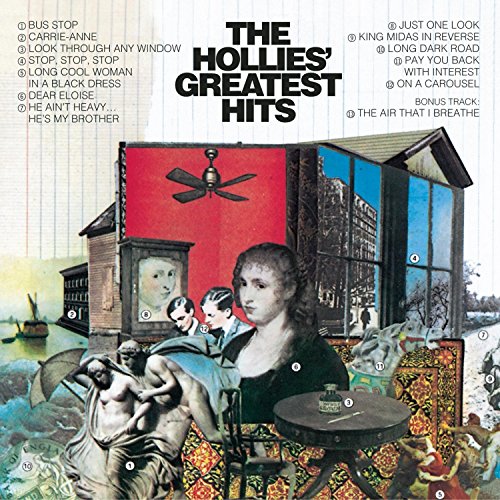
Greatest Hits
12 of the Hollies’ biggest chart hits
Covers Hicks’s guitar work from “Bus Stop” through “Long Cool Woman.”
The single best starting point for new fans.
🛒 Check Price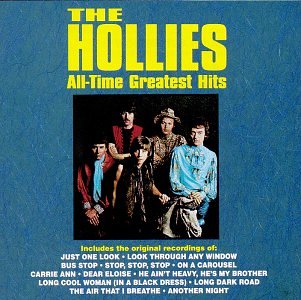
All-Time Greatest Hits
A broader hits collection
Adds deeper cuts alongside the singles most fans already know.
Good next step after the core Greatest Hits set.
🛒 Check Price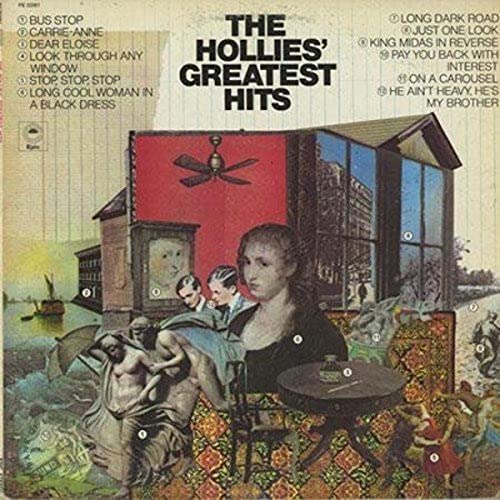
Greatest Hits (Vinyl)
The hits collection on vinyl
Built for fans who want Hicks’s guitar tone on a turntable.
A solid physical-format pick for collectors.
🛒 Check Price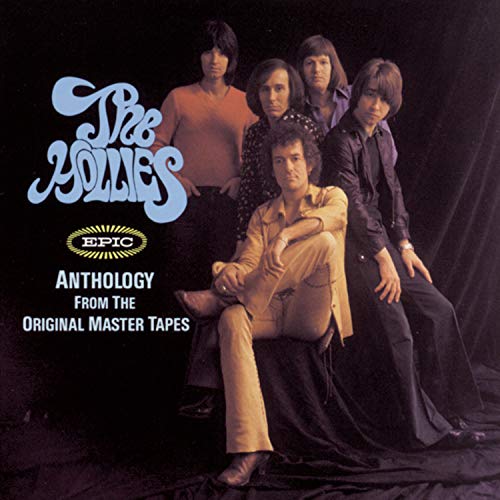
Epic Anthology: From the Original Master Tapes
1990 compilation
Pulls deep tracks from the Hollies’ Epic Records years.
Best pick for fans who already own the hits.
🛒 Check PriceYou Might Also Like
John Mayall: The Godfather of British Blues Legend Revealed
Another British bandleader whose 1960s work shaped the same UK blues and pop scene Hicks came up in.
Elvis Costello: The Voice That Rewrote British Rock
Like Hicks, a British songwriter-guitarist who built a career on melodic hooks and sharp arrangements.
Dave Mason: The Ultimate Biography of the Traffic Co-Founder
A fellow British guitarist who, like Hicks, helped write his band’s defining singles from the inside.
Steve Howe: The Guitarist Who Defined Yes’s Sound
Another British guitarist known for genre-bending textures, echoing the sitar experiments Hicks brought to the Hollies.
Tony Hicks spent 63 years as the guitarist who never left the Hollies.
He played on every hit from “Just One Look” to “The Air That I Breathe.”
His guitar lines and his steady presence through every lineup change made him one of the defining figures of the British Invasion.
Tony Hicks leaves the Hollies with a six-decade catalog and a permanent place in classic rock history.
Last updated: August 29, 2026.