
After a sixteen-year absence from the studio, Fleetwood Mac Say You Will arrived in 2003 as a testament to the enduring chemistry between Stevie Nicks, Lindsey Buckingham, and the rhythm section that had anchored the band through decades of triumph and turmoil.
This double album marked the first studio release from the classic lineup since 1987’s Fleetwood Mac Tango in the Night, though notably without Christine McVie, who had retired from the band.
The absence of McVie’s warm keyboard textures and melodic sensibilities created a sonic void that fundamentally altered the band’s signature sound.
What emerged instead was a darker, more experimental collection that showcased Buckingham’s increasingly adventurous production techniques and Nicks’ mature songwriting perspective.
Fleetwood Mac Say You Will – Available on Amazon
Get Fleetwood Mac Say You Will on Vinyl or CD at Amazon
Affiliate Disclosure: I am an Amazon affiliate and if you purchase through any Amazon links on this site I may earn a small commission at no extra charge to you. This helps support classicrockartists.com. Thank you for your support!
Table of Contents
Overview of Fleetwood Mac Say You Will
Fleetwood Mac Say You Will represents a fascinating paradox in the band’s storied catalog.
Released on April 15, 2003, the album spans eighteen tracks across two discs, clocking in at over seventy-five minutes of music.
The project began as separate solo endeavors from both Nicks and Buckingham before evolving into a full band effort.
Mick Fleetwood and John McVie provided the rhythmic foundation that had defined the band since the Fleetwood Mac 1975 Album transformed them into superstars.
The album’s extended length allowed both primary songwriters to present fully realized artistic visions without compromise.
Buckingham contributed nine tracks that showcased his evolution as a producer and multi-instrumentalist.
Nicks delivered nine compositions that reflected on aging, loss, and the passage of time with poetic introspection.
The sequencing alternates between their contributions, creating a dialogue between two artists who had shared creative and romantic history for nearly three decades.
This structure gives the album a unique conversational quality, as if listeners are witnessing an intimate exchange between former lovers.
The production aesthetic leans heavily toward Buckingham’s experimental tendencies, with layered guitars, unconventional song structures, and atmospheric textures.
Nicks’ tracks maintain more traditional pop-rock arrangements, though they benefit from modern production techniques that give her vocals new depth and presence.
The absence of Christine McVie’s songwriting meant no mid-tempo pop confections or sunny melodic counterpoints to balance the album’s darker moods.
Instead, the record embraces a mature, sometimes melancholic perspective that reflects the band’s collective age and experience.
Recording History and Production
The genesis of Fleetwood Mac Say You Will traces back to the success of Fleetwood Mac The Dance Album, the 1997 live reunion that proved the band’s commercial viability remained strong.
Initial sessions began in 1999 with all five members, including Christine McVie, who contributed to early recordings.
McVie’s decision to retire from touring and recording in 1998 created uncertainty about the project’s direction.
Her departure left the band without its musical anchor and most consistent hitmaker.
Buckingham assumed primary production duties, working extensively at his home studio in Los Angeles.
His approach involved building tracks layer by layer, often playing multiple instruments himself before bringing in Fleetwood and John McVie.
This methodology gave Buckingham unprecedented control over the sonic landscape, resulting in his most experimental work within the Fleetwood Mac framework.
Nicks recorded her vocals separately, often working with her own team of engineers and musicians.
The recording process stretched across four years, interrupted by touring commitments and creative disagreements.
Buckingham’s perfectionist tendencies led to extensive overdubbing and revision, with some tracks undergoing dozens of iterations.
The rhythm section recorded their parts at various stages, sometimes adding to nearly complete tracks that Buckingham had constructed.
This fragmented approach contrasted sharply with the live-in-studio methodology that had characterized earlier albums like Fleetwood Mac Mirage Album.
According to detailed documentation of the sessions, tensions occasionally flared between band members over creative direction and the album’s extended gestation period.
Buckingham employed digital recording technology alongside analog techniques, creating a hybrid sound that bridged classic rock warmth with contemporary clarity.
His guitar work ranged from delicate fingerpicking to aggressive, distorted passages that recalled his most adventurous moments on Fleetwood Mac Tusk Album.
Nicks brought in outside collaborators for some of her tracks, including longtime associate Waddy Wachtel on guitar.
The production budget reportedly exceeded two million dollars, reflecting both the extended timeline and the meticulous attention to detail.
Final mixing took place at multiple facilities, with Buckingham overseeing the sonic balance to ensure cohesion across the diverse material.
Track-by-Track Highlights of Fleetwood Mac Say You Will
The album opens with “What’s the World Coming To,” a Buckingham composition that immediately establishes the record’s experimental edge.
Layered acoustic guitars create a hypnotic foundation while Buckingham’s vocals deliver cryptic observations about modern disconnection.
The production features unusual stereo panning and rhythmic shifts that keep listeners slightly off-balance.
“Murrow Turning Over in His Grave” continues Buckingham’s social commentary with a driving rhythm and stacked vocal harmonies.
The title references legendary broadcaster Edward R. Murrow, lamenting the degradation of journalistic integrity.
Nicks enters with “Illume (9-11),” a haunting response to the September 11 attacks that showcases her gift for transforming tragedy into poetry.
Her voice floats over sparse instrumentation, creating an atmosphere of reverent mourning.
The title track “Say You Will” ranks among the album’s most accessible moments, with a memorable chorus and driving beat.
Buckingham’s production builds from intimate verses to an explosive climax featuring his signature guitar attack.
The song became the album’s lead single and demonstrated that the band could still craft radio-friendly rock.
“Peacekeeper” offers another Buckingham highlight, with propulsive drums from Fleetwood and a guitar riff that burrows into the brain.
The lyrics address themes of conflict resolution with characteristic ambiguity, allowing multiple interpretations.
Nicks contributes “Come,” a mid-tempo rocker that recalls her classic style while incorporating contemporary production sheen.
Her vocal performance conveys both vulnerability and strength, a balance she had perfected over decades.
“Red Rover” stands as one of Buckingham’s most emotionally direct compositions, addressing his relationship with his children.
The arrangement features delicate acoustic guitar and strings, creating a tender atmosphere rare in his catalog.
“Everybody Finds Out” showcases Nicks in storytelling mode, weaving a narrative about secrets and revelation.
The production incorporates atmospheric keyboards and layered backing vocals that enhance the song’s mysterious quality.
“Destiny Rules” finds Nicks reflecting on fate and choice with philosophical lyrics set to a steady, hypnotic groove.
The track builds gradually, adding instrumental layers that create mounting tension without ever fully releasing it.
“Say Goodbye” delivers one of Buckingham’s most experimental moments, with processed vocals and unconventional song structure.
The piece challenges traditional verse-chorus conventions, instead unfolding as a series of connected musical ideas.
“Smile at You” offers a brief Buckingham interlude, clocking in under three minutes with a deceptively simple melody.
The stripped-down arrangement highlights his fingerpicking technique and intimate vocal delivery.
“Running Through the Garden” presents Nicks in reflective mode, contemplating memory and loss with poetic imagery.
The production remains understated, allowing her lyrics and vocal nuances to take center stage.
“Silver Girl” ranks among the album’s most beautiful tracks, with Nicks delivering a tender meditation on aging and acceptance.
The arrangement features gentle acoustic guitar and subtle orchestration that supports without overwhelming.
“Steal Your Heart Away” brings Buckingham’s pop sensibilities to the fore with an infectious melody and bright production.
The track provides welcome uplift after the album’s darker moments, showcasing his range as a songwriter.
“Bleed to Love Her” closes the album with one of Buckingham’s most powerful performances.
The seven-minute epic builds from whispered intimacy to cathartic release, featuring some of his most intense guitar work.
The song’s extended coda allows Buckingham to explore textural possibilities, creating a fitting conclusion to this ambitious double album.
Chart Performance of Fleetwood Mac Say You Will
Fleetwood Mac Say You Will debuted at number three on the Billboard 200 chart in May 2003.
The album sold 131,000 copies in its first week, impressive numbers for a heritage act in the early 2000s music landscape.
This marked the band’s highest chart position since 1987’s Tango in the Night, which had peaked at number seven.
The lead single “Peacekeeper” reached number seven on the Adult Contemporary chart, demonstrating the band’s continued appeal to mature audiences.
Rock radio embraced the track, with several stations adding it to regular rotation despite its unconventional structure.
“Say You Will” performed moderately as a follow-up single, though it failed to match the success of “Peacekeeper.”
The album achieved gold certification in the United States, selling over 500,000 copies within its first year of release.
International performance proved strong in traditional Fleetwood Mac markets, with the album reaching the top ten in several European countries.
In the United Kingdom, the album peaked at number six, marking a respectable showing for the band’s first studio album in sixteen years.
Australian audiences embraced the record, pushing it to number four on the ARIA charts.
The accompanying tour became one of the highest-grossing of 2003, with the band playing to sold-out arenas across North America and Europe.
Concert ticket sales far exceeded album sales, suggesting that many fans preferred experiencing the classic catalog live rather than investing in new material.
Critics offered mixed reviews, with some praising the ambitious scope while others found the double-album format excessive.
Rolling Stone awarded the album three out of five stars, acknowledging strong individual tracks while questioning the overall cohesion.
By the end of 2003, the album had sold approximately 750,000 copies in the United States alone.
Worldwide sales eventually exceeded two million copies, a solid commercial performance though far below the multi-platinum heights of the band’s 1970s and 1980s releases.
Legacy and Cultural Impact
Fleetwood Mac Say You Will occupies a unique position in the band’s discography as their final studio album of original material with Lindsey Buckingham.
The record demonstrated that the core trio of Nicks, Buckingham, and the rhythm section could still create compelling music without Christine McVie’s contributions.
However, it also highlighted how essential McVie had been to the band’s signature sound, with her absence creating a tonal imbalance that some listeners found jarring.
The album’s experimental production techniques influenced how other heritage rock acts approached their later-career recordings.
Buckingham’s willingness to embrace modern recording technology while maintaining organic instrumentation provided a template for aging rockers seeking contemporary relevance.
The extensive touring that supported the album introduced Fleetwood Mac to a new generation of fans who had missed the band’s classic era.
Many younger listeners discovered the catalog through these concerts, leading to renewed interest in albums like Fleetwood Mac Go Your Own Way (1977) and other classic tracks.
The album’s themes of aging, reflection, and reconciliation resonated with the band’s core audience, who had grown older alongside them.
Nicks’ mature songwriting perspective offered a counterpoint to the youth-obsessed culture of early 2000s pop music.
Her willingness to address mortality and loss with poetic honesty gave the album emotional weight that transcended typical rock nostalgia.
Buckingham’s production work on the album influenced his subsequent solo releases, which continued exploring the experimental directions he had pioneered here.
The album’s commercial success proved that Fleetwood Mac remained a viable touring and recording entity, leading to continued activity throughout the 2000s and 2010s.
Several tracks from the album became concert staples, with “Peacekeeper” and “Say You Will” regularly appearing in setlists for years afterward.
The record’s exploration of political themes, particularly in Buckingham’s contributions, marked a departure from the personal relationship dramas that had defined earlier work.
This shift reflected the band’s evolution and their desire to engage with broader cultural concerns beyond their own interpersonal dynamics.
You can experience the album’s sonic landscape through this comprehensive listening session that showcases its production depth.
The album’s legacy remains somewhat contested among fans, with some viewing it as a triumphant return and others seeing it as an overlong curiosity.
Time has been kind to the record, with retrospective assessments often more favorable than initial reviews.
The album stands as proof that Fleetwood Mac could adapt and evolve while maintaining the core elements that made them distinctive.
Listener’s Note
When I first heard this album in 2003, I approached it with considerable skepticism.
Sixteen years had passed since the last studio album, and the absence of Christine McVie seemed like an insurmountable obstacle.
My initial listen confirmed some fears, as the album’s seventy-five-minute runtime felt excessive and the sequencing occasionally jarring.
However, subsequent listens revealed layers of complexity that rewarded patience and attention.
Buckingham’s experimental production choices, which initially seemed indulgent, began to reveal their own internal logic.
His willingness to push boundaries within the Fleetwood Mac framework demonstrated artistic courage that many heritage acts lack.
Nicks’ contributions grew on me more slowly, as her lyrical approach had become more abstract and less immediately accessible.
Yet tracks like “Silver Girl” and “Running Through the Garden” eventually revealed themselves as among her most emotionally honest work.
The album works best when approached not as a traditional Fleetwood Mac record but as a conversation between two artists with shared history.
The alternating songwriting creates a dialogue that mirrors the complex relationship between Nicks and Buckingham.
I found myself wishing for a single-disc version that trimmed the weaker tracks and created a more focused listening experience.
Yet the sprawling nature of the album also allows both artists to fully express their visions without compromise.
The rhythm section’s contributions deserve special mention, as Fleetwood and John McVie provide the connective tissue that holds disparate elements together.
Their playing remains as intuitive and powerful as it was on the Fleetwood Mac Debut Album 1968, adapted to serve these new compositions.
Twenty years after its release, I appreciate the album more than I did initially, recognizing it as a brave artistic statement from musicians who refused to simply recreate past glories.
Affiliate Disclosure: I am an Amazon affiliate and if you purchase through any Amazon links on this site I may earn a small commission at no extra charge to you. This helps support classicrockartists.com and allows me to keep providing deep-dive content on the legends of rock. Thank you for your support!
Collector’s Corner
Fleetwood Mac Say You Will was released in several formats that appeal to different types of collectors.
The standard two-disc CD edition remains the most common version, featuring the complete eighteen-track sequence.
A limited edition version included enhanced CD content with behind-the-scenes footage and interviews with members of Fleetwood Mac.
The vinyl release came as a double LP set, though it was pressed in limited quantities and has become increasingly scarce.
Original vinyl pressings from 2003 now command premium prices among collectors, particularly sealed copies.
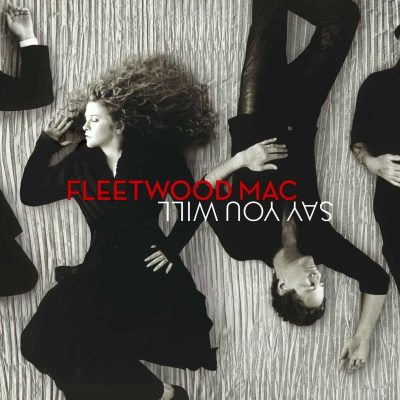
The album artwork features a stark, minimalist design that contrasts with the ornate packaging of earlier Fleetwood Mac releases.
Japanese editions included bonus tracks and alternative mixes not available on domestic releases.
Promotional copies sent to radio stations and reviewers featured different artwork and are highly sought by completists.
The album has been reissued several times on vinyl, with a 2016 pressing offering improved sound quality over the original release.
For those seeking the best audio experience, the CD version remains superior to most streaming options due to compression issues.
Secure your copy of Fleetwood Mac Say You Will on Amazon and experience this ambitious double album in its full glory.
The album pairs well with other late-period Fleetwood Mac releases, creating a comprehensive picture of the band’s evolution beyond their classic era.
FAQ About Fleetwood Mac Say You Will
Why wasn’t Christine McVie on Fleetwood Mac Say You Will?
Christine McVie retired from Fleetwood Mac in 1998, citing a fear of flying and a desire to step away from the demanding touring schedule.
She participated in early recording sessions for the album but ultimately decided not to continue with the project.
Her absence fundamentally altered the band’s sound, removing the warm keyboard textures and melodic pop sensibilities she had contributed since joining in 1970.
The remaining members chose to continue as a quartet rather than recruit a replacement, believing that McVie’s role was irreplaceable.
How long did it take to record Fleetwood Mac Say You Will?
The recording process for Fleetwood Mac Say You Will spanned approximately four years, from 1999 to 2003.
Sessions were interrupted multiple times by touring commitments, solo projects, and creative disagreements among band members.
Lindsey Buckingham’s perfectionist approach to production contributed to the extended timeline, as he continuously refined and revised tracks.
The lengthy gestation period created tension within the band but ultimately allowed both primary songwriters to fully realize their artistic visions.
What are the best songs on Fleetwood Mac Say You Will?
The standout tracks include “Peacekeeper,” which became the album’s most successful single and showcases Buckingham’s production prowess.
“Say You Will” offers an accessible entry point with its memorable chorus and driving rhythm.
“Silver Girl” represents Stevie Nicks at her most vulnerable and poetic, addressing themes of aging with grace.
“Bleed to Love Her” closes the album with an epic seven-minute showcase of Buckingham’s guitar virtuosity and emotional intensity.
Other highlights include “Red Rover,” “Illume (9-11),” and “Running Through the Garden,” each offering distinct perspectives from the two primary songwriters.
Is Fleetwood Mac Say You Will worth listening to for new fans?
New fans should approach Fleetwood Mac Say You Will after familiarizing themselves with the band’s classic albums from the 1970s and 1980s.
The album represents a significant departure from the accessible pop-rock sound that defined their most popular work.
Listeners who appreciate experimental production and mature, reflective songwriting will find much to admire in this ambitious double album.
However, those seeking the immediate hooks and harmonies of Rumours or Fleetwood Mac Gypsy (1982) may find the album challenging.
The record works best as a companion piece to the classic catalog, offering insight into how the band evolved over decades of creative partnership.
You Might Also Like
Fleetwood Mac Tango in the Night
Explore the band’s last studio album with Christine McVie, featuring lush production and timeless pop-rock craftsmanship.
Fleetwood Mac Then Play On
Discover the Peter Green era’s experimental masterpiece that showcased the band’s blues-rock foundations.
Fleetwood Mac The Dance Album
Experience the 1997 reunion that reignited the classic lineup and paved the way for Say You Will.
Fleetwood Mac Say You Will stands as a testament to the enduring creative partnership between Stevie Nicks and Lindsey Buckingham, proving that even after decades of collaboration and conflict, they could still challenge themselves and their audience with ambitious, uncompromising music.