

Alice in Chains Facelift arrived in August 1990 as a seismic shift in the hard rock landscape, introducing the world to a band that would redefine heavy music for the decade ahead.
This debut album combined the sludgy heaviness of Black Sabbath with the melodic sensibility of classic rock, creating a sound that was both brutally heavy and hauntingly beautiful.
The chemistry between guitarist Jerry Cantrell and vocalist Layne Staley became immediately apparent, establishing a creative partnership that would influence countless bands.
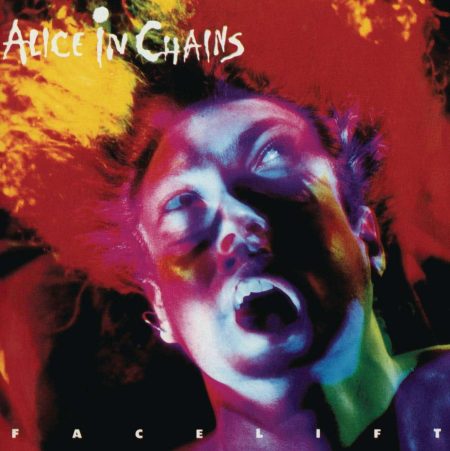
Alice in Chains Facelift – Available on Amazon
Get Alice in Chains Facelift (1990) on Amazon
Affiliate Disclosure: I am an Amazon affiliate and if you purchase through any Amazon links on this site I may earn a small commission at no extra charge to you. This helps support classicrockartists.com. Thank you for your support!
The lineup that created this landmark album would become legendary, as detailed in Alice in Chains Members: Complete Story & Where Are They Now, showcasing the talents of Cantrell, Staley, bassist Mike Starr, and drummer Sean Kinney.
Facelift captured a moment when Seattle was about to explode onto the global stage, though Alice in Chains always stood apart from their grunge contemporaries.
Table of Contents
Overview of Alice in Chains Facelift
Alice in Chains Facelift represented a bold statement from a band that refused to conform to the prevailing musical trends of 1990.
The album’s sonic palette drew from metal, hard rock, and psychedelic influences, creating something entirely unique.
Jerry Cantrell’s riff-heavy guitar work provided the foundation for songs that explored dark themes with unflinching honesty.
Layne Staley’s vocal performance showcased a range that moved from anguished screams to haunting melodic passages.
The rhythm section of Mike Starr and Sean Kinney locked into grooves that were both heavy and hypnotic.
Columbia Records took a chance on this unconventional band, signing them based on the strength of their live performances and demo recordings.
The album’s production captured the raw energy of the band while maintaining clarity and sonic depth.
Facelift established the template for Alice in Chains’ signature sound: harmonized vocals, down-tuned guitars, and lyrics that confronted addiction and despair.
The band’s willingness to embrace darkness set them apart from the more optimistic alternative rock emerging from college radio.
This debut would prove that heavy music could be both commercially successful and artistically uncompromising.
Recording History and Production
The recording sessions for Facelift took place at London Bridge Studio and Capitol Studios in Seattle during late 1989 and early 1990.
Producer Dave Jerden, fresh from his work with Jane’s Addiction, brought a keen understanding of how to capture heavy music with sonic sophistication.
Jerden recognized the unique chemistry between Cantrell and Staley, encouraging their vocal harmonies to become a central element of the sound.
The band entered the studio with most songs already road-tested through extensive gigging around the Seattle club circuit.
Jerry Cantrell’s guitar tone became a crucial element, achieved through a combination of vintage amplifiers and careful mic placement.
Layne Staley’s vocal performances were often captured in just a few takes, preserving the raw emotion of his delivery.
The production process emphasized the band’s natural dynamics rather than relying on studio trickery or excessive overdubs.
According to detailed documentation of the album’s creation, the recording budget was modest by major label standards, forcing creative solutions.
Sean Kinney’s drum sound combined power with precision, providing the backbone for the album’s heaviest moments.
Mike Starr’s bass lines added melodic counterpoint to Cantrell’s riffs while maintaining low-end heaviness.
The mixing process balanced the album’s aggressive elements with moments of acoustic introspection.
Jerden’s production allowed each instrument to occupy its own sonic space without sacrificing the overall density.
The final mix captured the claustrophobic intensity that would become an Alice in Chains trademark.
Track-by-Track Highlights of Alice in Chains Facelift
“We Die Young” opens the album with a relentless riff that immediately establishes the band’s heavy credentials.
The song’s lyrics address the impact of drug dealing on children, setting the tone for the album’s unflinching social commentary.
At just over two and a half minutes, it serves as a perfect introduction to the Alice in Chains sound.
“Man in the Box” became the album’s breakthrough single, with its iconic talk-box guitar effect and memorable chorus.
The song’s music video received heavy rotation on MTV, introducing the band to a mainstream audience.
Cantrell’s riff work on this track demonstrated his ability to craft hooks that were both heavy and instantly memorable.
“Sea of Sorrow” showcases the band’s ability to build tension through dynamic shifts and layered vocal harmonies.
The track’s mid-tempo groove allows Staley’s vocals to explore different emotional registers.
“Bleed the Freak” features some of the album’s most intricate guitar work, with Cantrell weaving melodic leads through heavy rhythm patterns.
The song’s lyrics explore themes of betrayal and emotional manipulation with vivid imagery.
“I Can’t Remember” slows the pace with a doom-laden riff that recalls Black Sabbath at their heaviest.
Staley’s vocal performance on this track conveys genuine anguish, foreshadowing the personal struggles that would later consume him.
“Love, Hate, Love” stands as the album’s epic centerpiece, stretching past six minutes with an extended emotional journey.
The song builds from a quiet, introspective opening to a cathartic climax featuring some of Staley’s most powerful vocal moments.
This track demonstrated that Alice in Chains could craft extended compositions without losing listener engagement.
“It Ain’t Like That” delivers a straightforward rocker with a defiant attitude and infectious energy.
The song’s message of independence and self-determination provided a counterpoint to the album’s darker themes.
“Sunshine” offers a brief moment of relative optimism, though still filtered through the band’s characteristically dark lens.
The track’s melodic sensibility hinted at the more acoustic direction the band would explore on later releases like Alice in Chains Nutshell (1994): The Acoustic Masterpiece From Jar of Flies.
“Put You Down” maintains the album’s aggressive momentum with another heavy riff and confrontational lyrics.
“Confusion” explores disorientation and mental instability through swirling guitar effects and dissonant harmonies.
The song’s structure mirrors its lyrical content, creating a sense of unease that lingers after the final note.
“I Know Somethin (Bout You)” closes the original album with a groove-oriented track that showcases the band’s funkier side.
The song’s swagger and confidence provided an upbeat ending to an otherwise heavy listening experience.
“Real Thing” appeared as a bonus track on some editions, offering another example of the band’s ability to craft memorable hooks.
Chart Performance of Alice in Chains Facelift
Alice in Chains Facelift initially received a modest commercial response upon its August 1990 release.
The album entered the Billboard 200 chart but didn’t immediately set the world on fire.
Everything changed when “Man in the Box” began receiving heavy rotation on MTV in early 1991.
The single’s success drove album sales, pushing Facelift steadily up the charts throughout 1991.
By the time the grunge explosion fully materialized in late 1991, Alice in Chains was already established.
The album eventually peaked at number 42 on the Billboard 200, an impressive achievement for a debut from a heavy band.
“Man in the Box” reached number 18 on the Mainstream Rock chart, becoming a rock radio staple.
The album’s longevity on the charts demonstrated its staying power beyond initial hype.
Facelift remained on the Billboard 200 for over two years, a testament to consistent sales and growing word-of-mouth.
The RIAA certified the album gold in September 1991, just over a year after its release.
Platinum certification followed in May 1992, as the band’s profile continued to rise.
The album eventually achieved double platinum status, selling over two million copies in the United States alone.
International sales added significantly to the album’s overall commercial success.
The success of Facelift positioned Alice in Chains perfectly for their even more successful follow-up, Dirt.
The album’s chart performance proved that heavy, uncompromising music could find a mainstream audience.
Legacy and Cultural Impact
Alice in Chains Facelift established a blueprint that countless bands would attempt to follow throughout the 1990s and beyond.
The album’s influence extended far beyond the Seattle scene, impacting heavy music globally.
The Cantrell-Staley vocal harmonies became a signature element that defined the Alice in Chains sound.
Many bands in the post-grunge era adopted similar vocal approaches, though few achieved the same emotional impact.
The album demonstrated that metal and alternative rock could coexist, creating a hybrid that appealed to fans of both genres.
Facelift’s success helped pave the way for other heavy Seattle bands to receive major label attention.
The album’s dark lyrical themes addressed addiction and depression with unprecedented honesty for mainstream rock.
This unflinching approach to difficult subjects would become even more pronounced on later works like Alice in Chains Angry Chair (1992): Layne Staley’s Rawest Confession.
Critics initially struggled to categorize Alice in Chains, with the band resisting easy classification.
Over time, Facelift has been recognized as one of the essential albums of the early 1990s rock renaissance.
The album’s production quality has aged remarkably well, sounding fresh and powerful decades after its release.
Modern metal and hard rock bands continue to cite Facelift as a formative influence on their sound.
The album’s impact can be heard in the work of bands ranging from Godsmack to Breaking Benjamin.
Music historians now view Facelift as a crucial bridge between 1980s metal and 1990s alternative rock.
The album proved that commercial success didn’t require compromising artistic vision or softening the message.
Video documentation of the album’s creation and impact provides fascinating insight into the recording process and the band’s mindset.
Facelift’s legacy extends beyond music into visual art, with its album cover becoming an iconic image of the era.
The album established Alice in Chains as more than just another Seattle band, but as genuine innovators.
Listener’s Note
When I first heard this album in 1991, it immediately struck me as something different from everything else on rock radio.
The heaviness wasn’t just sonic but emotional, creating an atmosphere that was both oppressive and strangely beautiful.
I remember being captivated by the vocal interplay between Cantrell and Staley, which created harmonies unlike anything I’d heard before.
The album demanded repeated listens, revealing new layers with each playthrough.
What struck me most was the band’s refusal to offer easy answers or false hope in their lyrics.
This honesty felt refreshing compared to the escapist themes dominating much of rock music at the time.
The production allowed me to hear every instrument clearly while maintaining the overall heaviness.
I found myself drawn to different tracks depending on my mood, with the album offering both aggressive catharsis and introspective moments.
“Love, Hate, Love” became a personal favorite, with its emotional arc mirroring the ups and downs of real relationships.
The album’s sequencing kept me engaged from start to finish, with each song flowing naturally into the next.
Listening to Facelift today, I’m struck by how well it has aged compared to many of its contemporaries.
The themes remain relevant, and the sonic approach still sounds fresh and powerful.
This album opened the door for me to explore the band’s later work, including masterpieces like Alice in Chains Would? (1992) and Alice in Chains Rooster: Jerry Cantrell’s Letter to His Father.
Facelift remains in my regular rotation, a testament to its enduring quality and emotional resonance.
Affiliate Disclosure: I am an Amazon affiliate and if you purchase through any Amazon links on this site I may earn a small commission at no extra charge to you. This helps support classicrockartists.com and allows me to keep providing deep-dive content on the legends of rock. Thank you for your support!
Collector’s Corner
Alice in Chains Facelift has been released in numerous formats over the years, making it a rewarding album for collectors.
The original 1990 CD pressing features slightly different mastering than later reissues.
Vinyl enthusiasts can find both original pressings and modern reissues, with the latter often featuring improved sound quality.
The 2009 remastered edition includes bonus tracks and enhanced audio that brings new clarity to the original recordings.
Japanese editions often include additional tracks and unique packaging that appeals to completists.
Limited edition colored vinyl pressings have become highly sought after by collectors.
The album’s iconic cover art has been reproduced on various merchandise items, from t-shirts to posters.
Original promotional materials from the album’s release, including posters and standees, command premium prices.
For those looking to add this essential album to their collection, Amazon offers various formats including vinyl, CD, and digital versions.
The vinyl pressing provides the warmest listening experience, particularly for the album’s heavier moments.
CD versions offer convenience and portability while maintaining excellent sound quality.
Digital formats allow for easy integration into modern streaming setups and portable devices.
FAQ About Alice in Chains Facelift
When was Alice in Chains Facelift released?
Alice in Chains Facelift was released on August 21, 1990, through Columbia Records.
The album arrived before the mainstream grunge explosion, positioning the band as pioneers rather than followers.
Its release date placed it ahead of landmark albums from Nirvana, Pearl Jam, and Soundgarden.
What is the best song on Alice in Chains Facelift?
“Man in the Box” became the album’s most commercially successful and recognizable track.
However, many fans and critics consider “Love, Hate, Love” to be the album’s artistic peak.
The opening track “We Die Young” perfectly encapsulates the band’s heavy, socially conscious approach.
Each song offers something unique, making the “best” track largely a matter of personal preference.
Who produced Alice in Chains Facelift?
Dave Jerden produced Alice in Chains Facelift, bringing his experience from working with Jane’s Addiction.
Jerden’s production approach emphasized the band’s natural dynamics and vocal harmonies.
His work on the album helped establish the sonic template for Alice in Chains’ future releases.
The production quality remains impressive decades later, showcasing Jerden’s skill and vision.
How did Alice in Chains Facelift perform commercially?
The album achieved double platinum certification in the United States, selling over two million copies.
It peaked at number 42 on the Billboard 200 chart during its extended chart run.
The album’s success built gradually through 1991 and 1992 as the band’s profile increased.
International sales added significantly to the album’s overall commercial impact.
You Might Also Like
Alice in Chains Them Bones (1992)
Explore the ferocious opening track from Dirt that took the Facelift formula to even heavier territory.
Alice in Chains Down in a Hole (1992)
Discover the emotional anchor of Dirt that showcased the band’s melodic evolution from Facelift.
Alice in Chains No Excuses (1994)
Experience the Grammy-winning track that demonstrated the band’s acoustic capabilities beyond Facelift’s electric assault.
Alice in Chains Facelift remains an essential listening experience for anyone seeking to understand the evolution of heavy rock in the 1990s and the enduring power of uncompromising artistic vision.