

Alice in Chains Angry Chair is the track on Dirt where Layne Staley writes from inside his own collapse.
He wrote it alone, without Jerry Cantrell, and in 1992 that distinction made all the difference to what the song became.
Affiliate Disclosure: As an Amazon Associate I earn from qualifying purchases. This helps support the site at no extra cost to you.
Quick Navigation
- Alice in Chains Angry Chair on the Dirt Album
- Layne Staley Wrote This One Alone
- Alice in Chains Angry Chair: What the Lyrics Are Saying
- The Musical Structure: Heavy and Relentless
- Alice in Chains Angry Chair and the Language of Addiction
- Staley’s Performance: Nothing Is Held Back
- The Official Video and MTV in 1992
- How the Song Sits Among the Dirt Tracks
- Alice in Chains Angry Chair Live and Onstage
- Own the Album, Hear the Full Confession
Alice in Chains Angry Chair on the Dirt Album
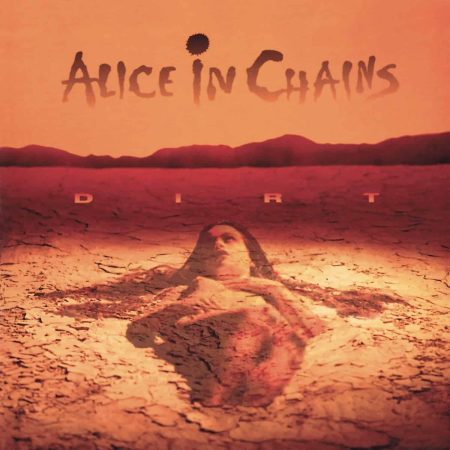
Alice in Chains Angry Chair appears as track nine on Dirt, released September 29, 1992.
It sits between some of the album’s most ambitious material, which is a difficult position to hold.
By track nine, Dirt had already established that it was not interested in making the listener comfortable.
Alice in Chains Angry Chair confirmed that, but from a different angle than anything that came before it on the record.
Where other Dirt tracks approached darkness through war, mortality, or addiction observed from a narrative distance, this one came from directly inside.
Staley’s perspective here is not filtered through craft or narrative construction.
It is immediate, personal, and completely unprotected.
Layne Staley Wrote This One Alone
Layne Staley is listed as the sole writer of Angry Chair, which is rare for Alice in Chains.
Most of the catalog is credited jointly to Staley and Cantrell, with Cantrell typically driving the music and structural shape.
Alice in Chains Angry Chair has no equivalent on Dirt in terms of personal exposure, which is exactly why Staley’s solo credit matters here.
When Cantrell writes, even his darkest material carries a certain structural control.
When Staley writes alone, the result is something rawer and less organized by compositional craft.
The song reflects how Staley actually thought and felt in 1992, without the shaping influence of a primary collaborator.
For a full picture of who wrote what across the catalog, the Alice in Chains members breakdown covers each contributor’s role across the full discography.
Alice in Chains Angry Chair: What the Lyrics Are Saying
Alice in Chains Angry Chair opens with a concrete image: trapped in an angry chair, surrounded by walls caving in.
The “angry chair” is widely understood as a reference to the specific place Staley occupied when he was using.
It is a space of paralysis rather than comfort, a location that had become a kind of prison.
The lyric “little boy made a mistake” is Staley addressing himself, reducing himself to a child who has failed.
There is no external villain in the song.
The accusation is always inward, always self-directed.
By 1992, Staley knew exactly where he was and what it was costing him, and this song is the documented evidence of that knowledge.
The Musical Structure: Heavy and Relentless
The track is built around a slow, grinding guitar riff that Dave Jerden recorded with maximum density and very little warmth.
There is little variation in the arrangement from verse to verse.
The song does not build toward a cathartic release or a soaring, redemptive chorus.
It stays in one emotional register for its entire runtime.
That choice is deliberate and structurally honest.
The feeling the song captures does not crescendo and resolve.
It just sits there, unchanging.
The musical arrangement of Alice in Chains Angry Chair is essentially one long statement of inescapable weight.
Alice in Chains Angry Chair and the Language of Addiction
Alice in Chains Angry Chair is one of the most direct documents of addiction in rock music from the 1990s.
It does not moralize or warn.
It does not frame addiction as a social problem with a redemptive arc or a before-and-after story.
It describes what addiction feels like from the inside: the paralysis, the self-recrimination, and the inability to move.
Other rock songs from that era addressed the same subject, but most maintained a narrative distance from it.
Staley had no interest in that distance when he wrote this.
He was writing from inside the experience in real time, and that is why the song registers as something beyond ordinary craft.
Staley’s Performance: Nothing Is Held Back
Layne Staley’s vocal on Alice in Chains Angry Chair is not polished for radio consumption or softened for wider accessibility.
He sounds exposed in a way that is difficult to categorize as simply a strong rock vocal.
The verses are delivered with a controlled flatness, as if the emotion has already burned through and left only the statement behind.
When he opens up on the chorus sections, the shift is abrupt and slightly unnerving.
Jerry Cantrell’s harmonies are present but feel like reinforcement rather than decoration.
The performance confirms what the lyric already told you: this is not a song Staley was watching himself perform from any safe distance.
His earlier work on Man in the Box showed what Staley could do within a more structured creative framework.
Angry Chair shows what he sounds like when that framework is removed entirely.
The Official Video and MTV in 1992
The official video for Angry Chair appeared on MTV in 1992 as Dirt was building its commercial and critical momentum.
The video captured Staley and the band in a visual approach that matched the song’s claustrophobic interior.
MTV in 1992 was the center of gravity for rock music culture, and exposure there gave the track a visibility it might not have otherwise reached.
Watch the full performance below and hear what the song sounded like when it first found its audience.
How the Song Sits Among the Dirt Tracks
Dirt is a record that earns its heaviest moments through accumulation.
By track nine, the listener has already been through Rain When I Die, Sickman, Dam That River, and the Vietnam meditation of Rooster.
That context matters to how Angry Chair lands.
Each track builds the listener’s capacity to absorb what comes next.
Angry Chair arrives in that sequence not as a louder version of what came before, but as something structurally different from the rest.
Where most Dirt tracks tell stories or construct arguments about the human condition, this one simply states a condition without comment.
The album closes from this point through tracks including Would?, which provides the final statement of the record’s emotional logic.
Alice in Chains Angry Chair Live and Onstage
Alice in Chains Angry Chair became one of the more demanding songs to perform live during the Dirt touring cycle in 1992 and 1993.
The song’s intensity required something from Staley each night that is difficult to sustain across a long run of shows.
Footage from that era shows the track landing with full force in arena settings.
The slow, heavy riff carried physically in large rooms in a way that faster songs cannot replicate.
After Staley’s death in April 2002, the song remained in the band’s catalog as a document of what he had recorded.
Performing it without the voice that wrote it is a different task, and William DuVall has approached it with evident respect.
For the full story of how the band navigated those transitions, the Jerry Cantrell 2025 tour activity shows exactly how the legacy of this material continues to connect with audiences.
Own the Album, Hear the Full Confession
Streaming Angry Chair in isolation gives you the track.
Hearing Dirt on vinyl from start to finish gives you the argument it belongs to.
Each of the thirteen tracks builds the case that 1992 was when rock music decided to stop pretending.
Visit the official band website at aliceinchains.com for all current news and releases.
Get Dirt on Amazon and hear Angry Chair in the sequence it was written to occupy.
You Might Also Like
Alice in Chains Angry Chair endures as the most unfiltered moment on Dirt, and three decades later it still sounds like a confession that cost something real to make.