
Geddy Lee: The Complete Biography of Rush’s Frontman
Geddy Lee has spent more than five decades making the bass guitar do things that most musicians would not attempt, and doing all of it while singing lead vocals and running a keyboard rig with his feet.
He is the voice, the bass, and the melodic center of Rush, one of the most technically demanding and consistently original rock bands in history.
If you have ever watched him perform and wondered how one person coordinates that many tasks simultaneously, you are asking the right question and the answer is still not fully satisfying.
The complete story of Geddy Lee is one of extraordinary musical development, lifelong friendship, impossible loss, and a return to the stage that nobody saw coming.

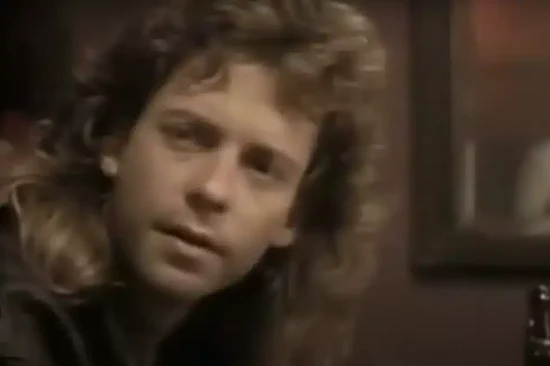
Photo: Cindy Ord, Getty Images
Quick Navigation
- Geddy Lee: The Origins of a Rock Icon
- How Rush Was Born in Toronto
- Geddy Lee’s Voice: An Instrument Unlike Any Other
- The Neil Peart Years: When Rush Found Its Third Corner
- 2112 and the Arrival of Progressive Rush
- Moving Pictures and Rush’s Commercial Peak
- Geddy Lee as a Multi-Instrumentalist and Composer
- Rush and the Rock and Roll Hall of Fame
- Neil Peart’s Death: The End of an Era
- Geddy Lee’s My Effin’ Life and the Bass Book
- Geddy Lee and the Rush 2026 Comeback
- Watch Geddy Lee: Funniest Rush Fan Story
- Connect With Geddy Lee
Geddy Lee: The Origins of a Rock Icon
Geddy Lee was born Gary Lee Weinrib on July 29, 1953, in North York, Ontario, Canada.
His parents were Holocaust survivors who had emigrated from Poland, and the weight of that history shaped the household he grew up in, even when it was not explicitly discussed.
Music became both escape and identity for the young Gary Weinrib, who gravitated toward bass guitar in his early teens after hearing the British bands that were rewriting rock in the late 1960s.
The nickname that became his professional name came from his grandmother, whose Yiddish-inflected pronunciation of “Gary” sounded to his neighborhood friends more like “Geddy,” and the name stuck long before anyone thought of putting it on an album cover.
Geddy Lee found his musical direction early, and once he found it, he pursued it without looking sideways at whatever else was popular at any given moment.
That commitment is visible in every record Rush made, and it begins with who this person was before he ever stepped into a recording studio.
How Rush Was Born in Toronto
Rush took shape in the Willowdale neighborhood of Toronto in 1968, when Geddy Lee joined childhood friend Alex Lifeson in a band that would spend the next several years developing the sound that eventually sold millions of records.
The earliest version of the band went through lineup changes before settling into a consistent working unit, with drummer John Rutsey anchoring the rhythm section alongside Lifeson and Lee.
Rush recorded their self-titled debut album in 1974, a record that owed more to Led Zeppelin and Cream than to the progressive rock that would define their later work.
The debut was raw, guitar-forward, and showed a band still finding the specific sound it wanted to make.
What it did establish clearly was the chemistry between Lifeson and Lee, two musicians who had grown up together and communicated in a musical shorthand that no outside hire could replicate.
That chemistry would prove durable enough to carry the band through fifty years of recording and every kind of commercial and critical shift the music industry could throw at them.
Did You Know?
Geddy Lee is an avid collector of vintage baseball memorabilia, with a particular focus on cards and artifacts from the 1920s and 1930s. He has amassed one of the most significant private collections in Canada, a passion he has discussed at length in interviews and which he describes as a counterbalance to the intensity of life in a working rock band. The collection spans decades of baseball history and reflects the same obsessive attention to detail that characterizes his approach to music.
Geddy Lee’s Voice: An Instrument Unlike Any Other
Geddy Lee’s vocal style is one of the most immediately recognizable in rock history, and also one of the most divisive.
The upper register he deployed throughout the 1970s and early 1980s was genuinely extreme, capable of reaching notes that few rock singers could approach without damaging their voice, and he hit them night after night on some of the most grueling touring schedules of the era.
Critics who encountered Rush for the first time often fixated on the vocal as an obstacle, while fans treated it as a defining feature that separated the band from everything else on the radio.
What is harder to dispute is the precision: Geddy Lee’s pitch control is exceptional, and the demands of Rush’s arrangements, which often required him to sing complex melodic lines while navigating equally complex bass parts, produced a vocalist who never had the luxury of coasting.
As the band moved through the 1980s and 1990s, his voice settled into a lower and warmer register that many listeners found more accessible.
The change was gradual and managed, and it allowed him to continue delivering demanding performances well into the band’s later decades without the vocal deterioration that claims many high-range singers by middle age.
By any honest measure, the voice of Geddy Lee is one of the great instruments in the history of rock music, whatever your initial reaction to it might have been.
The Neil Peart Years: When Rush Found Its Third Corner
The single most consequential event in Rush’s history was the arrival of drummer and lyricist Neil Peart in July 1974, who replaced founding drummer John Rutsey just before the band’s first American tour.
Rutsey’s departure was health-related, but the replacement turned out to be one of those rare personnel changes that transforms a promising band into something completely different.
Peart brought a level of drumming technique that immediately expanded what the rhythm section could do, and he became the band’s primary lyricist, giving Rush a literary and conceptual ambition that no one in the band’s orbit had previously expressed.
The combination of Peart’s drumming and lyrics with Lifeson’s guitar and Geddy Lee’s bass and vocals produced a triangle of creative force that remained intact for more than forty years.
What made the Rush lineup remarkable was not just the individual talent of each member but the specific way the three of them locked together.
The friendship between all three was genuine and visible, and it gave the music an internal coherence that purely professional arrangements rarely achieve.
2112 and the Arrival of Progressive Rush
Rush released 2112 in 1976, and the album changed the band’s commercial trajectory and artistic identity simultaneously.
The side-long title suite told the story of a dystopian future society through a combination of hard rock, progressive arrangements, and Neil Peart’s concept, which drew on science fiction influences to create a narrative that listeners could inhabit over a full album side.
The record arrived at a moment when the band’s label was pressuring them to record shorter, more radio-friendly material, and Rush responded by making their most ambitious and least radio-friendly record to that point.
2112 sold and kept selling, demonstrating that an audience existed for complex, extended rock compositions if the music was compelling enough to reward repeated listening.
The album established the template for the progressive era of Rush’s catalog: A Farewell to Kings, Hemispheres, and Permanent Waves all followed in the late 1970s, each refining the balance between complexity and directness that the band chased throughout that period.
Geddy Lee’s bass work on these records became increasingly sophisticated, developing a style that used the instrument as a melodic voice rather than simply a rhythmic anchor.
Did You Know?
Rush’s 2112 concept was partly inspired by the novella Anthem by Ayn Rand, in which an individual defies a collectivist society that has suppressed personal expression. Neil Peart acknowledged this influence, though the band later distanced themselves from the broader political implications of Rand’s philosophy. Peart stated in interviews that he found the theme of individual creative freedom compelling without endorsing Rand’s entire worldview, a distinction that has been a source of ongoing debate among both fans and critics.
Moving Pictures and Rush’s Commercial Peak
Moving Pictures, released in February 1981, is the album that most people who are not hardcore Rush fans know best, and it earned that position by being one of the most precisely constructed rock records of its era.
The opening track Tom Sawyer became Rush’s defining radio moment, combining the band’s progressive complexity with a directness that connected across a wide audience.
Limelight, Red Barchetta, and YYZ gave the band a live set that worked in arenas the way few bands’ material did.
Moving Pictures reached number three on the Billboard 200 and was eventually certified triple platinum in the United States, the band’s biggest commercial achievement as a studio album.
The record also represents the moment when Geddy Lee’s keyboard work became a genuine third voice in the arrangements rather than a supplementary texture.
The band spent much of 1981 and 1982 touring behind Moving Pictures, and those shows were landmarks for everyone who attended them.
Geddy Lee as a Multi-Instrumentalist and Composer
What separates Geddy Lee from most rock bassists is the scope of what he manages simultaneously on a live stage.
During Rush’s most elaborate touring periods, he played bass, triggered synthesizer sequences with foot pedals, handled keyboard parts with his hands between bass lines, and sang lead vocals throughout, without sacrificing any of the three.
The technical coordination required to do all of that in real time, at the tempo and precision Rush’s music demands, is genuinely rare.
Most musicians who attempt that level of multitasking sacrifice something: the vocals become straighter, the bass becomes simpler, or the keyboard parts get reduced to basic stabs.
Geddy Lee did not reduce any of them, which is one reason why Rush shows from their peak touring years hold up so well on video.
As a composer, his contribution to Rush’s arrangements shaped every record the band made, from the bass-driven heaviness of the early albums to the synthesizer-heavy sound of the mid-1980s and back to the more stripped guitar focus of the 1990s.
The range of that contribution across five decades is the most accurate measure of what kind of musician he actually is.
Rush and the Rock and Roll Hall of Fame
Rush was inducted into the Rock and Roll Hall of Fame in 2013, after years of eligibility during which the band’s absence from the inductee list became one of the more persistent conversations in the institution’s history.
The induction was fan-driven in significant part, with Rush receiving more votes in the fan ballot than any other nominee in 2013, a result that reflected the depth of loyalty the band had built across decades of touring and recording.
The ceremony reflected the same unsentimental professionalism that characterized Rush’s career: the band played, said what they had to say, and resisted the temptation to make the occasion larger than it was.
For the musicians, the induction confirmed something that the audience had always known, which is that the body of work Rush produced across forty-plus years deserved to sit alongside any other catalog in rock history.
Did You Know?
Rush holds the record for the third-highest number of consecutive gold or platinum studio albums by a rock band in North America, behind only the Beatles and the Rolling Stones. The streak runs from their 1975 album Fly by Night through multiple releases across the 2000s, covering one of the most sustained periods of commercial consistency in rock history. That level of output across format changes, genre shifts, and multiple decades makes the achievement genuinely unusual in the industry.
Neil Peart’s Death: The End of an Era
Neil Peart died on January 7, 2020, after a private battle with glioblastoma that lasted three and a half years.
The announcement came four days after his death, having been kept from the public at Peart’s request, and the response from the rock community and from Rush fans worldwide was unlike anything that had accompanied the loss of a rock musician in decades.
Peart had been the creative and intellectual center of Rush’s lyrical identity, and his retirement from performing in 2015 had already effectively ended the band’s touring life.
For Geddy Lee and Alex Lifeson, the loss was not only of a bandmate but of a close friend of nearly fifty years, and both men spoke in subsequent interviews about the difficulty of finding a reason to make music in the immediate aftermath.
The period between Peart’s death and any return to active music-making was one of genuine uncertainty about whether Rush, in any form, would ever perform again.
What followed was not an immediate answer but a slow process of figuring out what music still meant to two men who had defined themselves through it for their entire adult lives.
Geddy Lee’s My Effin’ Life and the Bass Book
In November 2023, Geddy Lee published his memoir, My Effin’ Life, a book that covers his childhood, his parents’ survival of the Holocaust, the full arc of Rush’s career, and his life outside of music.
The memoir is frank and detailed in a way that distinguished it from the promotional biographies that often pass for rock memoirs, and it received strong reviews from critics who came to it with no particular allegiance to Rush.
The book addressed Peart’s death with the honesty you would expect from someone still processing a loss of that magnitude, and it gave fans a version of the Rush story that had never been told from the inside in that kind of detail.
The official Rush biography of Geddy Lee traces the broad outlines of his career, but the memoir fills in the personal dimensions that official materials always leave out.
Geddy Lee had also previously published Geddy Lee’s Big Beautiful Book of Bass in 2018, a large-format photography book documenting his personal collection of vintage bass guitars, which sold through multiple printings and reached an audience that extended well beyond Rush fans.
Both books demonstrate that the articulate quality that comes through in his interviews is matched by a genuine ability to put ideas on the page.
Geddy Lee and the Rush 2026 Comeback
Geddy Lee and Alex Lifeson announced the Rush Fifty Something tour in 2026, a decision that surprised many observers who had assumed the band’s performing life was permanently over following Neil Peart’s death.
The Fifty Something tour expanded to forty shows as demand exceeded initial expectations, with new musicians filling the roles that the classic three-piece configuration had previously covered.
Drummer Anika Nilles joined the touring lineup, bringing technical credentials that Rush fans examined closely before arriving at a general verdict of approval.
Keyboardist Loren Gold also joined the expanded lineup, handling the keyboard and synthesizer orchestration that had always been a significant part of Rush’s live sound.
The official tour page at rush.com provides full dates and details, and coverage of the Rush 2026 tour documents how the shows took shape across the run.
The decision to continue performing under the Rush name with new members was not made lightly, and both Lee and Lifeson spoke extensively about what the band name meant to them and why they believed continuing it honored rather than diminished what Rush had been.
For fans who had accepted that Rush was finished, the 2026 tour was an unexpected chance to hear the catalog performed live by the two surviving members, and most of them chose not to pass it up.
Watch Geddy Lee: His Funniest Rush Fan Story
The clip below captures Geddy Lee in the kind of off-stage conversation that reveals more about who a musician actually is than any arena performance can.
This is Geddy Lee at his most natural: self-deprecating, observant, and genuinely funny about the world of rock music from the inside.
Connect With Geddy Lee
Geddy Lee keeps an active presence on social media and music platforms where he shares updates on music, touring, and the projects that continue to occupy his time.
Geddy Lee remains one of the most compelling figures in classic rock, and wherever he goes next, the audience will be paying close attention.
Explore Geddy Lee and Rush on Amazon
From Moving Pictures to My Effin’ Life, the catalog and memoir of Geddy Lee represent five decades of essential rock.