

Ozzy Osbourne: Prince of Darkness, Legend of Rock
Ozzy Osbourne was the voice that turned the volume up on an entire generation.
He came from nothing, built something that nobody had heard before, got knocked flat, and came back louder every single time.
From a working-class terrace house in Aston, Birmingham to the biggest stages on earth, this is the complete story of the Prince of Darkness.
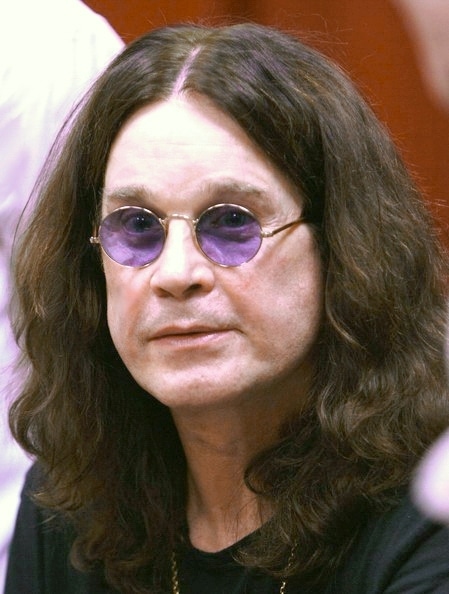
Ozzy Osbourne’s Early Life in Birmingham
Ozzy Osbourne was born John Michael Osbourne on December 3, 1948, in Marston Green, Warwickshire, and raised in a cramped terraced house on Lodge Road in Aston, Birmingham.
He was one of six children in a working-class family that rarely had enough of anything.
His father, John Thomas Osbourne, worked night shifts at a GEC tool factory for most of Ozzy’s childhood, coming home exhausted while the family scraped by on a factory worker’s wage.
Ozzy struggled badly at school from the start, unable to keep up with lessons he could not understand and sitting in classrooms that had no use for a kid like him.
He later revealed he had undiagnosed dyslexia and ADHD throughout his school years, conditions that went unrecognized and untreated in 1950s Birmingham.
He left school at 15 with almost no qualifications and no prospects, stepping directly into a city that had nothing waiting for him.
The jobs he took over the next few years read like a list of things no one wanted to do: slaughterhouse worker, plumber’s apprentice, construction laborer, car horn tester at Lucas Industries.
He later said the slaughterhouse work, killing animals every day to earn money, gave him a darkness that he could never fully shake and permanently changed how he saw the world.
He turned to petty crime in his teens and was convicted of burglary.
He could not pay the fine, so he spent six weeks in Winson Green Prison, Birmingham, a stretch that scared him straight about crime but did nothing to quiet his ambitions.
He was determined to make something of himself, even if he could not yet say what that something might be.
He bought his first microphone by pawning his father’s television set, and from that moment, the direction was set.
He said later: “I left school with a little more education than when I first started going.”
💡 Did You Know?
Before music, Ozzy worked in a slaughterhouse killing animals to earn money. He later said the experience gave him a darkness that he could never fully shake, and that it permanently affected how he saw the world.
How Black Sabbath Was Born From a Working-Class Dream
Ozzy Osbourne joined a local band called Rare Breed in the mid-1960s, playing small venues around Birmingham to any crowd willing to listen.
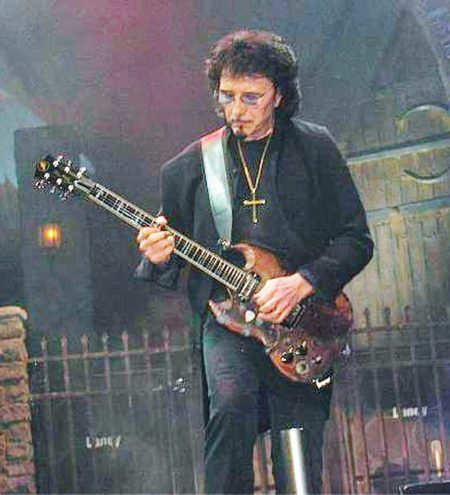
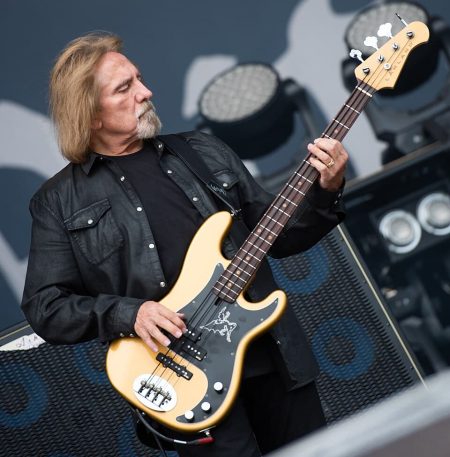
He met guitarist Tony Iommi, bassist Geezer Butler, and drummer Bill Ward while playing on the Aston music circuit, four young men from the same streets with the same hunger to get out.
The group went through several names as they searched for an identity: first the Polka Tulk Blues Band, then Earth, a name they quickly abandoned when they discovered another band already using it.
They changed the name to Black Sabbath in 1968, taking it directly from a 1963 Boris Karloff horror film of the same name.
The name fit perfectly with the dark, foreboding direction their sound was already taking, slow and heavy and built on dread rather than sunshine.
Their debut album landed in record shops on Friday the 13th, February 13, 1970, a date chosen with full awareness of what it would suggest.
The album was recorded in a single day for 600 pounds, a low-budget session that produced something critics despised and audiences could not get enough of.
The critics dismissed it as ugly and dangerous; the people who bought it felt, for the first time, that someone was making music specifically for them.
You can read the full history of that landmark record in the Black Sabbath self-titled debut album review, and the full lineup history in the story of the members of Black Sabbath.
Ozzy Osbourne and the Sound That Invented Heavy Metal
The Paranoid album arrived in late 1970 and became the record that put Ozzy Osbourne on every front page that mattered.
Recorded in a single session, it produced “War Pigs,” “Iron Man,” and the hammering title track, three songs that became the permanent shorthand for what heavy metal sounded like before anyone had agreed on a name for it.
Ozzy’s vocals were wailing, theatrical, and emotionally raw, sitting directly on top of Tony Iommi’s down-tuned riffs like a siren over a thunderstorm.
The combination had no precedent and no real competition.
Master of Reality (1971) pushed the heaviness even further, producing the slow-grinding foundations of doom and stoner metal in a single afternoon.
Vol. 4 (1972) saw cocaine enter the picture for the first time in a serious way, changing the band’s dynamics and pulling Ozzy Osbourne further from the straightforward singer he had been.
Between 1970 and 1978 they released eight studio albums, a run covered in full in the Black Sabbath albums in order guide.
Ozzy was the charismatic, unpredictable front man who made every show feel like it could fly off the rails at any second, and audiences paid to find out whether it would.
Fired From Black Sabbath: Ozzy Osbourne’s Darkest Hour
Tensions inside Black Sabbath built steadily through the late 1970s as alcohol and drug use escalated for every member, and the bond that had held the four of them together since Aston began to fracture.
Never Say Die! (1978) was a troubled recording session, with Ozzy Osbourne barely present mentally for much of it, showing up unpredictably and delivering performances that ranged from inspired to barely functional.
Black Sabbath fired Ozzy Osbourne in 1979 after repeated absences, missed rehearsals, and behavior that made every recording session and live date a gamble.
He was replaced by Ronnie James Dio, who would go on to record the celebrated Heaven and Hell album and prove the band could survive without its original singer.
Ozzy was devastated and spent months at the Holiday Inn in Los Angeles, drinking and sleeping through days he could barely remember.
He described this period as “the lowest point of my life,” a time when he genuinely could not see what came next.
Sharon Arden, daughter of his manager Don Arden, tracked him down at the hotel and refused to let him disappear entirely.
She booked him gigs to give him purpose, kept him moving when he wanted to stop, and in doing so changed the direction of both their lives.
Randy Rhoads and the Solo Career That Changed Everything
Ozzy Osbourne held auditions for a guitarist in late 1979 at a rehearsal space in Los Angeles, sitting through one after another until a 21-year-old named Randy Rhoads walked in.
Rhoads had been teaching guitar lessons in Hollywood to pay the bills, and within minutes of playing, Ozzy hired him on the spot.
The debut solo album, Blizzard of Ozz (1980), reached number seven in the UK and introduced a sound that nobody had connected to Ozzy Osbourne before: technically brilliant, melodically sophisticated, and heavier than almost anything else on the radio.
“Crazy Train,” “Mr. Crowley,” and “Goodbye to Romance” gave Ozzy Osbourne a solo identity that stood completely apart from Black Sabbath.
Diary of a Madman (1981) followed and showcased Rhoads at his most compositionally ambitious, a guitarist operating at a level that placed him alongside the best who had ever picked up the instrument.
Randy Rhoads died on March 19, 1982, in a plane crash in Leesburg, Florida.
The pilot of a small Beechcraft Bonanza buzzed the tour bus repeatedly during an early morning joyride; on the third pass, the wing clipped the bus and the plane crashed into a nearby house.
Rhoads was 25 years old.
Ozzy said that losing Rhoads nearly destroyed him a second time, the grief compounding an already fragile emotional state and threatening to pull him back into the spiral he had barely escaped.
At his 2024 Rock Hall induction, Ozzy said: “If I hadn’t have met Randy Rhoads, I don’t think I’d be sitting here now.”
The Scandals, the Stunts, and the Legend They Created
On January 25, 1982, Ozzy Osbourne attended a CBS Records meeting in Los Angeles, reached into his jacket, released two white doves, and then bit the head off one of them in front of the assembled record executives.
It happened before the bat incident, but it was the bat that the world remembered.
On January 20, 1982, at a concert in Des Moines, Iowa, a fan threw what Ozzy thought was a rubber toy bat onto the stage.
He picked it up and bit its head off as a theatrical stunt, only to discover the bat was very much alive.
He was taken for rabies shots immediately after the show.
He said afterward: “The news went round the world. I suddenly became the most evil man in rock and roll.”
On February 19, 1982, in San Antonio, Texas, Ozzy Osbourne was arrested after urinating on the Alamo in broad daylight while wearing Sharon’s dress.
He was banned from performing in San Antonio for a decade.
These incidents built the Prince of Darkness mythology that would follow Ozzy Osbourne for the rest of his life, a persona that was partly calculated and partly just who he was after enough alcohol.
He faced congressional scrutiny throughout the 1980s from the PMRC, which targeted his lyrics as dangerous and corrupting to young listeners.
“Suicide Solution” (1980) was linked in separate lawsuits to two teen suicides; both cases were ultimately dismissed by US courts, but the controversy deepened the Suicide Solution controversy that followed him into the next decade.
💡 Did You Know?
Ozzy Osbourne holds the Guinness World Record for the most crowd surfs by a performer in a single concert. He first crowd-surfed at 1996’s Ozzfest and continued the practice well into his 50s. His autobiography I Am Ozzy reveals the moment he realized he had become the most dangerous man in rock, not because of his music, but because no one around him ever said no.
Ozzy Osbourne’s Greatest Solo Albums
The solo catalog of Ozzy Osbourne spans 13 studio albums across four decades, and it holds up better than almost any comparable run in heavy rock history.
Blizzard of Ozz (1980) was the comeback that shocked everyone who had written him off: “Crazy Train” and “Mr. Crowley” announced a new chapter that sounded nothing like a man on his way out.
Diary of a Madman (1981) showed Randy Rhoads at his most complex and remains the album that grief made it hardest to revisit after his death.
Bark at the Moon (1983) was his first album after losing Rhoads, recorded with Jake E. Lee on guitar, and it topped US charts and proved Ozzy could survive another devastating personnel loss.
No More Tears (1991) became his commercial peak as a solo artist, reaching number seven on the US Billboard 200 and delivering the ballad “Mama I’m Coming Home” alongside the crushing title track.
It stands as one of the best-selling metal albums of the 1990s and the album most non-metal listeners could name if you pressed them.
Ozzmosis (1995), Down to Earth (2001), and Black Rain (2007) kept Ozzy Osbourne on radio and on arena stages through decades when many of his peers had faded entirely.
Ordinary Man (2020), recorded in COVID lockdown with producer Andrew Watt, was the most critically celebrated solo album of his later years.
It brought in Elton John, Post Malone, Travis Scott, and Tom Morello and sounded like a man who still had things to say and people willing to say them with him.
Patient Number 9 (2022) was his final studio album and his greatest commercial achievement as a solo artist, debuting at number three on the US Billboard 200, his highest-charting solo record ever.
Jeff Beck, Eric Clapton, Tony Iommi, Zakk Wylde, Mike McCready, Chad Smith, and Robert Trujillo all appeared on a single album that read like a who’s who of the people Ozzy Osbourne had inspired over five decades.
His combined solo record sales exceed 100 million copies worldwide, a number that puts him in a category shared by almost no one.
After his passing, the Essential Ozzy Osbourne Billboard chart surge documented just how much demand returned the moment the world lost him.
Sharon Osbourne: The Woman Who Saved Ozzy’s Life
Sharon Rachel Arden was born on October 9, 1952, in London, the daughter of Don Arden, one of the most feared and effective managers in British rock history.
Don Arden had managed ELO, Black Sabbath, the Small Faces, and a dozen other acts with a reputation for getting results through force of will and the occasional threat of violence.
Sharon had grown up watching how the business worked from the inside, and by her late twenties she was ready to run it herself.
She began managing Ozzy Osbourne in 1979, finding him in a Los Angeles hotel spiral and refusing to let him stay there.
In 1982, she fired her own father as Ozzy’s manager and took full control of his career, a move that ended her relationship with Don Arden for many years.
Don Arden did not speak to Sharon for a long time after the split, the wound deep enough to outlast several public reconciliation attempts.
Sharon and Ozzy married on July 4, 1982, in Maui, Hawaii, the most unlikely love story in heavy metal.
Together they have three children: Aimee, born in 1983, Kelly, born in 1984, and Jack, born in 1985.
Ozzy also has three children from his first marriage to Thelma Riley: Jessica, Louis, and Elliot.
In 1989, during an alcohol-fueled blackout, Ozzy attempted to strangle Sharon.
She called the police, pressed charges, and temporarily separated from him.
They reconciled, and both spoke about the incident openly in interviews over the years, Ozzy describing it as one of the moments he was most ashamed of in his life.
Sharon was diagnosed with colon cancer in 2002 and survived, a battle she fought publicly and used to raise awareness for other patients.
She is widely credited with rebuilding Ozzy’s career multiple times over four decades, creating Ozzfest from nothing, and turning the Ozzfest festival into one of the defining events in metal history.
At his 2024 Rock Hall induction, Ozzy’s only real statement was: “My wife Sharon. Saved my life.”
Jack Osbourne’s tribute to his father after Ozzy’s death captures exactly what that family meant to each other.
The Osbournes: Reality TV and a New Generation of Fans
The Osbournes premiered on MTV on March 5, 2002, and within its first season became the highest-rated series in the network’s history.
The debut episode drew 7.2 million viewers, a number that doubled by the end of the first season run.
The show followed Ozzy, Sharon, Kelly, and Jack at their Beverly Hills home, filmed with a level of unfiltered access that nobody had attempted with a rock musician before.
Ozzy was portrayed exactly as he was: genuinely confused by household appliances, endlessly devoted to his dogs, profoundly fond of his family, and unable to complete a sentence without several words that could not be broadcast without bleeping.
The show won an Emmy Award for Outstanding Reality Program in 2002 and ran for four seasons until 2005.
It made Kelly and Jack celebrities in their own right and introduced Ozzy Osbourne to an audience of millions who had never listened to Black Sabbath and never planned to.
His quote from the show that defined the entire public perception of him was simple: he could not figure out why the dogs kept using the house as a toilet and said so at volume, repeatedly, in every episode.
It was the most human a rock legend had ever appeared on camera, and the audience loved him for it.
Ozzy Osbourne’s Health Battles and the Fight to the End
Ozzy Osbourne’s body absorbed decades of punishment that would have finished most people far earlier, and his medical history reads like a list of events no single person should survive.
Drug and alcohol addiction was a constant from the mid-1970s onward, fought through multiple rehab stays throughout the 1980s and 1990s.
In 2003, he suffered a near-fatal quad bike accident at his Buckinghamshire estate, breaking his collarbone, eight ribs, a vertebra, and a kneecap.
He later admitted he had been battling Parkinson’s disease since that same year, long before he told anyone outside his immediate family.
In January 2020, Ozzy Osbourne publicly announced his Parkinson’s diagnosis on Good Morning America, sitting alongside Sharon and stating simply: “I have a form of Parkinson’s disease.”
The specific diagnosis was PRKN 2, a genetic variant of the disease that affects movement and autonomic function.
A fall in 2019 had dislodged metal rods previously inserted in his spine during surgery following the 2003 accident, leading to a cascade of subsequent operations over the following years.
He contracted COVID-19 during the 2020 pandemic, adding another complication to a health picture that was becoming increasingly difficult to manage.
He performed his final years of shows seated due to his Parkinson’s and spinal injuries, including his throne appearance at the 2024 Rock Hall induction.
The full story of his condition going into the final concert is documented in the coverage of Ozzy Osbourne hospitalized before the final concert, which revealed just how close it came to not happening at all.
💡 Did You Know?
Ozzy Osbourne’s genome was fully sequenced by a team of scientists in Boston in 2010, making him one of the first humans to have his entire DNA decoded publicly. The scientists were specifically trying to understand how his body had survived decades of extreme drug and alcohol consumption. They found rare genetic variants related to alcohol and drug metabolism that may have given him an unusual biological tolerance.
The Rock and Roll Hall of Fame: Ozzy Osbourne Enshrined Twice
Ozzy Osbourne was first inducted into the Rock and Roll Hall of Fame in 2006 as a member of Black Sabbath, recognizing a body of work that had shaped three generations of musicians.
His second induction came on October 19, 2024, at Rocket Mortgage FieldHouse in Cleveland, Ohio, this time as a solo artist in his own right.
Jack Black delivered the induction speech, one of the most animated and genuinely funny presentations in Rock Hall history, covering Ozzy’s career with the enthusiasm of a lifelong fan who happened to be a major movie star.
Ozzy accepted his award seated on a custom leather throne with skull armrests and a vampire bat mounted on top, brought out onto the stage because walking it unaided was no longer possible.
His speech was short and direct.
He said: “If I hadn’t have met Randy Rhoads, I don’t think I’d be sitting here now. And more than that, my wife Sharon. Saved my life.”
The all-star tribute performance that followed brought Maynard James Keenan of Tool to sing “Crazy Train,” Jelly Roll to perform “Mama I’m Coming Home,” and Billy Idol to close with “No More Tears.”
The backing band included Zakk Wylde, Robert Trujillo, Chad Smith, Wolfgang Van Halen, Andrew Watt, Steve Stevens, and Adam Wakeman.
You can read Ozzy’s full Rock Hall speech at Rolling Stone in full.
Back to the Beginning: Ozzy Osbourne’s Final Concert
On July 5, 2025, Ozzy Osbourne performed for the last time at Villa Park, Aston, Birmingham, the stadium sitting in the same neighborhood where he and Tony Iommi, Geezer Butler, and Bill Ward had grown up fifty years earlier.
The concert was called Back to the Beginning, and it closed the circle completely.
42,000 fans filled the stadium while an additional 3 million people paid to watch the worldwide livestream, the largest paid rock livestream audience in history at that point.
The box office generated 140 million pounds.
Ozzy Osbourne performed a solo set first, then rejoined Black Sabbath for the closing sequence, seated on a black throne because his Parkinson’s and spinal injuries made standing onstage impossible.
It was the first time all four original Black Sabbath members had shared a stage since 2005.
The lineup that surrounded them that day included Metallica, Guns N’ Roses, Tool, Slayer, Pantera, Yungblud, Ronnie Wood, Steven Tyler, Slash, and Ghost.
A drum showcase brought together Danny Carey, Travis Barker, and Chad Smith on stage simultaneously.
One week before the concert, all four original Black Sabbath members were made Freemen of the City of Birmingham, an honor that carries the right, rarely exercised, to herd sheep through the city center.
The concert was directed by Tom Morello.
A concert film, “Back to the Beginning: Ozzy’s Final Bow,” produced by Mercury Studios with Jason Momoa hosting and a 100-minute runtime, arrives in theaters in early 2026.
The full story of that night is covered in the article on the Back to the Beginning concert, and the film itself is previewed in the coverage of the Back to the Beginning concert film.
The account of what happened backstage and in the moments before the show is documented in the piece on inside Ozzy’s final show.
Ozzy Osbourne’s Death and the Legacy He Leaves Behind
Ozzy Osbourne died on July 22, 2025, at age 76, at his home in Harefield, Buckinghamshire, England.
He was 17 days past the Back to the Beginning concert.
His official death certificate, obtained by the New York Times, listed the cause as out-of-hospital cardiac arrest, with acute myocardial infarction as the immediate cause of death.
Contributing factors were coronary artery disease and Parkinson’s disease with autonomic dysfunction, conditions that had been compounding for years.
He was buried at Welders House, Jordans, Buckinghamshire.
Tony Iommi’s tribute was short and complete: “My dear dear friend Ozzy has passed away only weeks after our show at Villa Park. It’s just such heartbreaking news. There won’t ever be another like him.”
Geezer Butler said: “Goodbye dear friend. 4 kids from Aston. Who’d have thought, eh?”
Ozzy Osbourne was the number one most-read article on Wikipedia in 2025, according to the Wikimedia Foundation, with his page visited over 60 million times across that year.
His catalog streamed at record levels in the weeks following his death, and The Essential Ozzy Osbourne surged to number one on multiple Billboard charts.
The broader tribute response is covered in the piece on rock legends uniting for the Ozzy Osbourne tribute, and the reflection from Zak Starkey on Ozzy Osbourne captures the weight of what the rock world lost.
His full biography is documented at Ozzy Osbourne’s biography on Britannica.
The AI Avatar: Ozzy Osbourne Lives On in 2026
On May 20, 2026, Sharon and Jack Osbourne announced at Licensing Expo 2026 in Las Vegas that Ozzy Osbourne would return as an AI-powered digital avatar.
The technology partners are Hyperreal and Proto Hologram, companies specializing in what they describe as “Digital DNA” technology, capturing voice, likeness, and movement patterns.
Jack said at the announcement: “It’s kind of scary how it’s really very accurate. He will exist digitally as himself for as long as we have computers.”
Life-sized, interactive Proto Luma touchscreen units will appear across the US and UK beginning in late summer 2026, allowing fans to interact with the avatar, ask questions, and receive responses in Ozzy’s voice.
Jack claimed Ozzy discussed and approved the idea before his death: “We actually talked about it before he passed, about doing something like this. I know he would be into this.”
Backlash came quickly from fans online, many calling it too commercial and too soon after his death.
Jack defended the project in a YouTube livestream: “It’s not gonna be lame. This isn’t just like hooking up an image of my dad to ChatGPT. It is some high-level technology.”
The CEO of Hyperreal stated the avatar “can perform live, respond to audiences, and exist within interactive environments.”
The Osbourne family responds to false claims article covers the broader context of the family’s public communications around this period.
The full debate around the project and the backlash is documented at Billboard: Jack Osbourne responds to AI avatar backlash.
Frequently Asked Questions About Ozzy Osbourne
What was Ozzy Osbourne’s real name?
Ozzy Osbourne was born John Michael Osbourne on December 3, 1948, in Birmingham, England.
The nickname “Ozzy” came from schoolmates during his childhood years in Aston, a natural shortening of Osbourne that stuck through every band name and every era of his career.
He used it professionally from the earliest days of Black Sabbath and it eventually eclipsed his given name entirely.
Even his official Rock Hall induction cited him simply as Ozzy Osbourne.
How did Ozzy Osbourne die?
Ozzy Osbourne died on July 22, 2025, at age 76, at his home in Harefield, Buckinghamshire, England.
His official death certificate, obtained by the New York Times, listed the cause of death as out-of-hospital cardiac arrest and acute myocardial infarction.
Contributing causes were coronary artery disease and Parkinson’s disease with autonomic dysfunction.
He died 17 days after performing at the Back to the Beginning farewell concert in Birmingham, the show he had insisted on completing despite being hospitalized in the days before it.
How many albums did Ozzy Osbourne make?
Ozzy Osbourne released 13 solo studio albums between 1980 and 2022.
He also appeared on 8 Black Sabbath studio albums between 1970 and 1978, plus the 2013 reunion album 13.
His total combined record sales as a solo artist and member of Black Sabbath exceed 100 million copies worldwide.
His final solo album, Patient Number 9 (2022), debuted at number three on the US Billboard 200, his highest-charting solo album ever.
Was Ozzy Osbourne in the Rock and Roll Hall of Fame?
Ozzy Osbourne was inducted into the Rock and Roll Hall of Fame twice.
His first induction came as a member of Black Sabbath in 2006.
His second induction was as a solo artist in 2024, at a ceremony in Cleveland, Ohio, where he accepted the award from presenter Jack Black, seated in a skull-adorned leather throne.
He is among a small number of artists to receive two separate Rock Hall inductions in different categories.
Did Ozzy Osbourne really bite the head off a bat?
Yes, this incident is fully documented and confirmed.
On January 20, 1982, at a concert in Des Moines, Iowa, a fan threw a live bat onto the stage.
Ozzy thought it was a rubber toy and bit off its head as a stage stunt.
He was immediately taken for rabies shots after the show.
He said: “The news went round the world. I suddenly became the most evil man in rock and roll.”
Who was Ozzy Osbourne’s best guitarist?
Ozzy worked with several legendary guitarists across his career, including Randy Rhoads, Jake E. Lee, Zakk Wylde, Gus G., and Andrew Watt.
Most fans and Ozzy himself point to Randy Rhoads as the most important, a guitarist who arrived at exactly the right moment and elevated everything Ozzy Osbourne did during their brief time together.
Ozzy said at his 2024 Rock Hall induction: “If I hadn’t have met Randy Rhoads, I don’t think I’d be sitting here now.”
Rhoads died in a plane crash in 1982 at age 25, cutting short what most people who heard him believe would have been one of the greatest guitar careers in rock history.
What was Ozzy Osbourne’s net worth?
At the time of his death in July 2025, Ozzy Osbourne’s estimated net worth was approximately 220 million US dollars.
This was accumulated over a career spanning nearly six decades, coming from record sales exceeding 100 million copies, decades of world tours, the Osbournes television franchise, merchandise, and music publishing rights.
The Back to the Beginning farewell concert alone generated a box office of 140 million pounds.
Affiliate Disclosure: I am an Amazon affiliate and if you purchase through any amazon links on this site I may earn a small commission at no extra charge to you. This helps support classicrockartists.com and allows me to keep providing deep-dive content on the legends of rock. Thank you for your support!
As an Amazon Associate, I earn from qualifying purchases.
Ozzy Osbourne Essential Listening — Add to Your Collection
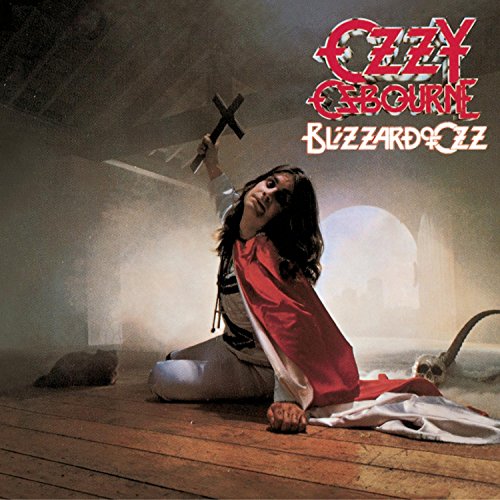
Blizzard of Ozz (1980)
“The album that proved Ozzy Osbourne didn’t need Black Sabbath.”
Crazy Train. Mr. Crowley. The birth of a solo legend.
Randy Rhoads at his most electrifying.
Essential for any serious rock collection.
No More Tears (1991)
“His commercial peak and one of heavy metal’s defining albums.”
Mama I’m Coming Home. No More Tears.
Multi-platinum and still stunning more than thirty years later.
The album that cemented his solo legacy.

Patient Number 9 (2022)
“His final studio statement, and one of his best.”
Jeff Beck. Eric Clapton. Tony Iommi. All on one record.
Debuted at number three on the US Billboard 200.
The perfect send-off for the Prince of Darkness.
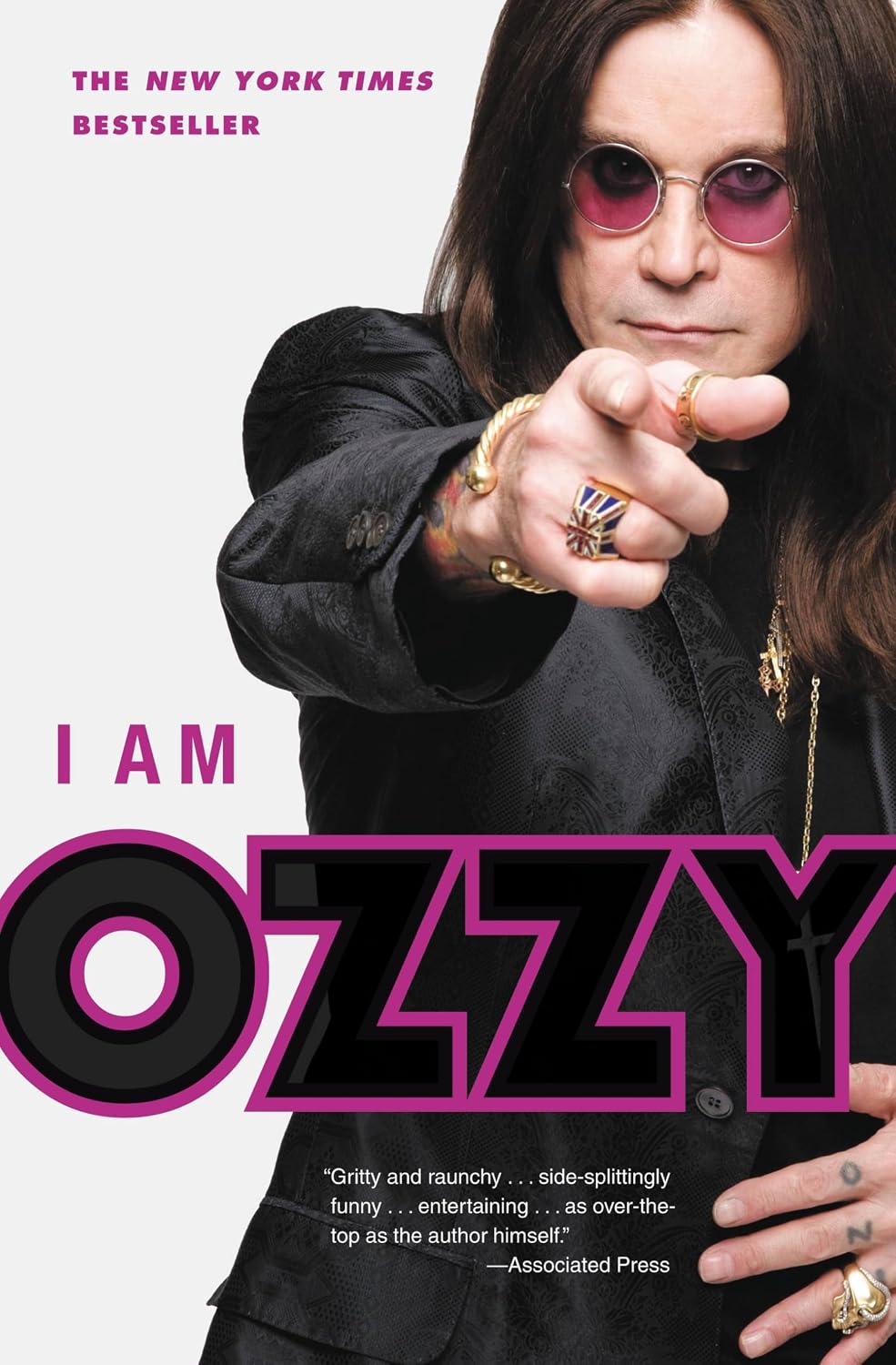
I Am Ozzy (Autobiography)
“The wildest rock memoir ever written. In his own words.”
Bats, brawls, Sabbath, Sharon, and everything in between.
The full uncensored story from the man himself.
Fan favorite with over 1,000 five-star reviews.
You Might Also Like
Ozzy Osbourne never became what anyone expected: too chaotic for the establishment, too genuine for the critics, and too loud to ignore.
He built heavy metal alongside three friends from Birmingham, got kicked out, rebuilt himself from the floor up, and spent the next 45 years proving everyone who wrote him off completely wrong.
The name Ozzy Osbourne means something: survival, volume, madness, loyalty, and a voice that could cut through any wall ever built.