
Geoff Nicholls: The Fifth Member of Black Sabbath You Never Saw
Geoff Nicholls was the invisible force behind Black Sabbath’s sound for 25 years.
He played on nine studio albums, wrote one of heavy metal’s most iconic bass lines, and stood onstage at nearly every Black Sabbath concert from 1980 to 2004.
The catch? You probably never saw him.
While Tony Iommi, Geezer Butler, and whoever was singing that year commanded the spotlight, Nicholls played from the wings, behind curtains, sometimes literally underneath the stage.
He was the gas fitter from Birmingham who became the secret fifth member of the heaviest band on earth.
This is his story.
Who Was Geoff Nicholls?
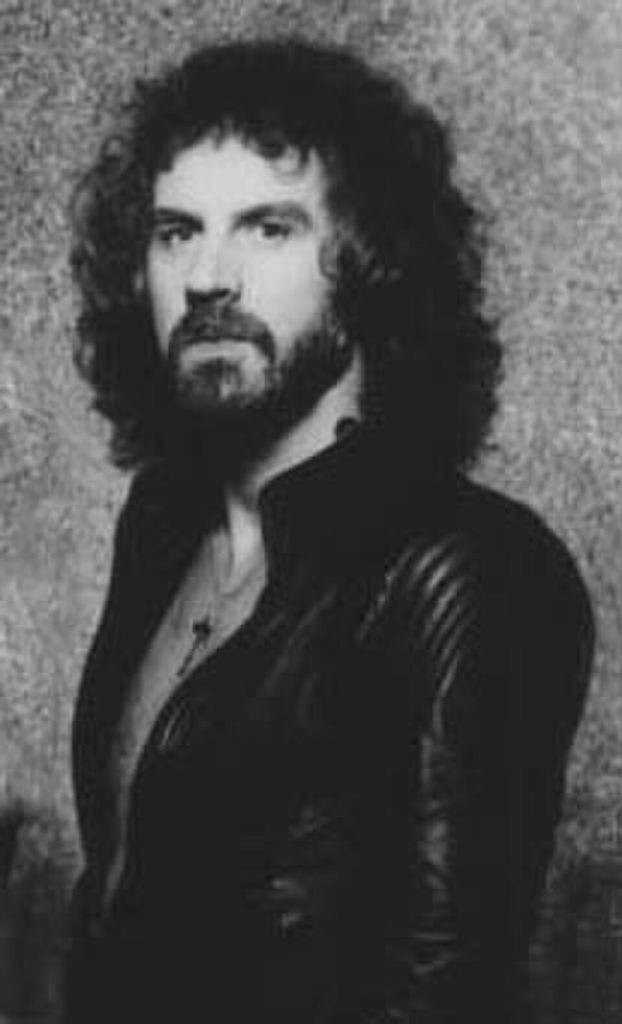
Geoffrey James Nicholls was born on February 28, 1948, in Kingstanding, a working-class district in northern Birmingham.
This was the same industrial city that spawned Black Sabbath itself.
Before he ever touched a synthesizer or sat behind a Hammond organ, Nicholls worked as a gas fitter.
He taught himself piano, organ, and guitar in whatever spare hours the job left him.
His early influences ranged from Chuck Berry to Django Reinhardt to Buddy Holly.
These were the sounds that shaped the kid who would one day help define post-Ozzy Sabbath.
By the early 1960s, Nicholls was playing lead guitar in local Birmingham bands like Colin Storm and the Whirlwinds, The Boll Weevils, and The Seed.
He even appeared on British television with Johnny Neal and the Starliners on the talent show *Opportunity Knocks*.
In 1968, he went fully professional, joining the psychedelic pop group World of Oz.
He contributed organ and guitar to their 1969 self-titled debut album before the band dissolved later that year.
But it was what came next that would change his life forever.
💡 Did You Know?
Geoff Nicholls initially auditioned for Black Sabbath as a second guitarist in July 1979, not as a keyboardist. He only moved to keyboards after Geezer Butler returned to the band following a brief walkout.
How Geoff Nicholls Joined Black Sabbath
In 1974, Nicholls co-founded a band called Bandy Legs with bassist Mike Taylor.
Within two years, they renamed themselves Quartz and rode the early wave of the New Wave of British Heavy Metal.
Quartz signed to Jet Records in 1977.
Their self-titled debut album was produced by a young Tony Iommi, who insisted on taking the job himself.
Iommi and Nicholls had known each other since their teenage years in Birmingham.
The Quartz sessions cemented a friendship that would last nearly four decades.
In a 2012 interview with MetalMouth, Nicholls described working with Iommi as an “eye opener.”
He praised the technical knowledge Iommi shared with the band.
Iommi, for his part, would later call Nicholls one of his “dearest and closest friends.”
That bond was about to be tested in a way neither of them could have predicted.
When Ozzy Osbourne was fired from Black Sabbath in April 1979, the band entered its worst crisis.
They weren’t even sure they could continue under the Sabbath name.
Iommi reached out to the one musician he trusted absolutely: Geoff Nicholls.
On July 17, 1979, Nicholls officially joined Black Sabbath.
He auditioned as a second guitarist.
What happened next was a chain of accidents that would define the next 25 years of his life.
Geezer Butler briefly walked away from the band in mid-1979.
Nicholls, who could play almost anything with strings or keys, stepped onto bass during Butler’s absence.
When Butler returned in November 1979, Ronnie James Dio had come aboard as the new frontman.
Nicholls slid sideways again, this time onto keyboards and backing vocals.
And here’s where the story gets even better.
Archival rehearsal recordings later revealed that the now-immortal bass line in “Heaven and Hell” was originally crafted by Nicholls.
He reportedly adapted it from a riff he’d used in the Quartz song “Mainline Riders.”
Within months of joining, Nicholls had already given the band one of its defining moments.
He just wasn’t standing where anyone could see him do it.
Geoff Nicholls’ Role in Black Sabbath
From 1980 onward, Nicholls became the band’s musical backbone.
His keyboards were rarely the loudest thing in the mix, but they were almost always the thing that made the songs feel cinematic.
On the Ronnie James Dio records like *Heaven and Hell* and *Mob Rules*, he provided the gothic, churchlike pads that elevated tracks like “Children of the Sea” and “The Sign of the Southern Cross.”
On the Tony Martin albums, especially *Headless Cross* and *Tyr*, his role expanded dramatically.
He added Norse-mythic atmospheres, orchestral swells, and the misty Hammond textures that gave that underrated era its distinctive grandeur.
He also contributed significantly to the songwriting, particularly on *Seventh Star*.
He sang backing vocals across most of the catalogue.
When the band needed someone to hold things together through a singer change, a bass-player walkout, a label crisis, or a tour, Nicholls was there.
Geoff Nicholls’ keyboards underpinned Black Sabbath’s sound for 25 years.
He worked with three different lead singers: Ronnie James Dio, Ian Gillan, Glenn Hughes, and Tony Martin.
He performed alongside multiple drummers: Bill Ward, Vinny Appice, Eric Singer, Bev Bevan, Cozy Powell, and Bobby Rondinelli.
Through every lineup change, Nicholls remained constant.
He was the thread that connected the Dio era to the Ian Gillan experiment to the Tony Martin renaissance.
But despite all of this, you rarely saw him onstage.
💡 Did You Know?
During some performances in the 1980s and 1990s, Geoff Nicholls literally played from beneath the stage, hidden from the audience entirely. His keyboards were audible, but he was completely invisible to fans.
The Albums Geoff Nicholls Appeared On
Nicholls played on nine studio albums between 1980 and 1995.
That’s every Black Sabbath studio record across three vocalists and multiple drummers.
His keyboards were never the loudest element, but they were always the element that gave the songs depth and atmosphere.
Here’s the complete list of studio albums featuring Nicholls:
*Heaven and Hell* (1980) with Ronnie James Dio on vocals.
This was the album that resurrected Black Sabbath after Ozzy’s departure.
Nicholls’ contribution to the title track bass line became one of metal’s most iconic riffs.
*Mob Rules* (1981) with Dio.
Nicholls added layers of gothic keyboards that made tracks like “Falling Off the Edge of the World” feel apocalyptic.
*Born Again* (1983) with Ian Gillan from Deep Purple.
This was Sabbath’s heaviest and strangest album, and Nicholls’ keyboards provided the atmospheric counterweight to the crushing guitar tones.
*Seventh Star* (1986) with Glenn Hughes.
Originally intended as a Tony Iommi solo album, Nicholls contributed significantly to the songwriting on this record.
*The Eternal Idol* (1987) with Tony Martin.
This marked the beginning of the Tony Martin era, and Nicholls’ keyboards became more prominent in the mix.
*Headless Cross* (1989) with Tony Martin.
Many fans consider this the best of the Tony Martin albums, and Nicholls’ Norse-mythic atmospheres are a huge part of why.
*Tyr* (1990) with Tony Martin.
Nicholls’ Hammond textures and orchestral swells gave this album its distinctive grandeur.
*Dehumanizer* (1992) with Dio.
Dio returned for this crushing album, and Nicholls’ keyboards added menace to tracks like “TV Crimes.”
*Cross Purposes* (1994) with Tony Martin.
Another solid Martin-era album with Nicholls providing the atmospheric backbone.
*Forbidden* (1995) with Tony Martin.
This would be Nicholls’ final studio album with Black Sabbath.
He also appears on the 1998 live document *Reunion*.
That’s 10 Black Sabbath releases spanning 18 years.
Not bad for a gas fitter from Birmingham.
Why Was Geoff Nicholls Never in the Official Lineup?
To anyone who attended a Black Sabbath concert between 1980 and 2004, Nicholls was a ghost.
He was rarely visible.
He usually performed from the side of the stage, sometimes from behind the backdrop, occasionally from beneath the riser itself.
The reason was less mysterious than fans assumed.
Heavy metal’s visual mythology demanded a four-piece silhouette: two guitars (or guitar plus bass), drums, vocals.
A man hunched over a Korg or a Hammond did not fit the iconography.
Keyboards were considered, in the parlance of the 1980s, uncool.
They were seen as an intrusion of “prog” into Sabbath’s blunt-force aesthetic.
So Nicholls played from the wings, audible but unseen.
This was common practice for hard rock keyboardists across the 1980s.
He didn’t seem to mind.
By all accounts, including tributes from Geezer Butler, who called him an “integral part” of the band, Nicholls was a humble, gracious presence who placed the music above the spotlight.
On rare occasions, particularly during the *Headless Cross* and *Forbidden* tours, he stepped further into view.
During reunion-era shows, he was sometimes brought out to be introduced at the end of the night.
He even handled rhythm guitar parts during Iommi’s solo in “Snowblind.”
But the most peculiar aspect of Nicholls’ tenure was the on-again, off-again nature of his formal membership.
He was a fixture for 25 years, yet he’s rarely listed in canonical Black Sabbath lineups.
The truth is more granular than the legend.
From 1979 to 1985, he was considered an unofficial or additional musician.
From 1986 to 1991, he was an official member.
During the *Dehumanizer* era (1991-1993), he was back to unofficial status.
From 1993 to 1996, he was an official member again.
From 1997 to 2004, during the Ozzy reunion era, he was reclassified as a touring and recording associate.
The pattern reveals the distinction at the heart of Nicholls’ career.
He was a full member when the band needed him to be a writer, a creative force, and a public face.
This was most notable across the Tony Martin years, when he appeared in band photos, gave interviews, and helped shape the records from the inside.
When the “classic” Ozzy-era lineup reunited from 1997 onward, Sabbath’s identity reverted to the original four.
Nicholls was reclassified as a hired hand, no matter how essential his actual contributions remained.
When Sabbath was a band, he was in the band.
When Sabbath was a brand, he was a hired hand.
It was a distinction the music never observed.
His tenure ended in early 2004, just before the band’s Ozzfest run.
Iommi and the others opted to bring in Adam Wakeman (son of Yes keyboardist Rick Wakeman) for keyboard duties going forward.
There was no public falling-out.
The change appears to have been quiet, professional, and accepted with the same modesty that had defined Nicholls’ entire career.
💡 Did You Know?
Despite never smoking, Geoff Nicholls developed lung cancer. Some reporting speculated about possible asbestos exposure during his early years working as a gas fitter in Birmingham’s industrial trade.
Geoff Nicholls’ Death
Nicholls didn’t retire when he left Black Sabbath in 2004.
He spent the next decade working with former Sabbath vocalist Tony Martin, both on Martin’s solo records (including *Scream*) and in the Headless Cross project.
The project was named after the 1989 Sabbath album they had built together.
He also reunited with Quartz, appearing on their 2016 comeback album *Fear No Evil*.
He was working on new material at the time of his death.
That material would later be released on Quartz’s 2022 album *On the Edge of No Tomorrow*, a posthumous coda assembled from his demos with contributions from Tony Martin.
Nicholls was diagnosed with lung cancer in 2015.
He fought it for roughly two years.
He died on January 28, 2017, at the age of 68.
By a cruel piece of timing, his death came in the closing weeks of Black Sabbath’s farewell tour, *The End*.
The band’s final concert, their last performance ever, in their hometown of Birmingham, took place just over a week later on February 4, 2017.
He never saw it.
The tributes were immediate and unguarded.
Tony Iommi, who had known him since they were teenagers in Birmingham, called him “one of my dearest and closest friends.”
Iommi said Nicholls had supported him for nearly forty years, adding that he would “live in my heart until we meet again.”
Ozzy Osbourne and Geezer Butler, bandmates from very different eras of Nicholls’ career, both publicly mourned him.
Butler called him an “integral part” of the band’s history.
For a man who spent most of his career in the wings, the tributes made it clear how visible he’d always been to the people who mattered most.
Affiliate Disclosure: I am an Amazon affiliate and if you purchase through any amazon links on this site i may earn a small commission at no extra charge to you. This helps support classicrockartists.com and allows me to keep providing deep-dive content on the legends of rock. Thank you for your support!


Geoff Nicholls’ Legacy
The phrase “fifth member” gets thrown around in rock journalism so often that it’s lost most of its meaning.
In Nicholls’ case, it’s closer to literal truth than metaphor.
For 25 years, across nine studio albums and three lead singers, he was the constant.
He was the man who knew every key change, every backing vocal, every keyboard cue.
When Iommi needed someone to hold the band together through a singer change, a bass-player walkout, a label crisis, or a tour, Nicholls was there.
When the band photo was taken, he often wasn’t.
The official Black Sabbath canon will continue to be told as the story of four men from Birmingham.
But the actual sound of post-Ozzy Sabbath, its grandeur on *Heaven and Hell*, its menace on *Mob Rules*, its mythological sweep on *Headless Cross* and *Tyr*, its weight on *Dehumanizer*, is unimaginable without the quiet gas fitter from Kingstanding playing somewhere just out of sight.
His keyboards gave Black Sabbath depth when the band could have been nothing but blunt force.
They gave the music atmosphere, texture, and cinematic scale.
He wrote one of metal’s most iconic bass lines and was barely credited for it.
He played on some of the band’s heaviest albums and was rarely listed in the lineup.
He stood onstage at hundreds of concerts and was almost never visible.
But everyone who was there heard him.
Everyone who played with him knew what he brought.
And everyone who listens to post-Ozzy Black Sabbath hears the contribution of Geoff Nicholls, whether they know his name or not.