

Bill Ward is the drummer who gave Black Sabbath its pulse, and the fact that he brought a jazz education to the heaviest band on earth is exactly why that pulse hit differently from anything else in rock.
Born in Aston, Birmingham, shaped by Gene Krupa records and big band swing, he walked into a rehearsal room with Tony Iommi and Geezer Butler and helped build a sound that rewrote what loud music could do.
His story covers every shade of rock mythology: the creative peak, the addiction, the long absence, the bitter contractual dispute, and finally, one extraordinary night in 2025 when all four of them stood on the same stage in Aston for the last time.
▼ Quick Navigation
- Who Is Bill Ward?
- Bill Ward’s Early Life in Aston, Birmingham
- Bill Ward’s Jazz Drumming Influences
- Bill Ward and the Formation of Black Sabbath
- Bill Ward’s Drumming Style: Swing Meets Crush
- Bill Ward’s First Departure: Alcoholism and Recovery
- The 2011 Reunion Controversy: An Unsignable Contract
- Bill Ward’s Solo Projects and Radio Work
- Bill Ward’s Return at Back to the Beginning (2025)
- Bill Ward Today (2026)
- Bill Ward’s Drumming Legacy
- Frequently Asked Questions About Bill Ward
Who Is Bill Ward?
Bill Ward is the founding drummer of Black Sabbath and one of the most distinctive percussionists in the history of heavy music.
Born William Thomas Ward on May 5, 1948, in Aston, Birmingham, England, he is 77 years old as of 2026.
He grew up on the same streets as Tony Iommi, Geezer Butler, and Ozzy Osbourne, four boys from a tight industrial neighborhood who would collectively reshape rock music in the early 1970s.
What made Ward different from every other drummer in heavy rock was not just power, but phrasing.
He brought a jazz sensibility to music that was otherwise built on the most crushing possible sounds, and the tension between those two approaches became the rhythmic signature of everything Black Sabbath recorded.
His drumming career spanned the band’s most celebrated years, a painful departure, a decades-long absence from the biggest reunion in metal history, and finally a return that fans had waited twenty years to witness.
For the complete account of every musician who passed through Black Sabbath, the members of Black Sabbath story covers each lineup change in depth.
Bill Ward’s Early Life in Aston, Birmingham
Bill Ward grew up in Aston in the late 1940s and 1950s, a neighborhood that carried all the weight and noise of postwar industrial Birmingham.
The area was dense with factories and foundries, and the sound of machinery was as much a part of daily life as anything on the radio.
Ward attended school in Aston where he crossed paths with Tony Iommi and Geezer Butler, the two musicians who would eventually anchor Black Sabbath alongside him and Ozzy Osbourne.
His childhood was working class by necessity and creative by instinct, with music arriving as the clearest way out of a future built around manual labor and predictable Birmingham winters.
He was drawn to drums at an early age, an attraction that had less to do with rock and roll than with the big band records he was hearing at home.
The drumming on those records, precise and swinging and technically demanding, set a standard that shaped everything Ward would later bring to Black Sabbath.
💡 Did You Know?
Bill Ward is an accomplished visual artist and painter whose work has appeared in exhibitions beyond the world of rock music.
He has spoken in interviews about painting as a separate creative language from drumming, one he has returned to throughout his life, particularly during periods when live performance was not possible. His visual art has been displayed publicly and reflects the same dark, emotionally raw quality that characterizes his best drumming performances. It’s a side of Ward that most fans never see, but one he considers equally important to his identity as a musician. Learn more about the era that shaped him in Black Sabbath biography books on Amazon.
Bill Ward’s Jazz Drumming Influences
Bill Ward came to rock drumming through jazz, and the route he took left permanent marks on how he played every beat he ever recorded.
His two defining early influences were Gene Krupa and Buddy Rich, the twin giants of American big band drumming whose technical mastery and showmanship set the benchmark for everything that followed in jazz percussion.
Krupa’s ability to drive a full band with a single bass drum pattern and Rich’s jaw-dropping speed and precision were what Ward studied before he ever played in a rock context.
Jazz drumming is fundamentally about space and swing, the discipline of knowing what not to play and the art of sitting slightly behind or ahead of the beat to create feeling.
Ward carried that understanding directly into Black Sabbath, where the band’s deliberately slow tempos gave him room to use jazz fills, triplet patterns, and rhythmic variations that no pure rock drummer of the era would have reached for.
The result was a kind of heavy music that breathed differently from everything around it.
Where other bands of the early 1970s drove forward relentlessly, Black Sabbath under Ward’s hands sometimes pulled back, let notes decay, and used silence as deliberately as any big band arranger.
That quality is impossible to hear without understanding that the man playing drums had spent years listening to jazz records from the 1940s and 1950s before he ever picked up a rock record.
Bill Ward and the Formation of Black Sabbath
Bill Ward was part of the group from the very beginning, cycling through the band names that preceded the final choice: Polka Tulk Blues Band, then Earth, then Black Sabbath.
The early version of the band played loud blues covers and original material around Birmingham’s live circuit, building an audience in pubs and small venues before anyone outside the Midlands had heard of them.
When they finally recorded and released their self-titled debut in February 1970, the music that came out shocked a rock world that had no category for it.
The debut album, documented in the Black Sabbath debut album story, opened with a tritone riff, a church bell, and a rainfall, and Ward’s drumming across those eight tracks already carried the jazz inflections that would define the band’s approach for the next decade.
Paranoid, released later the same year, established the band as something far beyond a Birmingham curiosity.
“War Pigs,” “Iron Man,” and the title track all carried Ward’s swing-influenced rhythm work at a volume and weight that no big band record ever approached.
Master of Reality (1971) pushed the tuning and the tempo even lower, and Ward’s drumming on tracks like “Children of the Grave” showed how effectively jazz dynamics could function inside a framework that felt physically crushing.
Vol. 4 (1972), recorded at Bel Air mansion on a cocaine budget, saw the band at its most decadent, and Ward’s playing on that album has a looseness and confidence that reflected both the excess and the creative peak of that moment.
Sabbath Bloody Sabbath (1973) added orchestral arrangements to the familiar heaviness, and Sabotage (1975) brought the band’s internal legal battles into the music with palpable intensity.
The final two Ozzy-era albums, Technical Ecstasy (1976) and Never Say Die (1978), showed the band stretching in directions that not every fan followed, with jazz and funk influences surfacing more openly than on the earlier records.
Bill Ward’s Drumming Style: Swing Meets Crush
Bill Ward is ranked 42nd on Rolling Stone’s list of the 100 Greatest Drummers of All Time, a position that understates how singular his approach actually was.
The defining feature of his playing is the combination of jazz swing with the physical requirements of heavy rock.
He used triplet-based fills where a pure rock drummer would use straight sixteenth notes, giving his transitions and accents a rounded, rolling quality that contrasted with the rectangular brutality of Iommi’s riffs.
His hi-hat work reflected jazz training directly: open and closed patterns that created rhythmic texture within the framework of a slow, crushing groove.
His ride cymbal technique carried the swing feel into sections where other drummers of the era would have gone straight and hard.
This combination gave Black Sabbath a rhythmic complexity that most heavy bands of the 1970s did not have, and it is one of the primary reasons the band’s catalog holds up across decades the way it does.
Listening to “The Wizard” or “N.I.B.” or the verses of “War Pigs” with Ward’s drumming specifically in mind is a different experience from just hearing the songs as a whole.
The jazz is there, underneath the volume, doing exactly what it was designed to do.
Bill Ward’s jazz-influenced drumming gave Black Sabbath its unique rhythm.
💡 Did You Know?
During a show on the 1974 Sabbath Bloody Sabbath tour, Geezer Butler poured alcohol on Bill Ward and set him on fire as an onstage prank.
Ward suffered burns and reportedly continued playing through the incident, an episode that has been recounted in multiple Black Sabbath interviews and biographies over the decades. It was part of the wild, boundary-free culture of touring in the 1970s, when bands operated by rules that would be completely unrecognizable today. Ward has spoken about it with humor in retrospect, though at the time it was a serious injury. Geezer Butler’s own account of the Black Sabbath years can be found in his memoir, Into the Void, available on Amazon.
Bill Ward’s First Departure: Alcoholism and Recovery
Bill Ward‘s relationship with alcohol became severe across the course of the 1970s, escalating alongside the band’s success until it compromised his ability to perform reliably.
The problem was not hidden, either from the band or from audiences who followed them closely through that decade.
After completing the Heaven and Hell tour in 1981, following the band’s first album with Ronnie James Dio, Ward departed Black Sabbath.
The departure was not a clean decision but a recognition that his condition had reached a point where continuing was not realistic.
He was replaced behind the kit by Vinny Appice, whose contribution to the band during that period is covered in the Vinny Appice and Black Sabbath story.
Appice handled the drumming on Mob Rules (1981) and the live double album Live Evil (1983), two records from the Dio era that carried forward the heaviness of the Heaven and Hell blueprint.
Ward returned to Black Sabbath for the Born Again album in 1983, recorded with former Deep Purple vocalist Ian Gillan in the lineup.
That reunion was short-lived, but it demonstrated that Ward’s recovery was real and that his playing had not been diminished by what he had been through.
He went on to participate in several of the Tony Martin era Sabbath albums through the late 1980s and 1990s, a stretch of band history that often gets overlooked but contained some genuinely heavy music.
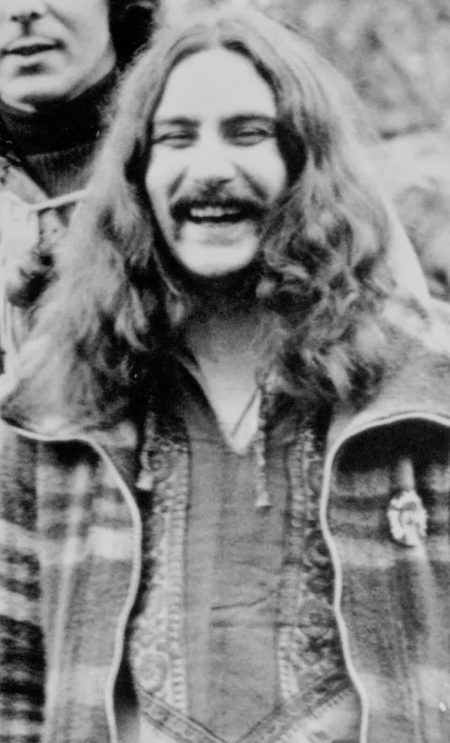
Black Sabbath performing “War Pigs” in 1970, with Bill Ward’s jazz-trained swing driving the band live.
The 2011 Reunion Controversy: An Unsignable Contract
The announcement in 2011 that all four original members of Black Sabbath were reuniting should have been one of the most straightforward stories in rock history.
Instead, it became one of the most painful, and Bill Ward was at the center of it.
Ward was announced as part of the reunion and appeared in the initial press conference alongside Iommi, Butler, and Osbourne.
But he ultimately declined to participate in the recording of the 13 album or the subsequent End Tour, citing what he described publicly as an “unsignable contract.”
His statement made clear that the contract offered to him did not reflect what he considered adequate respect for his contributions as a founding member of the band.
He never detailed the specific terms publicly, and the other members never publicly confirmed his characterization of the situation.
The contractual impasse was never resolved.
Tommy Clufetos handled the drums for the End Tour, which ran from 2016 to 2017 and was billed as Black Sabbath’s final touring cycle before retirement.
The absence of Ward from those final shows left a scar in the narrative for many fans who had followed the band since the beginning.
The four original members had not performed together since 2005, and with the End Tour over and Iommi publicly dealing with lymphoma, the window for any further reunion appeared to have closed permanently.
Ward underwent gastrointestinal surgery in 2013, and through the mid-2010s his health remained a recurring theme in whatever limited public communication he maintained.
Bill Ward’s Solo Projects and Radio Work
Bill Ward released his solo album Accountable Beasts in 2015, a record that arrived quietly but showed his drumming still carried the same weight and personality it always had.
He formed the Day of Errors band around the same time, though health complications forced the cancellation of some planned dates before the project fully got off the ground.
His most sustained solo activity in the years following the reunion controversy was not musical performance but radio.
He hosted an internet-based program called Rock 50, which ran until 2018 and gave him a regular platform to talk about music, share stories from the Black Sabbath years, and engage directly with fans who had been following him since the beginning.
In June 2025, just weeks before the Back to the Beginning concert, Ward announced a return to radio via LA Radio Sessions on KLBP.
The announcement signaled that he remained active and engaged with music even as the question of whether he would play at Villa Park was still unresolved for many observers.
💡 Did You Know?
Beyond Gene Krupa and Buddy Rich, Bill Ward has cited Ginger Baker (Cream) and Keith Moon (The Who) as key rock-era influences that shaped how he translated his jazz training into heavy music.
Baker’s polyrhythmic approach and African drumming influence gave Ward a model for how jazz complexity could function in a rock band setting. Moon’s controlled chaos showed that a drummer could be the most dramatic presence on stage without sacrificing the pocket. Ward synthesized all of these influences into something that sounded like none of them, which is the most accurate definition of originality in drumming. If you want to hear how those influences shaped the drumstick technique, ProMark’s TX5AW hickory drumsticks on Amazon are the kind of tool built for that kind of dynamic range.
Bill Ward’s Return at Back to the Beginning (2025)
One week before the July 5, 2025 concert at Villa Park, Bill Ward was made a Freeman of the City of Birmingham, one of the highest civic honors the city can bestow.
The timing was not coincidental.
The city was acknowledging what the concert was about to confirm: that four boys from Aston had built something that outlasted every passing trend in popular music and meant more to Birmingham’s cultural identity than almost anything else the city had produced.
When Ward took his position behind the kit at Villa Park that night, he was completing a circle that had been broken in 2011 and left open through a decade of health challenges, contractual bitterness, and public silence.
It was the first time all four original members had performed together since 2005, and by most accounts it was the most emotionally charged moment of an already extraordinary evening.
Forty-two thousand people inside Villa Park understood what they were watching, and the three million who paid to stream the show understood it too.
For the complete account of what happened that night, the Back to the Beginning concert story covers the full evening in detail, and the Back to the Beginning concert film from Mercury Studios brings it to theaters in 2026.
Ward spoke about his health in the lead-up to the show with the directness of someone who had fought for every one of his 76 years: “Everyday I’m pretty good for 76 years old, I’m active musically every day, and I have a very busy and gratifying life.”
Ozzy Osbourne died 17 days after the concert, on July 22, 2025, and Ward’s presence at Villa Park took on a significance that no one at the original press conference in 2011 could have predicted.
Bill Ward Today (2026)
Bill Ward is 77 years old in 2026 and continues to be musically active, primarily through his radio work with LA Radio Sessions on KLBP.
His return to the airwaves in June 2025 established a platform that he has carried forward past the concert and into the year that followed.
He has not announced any plans for live performance or new studio recordings, but the tone of his public communications in 2026 is that of someone engaged with music rather than stepping away from it.
The Back to the Beginning concert settled whatever unfinished business remained from 2011.
The original lineup played together one more time, in the neighborhood where they grew up, and Bill Ward was behind the kit for all of it.
Bill Ward’s Drumming Legacy
Bill Ward sits at the intersection of two worlds that almost never meet: jazz and heavy metal.
His placement at 42nd on Rolling Stone’s 100 Greatest Drummers list reflects formal recognition, but what he actually built was something more difficult to quantify.
He proved that drums in heavy music did not have to be blunt instruments.
He showed that the language of swing and jazz phrasing could operate inside a framework of crushing volume and slow tempos, and that the combination would produce something more interesting than either approach could achieve alone.
The drummers who came after him in metal and hard rock, from Tommy Aldridge to Mike Bordin to Dave Lombardo, all absorbed different parts of what he developed even when they were consciously pursuing something harder and faster.
His influence runs through doom metal, stoner rock, and post-metal drumming in ways that are often felt before they are identified.
The catalog he built with Black Sabbath remains the primary evidence of what he was capable of, and the complete Black Sabbath albums in order gives the full picture of a drummer who played differently on every record while remaining instantly recognizable on all of them.
As an Amazon Associate, I earn from qualifying purchases.
Bill Ward and Black Sabbath: Books, Albums, and Gear on Amazon
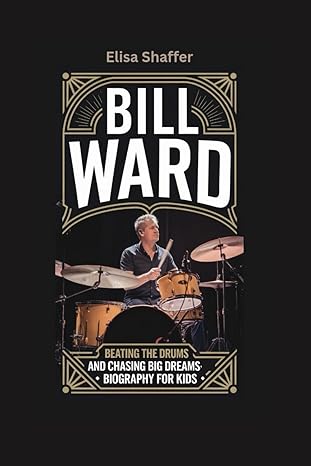
Bill Ward: Beating the Drums and Chasing Big Dreams
Biography for rock fans of all ages
The story of Bill Ward’s life, from Aston to Black Sabbath, told for a new generation of fans discovering his legacy.

Live Evil: 40th Anniversary Super Deluxe
Essential live document
The Dio-era live album remastered and expanded. Context for the lineup transition period that followed Ward’s first departure.

ProMark TX5AW Hickory 5A Drumsticks
For drummers who want that range
Built for the kind of dynamic range that Ward used to move between jazz finesse and heavy rock power within a single song.

Black Sabbath: Black Sabbath (1970)
Where it all started
The debut album that started everything. Ward’s jazz-influenced drumming is on full display from the very first track.
Frequently Asked Questions About Bill Ward
What is Bill Ward’s real name?
His full legal name is William Thomas Ward. He has been known as Bill Ward throughout his entire professional career.
Why did Bill Ward leave Black Sabbath?
Ward departed Black Sabbath after the Heaven and Hell tour in 1981 due to severe alcoholism. He subsequently got sober and returned to the band for the Born Again era in 1983 and participated in several Tony Martin-era albums in the late 1980s and 1990s.
Why wasn’t Bill Ward on the 13 album or The End Tour?
Ward cited an “unsignable contract” that he said did not adequately reflect his status as a founding member. He never disclosed the specific terms. Tommy Clufetos handled the drumming for both the 13 recording sessions and The End Tour.
What jazz drummers influenced Bill Ward?
Ward’s primary influences were Gene Krupa and Buddy Rich from the big band jazz era. He has also cited Ginger Baker and Keith Moon as rock-era influences who showed him how jazz sensibility could function in a louder, heavier context.
Did Bill Ward play at Back to the Beginning in 2025?
Yes. Ward performed at Villa Park on July 5, 2025, alongside Tony Iommi, Geezer Butler, and Ozzy Osbourne. It was the first time all four original members had shared a stage since 2005, and it was Ozzy’s final performance before his death on July 22, 2025.
What is Bill Ward doing in 2026?
Ward is continuing his radio work via LA Radio Sessions on KLBP, a project he launched in June 2025. He remains musically active and has spoken about staying engaged with music on a daily basis, though he has not announced any plans for live performance.
You Might Also Like
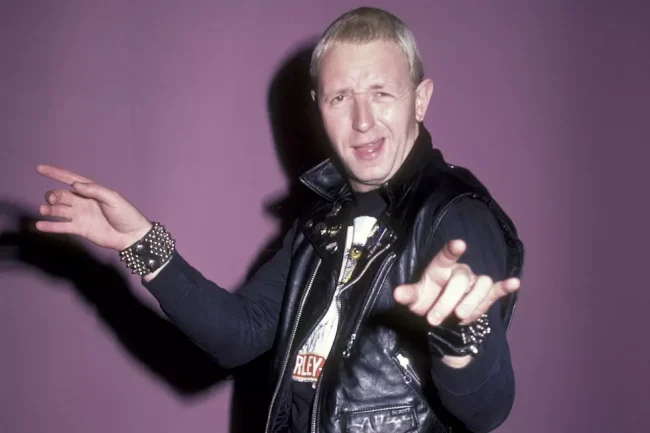

From the jazz records he studied as a teenager in Aston to the moment he sat back down behind a Black Sabbath kit at Villa Park in 2025, Bill Ward has always played drums in a way that no one else in heavy music has ever fully replicated.