
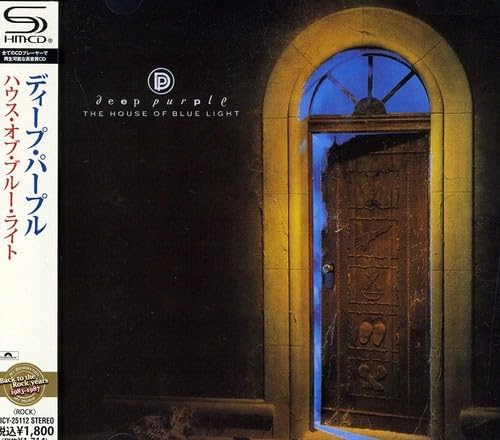
House of Blue Light by Deep Purple is the album that proves even the greatest bands can stumble when tension overrides talent.
Released on 12 January 1987 by Polydor Records, it was the twelfth studio album from the English hard rock legends and the second recorded by the reunited Mark II lineup.
What followed the triumphant return of Perfect Strangers was something far more complicated: a record made under duress, marred by fractured relationships, yet still capable of moments that remind you exactly why this band mattered.
Affiliate Disclosure: I am an Amazon affiliate and if you purchase through any amazon links on this site i may earn a small commission at no extra charge to you.
📋 Table of Contents [+]
Album Overview
The House of Blue Light arrived two years and one month after Perfect Strangers reignited the world’s interest in Deep Purple.
Where Perfect Strangers had felt electric, charged with the relief and joy of five musicians rediscovering each other, House of Blue Light carried a different energy entirely.
The recording sessions in Stowe, Vermont, were difficult from the start, and the friction between Ian Gillan and Ritchie Blackmore that had ended the original Mark II run in 1973 was already resurfacing.
The result is an album that divides the Deep Purple faithful to this day: a record that sold well, charted strongly across Europe, but left the band and many of its longest-standing supporters feeling something was missing.
It is not a bad album by any objective measure, but measured against the band’s own standard, it falls short in ways the numbers cannot fully explain.
The Troubled Road to Recording
The Mark II reunion that produced Perfect Strangers in 1984 was one of rock’s great second acts.
The tour that followed was a massive commercial and artistic success, and expectations for a follow-up record were enormous.
By the time the band gathered at a converted Playhouse in Stowe, Vermont, in May 1986, those expectations were colliding with real personality conflicts.
Ian Gillan later described the sessions by comparing them to the fractious Who Do We Think We Are sessions of 1972, a comparison that should have set off alarms.
Ritchie Blackmore acknowledged that he re-recorded significant portions of his guitar parts and later admitted he was not fully engaged with the project.
Jon Lord described it plainly: the band had made the mistake of trying to sound current, and the audience did not want that from Deep Purple.
Gillan’s own verdict on the album was equally candid: he could hear five professionals doing their best, but the spirit that made Deep Purple great was not present in the room.
Personnel and Production
The classic Mark II lineup recorded House of Blue Light: Ian Gillan on vocals, congas, and harmonica; Ritchie Blackmore on guitars and guitar synthesizer; Roger Glover on bass, synthesizers, and sequencer; Jon Lord on Hammond organ, synthesizers, and electric piano; and Ian Paice on drums and percussion.
Roger Glover co-produced alongside the band, with Nick Blagona engineering the sessions.
The album was mixed by Harry Schnitzler at Union Studios in Munich, West Germany, and mastered by Greg Calbi at Sterling Sound in New York.
The choice to record in a rented Vermont playhouse using Le Mobile’s remote recording rig gave the sessions an intimate setting, though it did not translate into the loose, spontaneous energy the band had generated on earlier records.
Glover later noted that the mixing process was so draining he flew to George Martin’s AIR Studios in Montserrat immediately afterward to unwind by making an entirely different record.
House of Blue Light: Side One Track by Track
The album opens with “Bad Attitude,” and it is the strongest case for what House of Blue Light can be at its best.
Jon Lord’s Hammond organ through a Marshall stack announces itself immediately, and Blackmore’s riff locks in with the kind of precision that made Machine Head iconic.
Gillan’s vocals are sharp and commanding, and the song’s structure is tight enough that it could have sat comfortably on Perfect Strangers without anyone questioning its credentials.
“The Unwritten Law” follows, and this is one of the most underrated tracks in the Deep Purple catalog.
Driven primarily by Ian Paice’s drumming, it has a relentless, dramatic quality, and Gillan’s vocal improvisation toward the end reaches back toward the raw intensity of the early 1970s recordings.
“Call of the Wild” was selected as the lead single, and it is the moment where the album’s identity crisis becomes audible.
The song is melodic, radio-friendly, and Lord’s keyboard work gives it genuine charm, but it sounds like a concession to contemporary taste rather than an expression of what Deep Purple actually does best.
“Mad Dog” restores some energy with a Blackmore riff that bites, though the song does not develop into anything memorable beyond its opening hook.
“Black and White” closes the first side as a competent but unremarkable piece of mid-80s hard rock, the kind of track that fits the album without distinguishing it.
Side Two: Where the Album Finds Its Footing
The second half of House of Blue Light is significantly more interesting than the first, and any fair assessment of the record has to reckon with that disparity.
“Hard Lovin’ Woman” opens side two with the kind of riff-forward hard rock the band can produce without effort, complete with tight harmonies and a straightforward energy that suits the material.
“The Spanish Archer” is the most musically adventurous track on the album.
Blackmore brings an Eastern flavor to the arrangement, and with all five members playing at the intensity of musicians who have stopped worrying about sounding current, the song achieves something genuinely distinctive.
“Strangeways” is a seven-minute piece with real lyrical ambition, a commentary on contemporary life that builds tension through repetition and never quite resolves where you expect it to.
“Mitzi Dupree” is the album’s most surprising track: a laid-back, bluesy jam that emerged from an improvisation session and was kept largely in that spontaneous form at Gillan’s insistence.
It is the track that sounds most alive on the entire record, precisely because it was not overthought.
“Dead or Alive” closes the album as a high-tempo rocker, functional and energetic if not essential.
Production and Sound
The production on House of Blue Light is the single most debated aspect of the record among fans and critics.
The 80s sheen that Roger Glover applied to the mix reflected the commercial preferences of the era, but it sits uneasily with the rawer, more aggressive sound that defines the band’s best work.
The album was also released in different versions: the original CD release in 1987 contained tracks that were significantly longer than those on the LP and cassette versions.
When the album was remastered in 1999, producers returned to the vinyl master tapes, meaning that subsequent listeners heard the shorter versions rather than the extended CD originals.
Blackmore has suggested that the production decisions did not serve the guitar performances on the album, and listening to tracks like “The Unwritten Law” and “The Spanish Archer” with the knowledge that more was available makes the final product feel constrained.
Chart Performance and Certifications
Whatever its artistic shortcomings, House of Blue Light performed strongly in the marketplace.
The album reached number 10 on the UK Albums chart and number 34 on the US Billboard 200.
In continental Europe it was a genuine blockbuster: number one in Germany, Sweden, and Finland, number two in Norway, number three in Switzerland, number nine in Japan.
The record was certified Gold in the United States by the RIAA, representing 500,000 units, and Silver in the United Kingdom.
Global sales across all markets are estimated at 2.5 million copies, a figure that makes it one of the more commercially successful albums in the band’s catalog outside of the early 70s peak years.
Critics were divided: Kerrang! reviewed it favorably, Rolling Stone found merit in it, and Martin Popoff of the Collector’s Guide to Heavy Metal awarded it a perfect 10.
House of Blue Light Singles and Promo Videos
Two singles were released from the album: “Call of the Wild” in February 1987 and “Bad Attitude” later that same year.
Promotional videos were produced for both tracks, with both featuring the band members.
“Call of the Wild” was the commercial priority and received the wider push, though neither single managed to generate significant chart action in the United States.
In the UK, the singles served primarily to support the album campaign rather than break new radio ground.
The title of the album itself has an interesting origin: it was taken from a phrase that appeared in the lyrics of Speed King, Deep Purple’s opening track from Deep Purple in Rock, which had itself borrowed the phrase from Little Richard.
The 1987 Tour
Deep Purple launched an extensive tour in support of House of Blue Light beginning in January 1987, covering approximately 66 shows across Europe, North America, and beyond.
The live performances during this period were reportedly stronger than the album itself, with the band able to translate the material more effectively on stage than they had captured in the studio.
Recordings from the tour eventually fed into the live album Nobody’s Perfect, released in 1988, which captured the band at greater intensity than the studio record had suggested was possible.
The tour was also marked by the personal conflicts that had plagued the recording sessions, and by its conclusion the relationships within the band had deteriorated to the point where Gillan would again leave Deep Purple shortly afterward.
None of the songs from House of Blue Light have been performed live by the band since that 1987-88 tour, which speaks to how the members themselves regard the album’s material.
Legacy and Reassessment
Time has been somewhat kinder to House of Blue Light than the band’s own members have been.
Listeners who came to the album without the weight of expectation that followed Perfect Strangers have found genuine pleasures in it, particularly on the second side.
The album sits between the commercial high of Perfect Strangers and the underrated Slaves and Masters, representing a band in transition rather than a band at its peak.
The Mark II lineup’s third phase would ultimately produce only one more album, The Battle Rages On in 1993, before Blackmore’s final departure from the band he had co-founded.
Understanding House of Blue Light requires understanding that context: it is the record made when the reunion was no longer a honeymoon but had not yet fully collapsed.
For fans who want to understand the complete arc of Deep Purple’s career, the album is essential listening, not for its highest moments but for what it reveals about the band’s internal weather in 1986 and 1987.
The best tracks, specifically “Bad Attitude,” “The Unwritten Law,” “The Spanish Archer,” and “Mitzi Dupree,” hold up better than their reputation suggests.
As part of the journey from Burn through the second reunion and toward the Airey-Morse era, House of Blue Light occupies a necessary position in the Deep Purple story, even if it will never be anyone’s first recommendation as a starting point for the catalog.
People Also Ask
When was The House of Blue Light released?
The House of Blue Light was released on 12 January 1987 by Polydor Records in the UK and Mercury Records in the United States.
It was recorded at the Playhouse in Stowe, Vermont, during May and June of 1986 using Le Mobile’s remote recording setup.
What Deep Purple lineup recorded The House of Blue Light?
The album was recorded by the classic Mark II lineup: Ian Gillan on vocals, Ritchie Blackmore on guitar, Roger Glover on bass, Jon Lord on keyboards, and Ian Paice on drums.
It was the second studio album recorded by this reunited formation, following Perfect Strangers in 1984.
How did The House of Blue Light chart?
The album reached number 10 in the UK and number 34 on the US Billboard 200.
It performed exceptionally well in Europe, hitting number one in Germany, Sweden, and Finland, and was certified Gold in the United States with 500,000 units.
Globally, total sales are estimated at approximately 2.5 million copies.
What are the best tracks on House of Blue Light?
Most listeners and critics point to “Bad Attitude,” “The Unwritten Law,” “The Spanish Archer,” and “Mitzi Dupree” as the album’s strongest moments.
“Bad Attitude” in particular showcases Jon Lord’s Hammond organ work and a focused Blackmore riff that ranks among his better contributions to the 1980s Deep Purple catalog.
Where does the title The House of Blue Light come from?
The phrase “house of blue light” originates with Little Richard’s stage act and appeared in the lyrics to “Speed King,” the opening track on Deep Purple’s 1970 album Deep Purple in Rock.
The band recycled the phrase as the album title, connecting the 1987 record to the band’s own earlier catalog.
Why was The House of Blue Light difficult to make?
The recording sessions were strained by personal conflicts, primarily between Ian Gillan and Ritchie Blackmore, that had been building since the reunion tour concluded.
Blackmore re-recorded significant portions of his guitar parts and later said he was not fully invested in the sessions, while Jon Lord acknowledged the band made the mistake of trying to sound contemporary rather than playing to their strengths.
Watch: Bad Attitude
Shop Deep Purple
Affiliate Disclosure: I am an Amazon affiliate and if you purchase through any amazon links on this site i may earn a small commission at no extra charge to you. This helps support classicrockartists.com and allows me to keep providing deep-dive content on the legends of rock. Thank you for your support!
As an Amazon Associate, I earn from qualifying purchases.
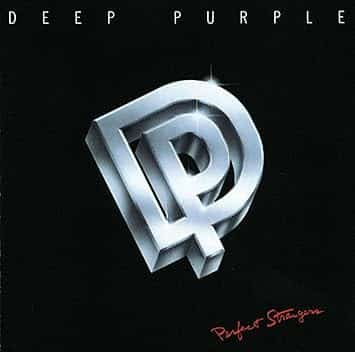
Perfect Strangers
1984 — CD Remastered
The triumphant reunion album that set the stage for House of Blue Light.
Features “Knocking at Your Back Door” and the title track.
Essential for any serious Deep Purple collection.
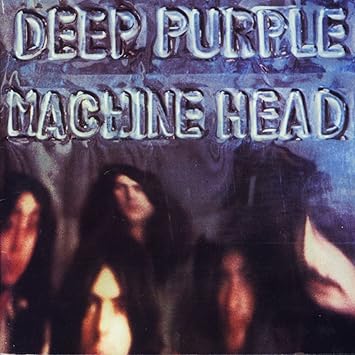
Machine Head
1972 — CD Remastered
The definitive Deep Purple album and the benchmark against which all others are measured.
Contains “Smoke on the Water,” “Highway Star,” and “Space Truckin’.”
The peak of what the Mark II lineup could achieve in a studio.

The Very Best of Deep Purple
Compilation — CD
The ideal introduction to five decades of classic rock from one of the genre’s founding bands.
Covers every era and every essential lineup.
Perfect for listeners who want the whole story in one place.
Mark II Collection: In Rock, Fireball, Machine Head
3-Album Set — Vinyl
Three consecutive masterpieces from the lineup’s greatest creative run, 1970 to 1972.
The context you need to fully understand where House of Blue Light sat in the band’s arc.
Best value way to own the Mark II peak period.
You Might Also Like
Perfect Strangers by Deep Purple
The reunion album that preceded House of Blue Light. Read why it remains one of the great rock comebacks.
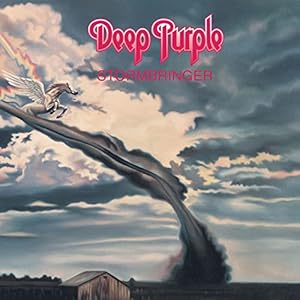
Stormbringer by Deep Purple
Another divisive chapter in Deep Purple’s story. Discover the album that drove Ritchie Blackmore to leave the band.
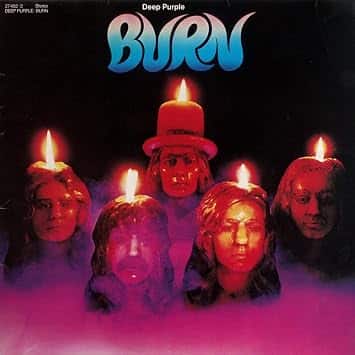
Burn by Deep Purple
The Mark III debut that introduced David Coverdale and Glenn Hughes. One of the band’s most powerful studio recordings.
Machine Head by Deep Purple
The 1972 masterpiece that defined hard rock for a generation. Read the full deep-dive review.
House of Blue Light by Deep Purple remains a complicated entry in one of rock’s most storied catalogs, an album made by five exceptional musicians who were not, in that moment, fully connected to each other or to the music they were capable of making.