
The Burn by Deep Purple album review starts in the most unforgiving way possible: a six-minute title track that demands your attention and does not let go.
Released on 15 February 1974, Burn is the eighth studio album by Deep Purple and the debut record of the band’s Mark III lineup.
Two founding members were gone: vocalist Ian Gillan and bassist Roger Glover had departed in 1973.
In came David Coverdale, an unknown 22-year-old singer from Saltburn in northeast England, and Glenn Hughes, the vocalist and bassist from Midlands rock band Trapeze.
The world expected Deep Purple to collapse.
Instead, they delivered one of the most ferocious albums of the hard rock decade.

Affiliate Disclosure: I am an Amazon affiliate and if you purchase through any amazon links on this site i may earn a small commission at no extra charge to you. This helps support classicrockartists.com and allows me to keep providing deep-dive content on the legends of rock. Thank you for your support!
📋 Table of Contents [+]
The Lineup Change That Shocked the Rock World
By mid-1973, Deep Purple were one of the biggest rock bands on the planet, fresh off the success of Machine Head and its landmark live document Made in Japan.
The departure of Ian Gillan and Roger Glover left a massive gap, and the band’s management considered going forward as a four-piece.
Ritchie Blackmore had other ideas.
Glenn Hughes, the powerhouse vocalist and bassist from Trapeze, was recruited first.
The band also approached Paul Rodgers of Free as a co-lead vocalist, but Rodgers declined to form Bad Company instead.
Auditions were then held for a lead singer, and they settled on David Coverdale, whose masculine, blues-tinged voice immediately caught Blackmore’s attention.
On 23 September 1973, a day after his 22nd birthday, the band held a press conference to announce Coverdale as Deep Purple’s new vocalist.
The cynics were loud, and the doubts were real.
The music answered all of them.
Recording Sessions: Montreux, November 1973
The entire album was recorded in November 1973 at Montreux, Switzerland, using the Rolling Stones Mobile Unit.
The same town had famously provided the backdrop for Smoke on the Water during the Machine Head sessions two years earlier.
Produced by Deep Purple themselves and engineered by Martin Birch, the sessions moved quickly.
“Lay Down, Stay Down” was reportedly the first track completed in the studio, with an early working title that Coverdale described in terms not suitable for print.
Coverdale spent an entire night writing multiple sets of lyrics for the title track, cycling through what he called “science fiction poems” to satisfy Blackmore’s preference for mythology and the supernatural over standard rock clichés.
Glenn Hughes could not receive official songwriting credit due to an existing publishing contract, but his contribution to the direction and feel of the record was substantial throughout.
Burn Album Review: Track-by-Track Breakdown
The album contains eight tracks across two sides, ranging from the thundering title cut to a closing synthesizer instrumental.
Burn opens the album at full speed: six minutes of Blackmore’s riff, Lord’s Hammond organ, and the intertwined voices of Coverdale and Hughes.
Might Just Take Your Life was the first single released from the album and leans into a tighter, more radio-friendly structure built around an organ riff.
Lay Down, Stay Down brings funk and rock together, with Paice’s drums, cowbell, and tambourine all sharing the spotlight.
Sail Away, co-written by Blackmore and Coverdale, opens with a funky bass groove from Hughes and showcases a style of music the Mark II lineup could never have produced.
You Fool No One kicks off side two with an almost Latin-influenced backbeat and some of Blackmore’s most melodic playing on the record.
What’s Goin’ on Here is a barroom blues workout that gives Lord a chance to stretch on the piano.
Mistreated, co-written by Blackmore and Coverdale, is a slow-burning seven-minute blues that became one of Coverdale’s signature songs and remains among the most powerful pieces in the Deep Purple catalog.
“A” 200 closes the album as an instrumental, co-written by Blackmore, Lord, and Paice, featuring Lord’s new synthesizer prominently alongside the Hammond organ.
The Title Track: A Masterclass in Hard Rock
The opening riff of “Burn” is one of the most immediately recognisable moments in Deep Purple’s entire catalog.
Blackmore developed the riff during a jam session, and it was only later, when Lord took a tape home, that the similarity to George Gershwin’s “Fascinating Rhythm” was pointed out by Lord’s wife at the time.
The track runs six minutes and features separate guitar and organ solos: Blackmore’s follows the first two verses, while Lord’s classical-influenced Hammond solo comes between the second bridge and third verse.
“Burn” served as Deep Purple’s concert opener for two years following the album’s release.
In a Billboard interview, Eddie Van Halen named it one of his all-time favourite guitar riffs.
The track was also featured in Guitar Hero: Warriors of Rock using a 2004 remix version.
Both Coverdale (all verses and chorus) and Hughes (chorus and bridge) share lead vocal duties, creating the layered attack that would define the Mark III sound.
Mistreated and the Blues Foundation
If the title track announces the Mark III lineup with brute force, “Mistreated” reveals its emotional depth.
At seven minutes and 25 seconds, the track is built around one of Blackmore’s most expressive guitar performances and Coverdale’s most convincing vocal on the record.
Coverdale later reflected that “Mistreated” encapsulated what he brought to Deep Purple as a separate identity, alongside “Sail Away.”
The song remained part of Whitesnake’s live set for years after Coverdale departed Deep Purple in 1976.
Ian Paice described the track’s guitar riff as deceptively simple: a small foundation that builds into something much larger through the way Blackmore uses tone and restraint to create atmosphere.
Paice’s own drumming on “Mistreated” is among the most controlled and purposeful on the album, locking in beneath Blackmore’s long sustained notes rather than pushing against them.
The Dual Vocal Attack of Coverdale and Hughes
One of the defining features of the Burn by Deep Purple album review conversation is the dual vocal arrangement between David Coverdale and Glenn Hughes.
No previous Deep Purple lineup had featured two genuine lead singers sharing a record on equal footing.
Coverdale brought a deep, masculine blues tone that suited Blackmore’s preference for brooding, dramatic material.
Hughes added a higher, soulful register and a funk influence drawn from his Trapeze years that pushed the band into territory it had never explored.
On “Lay Down, Stay Down,” the two voices blend in a way that Hughes later noted borrowed from the Cream approach to harmony singing.
Hughes also recalled in interviews that Ian Paice developed the drum groove on “Lay Down, Stay Down” during one of the first takes, inspired in part by the drumming of John Bonham of Led Zeppelin.
The combination produced an album that sounded unlike anything Deep Purple had previously recorded, while still carrying the unmistakable weight of the band’s core lineup of Blackmore, Lord, and Paice.
Jon Lord and the Synthesizer Breakthrough
Burn marked the first time Jon Lord used synthesizers on a Deep Purple studio album.
The closing instrumental “A” 200 was built specifically around Lord’s new synthesizer alongside his Hammond organ, with Ritchie Blackmore noting that Hughes had initially disliked the synth sounds before they came back into fashion.
Lord also contributes a MiniMoog solo that appears briefly elsewhere on the record, demonstrating an early interest in electronic textures that would become more prominent in the band’s later work.
Throughout the rest of the album, his Hammond C3 organ playing remains the dominant keyboard voice, delivering everything from Bach-influenced classical lines on the title track to barroom piano on “What’s Goin’ on Here.”
Lord’s performance on “Burn” has been widely cited as one of the finest organ solos in hard rock, matching Blackmore’s guitar solo in construction and classical influence rather than simply filling space.
Burn by Deep Purple Album Review: Chart Performance
The Burn by Deep Purple album review story is backed by hard commercial data: the album charted in 13 countries and hit the top spot in Austria, Denmark, Germany, and Norway.
In the UK, the album debuted at number 17 and peaked at number 3, spending 23 weeks on the chart and earning gold certification from the BPI by July 1974 for sales of over 100,000 copies.
In the United States, the album reached number 9 on the Billboard 200, spending 30 weeks on the chart, and was certified gold by the RIAA before eventually being certified platinum.
The album also earned gold certifications in France, Germany, and Sweden.
The first single, “Might Just Take Your Life,” was released ahead of the album and introduced the new lineup to radio audiences.
“Burn” itself was released as a single in the US and Japan as the second release from the Mark III lineup.
For a lineup change of this magnitude, those numbers represented a decisive vote of confidence from the public.
California Jam 1974: The Album Goes Live
Two months after the album’s release, Deep Purple co-headlined the California Jam festival at Ontario Motor Speedway in Southern California on 6 April 1974.
The festival attracted over 300,000 fans and was co-headlined by Emerson, Lake and Palmer, with support from Black Sabbath, Eagles, and Earth, Wind and Fire.
Portions of the performance were broadcast on ABC Television in the United States, giving the Mark III lineup its first major American television exposure.
Blackmore struck one of the cameras five times with his guitar during the set and detonated a pyrotechnic device in one of his amplifiers, creating a large fireball on stage.
“Burn” opened the band’s televised California Jam set, just two months after its release, and confirmed that the new lineup could deliver the title track with full conviction on the largest stage available.
The California Jam performance has since been described as one of the highlights of Deep Purple’s entire live career.
A month later, the band’s 22 May 1974 performance at the Gaumont State Cinema in Kilburn, London was recorded and later released in 1982 as Live in London.
The Album Cover: Candles and Fin Costello
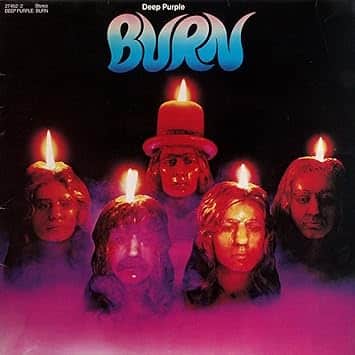
The cover of Burn features five burning candles shaped to resemble the faces of each band member, photographed by renowned rock photographer Fin Costello.
Costello took the photo quickly, intending it only as a concept sketch to show the band what he had in mind.
Nobody told him it had been selected for the actual cover until after the album was released.
The back cover shows the same candles extinguished and partially melted, with the band members’ faces visible in the background.
Years later, Costello reproduced the image for a Kerrang! feature article, reshooting the concept from scratch.
The original candles used in the session were never put up for sale, though an unused set of candles from the same period later appeared at auction.
Legacy and Influence of Burn
The legacy of the Burn by Deep Purple album review conversation is larger than the album’s initial reception suggested.
The title track has remained a touchstone for guitarists across generations: Eddie Van Halen’s praise in a Billboard interview is one of the more notable endorsements in classic rock history.
Glenn Hughes has continued to perform “Burn” live as a solo artist and as a member of Black Country Communion.
After Deep Purple’s 1984 reunion with Ian Gillan, “Burn” was no longer played by the full band, as Gillan declined to perform Mark III-era material.
The song did return to the set briefly in 1991 when Joe Lynn Turner stepped in as vocalist, and the riff was also incorporated into “Speed King” medleys in 1993.
David Coverdale went on to perform “Burn,” “Mistreated,” and “Might Just Take Your Life” with Whitesnake, keeping the Mark III songbook alive for audiences who discovered those songs through the later band.
For a record built around two unknown singers and a lineup change nobody asked for, Burn has proven to be one of the most durable albums in the entire Deep Purple story.
The song article for Deep Purple’s Burn covers the title track in full detail for readers who want to go deeper on the track itself.
The 2004 Expanded Edition
In 2004, Burn was remastered and re-released as an expanded CD with bonus tracks.
The bonus material includes “Coronarias Redig,” an instrumental recorded during the Burn sessions that was originally released only as a B-side for the “Might Just Take Your Life” single in 1974.
The expanded edition also includes 2004 remixed versions of “Burn,” “Mistreated,” “You Fool No One,” and “Sail Away.”
A 2005 unauthorised documentary about the album was produced as part of “The Ultimate Critical Review” series and featured a new interview with Glenn Hughes.
The album also appeared on purple vinyl and orange vinyl LP reissues in 2018 in Europe.
For collectors, the 2004 expanded CD remains the recommended version, offering both the original album and additional context from the sessions.
You can read more about the Soldier of Fortune era, which followed directly from these sessions, in our dedicated song article.
People Also Ask
Is Burn a good Deep Purple album?
Burn is widely considered one of Deep Purple’s strongest albums and one of the best hard rock records of 1974.
It charted in 13 countries, reached number 3 in the UK and number 9 in the US, and earned gold or platinum certification in multiple territories.
Critics and fans consistently rank the title track among the finest in the band’s catalog, and “Mistreated” is often cited as a blues rock landmark.
What Deep Purple lineup recorded Burn?
Burn was recorded by the Mark III lineup of Deep Purple: Ritchie Blackmore on guitar, Jon Lord on keyboards, Ian Paice on drums, David Coverdale on lead vocals, and Glenn Hughes on bass and vocals.
Coverdale and Hughes had both recently joined the band, replacing Ian Gillan and Roger Glover who departed in 1973.
Where was the Deep Purple Burn album recorded?
Burn was recorded in November 1973 at Montreux, Switzerland, using the Rolling Stones Mobile Unit.
Martin Birch engineered the sessions, and the album was produced by Deep Purple themselves.
The band used the same Montreux location that had been the scene of the fire that inspired “Smoke on the Water” during the Machine Head sessions two years earlier.
What chart position did Deep Purple’s Burn reach?
Burn reached number 3 on the UK Albums Chart and number 9 on the US Billboard 200.
The album also topped the charts in Austria, Denmark, Germany, and Norway, and charted across 13 countries in total.
It was certified gold by the BPI in the UK and eventually platinum by the RIAA in the United States.
What is the song Burn by Deep Purple about?
The lyrics of “Burn” deal with witchcraft, the supernatural, and a bewitching female figure, reflecting Ritchie Blackmore’s longstanding interest in mythology and the occult.
David Coverdale wrote multiple sets of lyrics before Blackmore selected the final version, describing them as “science fiction poems.”
The title track’s riff was inspired, possibly subconsciously, by George Gershwin’s jazz standard “Fascinating Rhythm.”
Watch: Deep Purple Perform Burn
Shop the Burn Era: Essential Deep Purple
Affiliate Disclosure: I am an Amazon affiliate and if you purchase through any amazon links on this site i may earn a small commission at no extra charge to you. This helps support classicrockartists.com and allows me to keep providing deep-dive content on the legends of rock. Thank you for your support!
As an Amazon Associate, I earn from qualifying purchases.
Burn (2005 Expanded Edition)
Deep Purple, 1974
The definitive Mark III debut, remastered with bonus tracks including the rare B-side “Coronarias Redig” and four 2004 remixed versions.
Essential for any serious Deep Purple collection.

Machine Head
Deep Purple, 1972
The album that preceded Burn and set the commercial and creative standard the Mark III lineup had to meet.
Contains “Smoke on the Water” and “Highway Star.”

Come Taste the Band (35th Anniversary Edition)
Deep Purple, 1975
The Mark IV album that followed Stormbringer, completing the Coverdale and Hughes era of Deep Purple.
Features Tommy Bolin on guitar in place of Ritchie Blackmore.

The Very Best of Deep Purple
Compilation
Covers all eras of Deep Purple’s catalog, including the Mark III hits from the Burn period.
The ideal starting point for new listeners or a great gift for any classic rock fan.
You Might Also Like
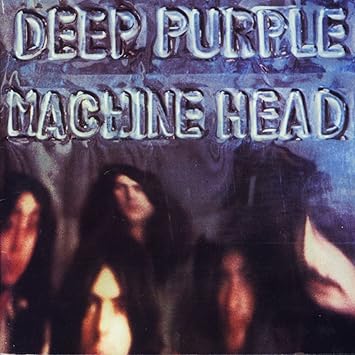
Machine Head by Deep Purple Album Review: The 1972 Album That Changed Everything
The Machine Head by Deep Purple album review covers the six-million-selling 1972 album recorded in hotel corridors after the Montreux Casino…
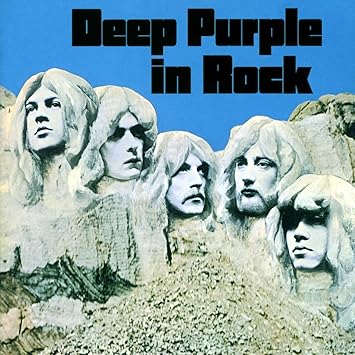
Deep Purple in Rock Album Review: The 1970 Album That Changed Everything
The Deep Purple in Rock album review covers the 1970 landmark that launched the Mark II era: seven tracks recorded across London studios bet…
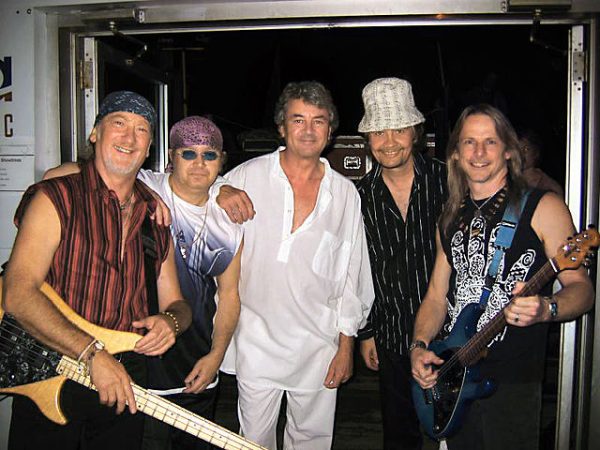
Members of Deep Purple: Complete Story & Where Are They Now
Discover the complete story of members of Deep Purple from formation to today. Original lineup, changes, and where these rock legends are no…
Deep Purple Burn: The Song That Launched a New Era
Deep Purple Burn arrived in 1974 and changed everything the band had built. Here is the full story behind one of the greatest hard rock song…
The Burn by Deep Purple album review holds up in 2024 exactly as it did in 1974: a record that silenced doubters, launched two future legends, and produced one of the greatest album-opening title tracks in hard rock history.