

The Stormbringer by Deep Purple album review begins at a crossroads: the ninth studio album by the band, released in November 1974, was the record that ended an era and drove Ritchie Blackmore out the door.
Recorded at Musicland Studios in Munich in August 1974 and mixed at The Record Plant in Los Angeles the following month, Stormbringer was the second and final studio album from Deep Purple’s Mark III lineup.
It arrived just nine months after Burn, which had silenced doubters and reached number three in the UK.
This time, the doubters had more ammunition.
The funk and soul influences that David Coverdale and Glenn Hughes had hinted at on Burn now moved to the centre of the record, and Blackmore, increasingly unhappy with what he called the band’s new direction, was already making plans to leave.
What remains is a genuinely fascinating album: flawed, divided, and unlike any other Deep Purple record before or since.

Affiliate Disclosure: I am an Amazon affiliate and if you purchase through any amazon links on this site i may earn a small commission at no extra charge to you. This helps support classicrockartists.com and allows me to keep providing deep-dive content on the legends of rock. Thank you for your support!
📋 Table of Contents [+]
Context: The Second Mark III Album
By the summer of 1974, Deep Purple had already had an extraordinary year.
Burn had been released in February, charted in 13 countries, and firmly established the new Mark III lineup as a credible force.
The band had co-headlined the California Jam festival in April before crowds of over 300,000 and toured extensively through North America.
Returning to the studio just months later, the band rehearsed new material at Clearwell Castle in Gloucestershire during June and July 1974, before heading to Munich to record.
The sessions at Musicland took place over a compressed two-week window from 8 to 20 August 1974, with the band laying down basic tracks before moving to overdubs.
The pace was fast, but the atmosphere was not straightforward.
Ritchie Blackmore was dealing with a difficult personal period, including a pending divorce, and his dissatisfaction with the musical direction the album was taking was already visible to his bandmates.
Glenn Hughes later recalled that Blackmore “didn’t bring a lot of songs into Stormbringer” and that by midway through the sessions he was likely already thinking about leaving, though nobody knew it at the time.
Recording Sessions: Munich, August 1974
Musicland Studios in Munich had been chosen partly because the band were operating as tax exiles outside the UK, and the facility, founded by producer Giorgio Moroder, offered advanced 16-track recording capabilities.
The album was produced by Deep Purple and Martin Birch, with mixing completed at The Record Plant in Los Angeles in September 1974.
The band had entered the sessions with limited prepared material: only the bare bones of the title track were in place before rehearsals began.
Most songs developed through improvisation and jams at Clearwell Castle, with Coverdale and Hughes asserting a much stronger creative voice than they had on Burn.
Jon Lord noted in interviews from the period that the band had composed around 14 or 15 pieces during this phase, though only nine made the final album.
Songwriting credits on the album reflect the shifting balance of power: several tracks carried credits for Coverdale, Hughes, Lord, and Paice with no Blackmore contribution, a notable first in the band’s history since 1969.
One moment that became part of Stormbringer lore involves the “Holy Man” guitar solo: Hughes asked Blackmore to play a bottleneck slide on the track, and rather than walk across the room to fetch the slide, Blackmore picked up a nearby screwdriver, laid down the solo in a single take, threw the screwdriver down, and walked out.
Blackmore and the Funk Problem
The central tension of the Stormbringer by Deep Purple album review story is musical: Blackmore wanted hard rock with classical and medieval influences; Coverdale and Hughes wanted soul, funk, and R&B.
Hughes had friendships with Stevie Wonder, Luther Vandross, and Herbie Hancock, and those influences were feeding directly into the material he was writing.
During the sessions, Hughes played “Love Don’t Mean a Thing” to Stevie Wonder in the studio, and Wonder’s enthusiastic response was a strong endorsement of the funk direction the album was taking.
Blackmore publicly described the new sound as “shoeshine music,” a phrase that caused lasting hurt among his bandmates.
The one track Blackmore genuinely cared about was “Soldier of Fortune,” a medieval-influenced acoustic ballad he had co-written with Coverdale.
The rest of the band did not want it on the album.
Blackmore later recalled having to trade favours to get it included: he agreed to play on the funk tracks if the others would play his ballad.
Even then, Ian Paice quit the song after two takes, finding too little to do in its sparse arrangement.
Stormbringer Album Review: Track-by-Track
The album contains nine tracks spanning a wider stylistic range than any other Deep Purple record of the era.
Stormbringer opens the album with the full Mark III force: a Blackmore and Coverdale co-write built around a heavy riff, with a spoken passage at the beginning that Glenn Hughes claimed was the same backwards dialogue from the 1973 film The Exorcist.
Love Don’t Mean a Thing is one of the deepest funk cuts on the record, a full-band composition drawing heavily from American R&B traditions.
Holy Man was written by Coverdale, Hughes, and Lord, with Hughes taking sole lead vocal duties, and features the screwdriver slide guitar solo from Blackmore that has become one of the record’s more unusual footnotes.
Hold On features a jazzy Rhodes piano passage from Jon Lord that surprised many listeners expecting straight hard rock, alongside funk bass from Hughes.
Lady Double Dealer is a hard-driving rocker co-written by Blackmore and Coverdale, one of the more traditional Purple moments on the record.
You Can’t Do It Right (With the One You Love) is a Blackmore, Coverdale, and Hughes co-write that leans hardest into funk territory, the kind of track that most tested Blackmore’s patience in the studio.
The Gypsy is a mid-tempo piece built on guitar riffs from Blackmore and expanded by the full band, carrying the fantasy and nomadic imagery that runs through the album’s lyrical themes.
High Ball Shooter, a full-band composition, is the most divisive track on the record, though Jon Lord’s organ solo has been cited as a saving grace by more than one reviewer.
Soldier of Fortune closes the album in a completely different world: an acoustic guitar ballad, fingerpicked by Blackmore, with Coverdale singing alone and Lord providing subtle keyboard color in the background.
The Title Track: Purple at Full Force
Whatever arguments surrounded the album’s direction, the opening title track gave nobody any cause for complaint.
“Stormbringer” is the record at its most recognisably Deep Purple: Blackmore’s riff is heavy and direct, Lord’s organ is present and muscular, and the Coverdale/Hughes vocal combination is working at full power.
The song was bookended with the ballad “Soldier of Fortune” as the two Blackmore/Coverdale writing collaborations on the record, and together they represent the traditional hard rock and medieval-folk sides of Blackmore’s musical personality in sharp contrast to everything in between.
The title track was released as a single and received radio play on both sides of the Atlantic.
The spoken passage at the song’s opening, attributed by Hughes to reversed dialogue from The Exorcist, fitted neatly with Blackmore’s longstanding interest in the supernatural and mythology.
The track remained part of both Whitesnake’s and Glenn Hughes’s live sets for years after Deep Purple’s Mark III era ended.
Soldier of Fortune: The Ballad Nobody Wanted
“Soldier of Fortune” is one of the most striking tracks in the entire Deep Purple catalog, and the fact that it almost did not make the album makes it more remarkable.
Blackmore, who was increasingly drawn to medieval and Renaissance music in this period, co-wrote the song with Coverdale as a fingerpicked acoustic piece with almost no percussion and a stripped-down arrangement that sounded nothing like the band’s reputation.
Coverdale sang the track alone, one of the only Deep Purple songs from the Mark III era without a Hughes contribution on lead vocals.
When released as a single in 1975, “Soldier of Fortune” reached number 49 on the UK Singles Chart.
The song was later covered by Blackmore’s Night, Opeth, and various other artists, and has been revisited by Whitesnake including on the 2015 album The Purple Album.
You can read more about its place in the Deep Purple story in the dedicated Soldier of Fortune article on this site.
Coverdale and Hughes: The Vocal Split
As with Burn, the Stormbringer by Deep Purple album review cannot be separated from the dual vocal dynamic at its heart.
Most tracks on the album feature both Coverdale and Hughes sharing lead vocal duties, continuing the approach established on the previous record.
“Holy Man” is the exception on Hughes’s side: he takes the track alone, and the hymnal quality of the song suited his higher, soulful register in a way that would have been difficult to match with a shared arrangement.
“Soldier of Fortune” is the exception on Coverdale’s side: his controlled, emotive delivery on that track is one of the finest solo vocal performances in the Mark III catalog, and the restraint required to serve a song that quiet was a significant test for a singer more associated with heavier material.
Together, Coverdale and Hughes continued to push the band into territory it could not have reached with Ian Gillan alone, even as that same push was accelerating the departure of Ritchie Blackmore.
The Album Title, the Moorcock Connection, and the Cover
The album takes its name from Stormbringer, the second novel in Michael Moorcock’s Elric of Melniboné series, in which Stormbringer is the name of a demonic black sword carried by the protagonist.
David Coverdale later claimed he was unaware of the Moorcock connection until shortly after the album was recorded, saying in an interview with the NME that he had believed the name came from general mythology.
Moorcock himself would later collaborate with Blue Öyster Cult to write “Black Blade,” a song directly about the sword.
The cover image is a modified version of a photograph of a tornado taken near Jasper, Minnesota on 8 July 1927 by Lucille Handberg.
The same photograph had previously been used by Miles Davis for his 1970 album Bitches Brew and would later be used by Siouxsie and the Banshees for their 1986 album Tinderbox.
The cover image, a funnel cloud tearing across open land, proved more prophetic than anyone intended: the storm within the band was about to touch down.
Stormbringer Album Review: Chart Performance
The Stormbringer by Deep Purple album review numbers tell a straightforward story: the album sold well but not as well as Burn.
In the UK, Stormbringer debuted on the chart at number 12 before climbing to a peak of number 6 in its second week.
In the United States, the album reached number 20 on the Billboard 200, compared to the number 9 peak of Burn.
Despite the lower chart positions, the album was certified gold by the RIAA, demonstrating that Deep Purple’s audience remained substantial even as the band’s internal situation was deteriorating.
The title track single received radio airplay on both sides of the Atlantic, and “Soldier of Fortune” reached number 49 on the UK Singles Chart when released as a single in 1975.
Contemporary reviews were divided: some critics praised the vocal performances of Coverdale and Hughes and the album’s soulful evolution, while others felt the band had moved too far from the hard rock sound that had made them one of the world’s biggest acts.
Blackmore’s Departure and What Came Next
Ritchie Blackmore officially departed Deep Purple on 7 April 1975, following the album’s supporting tour and a final concert at the Palais des Sports in Paris.
During breaks in the North American tour in late 1974, Blackmore had already been recording tracks with a new project featuring vocalist Ronnie James Dio, which became Rainbow.
The first Rainbow album included “Black Sheep of the Family,” the Quatermass cover Blackmore had tried and failed to get Deep Purple to record during the Stormbringer sessions.
When Blackmore gave his notice, Coverdale later recalled considering leaving too, and it was David Bowie, who was living at Coverdale’s house at the time, who convinced him to stay.
Deep Purple replaced Blackmore with guitarist Tommy Bolin, and the Mark IV lineup recorded Come Taste the Band in 1975.
The band dissolved in 1976 and did not reform with the Mark II lineup until 1984’s Perfect Strangers.
After the reunion, none of the Stormbringer-era songs appeared in the band’s live set, as Ian Gillan declined to perform material from the Mark III and IV periods.
The 35th Anniversary Edition
On 23 February 2009, EMI released the 35th Anniversary Edition of Stormbringer for the European and international market.
The expanded two-disc set included the full remastered album on the first disc alongside bonus remixes overseen by Glenn Hughes, who worked with Peter Mew at Abbey Road Studios in London in November 2006.
The second disc was a DVD containing the original quadraphonic mix in 5.1 surround sound, reformatted from the quad reel originally released in the US in 1974.
A limited edition double gatefold vinyl pressing was also released, and the set later became available as a single CD edition after the initial run.
Hughes’s personal involvement in the remastering process gave the anniversary edition a particular authority, and the bonus tracks include alternative mixes that offer a different perspective on the sessions.
Legacy and Reappraisal
The legacy of the Stormbringer by Deep Purple album review has shifted considerably in the decades since its release.
At the time, many fans and critics heard it as a betrayal of the band’s hard rock identity.
In retrospect, it sounds like a band in genuine creative transition, with two factions pulling in opposite directions and both producing music of real quality in the process.
The title track appears regularly in classic rock playlists celebrating the Mark III era, and discussions around the album’s 50th anniversary in 2024 brought renewed critical attention to its experimental edge.
Coverdale revisited several Stormbringer tracks on Whitesnake’s 2015 album The Purple Album, including the title track and “Soldier of Fortune,” confirming that the songs had retained their emotional power across four decades.
Glenn Hughes has continued to perform tracks from the album live as a solo artist.
The album also remains a key document in understanding how Blackmore’s frustrations during this period fed directly into the sound of Rainbow, the band that followed immediately after.
For anyone following the Stormbringer title track from the song article perspective, the album context makes the song’s opening even more charged.
People Also Ask
Why did Ritchie Blackmore leave Deep Purple after Stormbringer?
Blackmore left Deep Purple because he was unhappy with the increasing funk and soul influences that David Coverdale and Glenn Hughes were bringing to the band’s music on Stormbringer and the direction the band was heading generally.
He officially departed on 7 April 1975 after the final concert of the supporting tour at the Palais des Sports in Paris, and immediately went on to form Rainbow with vocalist Ronnie James Dio.
What does Stormbringer mean in Deep Purple’s album title?
The album title refers to the demonic magical sword called Stormbringer in Michael Moorcock’s Elric of Melniboné fantasy novel series, in which the sword drives its wielder toward destruction.
David Coverdale claimed at the time that he believed the name came from general mythology rather than Moorcock’s work, though the connection to the novels was widely noted after the album’s release.
What chart position did Deep Purple’s Stormbringer reach?
Stormbringer reached number 6 on the UK Albums Chart and number 20 on the US Billboard 200.
The album was certified gold by the RIAA in the United States, and “Soldier of Fortune,” released as a single in 1975, reached number 49 on the UK Singles Chart.
Where was Stormbringer recorded?
Stormbringer was recorded at Musicland Studios in Munich, West Germany, during August 1974, with mixing completed at The Record Plant in Los Angeles in September 1974.
The band rehearsed at Clearwell Castle in Gloucestershire during June and July 1974 before the Munich sessions began.
Is Stormbringer a good Deep Purple album?
Stormbringer is a divisive but genuinely interesting album that divides opinion largely on the basis of how attached the listener is to the Mark II hard rock sound.
The title track and “Soldier of Fortune” are widely regarded as excellent, and the dual vocal performances from Coverdale and Hughes are consistently strong throughout, though the heavier funk influence on tracks like “You Can’t Do It Right” and “Love Don’t Mean a Thing” remains polarising among classic Deep Purple fans.
Watch: Deep Purple Perform Stormbringer
Shop the Mark III Era: Essential Deep Purple
Affiliate Disclosure: I am an Amazon affiliate and if you purchase through any amazon links on this site i may earn a small commission at no extra charge to you. This helps support classicrockartists.com and allows me to keep providing deep-dive content on the legends of rock. Thank you for your support!
As an Amazon Associate, I earn from qualifying purchases.
Stormbringer (Mark II 3-Pack Edition)
Deep Purple Mark III, 1974
The last album to feature Ritchie Blackmore before his 1975 departure, bundled with In Rock and Fireball for the definitive Deep Purple studio collection.
The most complete way to experience the full Blackmore era.

Burn (2005 Expanded Edition)
Deep Purple, 1974
The Mark III debut that preceded Stormbringer, containing the title track, Mistreated, and Sail Away.
Remastered with bonus tracks including rare B-side Coronarias Redig.

Come Taste the Band (35th Anniversary Edition)
Deep Purple, 1975
The Mark IV album that followed Stormbringer, featuring Tommy Bolin on guitar and completing the Coverdale and Hughes chapter of Deep Purple.
An underrated chapter in the Deep Purple story.

The Very Best of Deep Purple
Compilation
Spans all eras of Deep Purple including the Mark III highlights from Burn and Stormbringer.
The ideal companion to both album reviews or a great entry point for new listeners.
You Might Also Like
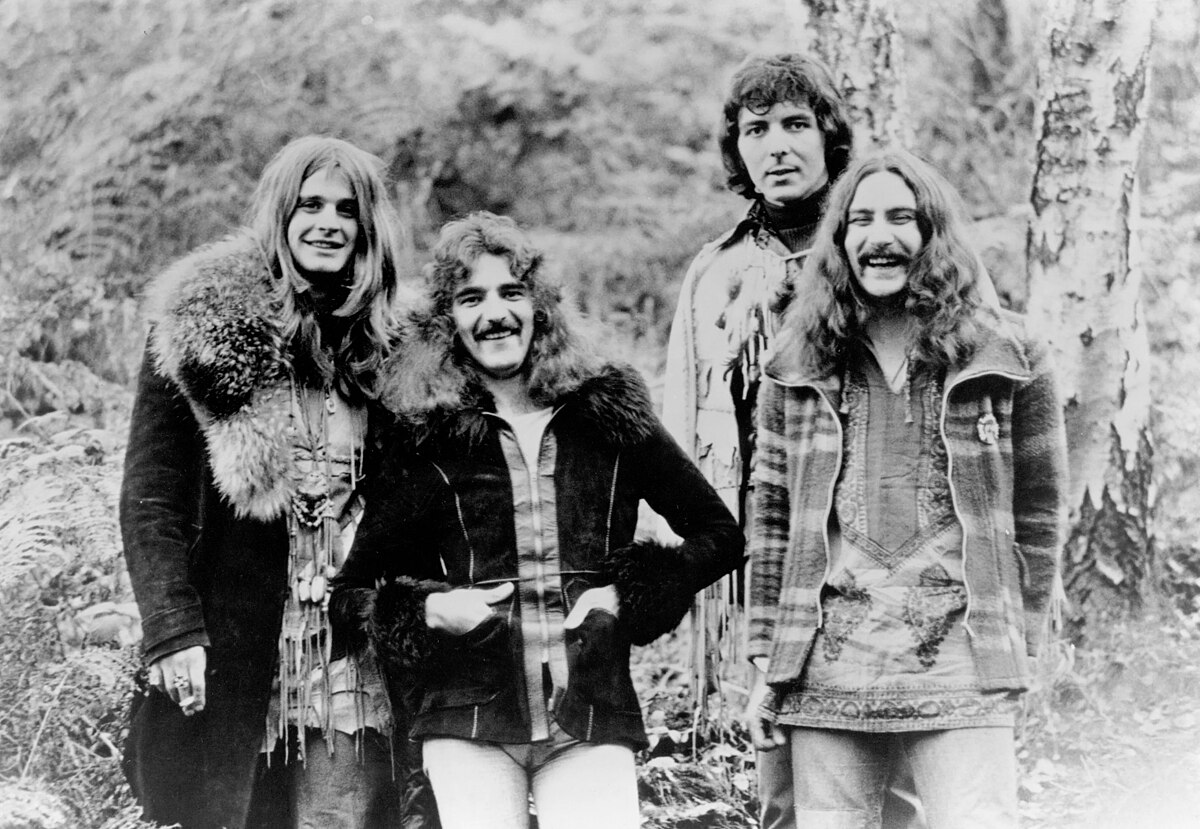
Members of Black Sabbath: Complete Story
The complete story of every member of Black Sabbath, the band that defined heavy metal alongside Deep Purple.
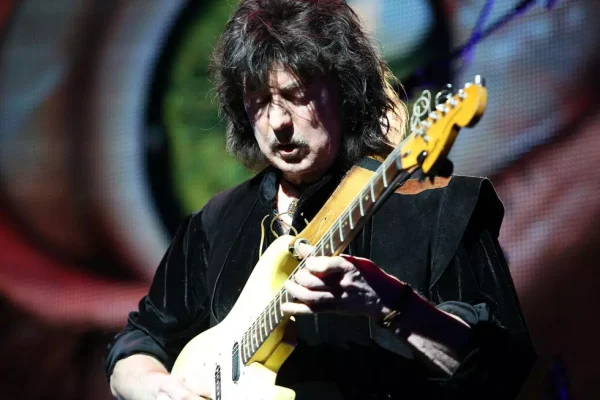
Ritchie Blackmore Tour Postponed
The latest news on Ritchie Blackmore’s touring plans, the guitarist whose departure from Deep Purple followed directly from the Stormbringer sessions.
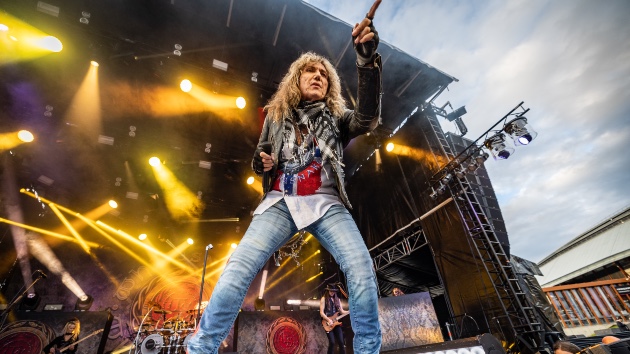
David Coverdale Retires: Rock Legend Bids Farewell
The news that David Coverdale, the voice of Stormbringer and so much more, has announced his retirement from performing.
Glenn Hughes and Trapeze: The Band Before Deep Purple
The story of Glenn Hughes with Trapeze, the funk-rock band whose influence shaped the sound of Stormbringer and the entire Mark III era.
The Stormbringer by Deep Purple album review ends where it has to: with a band that produced something genuinely unexpected, paid a real price for it, and left behind a record that still provokes argument and earns admiration fifty years later.