

Come Taste the Band by Deep Purple album review begins where most classic rock stories end: with their defining guitarist gone and a stranger nobody had heard of taking his place.
Released on 7 November 1975, Come Taste the Band is the tenth studio album by Deep Purple and the only studio record made by the band’s Mark IV lineup.
Ritchie Blackmore had resigned in April 1975 to form his own group, Rainbow.
In his place came Tommy Bolin, a 24-year-old guitarist from Sioux City, Iowa, with a background in jazz fusion and hard rock.
The result was the most adventurous, polarising, and ultimately poignant chapter in the band’s history.

Affiliate Disclosure: I am an Amazon affiliate and if you purchase through any amazon links on this site i may earn a small commission at no extra charge to you. This helps support classicrockartists.com and allows me to keep providing deep-dive content on the legends of rock. Thank you for your support!
📋 Table of Contents [+]
Come Taste the Band by Deep Purple: The Mark IV Lineup
The Mark IV lineup was the final configuration Deep Purple would use before their first breakup in July 1976.
It consisted of David Coverdale on vocals, Tommy Bolin on guitar, Glenn Hughes on bass guitar and vocals, Jon Lord on keyboards, and Ian Paice on drums.
This lineup recorded only one studio album, making Come Taste the Band the sole studio document of what this particular combination of musicians could produce.
Coverdale and Hughes had joined in 1973, replacing Ian Gillan and Roger Glover for the Burn and Stormbringer albums.
By 1975, their influence had moved the band’s sound far from the hard rock template Blackmore had built over the preceding five years.
With Blackmore gone, that shift became the entire album.
Why Ritchie Blackmore Left Deep Purple in 1975
Ritchie Blackmore’s resignation was not a sudden decision.
His frustration had been building since Deep Purple released Stormbringer in late 1974, an album that leaned heavily into funk and soul.
He felt the band had stopped being a rock act and had become a vehicle for the American influences brought in by Coverdale and Hughes.
Blackmore later described the situation by saying the band was no longer a band but a group of people with conflicting commercial interests.
His final show with Deep Purple took place in Liverpool on 7 April 1975.
He departed to form Rainbow with vocalist Ronnie James Dio, a band built entirely around his own creative vision.
The remaining members could have called it finished.
Coverdale and Hughes convinced Lord and Paice to keep going, and auditions for a replacement began almost immediately.
Tommy Bolin: The Guitarist Nobody Expected
Tommy Bolin had made his name in jazz fusion circles before Deep Purple came calling.
He had contributed guitar to four tracks on drummer Billy Cobham’s 1973 album Spectrum, which was how David Coverdale first heard him.
Bolin had also spent time in the James Gang, the Ohio hard rock group best known for launching Joe Walsh’s career.
His audition at Pirate Sound Studios in Hollywood has since become one of the more colourful stories in rock history.
Bolin arrived wearing brightly coloured clothes and platform sandals, walked up to a wall of Marshall amplifiers, turned them all to maximum, and began playing.
Glenn Hughes later recalled that the entire band grabbed their instruments and joined in within seconds.
After four hours of continuous jamming, the job was his.
Jon Lord, who had been among the most reluctant to continue the band, said Bolin had completely re-energised what had been a distraught group.
Recording Sessions: Musicland Studios, Munich 1975
The album was recorded at Musicland Studios in Munich, Germany, from 3 August to 1 September 1975.
Musicland was a familiar setting for Deep Purple, having been used for the previous Stormbringer sessions.
The album was co-produced by the band and longtime associate Martin Birch, who had engineered several of their previous records.
Recording was not without complications.
Glenn Hughes was sent to London during part of the sessions for a period of rehabilitation, limiting his vocal contributions on some tracks.
Drug use among band members, particularly involving Bolin and Hughes, created a fragmented recording environment throughout August.
Bolin was also largely unfamiliar with Deep Purple’s earlier catalog before joining, which meant his contributions were built from fresh instincts rather than inherited expectations.
Despite these pressures, nine tracks were completed in under a month.
Come Taste the Band Album Review: Track-by-Track
The album opens with Comin’ Home (3:55), a mid-tempo rocker with a relaxed groove that signals immediately how different this record is from Machine Head or Deep Purple in Rock.
Bolin plays bass on this track alongside his guitar duties, a detail that reflects the breadth of his ability.
Lady Luck (2:48) is a compact track that leans into Hughes’s soulful bass playing and Coverdale’s raw vocal delivery.
Gettin’ Tighter (3:37) is the album’s closest equivalent to a hard rock single and became the most-performed song on the subsequent tour.
Dealer (3:50) showcases Bolin’s rhythm work and demonstrates how the Mark IV lineup could lock into a tight groove without sacrificing rock energy.
I Need Love (4:23) is one of the album’s most direct emotional performances, with Coverdale delivering a raw vocal that sits closer to early Whitesnake than anything on Burn.
Drifter (4:02) opens Side Two and features Hughes’s high tenor as its primary voice, contrasting throughout with Coverdale’s lower register.
Love Child (3:08) is a funk-influenced cut that would have been unimaginable on any previous Deep Purple album.
This Time Around/Owed to ‘G’ (6:10) is the album’s most progressive moment, a two-part suite shifting from a reflective opening into an instrumental passage built around Jon Lord’s organ and Bolin’s improvised lead work.
You Keep On Moving (5:19) closes the album as one of the finest vocal performances in Deep Purple’s catalog, with Coverdale and Hughes weaving together in a way that shows exactly what this lineup was capable of at its best.
Tommy Bolin’s Guitar Style and Approach
Bolin’s approach was entirely unlike Blackmore’s.
Where Blackmore favoured economy, power chords, and classical influences, Bolin brought a wider palette built on effects pedals, studio layering, and jazz-influenced phrasing.
His leads on Come Taste the Band are fluid and melodic rather than aggressive, using space and dynamics rather than constant velocity.
He brought working knowledge of American funk and soul into a band rooted in British hard rock.
Rolling Stone noted at the time that Bolin was more versatile than Blackmore, with the album favouring melody and dynamics over sheer volume.
This was not universally welcomed by the existing fanbase, who had come to Deep Purple through Machine Head and Made in Japan.
In hindsight, Bolin’s contributions represent a genuine creative expansion the band was never able to fully develop.
David Coverdale and Glenn Hughes: The Dual Vocal Front
The interplay between Coverdale and Hughes is the most distinctive element of the Deep Purple Mark IV sound.
Coverdale brought a lower, grittier rock vocal, while Hughes contributed a higher and more soulful range influenced by American rhythm and blues.
The two voices are at their most effective on You Keep On Moving, the closing track, which builds from a tender opening into a powerful unison climax.
Hughes had been pushing the band toward funk and soul since joining in 1973, and Come Taste the Band was the fullest expression of his influence on Deep Purple’s direction.
Coverdale would go on to form Whitesnake after Deep Purple disbanded, while Hughes pursued a solo career and later collaborated with artists across multiple genres and decades.
Come Taste the Band by Deep Purple: Chart Performance
The album reached number 19 on the UK Albums Chart and number 43 on the US Billboard 200.
These results placed it below the commercial peaks of Machine Head, which had reached number five in the UK in 1972, and Burn, which reached number three in the same chart in 1974.
The decline reflected both the loss of Blackmore and the shift in the band’s sound away from the hard rock audience that had driven its earlier success.
It was released on Purple Records in the UK and on Warner Bros. Records in North America.
Critical reviews were mixed at the time of release, with some acknowledging Bolin’s talent while questioning whether the album represented a legitimate continuation of Deep Purple.
Former vocalist Ian Gillan publicly questioned whether the Mark IV incarnation had any genuine claim to the Deep Purple name.
Come Taste the Band: The 1975-76 Tour and Deep Purple’s End
Deep Purple toured extensively in support of Come Taste the Band throughout late 1975 and into 1976, covering the United Kingdom, North America, Japan, and Australia.
Bolin’s physical condition deteriorated significantly as the tour progressed, with his drug dependency creating serious problems during performances.
Several concert reviews from the period describe uneven sets where Bolin appeared unable to play to his capabilities.
Hughes was also struggling, and the band’s internal dynamic had fractured to the point where individual members were barely communicating off stage.
The final Deep Purple concert of this era took place on 15 March 1976 in Liverpool.
The band officially disbanded in July 1976, ending the first chapter of their history as a performing and recording group.
Tommy Bolin’s Tragic Death in December 1976
Tommy Bolin died on 4 December 1976 in Miami, Florida.
He was 25 years old.
The medical examiner attributed his death to an overdose involving heroin, cocaine, barbiturates, and alcohol.
He died in his hotel room in the early hours of the morning following a concert with his solo band at the Jai Alai Fronton in Miami.
Bolin had released two solo albums before his death: Teaser in 1975 and Private Eyes in 1976.
His passing came less than two years after he had joined Deep Purple and less than eight months after the band’s final concert.
His death ensured the Mark IV chapter would remain defined by loss as much as by music.
Come Taste the Band: The 35th Anniversary Edition
A 35th Anniversary Edition was released in 2010 as a two-disc set.
The first disc contained a remaster of the original album.
The second disc included a remix by Kevin Shirley and a selection of previously unreleased bonus tracks, among them Same in LA and a Bolin/Paice jam session.
Kevin Shirley’s remix brought greater clarity to Bolin’s guitar parts and gave the rhythm section more presence than the original 1975 mix.
The reissue contributed to a broader critical reassessment of the Mark IV period and introduced the album to listeners who had dismissed it first time around.
The Bolin/Paice jam, in particular, offered a glimpse of what this lineup might have developed into with more time and stability.
Come Taste the Band by Deep Purple: Legacy
For years, Come Taste the Band was treated as a footnote in the Deep Purple catalog, an outlier produced during a period of personal and creative dysfunction.
That view has shifted considerably.
Critics who revisited the album after Deep Purple reformed in 1984 found qualities that had been dismissed in the original rush to write off the Bolin era.
The dual vocal approach of Coverdale and Hughes, the range of styles across the nine tracks, and Bolin’s technically inventive playing now read as genuine attempts to expand what hard rock could be in 1975.
You Keep On Moving stands as well as the Burn title track from 1974, two very different songs from two very different eras of the same band.
Come Taste the Band by Deep Purple album review ultimately confirms what time has made clear: this was not a band in decline but a band in genuine transition, cut short before it found its direction.
People Also Ask
Why did Ritchie Blackmore leave Deep Purple?
Ritchie Blackmore left Deep Purple in April 1975 because he felt the band had become a committee rather than a creative unit, with growing disagreements over the soul and funk direction introduced by Coverdale and Hughes.
He went on to form Rainbow with vocalist Ronnie James Dio.
Who replaced Ritchie Blackmore in Deep Purple?
Tommy Bolin replaced Ritchie Blackmore in Deep Purple in 1975.
Bolin was a 24-year-old guitarist from Sioux City, Iowa, previously known for his work with the James Gang and his contributions to Billy Cobham’s jazz fusion album Spectrum.
How did Tommy Bolin die?
Tommy Bolin died on 4 December 1976 in Miami, Florida, from a drug overdose.
He was 25 years old.
The medical examiner’s report showed he had ingested a combination of heroin, cocaine, barbiturates, and alcohol.
What chart position did Come Taste the Band reach?
Come Taste the Band reached number 19 on the UK Albums Chart and number 43 on the US Billboard 200 following its release in November 1975.
Is Come Taste the Band worth listening to?
Come Taste the Band has been reassessed positively since its mixed initial reception, with critics noting Bolin’s versatile guitar work and the exceptional vocal interplay between Coverdale and Hughes.
The closing track You Keep On Moving is widely regarded as one of Deep Purple’s finest recordings across any lineup.
Watch: Deep Purple Live with Tommy Bolin
This live performance of Gettin’ Tighter captures the Mark IV lineup during the Come Taste the Band tour.
Shop the Mark IV Era: Essential Deep Purple
Affiliate Disclosure: I am an Amazon affiliate and if you purchase through any amazon links on this site i may earn a small commission at no extra charge to you. This helps support classicrockartists.com and allows me to keep providing deep-dive content on the legends of rock. Thank you for your support!
As an Amazon Associate, I earn from qualifying purchases.
Come Taste the Band
35th Anniversary Edition, 2CD
The only Mark IV studio album.
Includes Kevin Shirley remix and bonus tracks on disc two.

Burn
Expanded Edition, 2005
The Mark III debut, 1974.
Coverdale and Hughes arrive. One of the most ferocious hard rock albums of the decade.

Mark II Collection 3-Pack
In Rock, Fireball, Machine Head
Three classic albums in one set.
The essential Blackmore era before the lineup changes of 1973 and 1975.

The Very Best of Deep Purple
Compilation CD
Spanning all eras, all lineups.
From Smoke on the Water to You Keep On Moving: the complete picture in one collection.
You Might Also Like
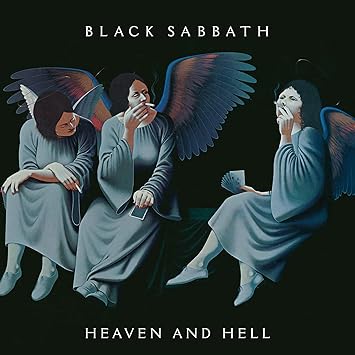
Heaven and Hell by Black Sabbath
The 1980 Dio-era Black Sabbath album that proved the band could survive without Ozzy. A hard rock landmark with Ronnie James Dio on vocals.

Master of Reality by Black Sabbath
The 1971 album where Tony Iommi tuned down his strings and invented a heavier sound. Essential for any fan of 1970s hard rock.
Ozzy Osbourne: The Complete Story
From Black Sabbath founding member to global solo legend. The full biography of the Prince of Darkness, his albums, and his legacy.

Bad Company: Feel Like Makin’ Love (1975)
Bad Company’s soulful 1975 hit from the Straight Shooter album. Paul Rodgers at his most expressive, from the same era as Come Taste the Band.
For anyone serious about hard rock history, the Come Taste the Band by Deep Purple album review ends here but the listening never does.