

Perfect Strangers by Deep Purple is one of the most important comeback albums in rock history, a record that proved the classic Mark II lineup still had the fire to create essential music more than a decade after their original run.

Affiliate Disclosure: I am an Amazon affiliate and if you purchase through any amazon links on this site i may earn a small commission at no extra charge to you.
📋 Table of Contents [+]
The Reunion That Nobody Predicted
By 1984, Deep Purple had been finished for nearly a decade.
The Mark II lineup, the one that recorded Machine Head and shook the foundations of hard rock, had imploded in 1973 under the weight of internal tension and creative exhaustion.
In the years that followed, each member went their separate ways.
Ritchie Blackmore built Rainbow into a formidable act across seven albums spanning eight years.
Roger Glover joined him there, serving as bassist and producer for four of those records.
Ian Gillan passed through several projects before taking a bizarre detour as the lead vocalist on Black Sabbath’s Born Again album in 1983.
Jon Lord connected with David Coverdale and became a cornerstone of early Whitesnake, recording right through 1984’s Slide It In.
Ian Paice ended up as the drummer in Gary Moore’s touring band.
Five former bandmates, five separate orbits, and years of silence between them.
The idea of a reunion seemed far-fetched to most people who knew the history.
When it happened anyway, the music world took notice.
Recording in Vermont: Less Than a Month to Make History
The Mark II lineup convened in Stowe, Vermont in August 1984 to write and record what would become Perfect Strangers by Deep Purple.
The location was rural and unlikely for five English rock stars, but it gave them isolation, focus, and a studio environment far from the distractions of London or Los Angeles.
The entire album was written and recorded in less than a month.
That speed shows in places, but it also explains the urgency that courses through the best moments on the record.
Roger Glover took on production duties, a logical choice given his track record producing Nazareth, Judas Priest’s Sin After Sin, and most of Rainbow’s catalog.
His familiarity with each of these players gave him credibility in the producer’s chair.
The album was recorded digitally, which was still relatively uncommon for a rock record in 1984.
That decision gave Perfect Strangers a clarity and depth of instrumental tone that many albums of the era lack.
Jon Lord’s Hammond organ sits deep and full in the mix.
Ian Paice’s drum sound is massive without being processed into irrelevance.
Blackmore’s Stratocaster has the same roar it always carried, but sharper and more defined than on the analog recordings of the 1970s.
The composition credits were a point of friction from the start.
Only two songs, “Nobody’s Home” and “Not Responsible,” were credited to all five band members.
Gillan and Glover pushed for the all-for-one writing credits that had defined the Mk II era from 1970 to 1973, but Blackmore held his ground.
The tension in the studio translated, in part, into the tension on the record itself.
Perfect Strangers by Deep Purple: Track-by-Track
Knocking at Your Back Door opens the album and makes an immediate statement.
It builds from an ominous Jon Lord keyboard figure, then Glover’s bass enters, then Paice locks in, and finally Blackmore’s chords crash down.
The construction mirrors the layered entry of “Smoke on the Water” in reverse, familiar enough to signal continuity but fresh enough to prove they were not simply retreading old ground.
At over seven minutes, it is the longest and most ambitious track on the record.
Gillan’s voice sounds as commanding here as it did ten years earlier.
Blackmore delivers two tightly constructed solos that prove his time away had sharpened rather than dulled his edge.
Under the Gun is a direct, no-frills hard rocker that sits comfortably in the Deep Purple tradition without adding anything surprising.
It is efficient and well-played, though it would not be anyone’s first choice for a highlight.
Nobody’s Home is one of the two tracks credited to all five members and it shows: the song has a collaborative looseness that some of the more tightly controlled Blackmore compositions do not.
Gillan’s vocal performance here is particularly strong.
Mean Streak is a sharp, mid-tempo rocker with a riff that Blackmore delivers with the kind of authority that reminds listeners why he was still one of the most respected guitarists in rock.
Perfect Strangers, the title track, sits at position five on the original vinyl and opens side two.
It is discussed in detail in its own section below.
Side Two: The Deep Cuts
A Gypsy’s Kiss is one of the album’s most underrated moments.
It moves at pace, features a neo-classical guitar and keyboard interplay that echoes the intensity of “Burn,” and showcases Blackmore at his most fleet-fingered.
For listeners who come to this record only knowing the two singles, this track is the discovery.
Wasted Sunsets is the album’s power ballad, driven by heavy Hammond organ and a restrained, atmospheric guitar line.
It avoids the MTV-ready excess that would have been easy to slide into in 1984, and it earns its place on the record.
Hungry Daze closes the standard album on an upbeat note, with Gillan delivering his most dynamic vocal performance and Paice unleashing a drum section during an extended psychedelic passage that sounds genuinely unhinged in the best possible way.
Not Responsible was included on CD and cassette but omitted from the vinyl release.
It is one of the few Deep Purple tracks to feature explicit language and is credited to all five members.
Son of Alerik, an instrumental, appeared as a B-side on the “Perfect Strangers” single and was later added as a bonus track to the 1999 remaster.
It demonstrates the band’s capacity for extended improvisation that the tighter album tracks do not always allow.
Production and Sound: Roger Glover Steps Behind the Board
Glover’s production on Perfect Strangers walks a careful line.
The record sounds unmistakably of its era but not in the ways that have aged badly.
There is no excessive reverb on the snare, no processed guitar tones that would date it immediately.
Instead, the 80s influence shows in the clarity and separation of the instruments, which works in the album’s favor.
The digital recording process gave each player room to be heard distinctly.
Lord’s organ is not fighting with Blackmore’s guitar for the same sonic space the way it sometimes did on the live recordings from the early 1970s.
Paice’s drums have weight without being buried.
Glover’s bass is muscular and present throughout.
The album sounds, as one producer later put it, like a band who knew how to use a modern studio without being seduced by it.
Some critics at the time and since have argued that Glover was too close to the material to be objective, that the album lacks the cohesion a more detached producer might have provided.
That is a fair point, particularly for the weaker tracks on side one.
But on the album’s high points, the production serves the music without getting in the way of it.
The Title Track Examined
The title track of Perfect Strangers by Deep Purple is unlike anything else in the band’s catalog.
It opens with Jon Lord’s Hammond playing a slow, heavy figure that sets a mood of dark grandeur before the full band enters.
The riff that follows is one of the most instantly recognizable in 1980s rock.
Ritchie Blackmore has named it his favorite Deep Purple song, which is a significant statement from a man who helped write “Highway Star” and Smoke on the Water.
The song contains no guitar solo, making it one of the very few Deep Purple compositions structured that way.
Ian Gillan’s lyrics draw on Michael Moorcock’s Elric fantasy novels, weaving imagery of reincarnation, ancient warriors, and souls moving across lifetimes.
Gillan himself has described the meaning as being about reincarnation, the sense that souls who have known each other across previous lives remain connected but must ultimately stay strangers.
The phrase also reflected the reality of the reunion: these five men had been deeply bonded for years, then spent over a decade apart, and were now sitting in a Vermont basement trying to remember how to play together.
They were, quite literally, perfect strangers to one another again.
The track peaked at number 48 on the UK Singles chart after a January 1985 release, a modest chart placing that understates how deeply the song embedded itself in rock culture over the decades that followed.
Dream Theater covered it on their EP A Change of Seasons and performed it live with Bruce Dickinson of Iron Maiden on vocals on a BBC Radio session.
Dimmu Borgir included a version on their album Abrahadabra.
The song has become Deep Purple’s standard show-closer and remains their most consistent live piece across every lineup change since 1984.
Chart Performance and Commercial Success
Perfect Strangers was released on 29 October 1984 through Polydor in the UK and Mercury in the United States.
It reached number 5 on the UK Albums Chart and number 17 on the Billboard 200 in the US.
The album was certified platinum in the United States, only the second Deep Purple studio album to achieve that status, following Machine Head.
It charted in the top 10 across six European countries.
According to sales tracking data, Perfect Strangers is the third-highest selling Deep Purple studio album of all time worldwide, behind only Machine Head and In Rock.
Two singles were released from the album: “Knocking at Your Back Door” and “Perfect Strangers.”
“Knocking at Your Back Door” received significant US album rock radio play and helped introduce the band to a generation of listeners who had been too young for the original Mark II era.
The 1985 World Tour
The touring cycle that followed Perfect Strangers was a commercial phenomenon.
Deep Purple’s US arena tour in 1985 out-grossed every other touring artist that year except Bruce Springsteen.
The demand was so strong that the band was forced to add additional arena dates after original shows sold out quickly.
The setlist centered heavily on the new album alongside classic material including tracks from the original Mark II era.
Songs from Perfect Strangers slotted naturally alongside Deep Purple’s older catalog, a sign that the new material had the weight and authority to stand beside the band’s most celebrated work.
The title track in particular grew into something larger in a live setting, becoming the kind of slow-burning epic that fills arenas.
Critical Reception Then and Now
Contemporary reviews of Perfect Strangers by Deep Purple were mixed.
Rolling Stone’s Deborah Frost acknowledged the power of Blackmore’s guitar tone while criticizing several tracks as rushed and opportunistic, suggesting the album was partly designed to capitalize on the mid-decade heavy metal boom.
Canadian rock journalist Martin Popoff took a more favorable view, praising the album for concentrating on songcraft rather than technical display and positioning Deep Purple as a defining reference point for the genre.
Roger Glover himself was measured about the result: “A great moment in time, but, as an album, it doesn’t quite hang together.”
That self-assessment is honest and largely accurate.
The album’s middle section, where several competent but unremarkable rockers cluster together, keeps it from being the perfect comeback record it could have been.
But the ceiling is very high.
When the album fires, it fires completely, and the high points justify every word written in its defense over the past four decades.
Modern reassessment has been warmer, with many critics now recognizing that a record this consistent in quality, this unafraid to sound like itself amid the glam excess of 1984, deserved more credit than it initially received.
Legacy and Influence of Perfect Strangers by Deep Purple
Perfect Strangers by Deep Purple did something rare: it made a credible case that a legendary rock band could return after a decade of silence and produce music that mattered.
That template was studied by the managers, labels, and bandmates of nearly every major classic rock act that reunited in the years that followed.
The album proved that reunion records did not have to be nostalgia products.
They could be competitive, contemporary, and worthy additions to a band’s catalog.
The title track has become one of the standard-bearers of the Deep Purple live experience, a song that the current lineup, featuring Simon McBride on guitar in place of the departed Blackmore, still opens or closes shows with.
Blackmore’s decision to name it his favorite Deep Purple song has given it a special status among fans of his guitar work, since it contains no solo whatsoever.
The mystery of what he hears in it, what draws him to a composition built entirely on atmosphere and collective restraint rather than individual virtuosity, says something important about what makes the song work.
It is a band performance, not a showcase for any single member, and that may be precisely why it endures.
How to Listen to Perfect Strangers Today
Start with “Knocking at Your Back Door” and let it run its full seven-plus minutes.
Do not skip anything.
Follow it immediately with the title track and pay attention to what Jon Lord does in the first thirty seconds before the rest of the band enters.
Then go to “A Gypsy’s Kiss” and “Hungry Daze” on side two, which are the most overlooked songs on the record.
The 1999 remaster of Perfect Strangers by Deep Purple, with “Son of Alerik” and “Not Responsible” as bonus tracks, is the recommended version.
“Son of Alerik” in particular gives a clear picture of where the band’s improvisational instincts were in 1984, separate from the tighter, more structured album compositions.
The Machine Head and Perfect Strangers 2-Pack on Amazon (ASIN B0FGYK2358) is worth considering if you want to own both essential Mark II studio albums in a single package.
People Also Ask
What is the album Perfect Strangers by Deep Purple about?
The album documents the reunion of Deep Purple’s classic Mark II lineup after eleven years apart, with the title drawn from the phrase that described how the five bandmates felt upon reconvening in 1984. The lyrics on the title track specifically reference reincarnation and the Elric fantasy novels of Michael Moorcock, though Ian Gillan has also spoken about how the phrase reflected the genuine awkwardness and distance the bandmates felt toward one another during the reunion sessions in Vermont.
Is Perfect Strangers by Deep Purple a good album?
Yes, though opinions vary on how high it ranks in the Deep Purple catalog. The album’s two standout tracks, “Knocking at Your Back Door” and the title track, are among the best work the Mark II lineup ever recorded. The rest of the album is solid hard rock that sits comfortably in the Deep Purple tradition, even if the middle section of the tracklist lacks the ambition of the two lead tracks. It reached platinum status in the US and number 5 in the UK, and its world tour in 1985 out-grossed every other touring act except Bruce Springsteen.
Why does the song Perfect Strangers have no guitar solo?
The title track of Perfect Strangers by Deep Purple is built around a brooding, atmospheric structure that draws its power from the collective performance of all five musicians rather than from any solo showcase. Ritchie Blackmore chose to let the riff, the organ, and Gillan’s vocal carry the track without a lead solo section, making it one of the very few Deep Purple compositions structured that way. Blackmore has called it his favorite Deep Purple song, which makes the absence of a solo all the more notable.
Who recorded Perfect Strangers and where was it made?
Perfect Strangers was recorded by the Mark II lineup of Deep Purple, consisting of Ritchie Blackmore, Ian Gillan, Roger Glover, Jon Lord, and Ian Paice. It was written and recorded in Stowe, Vermont, USA in August 1984, taking less than a month to complete. Roger Glover produced the album, and it was released on 29 October 1984 through Polydor in the UK and Mercury in the US.
How did Perfect Strangers by Deep Purple chart?
The album reached number 5 on the UK Albums Chart and number 17 on the US Billboard 200. It charted in the top 10 in six European countries and was certified platinum in the United States, making it only the second Deep Purple studio album to reach that milestone after Machine Head. The single “Perfect Strangers” peaked at number 48 in the UK Singles Chart in early 1985.
Watch Deep Purple Live
Shop Deep Purple on Amazon
Affiliate Disclosure: I am an Amazon affiliate and if you purchase through any amazon links on this site i may earn a small commission at no extra charge to you. This helps support classicrockartists.com and allows me to keep providing deep-dive content on the legends of rock. Thank you for your support!
As an Amazon Associate, I earn from qualifying purchases.
Perfect Strangers
1984 — The Mark II Comeback
Essential listening
The album that proved Deep Purple’s classic lineup still had everything it took. Platinum-certified in the US, number 5 in the UK, and home to two of the band’s greatest recordings.

Machine Head
1972 — The Peak of Mark II
Essential listening
The album that defined what Deep Purple Mark II could do at their absolute peak. Contains Smoke on the Water, Highway Star, and Space Truckin among others.

Deep Purple in Rock
1970 — Where It All Began
Essential listening
The album that launched the Mark II lineup into the stratosphere. Child in Time, Speed King, and Black Night on one record. One of the defining hard rock albums of any decade.
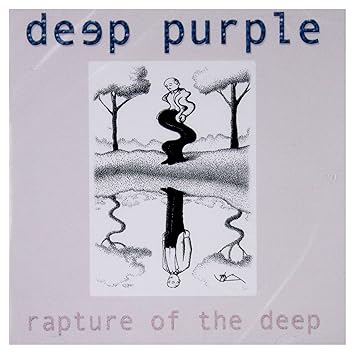
Rapture of the Deep
2005 — 20th Anniversary 2CD Edition
Essential listening
Deep Purple’s last studio album with Steve Morse on guitar. The 20th Anniversary 2CD edition is the definitive version and one of the strongest albums of the band’s later career.
Perfect Strangers by Deep Purple remains the gold standard for what a classic rock reunion can achieve, a record built from real tension, real chemistry, and a refusal to coast on a famous name.
You Might Also Like
Stormbringer by Deep Purple Review: The Album That Ended an Era
A full Stormbringer by Deep Purple album review: the 1974 Mark III closer recorded in Munich that drove Ritchie Blackmore out the door. #6 UK, #20…
Burn by Deep Purple Album Review: The Mark III Masterpiece of 1974
A full Burn by Deep Purple album review: how the 1974 Mark III debut with Coverdale and Hughes silenced the doubters and hit #3 in the UK.
Machine Head by Deep Purple Album Review: The 1972 Album That Changed Everything
The Machine Head by Deep Purple album review covers the six-million-selling 1972 album recorded in hotel corridors after the Montreux Casino fire,…
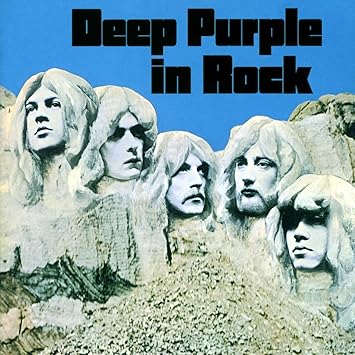
Deep Purple in Rock Album Review: The 1970 Album That Changed Everything
The Deep Purple in Rock album review covers the 1970 landmark that launched the Mark II era: seven tracks recorded across London studios between…