

Slaves and Masters by Deep Purple is the most polarizing album the band ever released, a record that asked a simple and devastating question: what is Deep Purple without Ian Gillan?
Released on 22 October 1990 through RCA Records, this was the thirteenth studio album from the English hard rock legends and the only studio recording by the Mark V lineup.
With former Rainbow vocalist Joe Lynn Turner stepping into the role Gillan had vacated, Deep Purple produced something polished, melodic, and genuinely accomplished, yet something that sounded unmistakably unlike any previous chapter in their history.
Decades later, Slaves and Masters by Deep Purple remains an album that rewards honest listening far more than its fractured reputation suggests.

Affiliate Disclosure: I am an Amazon affiliate and if you purchase through any amazon links on this site i may earn a small commission at no extra charge to you.
📋 Table of Contents [+]
Slaves and Masters by Deep Purple: Overview
By 1989, the Mark II reunion that had produced Perfect Strangers and House of Blue Light had collapsed under the weight of its own internal tensions.
Ian Gillan was fired from Deep Purple for the second time, and the remaining four Mark II members faced a choice: stop, or find a new voice.
They chose to continue, and the voice they found was Joe Lynn Turner, whose polished melodic rock approach would define every note of what became Slaves and Masters by Deep Purple.
The album that resulted is not Machine Head, and it is not Perfect Strangers.
What it is: a well-crafted, commercially focused hard rock record with moments of genuine power, filtered through a sensibility that sits closer to AOR than to anything the band had previously recorded.
Whether that constitutes a failure or an underrated achievement depends entirely on what you expect from a Deep Purple album.
How Slaves and Masters Came to Be
Ian Gillan’s second departure from Deep Purple was acrimonious.
The Gillan-Blackmore conflict that had driven the original Mark II split in 1973 had never truly resolved itself, and the years of the reunion tour had only deepened the fault lines.
Before settling on Joe Lynn Turner, the band considered several vocalists.
Jimi Jamison of Survivor was reportedly the first choice, but management complications made him unavailable.
Turner had history with Ritchie Blackmore: he had fronted Rainbow through their final three studio albums, bringing a smooth, melodic approach that contrasted with Ronnie James Dio’s more operatic style.
His arrival in Deep Purple was not universally welcomed, but for Blackmore in particular, it made musical sense.
Recording took place in 1990 with Roger Glover once again producing, as he had done for the previous two reunion albums.
Most of the musical foundation had already been written by Blackmore, and the task of Turner and Glover was to build lyrics and vocal melodies on top of those existing structures.
Joe Lynn Turner and the Mark V Lineup
The Mark V lineup of Deep Purple consisted of Ritchie Blackmore on guitar, Roger Glover on bass, Jon Lord on keyboards, Ian Paice on drums, and Joe Lynn Turner on lead vocals.
It was, in every respect except the vocalist, the same band that had recorded Perfect Strangers and House of Blue Light.
Turner brought a very different energy to the microphone.
Where Gillan was unpredictable, theatrical, and vocally confrontational, Turner was controlled, polished, and melodically precise.
His strengths were the strengths of AOR: smooth phrasing, powerful choruses, and a voice that sat comfortably in radio-friendly production.
Those strengths shaped Slaves and Masters as much as any individual decision about songwriting or arrangement.
Jon Lord later acknowledged that he never fully regarded the album as a Deep Purple record, a view shared by Roger Glover in retrospect.
Blackmore’s position was the opposite: he has described Slaves and Masters as his favorite album from the entire 1984-1993 reunion era, a statement that says as much about his relationship with Gillan as it does about the music.
Track-by-Track: Slaves and Masters by Deep Purple
“King of Dreams” opens the album and functions as an effective mission statement for what Slaves and Masters is attempting.
It is built on a driving bass groove rather than a Blackmore riff lead, Turner’s vocal glides across a melodic hook that is immediately memorable, and the whole thing lands somewhere between late-period Rainbow and mid-period Foreigner.
“The Cut Runs Deep” is the track that most convincingly sounds like classic Deep Purple.
The riff Blackmore plays here is among the best he contributed to the 1984-1993 era: fast, aggressive, and built on the kind of instinctive hard rock logic that made Deep Purple in Rock so significant two decades earlier.
“Fire in the Basement” is another strong entry, delivering the kind of Blackmore-Lord interplay that remains the musical core of any Deep Purple lineup regardless of who is singing.
“Truth Hurts” showcases Turner at his most effective, a controlled vocal performance over a mid-tempo arrangement that demonstrates the album’s central strength: melodic coherence.
“Fortuneteller” leans into a blues-influenced groove that works well, with Blackmore’s solo work showing genuine investment in the material.
“Too Much Is Not Enough” is the album’s weakest moment, a track so close to pure pop that even Turner later noted Yngwie Malmsteen had previously rejected it for his own album.
“Love Conquers All” was one of the singles and is built for radio in a way that divides opinion: those who like the album tend to find it charming, those who do not tend to find it the sharpest evidence of how far the band had drifted from their roots.
“Breakfast in Bed” offers something more layered than its title suggests, with Lord’s keyboard work giving the track a texture the surrounding material sometimes lacks.
“Slow Down Sister,” included as a bonus track on the expanded CD reissue, is a B-side that actually deserves its rehabilitation.
“Wicked Ways” closes the original album and is genuinely one of the strongest tracks on the record: symphonic in arrangement, with room for the instrumental interplay that defined Deep Purple’s best work, and a performance from Turner that reaches beyond the AOR comfort zone the rest of the album occupies.
Production and Sound
Roger Glover’s production on Slaves and Masters is clean, precise, and commercial in a way that suited 1990 radio but has aged in exactly the manner that 1990 production tends to age.
The mix favors the vocals heavily, which amplifies the album’s AOR character and simultaneously diminishes the impact of Blackmore’s guitar work and Lord’s organ on tracks where those elements should be the center of gravity.
The result is an album that sounds polished rather than powerful, refined rather than raw.
That is not an inherent flaw, but it is a fundamental departure from the production philosophy of Machine Head, Burn, and even Perfect Strangers, which retained a harder edge despite their own commercial ambitions.
The expanded CD reissue improved the album’s reputation by restoring the longer track versions and adding “Slow Down Sister,” giving listeners a more complete picture of what the sessions actually produced.
Chart Performance
Slaves and Masters peaked at number 87 on the US Billboard 200, a significant drop from House of Blue Light’s number 34 position.
The album performed better in Europe, where Deep Purple maintained a stronger fanbase through the difficult years of the mid-to-late 1980s.
By 1990, the music landscape was shifting rapidly: grunge was months away from rewriting commercial rock’s priorities entirely, and an album as polished and melodic as Slaves and Masters landed at exactly the wrong moment for maximum commercial impact.
The timing was genuinely unfortunate.
An album this rooted in the AOR aesthetic of 1987-1990 would have charted significantly better two or three years earlier, before the cultural ground shifted beneath it.
Singles and Music Videos
“King of Dreams” was released as the lead single and received a full music video directed by James Foley, shot at Santa Cruz Beach Boardwalk and featuring the band.
“Love Conquers All” followed as the second single, with its video directed by Storm Thorgerson, the designer formerly associated with Hipgnosis, the legendary album art studio behind many of the great rock covers of the 1970s.
Both videos received MTV rotation in 1990 and 1991, giving the Mark V lineup a visual presence that neither of the previous two reunion albums had managed with the same clarity of commercial intent.
The videos communicated exactly what the album was: a professionally executed, image-conscious hard rock product aimed directly at the 1990 mainstream.
Critical Reception
Critical response to Slaves and Masters at the time of release was mixed, and the division has never fully resolved.
AllMusic’s retrospective assessment was negative, describing the songwriting as weak and comparing the band unfavorably to Foreigner.
Martin Popoff and Joel McIver, two of the more detailed chroniclers of heavy rock, noted that the album sounded like a late-period Rainbow record, which was accurate as an observation but interpreted as a criticism.
Ritchie Blackmore’s assessment was the polar opposite: he called Slaves and Masters his favorite from the entire reunion period, citing the songwriting quality and the production as the strongest of any album he made with the band after 1973.
Turner’s view was equally generous, describing it as probably the last great Purple album, a position that requires accepting the album on its own terms rather than measuring it against the Mark II peak years.
Jon Lord’s silence on the record’s merits spoke volumes.
The 1991 World Tour
Despite the album’s underwhelming chart performance in the United States, Deep Purple’s 1991 world tour in support of Slaves and Masters was a substantial success, particularly across Europe.
The live shows were reportedly stronger than the album suggested they would be.
The Mark V lineup’s setlist notably included “Burn” and “Hey Joe,” tracks that Ian Gillan had consistently refused to perform during his tenures with the band.
Turner’s vocal range and Rainbow experience made those songs accessible again, and their inclusion gave the tour a breadth of Deep Purple material that the previous reunion tours had lacked.
No songs from Slaves and Masters have been performed live by Deep Purple since the 1991 tour concluded, which mirrors the fate of House of Blue Light’s material and reflects how thoroughly subsequent lineups have treated the Turner era as a closed chapter.
The End of the Mark V Era
Work on a follow-up to Slaves and Masters began in 1992, with Turner still in the band and new material being developed.
The follow-up never materialized under the Mark V name.
Pressure from management and the commercial pull of a 25th anniversary tour created momentum for Ian Gillan’s return, and the band ultimately brought him back for The Battle Rages On in 1993.
A handful of tracks originally written for the Slaves and Masters follow-up ended up on Turner’s subsequent solo projects, preserving the musical ideas even if the lineup that generated them was gone.
Turner’s connection to the Mark V era of Deep Purple remained strong enough that he and former member Glenn Hughes later performed “King of Dreams” together as part of the Hughes Turner Project’s European and Japanese tours in 2002.
Slaves and Masters Legacy and Reassessment
The legacy of Slaves and Masters by Deep Purple has evolved considerably since 1990.
Listeners who approach it without the expectation that it should sound like Machine Head or even Perfect Strangers tend to find a well-constructed, occasionally excellent hard rock album with a coherent identity.
The tracks that work best: “King of Dreams,” “The Cut Runs Deep,” “Fire in the Basement,” “Wicked Ways,” and “Truth Hurts,” would constitute a solid album in any era if grouped together and supported by stronger filler.
The tracks that do not work reveal the album’s fundamental problem: when the band tried hardest to be commercial, they produced music that sounded generic, and in a catalog that includes “Highway Star” and “Child in Time,” generic is a standard no fan can accept.
The expanded CD reissue with “Slow Down Sister” and the remastered audio improved the album’s standing among collectors and long-term fans.
For anyone building a complete understanding of Deep Purple’s career, Slaves and Masters by Deep Purple is essential context: the record that bridged the fractured second reunion and the brief, final Blackmore chapter of The Battle Rages On.
People Also Ask
Who sang on Slaves and Masters by Deep Purple?
Joe Lynn Turner sang lead vocals on Slaves and Masters, making it the only Deep Purple studio album to feature him as vocalist.
Turner had previously fronted Ritchie Blackmore’s Rainbow through their final three studio albums between 1981 and 1983.
When was Slaves and Masters released?
Slaves and Masters was released on 22 October 1990 through RCA Records.
It was the thirteenth studio album by Deep Purple and the sole studio recording from the Mark V lineup of the band.
What is the Deep Purple Mark V lineup?
The Mark V lineup consisted of Ritchie Blackmore on guitar, Roger Glover on bass, Jon Lord on keyboards, Ian Paice on drums, and Joe Lynn Turner on vocals.
It was identical to the Mark II reunion lineup except that Ian Gillan had been replaced by Turner following Gillan’s firing in 1989.
How did Slaves and Masters chart?
The album reached number 87 on the US Billboard 200, a significant commercial step back from House of Blue Light’s number 34 position.
It performed better across Europe, where the band retained a loyal audience despite the absence of Gillan.
What are the best songs on Slaves and Masters?
“The Cut Runs Deep” is widely regarded as the album’s strongest track, delivering a Blackmore riff that sits among his best work from the reunion era.
“King of Dreams,” “Fire in the Basement,” and “Wicked Ways” are the other tracks most consistently praised by critics and fans who revisit the album with an open mind.
What did Ritchie Blackmore say about Slaves and Masters?
Blackmore has described Slaves and Masters as his favorite album from the entire 1984-1993 reunion era of Deep Purple.
He praised both the songwriting quality and the production, a position that stands in direct contrast to Jon Lord’s view that the album was not a genuine Deep Purple record.
Watch: King of Dreams
Shop Deep Purple
Affiliate Disclosure: I am an Amazon affiliate and if you purchase through any amazon links on this site i may earn a small commission at no extra charge to you. This helps support classicrockartists.com and allows me to keep providing deep-dive content on the legends of rock. Thank you for your support!
As an Amazon Associate, I earn from qualifying purchases.
Slaves and Masters
1990 — CD Expanded Edition
The only Deep Purple studio album with Joe Lynn Turner on vocals.
Expanded edition includes the bonus track “Slow Down Sister.”
Essential for anyone building a complete Deep Purple collection.
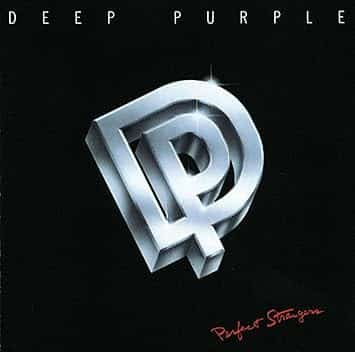
Perfect Strangers
1984 — CD Remastered
The Mark II reunion album that preceded the Slaves and Masters era.
Contains “Knocking at Your Back Door” and the iconic title track.
The high-water mark of Deep Purple’s second run.
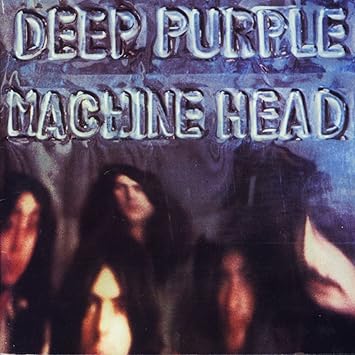
Machine Head
1972 — CD Remastered
The benchmark album that defined Deep Purple’s legacy and against which Slaves and Masters was inevitably judged.
Contains “Smoke on the Water,” “Highway Star,” and “Space Truckin’.”
Required listening for any rock fan.
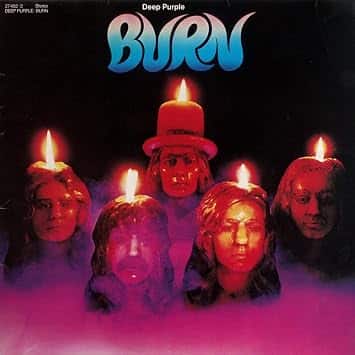
Burn
1974 — Expanded 2CD Edition
The Mark III debut that proved Deep Purple could survive a complete vocalist change, a lesson that informed the Turner era.
Featuring David Coverdale and Glenn Hughes.
One of the band’s most powerful studio albums.
You Might Also Like
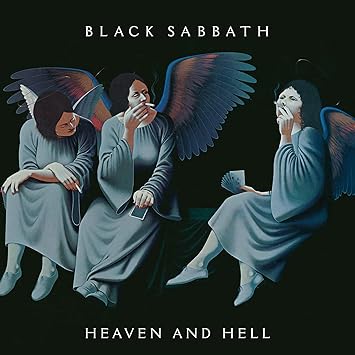
Heaven and Hell by Black Sabbath
Another classic band that replaced its iconic vocalist and produced something unexpected. Ronnie James Dio changed everything.
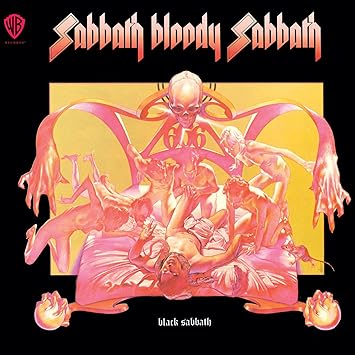
Sabbath Bloody Sabbath by Black Sabbath
A defining album from one of hard rock’s founding bands, recorded during a creative surge that defined a generation of heavy music.
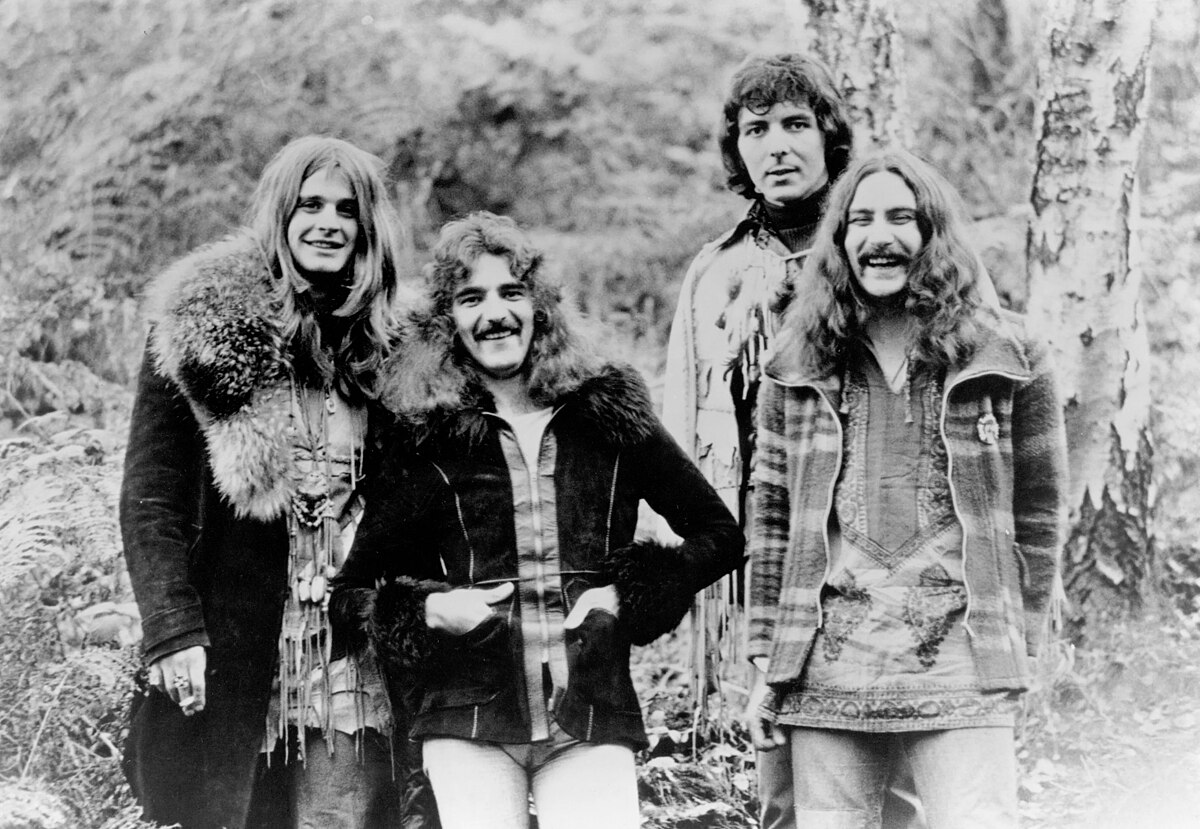
Members of Black Sabbath: The Complete Story
Every lineup, every era, every controversy. The full story of the band that invented heavy metal, told from beginning to end.
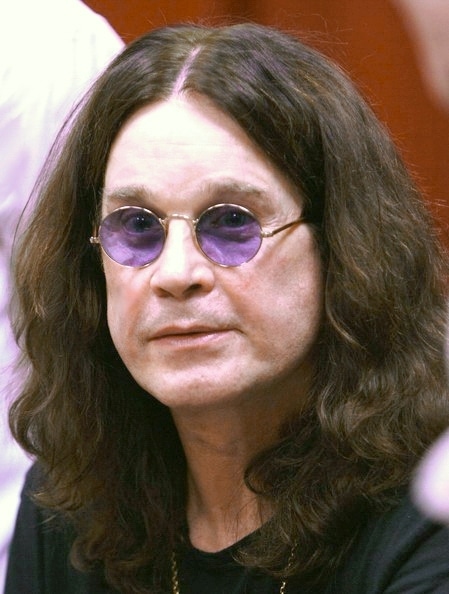
Ozzy Osbourne: The Complete Story
From Black Sabbath to solo superstardom. The full biography of one of rock’s most enduring figures, from Birmingham to the final curtain.
Slaves and Masters by Deep Purple is not the album most fans would choose to represent the band, but it is the album that makes the most sense of the gap between House of Blue Light and The Battle Rages On, and that alone makes it worth a serious, honest listen.