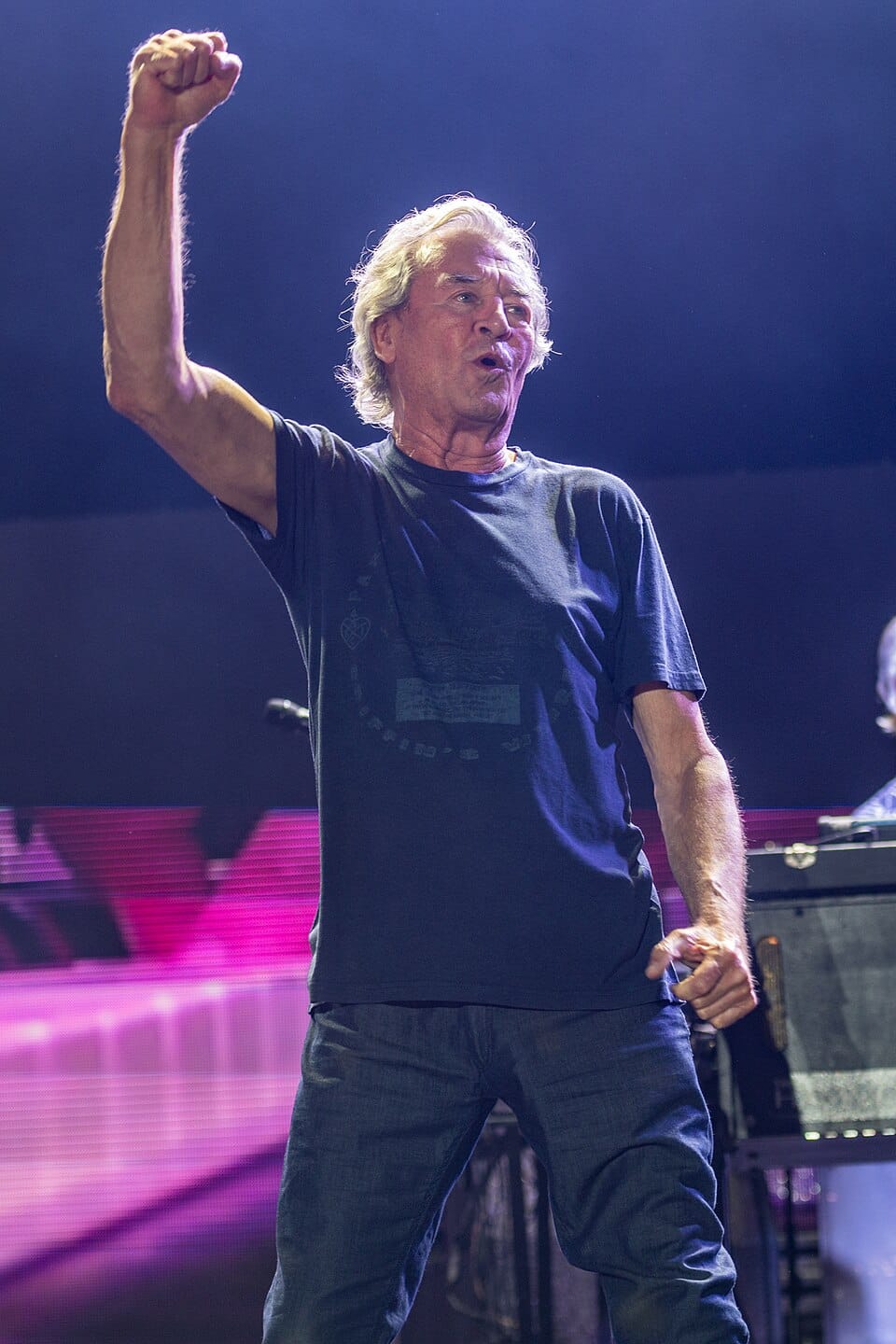
Ian Gillan is one of the most powerful and influential vocalists in the history of hard rock and heavy metal, a singer whose voice helped define an era and reshape what rock music could sound like.
As the lead singer of Deep Purple, he delivered performances on records like Deep Purple in Rock and Machine Head that remain benchmarks for vocal power and range more than five decades later.
From screaming at the top of his register on “Child in Time” to anchoring the iconic riff of “Perfect Strangers,” he has sustained a career that spans multiple Deep Purple lineups, a controversial stint with Black Sabbath, and a rich body of solo work.
This biography covers the full arc of his life and career, from his early days in the London suburbs through his Rock and Roll Hall of Fame induction and beyond.
📋 Table of Contents [+]
Ian Gillan Quick Facts
| Full Name | Ian Gillan |
| Born | August 19, 1945, Hounslow, Middlesex, England |
| Genres | Hard Rock, Heavy Metal, Classic Rock |
| Main Band | Deep Purple |
| Other Bands | Episode Six, Ian Gillan Band, Black Sabbath, Gillan |
| Instruments | Vocals, Harmonica |
| Active Years | 1961 to present |
| Hall of Fame | Rock and Roll Hall of Fame (2016, with Deep Purple) |
| Iconic Songs | “Smoke on the Water,” “Child in Time,” “Highway Star,” “Perfect Strangers” |
Ian Gillan’s Early Life and Musical Beginnings
Growing Up in Hounslow
Ian Gillan was born on August 19, 1945, in Hounslow, a suburb in the western outskirts of London, England.
He grew up in the Chiswick area and showed an early fascination with music, gravitating toward the sounds of American rock and roll that were electrifying British youth throughout the late 1950s.
Artists like Elvis Presley and Chuck Berry made a deep impression on him, and he began developing ambitions to perform well before he had any formal training or band experience.
Like many musicians of his generation, he came of age during the skiffle craze, a genre that gave countless British teenagers their first taste of making music with basic instruments.
Ian Gillan’s Early Bands Before Deep Purple
His first real band experience came in the early 1960s with a series of local groups that gave him invaluable stage time and helped shape his vocal style.
His most significant pre-Deep Purple tenure came with Episode Six, a pop-oriented outfit he joined in 1964 where he served as the group’s lead singer and front man.
Episode Six recorded a series of singles during the mid-to-late 1960s and earned a solid following on the British club circuit, though the band never achieved major commercial success.
It was through Episode Six that he formed a lasting musical partnership with bassist Roger Glover, a collaboration that would prove transformative when both men were invited to join Deep Purple in 1969.
💡 Did You Know?
He sang the role of Jesus Christ on the original 1970 studio recording of Andrew Lloyd Webber and Tim Rice’s “Jesus Christ Superstar,” making him one of the few rock vocalists to leave a permanent mark on both hard rock and musical theatre history.
Joining Deep Purple and the Mark II Lineup
Ian Gillan’s Rise to Rock Stardom
When he and Roger Glover joined Deep Purple in the summer of 1969, the band was at a crossroads, seeking a harder and heavier direction after their early pop-influenced records.
His arrival transformed the band almost immediately, his voice bringing an intensity and raw power that pushed Deep Purple squarely into the emerging world of heavy rock.
The Mark II lineup, consisting of Gillan, Roger Glover, Ritchie Blackmore, Jon Lord, and Ian Paice, is widely regarded as the definitive Deep Purple configuration and one of the greatest rock bands ever assembled.
His debut album with the band, Deep Purple in Rock (1970), announced the new direction with ferocity, with songs like “Speed King” and “Into the Fire” showcasing a vocalist operating at an extraordinary level of power and control.
Child in Time and the Sound That Changed Rock Forever
No single performance better demonstrates his vocal mastery than “Child in Time,” the extended epic from Deep Purple in Rock that builds from a whispered meditation to a screaming crescendo that few vocalists have ever matched.
His ability to sustain and manipulate his upper register during “Child in Time” remains one of the most discussed vocal achievements in classic rock history, a performance that continues to astound listeners hearing it for the first time.
The Fireball album followed in 1971, with him demonstrating greater versatility across tracks ranging from the title track’s hard-charging attack to the more melodic textures of “Strange Kind of Woman.”
Then came 1972 and the recording of Machine Head, an album that would cement both Deep Purple’s legacy and his standing as one of rock’s all-time great vocalists.
The recording sessions for Machine Head took place at the Montreux Casino, a location that burned down during a Frank Zappa concert the night before the band was due to start work, an incident that directly inspired him to write the lyrics to “Smoke on the Water,” one of the most recognizable songs in rock history.
Machine Head also contains “Space Truckin’,” “Lazy,” and the thunderous album opener “Highway Star,” across which he delivers one consistently breathtaking vocal performance after another.
The band’s 1972 live album “Made in Japan” captured him and Deep Purple at a peak of improvisational energy, and that record is frequently cited as one of the greatest live albums ever released.
💡 Did You Know?
Deep Purple earned a certified entry in the Guinness Book of World Records as the world’s loudest rock band, a record set during the height of the Mark II era when he fronted the lineup at London’s Rainbow Theatre.
The Ian Gillan Band and Solo Years
What Ian Gillan Did After Leaving Deep Purple in 1973
The pressures of constant touring and internal tensions within Deep Purple’s Mark II lineup eventually became unsustainable, and he departed the band in 1973, shortly after the troubled recording sessions that produced Who Do We Think We Are.
He spent the mid-1970s stepping back from the intense pace of his Deep Purple years before forming the Ian Gillan Band in 1975, a jazz-fusion-influenced outfit that represented a significant musical departure from hard rock.
The Ian Gillan Band released three studio albums between 1976 and 1978, including “Child in Time,” “Clear Air Turbulence,” and “Scarabus,” all of which showcased a more adventurous and experimental side of his musical personality.
The commercial response to the fusion-oriented direction was lukewarm, and he ultimately dissolved that lineup in 1978 to form a more straightforwardly hard-rocking band simply called Gillan.
Ian Gillan’s Gillan Band Era
The band Gillan found considerably more commercial traction in the United Kingdom, scoring hits and releasing a string of albums between 1978 and 1982 that reconnected him with the hard rock audience that had followed him since his Deep Purple days.
Albums like “Mr. Universe” (1979), “Glory Road” (1980), and “Future Shock” (1981) showed him in strong form, and the band built a devoted following particularly in Britain, where their energetic live shows earned enthusiastic reviews.
The Gillan era produced some of his most underrated work, and fans who dig deeper into his catalog beyond the Deep Purple years are often pleasantly surprised by the quality and consistency of these recordings.
💡 Did You Know?
He and Roger Glover have been musical partners for over six decades, first connecting in Episode Six in 1964, joining Deep Purple together in 1969, and remaining core members of the band to this day, making theirs one of the longest-running partnerships in rock history.
Ian Gillan on Deep Purple’s Songwriting Method (Video)
In this revealing interview, he discusses how Deep Purple’s collaborative songwriting process has remained fundamentally unchanged since the band’s earliest days, offering fascinating insight into how some of classic rock’s most iconic tracks were created.
Ian Gillan and Black Sabbath: The Born Again Years
A Controversial Chapter in Ian Gillan’s Career
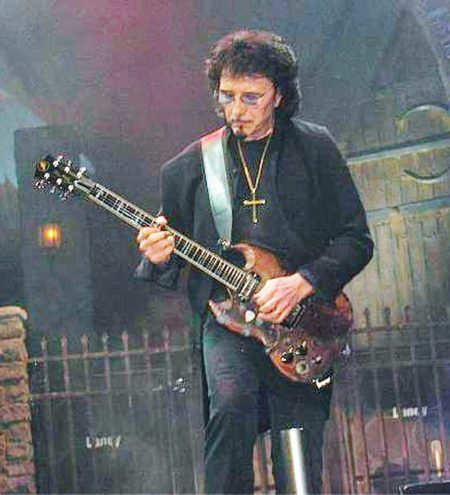
In 1983, Ian Gillan made one of the most unexpected moves of any vocalist in rock history when he agreed to join Black Sabbath, replacing Ronnie James Dio as the band’s lead singer.
The resulting album, “Born Again,” released in 1983, is one of the most polarizing records in either band’s catalog, with a dense, dark production style and a set of songs that divided critics and fans sharply upon release.
He has spoken candidly in interviews about the experience, acknowledging that the collaboration was somewhat chaotic and that his time with Black Sabbath was never intended to be a long-term arrangement.
The “Born Again” tour was notably ambitious in its stage production, featuring a massive replica of Stonehenge that famously became so large it could not fit on most stages, an incident later immortalized in the rock mockumentary “This Is Spinal Tap.”
He departed Black Sabbath in 1984 after the conclusion of the Born Again tour, and while the album remains a curiosity rather than a centerpiece of either artist’s legacy, it stands as one of rock history’s most intriguing experiments.
Ian Gillan Returns to Deep Purple
The Perfect Strangers Reunion
The most celebrated chapter of his post-1973 career began in 1984 when the classic Mark II lineup of Deep Purple reconvened, with Gillan and Roger Glover returning alongside Ritchie Blackmore, Jon Lord, and Ian Paice.
The reunion album Perfect Strangers (1984) was a remarkable achievement, demonstrating that the chemistry between these five musicians had survived more than a decade of separation.
The title track, “Perfect Strangers,” gave him one of his most enduring post-reunion vocal showcases, its building dynamics allowing him to demonstrate that his voice had lost none of its commanding power.
“Knocking at Your Back Door” became another fan favorite from the reunion era, and the album proved commercially successful enough to relaunch Deep Purple as a genuine arena-level act.
The follow-up, The House of Blue Light (1987), kept the momentum going, and he continued recording and touring with Deep Purple through various lineup changes in the years that followed.
When Ritchie Blackmore departed Deep Purple in 1993, the band navigated a transitional period, and the Slaves and Masters era had briefly featured a different vocalist before his return secured the lineup most fans prefer.
Deep Purple’s Mark II core, with Joe Satriani and later Steve Morse taking over guitar duties, continued to produce new music and tour extensively throughout the 1990s and 2000s, with the vocalist remaining the vocal anchor of the entire enterprise.
Ian Gillan’s Voice: Range, Style, and Influence
How Ian Gillan Shaped Hard Rock Vocals
At his peak in the early 1970s, he possessed one of the widest vocal ranges of any rock singer, capable of moving from a warm midrange baritone to piercing upper-register screams with remarkable control and precision.
His technique combined raw power with genuine musicality, allowing him to navigate the complex rhythmic and melodic demands of Deep Purple’s music without sacrificing expressiveness or emotional impact.
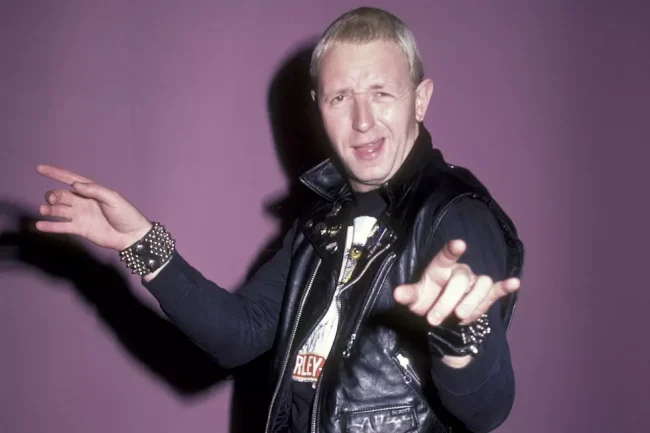
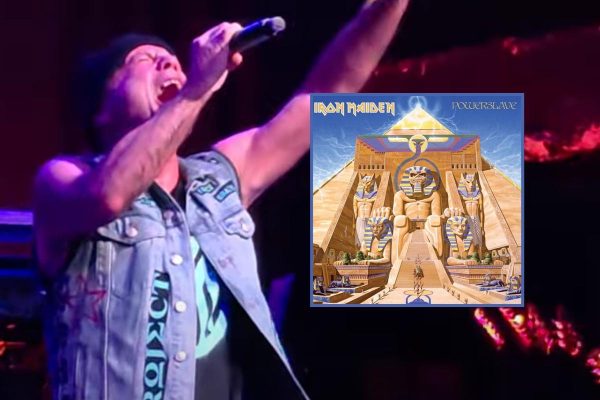
His influence on subsequent generations of hard rock and heavy metal vocalists is profound, with singers including Rob Halford of Judas Priest and Bruce Dickinson of Iron Maiden citing him as a formative influence on their own approaches to the microphone.
What sets the Deep Purple frontman apart from many of his contemporaries is his ability to convey drama and intensity through timbre and phrasing rather than relying purely on volume, a quality that made even his quieter moments feel loaded with meaning.
His work on tracks like “Fireball” demonstrates his rhythmic precision, while performances on “Woman From Tokyo” showcase the melodic sensitivity that is sometimes overlooked in discussions focused on his more incendiary moments.
He has also spoken extensively about the importance of not trying to replicate his 1970s vocal performances note for note in concert, adapting his approach over the decades to work within the range his voice naturally occupies at any given stage of his life.
Ian Gillan’s Legacy and Deep Purple Today
Rock and Roll Hall of Fame Induction
He and Deep Purple were inducted into the Rock and Roll Hall of Fame in 2016, a recognition that had been long overdue given the band’s enormous influence on hard rock and heavy metal as genres.
The induction acknowledged the band’s foundational role in developing the sonic template that countless subsequent acts would draw upon, with his vocal contributions central to that legacy.
Deep Purple has continued to release new music well into the 21st century, with albums like “Whoosh!” (2020) and “=1” (2023) demonstrating that he and his bandmates remain creatively engaged decades after they first made their mark on rock history.
He has also remained active as a public advocate for music education and has participated in various charitable and cultural initiatives over the years that reflect his broader engagement with the music community.
The “Smoke on the Water” riff, which he soundtracked with one of rock’s most indelible vocal melodies, remains among the most recognizable musical phrases ever recorded, introduced to new generations of listeners with each passing decade.
His place in the rock pantheon is secure, but what is perhaps more impressive is that he continues to perform and record at a high level, treating music as a living practice rather than simply a legacy to be preserved and celebrated.
Ian Gillan Recommended Listening
For fans looking to explore his full body of work, these four essential Deep Purple releases capture his range as a vocalist across the most important eras of his career.
Affiliate Disclosure: I am an Amazon affiliate and if you purchase through any amazon links on this site i may earn a small commission at no extra charge to you. This helps support classicrockartists.com and allows me to keep providing deep-dive content on the legends of rock. Thank you for your support!
As an Amazon Associate, I earn from qualifying purchases.

Deep Purple in Rock
1970 — The album that launched an era
Essential hard rock listening
Contains “Speed King,” “Child in Time,” “Into the Fire” — his debut with Deep Purple and one of the genre’s defining records.

Machine Head
1972 — Smoke on the Water and beyond
The pinnacle of the Mark II lineup
Contains “Smoke on the Water,” “Highway Star,” “Lazy,” and “Space Truckin'” — the vocalist at the absolute peak of his powers.

Perfect Strangers
1984 — The reunion that delivered
The classic Mark II lineup returns
He and Deep Purple reunite for an album that proved their chemistry had never faded — “Perfect Strangers” and “Knocking at Your Back Door” are career highlights.

The Very Best of Deep Purple
Compilation — Essential overview
The definitive Gillan era collection
Covers the full arc of his Deep Purple years — the ideal entry point for new listeners and a great companion for long-time fans.
Frequently Asked Questions About Ian Gillan
What is Ian Gillan best known for?
He is best known as the lead vocalist of Deep Purple’s classic Mark II lineup, the voice behind iconic tracks including “Smoke on the Water,” “Child in Time,” “Highway Star,” and “Perfect Strangers.”
Did Ian Gillan really sing for Black Sabbath?
Yes, he served as Black Sabbath’s lead vocalist from 1983 to 1984, recording the “Born Again” album with the band before departing to eventually rejoin Deep Purple.
How many times has Ian Gillan been in Deep Purple?
He has had three distinct tenures with Deep Purple: the classic Mark II era from 1969 to 1973, a brief return in 1984 that produced Perfect Strangers and subsequent albums, and his current ongoing tenure which has made him the band’s longest-serving vocalist by cumulative years.
What is Ian Gillan’s vocal range?
At his 1970s peak, he was widely recognized as a tenor with an exceptionally high upper range, capable of reaching and sustaining notes that placed him among the most technically gifted vocalists in hard rock history.
Is Ian Gillan still with Deep Purple?
Yes, he remains the lead vocalist of Deep Purple as of 2025, continuing to record and tour with the band’s current lineup.
What band was Ian Gillan in before Deep Purple?
He was the lead vocalist of Episode Six, a British pop group he joined in 1964, before he and bassist Roger Glover were recruited to join Deep Purple in 1969.
Ian Gillan’s six decades of performing, recording, and pushing the boundaries of what a rock vocalist can do make him one of the most significant figures the genre has ever produced, and his influence continues to shape hard rock to this day.