

When Alice in Chains released Jar of Flies in January 1994, they accomplished something unprecedented in rock history.
This EP became the first of its format to debut at number one on the Billboard 200.
The achievement marked a creative peak for a band already established as grunge royalty.
Following the massive success of Alice in Chains Dirt (1992), the Seattle quartet faced immense pressure to deliver another heavy masterpiece.
Instead, they retreated inward and emerged with something entirely different.
Alice in Chains Jar of Flies showcased a vulnerable, acoustic-driven sound that expanded the boundaries of what grunge could be.
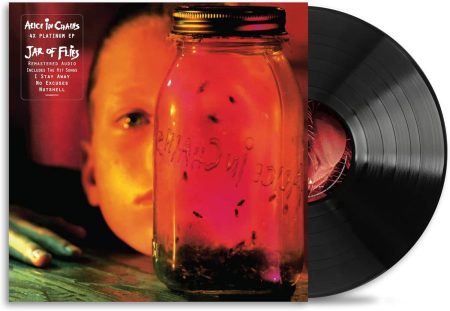
Alice in Chains Jar of Flies – Available on Amazon
Get Alice in Chains Jar of Flies (1994) on Vinyl or CD at Amazon
Affiliate Disclosure: I am an Amazon affiliate and if you purchase through any Amazon links on this site I may earn a small commission at no extra charge to you. This helps support classicrockartists.com. Thank you for your support!
Table of Contents
Overview of Alice in Chains Jar of Flies
Alice in Chains Jar of Flies arrived at a pivotal moment in the band’s trajectory.
The relentless touring cycle behind Dirt had left the band physically and emotionally exhausted.
Layne Staley’s struggles with addiction were intensifying.
Jerry Cantrell was grappling with the weight of sudden fame and creative expectations.
Rather than push through with another full-length album, the band chose a different path.
They booked just seven days at Seattle’s London Bridge Studios with producer Toby Wright.
The goal was simple: create without pressure, explore acoustic textures, and see what emerged.
What came out was seven tracks totaling just over thirty minutes.
Each song carried the weight of melancholy and introspection that had always lurked beneath the band’s heavy exterior.
The EP format allowed for experimentation without the commercial demands of a full album.
Acoustic guitars dominated the sonic landscape, but this was no MTV Unplugged exercise.
The darkness remained intact, perhaps even more pronounced without the distortion to hide behind.
Mike Inez’s bass work provided melodic counterpoints rather than just rhythmic foundation.
Sean Kinney’s drumming showed remarkable restraint and dynamic sensitivity.
The interplay between Alice in Chains Members: Complete Story & Where Are They Now revealed a band operating at peak creative synchronicity.
Cantrell’s guitar work ranged from delicate fingerpicking to soaring electric leads.
Staley’s vocals conveyed vulnerability and pain with devastating clarity.
The harmonies between Staley and Cantrell had never sounded more haunting or beautiful.
Recording History and Production
The recording sessions for Alice in Chains Jar of Flies took place in September 1993.
London Bridge Studios in Seattle had become a second home for the band.
Producer Toby Wright brought a fresh perspective after the band’s work with Dave Jerden on previous albums.
Wright encouraged spontaneity and first-take magic over endless overdubs.
The seven-day timeline created a sense of urgency that paradoxically freed the band creatively.
According to Wikipedia, the entire EP was written and recorded within that single week.
This rapid creation process captured raw emotion that might have been polished away in longer sessions.
Cantrell arrived with several acoustic ideas he had been developing on the road.
The band would jam on these fragments, building arrangements organically in the studio.
Wright’s production emphasized space and atmosphere over density.
Reverb and delay created cavernous environments for the songs to inhabit.
The acoustic guitars were recorded with meticulous attention to tone and placement.
Multiple acoustic tracks were layered to create rich, shimmering textures.
When electric guitars appeared, they were used strategically for maximum emotional impact.
String arrangements on several tracks added cinematic depth without overwhelming the core performances.
The strings were arranged by the band members themselves, maintaining creative control.
Staley’s vocal performances were often captured in just one or two takes.
His voice carried a fragility that felt uncomfortably intimate at times.
The mixing process balanced clarity with the murky emotional undertow the songs required.
Wright’s work earned him a long-term relationship with the band on subsequent releases.
Track-by-Track Highlights of Alice in Chains Jar of Flies
The EP opens with “Rotten Apple,” a slow-burning meditation on decay and disillusionment.
Cantrell’s acoustic guitar establishes a hypnotic pattern that anchors the entire track.
Staley’s opening line, “Innocence is over,” sets the thematic tone for everything that follows.
The song builds gradually, adding layers of texture without ever exploding into aggression.
String arrangements sweep in during the chorus, elevating the melancholy to orchestral heights.
“Nutshell” stands as perhaps the most emotionally devastating song in the Alice in Chains catalog.
Staley’s lyrics confront isolation and self-awareness with brutal honesty.
The line “If I can’t be my own, I’d feel better dead” hits with uncomfortable prescience.
Cantrell’s electric guitar solo soars with a beauty that contrasts sharply with the lyrical despair.
The vocal harmonies between Staley and Cantrell achieve a transcendent quality here.
“I Stay Away” features some of the most distinctive production on the EP.
The talkbox effect on Cantrell’s guitar creates an otherworldly, almost vocal quality.
Strings play a prominent role, giving the track a sweeping, cinematic feel.
The song addresses themes of self-imposed exile and protective isolation.
Its music video, featuring stop-motion animation, became an MTV staple.
Alice in Chains No Excuses (1994) became the EP’s biggest commercial success.
The song’s relatively upbeat tempo and memorable chorus made it radio-friendly.
Yet beneath the accessibility lies Cantrell’s meditation on accountability and personal responsibility.
The guitar tone is warm and inviting, a departure from the band’s typically darker sonic palette.
Staley’s vocal delivery balances resignation with a hint of defiant acceptance.
“Whale & Wasp” serves as a brief instrumental interlude.
The track showcases Cantrell’s classical guitar influences and compositional range.
Its placement in the track sequence provides a moment of reflection before the final two songs.
“Don’t Follow” returns to full-band arrangements with renewed intensity.
Cantrell takes lead vocals on this track, one of his strongest performances with the band.
The lyrics explore themes of independence and the courage to walk away from toxic situations.
Kinney’s drumming drives the song forward with propulsive energy.
The chorus features some of the EP’s most powerful vocal harmonies.
The EP closes with “Swing on This,” a bluesy instrumental that feels like a palate cleanser.
The track’s loose, jammy quality contrasts with the tightly composed songs that precede it.
It ends the EP on a note of musical playfulness rather than emotional devastation.
Chart Performance of Alice in Chains Jar of Flies
Alice in Chains Jar of Flies made history upon its release on January 25, 1994.
The EP debuted at number one on the Billboard 200 chart.
This marked the first time an EP had ever achieved this feat.
The accomplishment demonstrated the band’s commercial power and fan loyalty.
It also proved that audiences were hungry for something different from the grunge giants.
The EP sold over 140,000 copies in its first week.
By March 1994, it had been certified triple platinum by the RIAA.
This rapid certification timeline was extraordinary for a seven-song release.
“No Excuses” became a rock radio staple throughout 1994.
The song reached number one on the Billboard Mainstream Rock chart.
It also crossed over to alternative rock stations, expanding the band’s audience.
“I Stay Away” followed as the second single, also performing well on rock radio.
Its distinctive music video helped maintain the EP’s visibility on MTV.
The commercial success came without any traditional touring support.
The band was taking a break from the road when the EP was released.
This made the chart performance even more remarkable.
Internationally, the EP performed strongly in Canada, Australia, and throughout Europe.
It reached the top ten in multiple countries.
The success of Jar of Flies cemented Alice in Chains as one of the biggest rock bands of the 1990s.
It also set a commercial precedent that few EPs have matched since.
Legacy and Cultural Impact
The legacy of Alice in Chains Jar of Flies extends far beyond its chart achievements.
The EP demonstrated that heavy bands could explore vulnerability without losing credibility.
It influenced countless rock and metal bands to incorporate acoustic elements into their sound.
The success paved the way for other bands to release EPs as legitimate artistic statements.
Prior to Jar of Flies, EPs were often viewed as stopgap releases or collections of B-sides.
Alice in Chains proved the format could be a focused artistic vision.
The emotional honesty of songs like “Nutshell” resonated deeply with fans struggling with similar issues.
Staley’s willingness to expose his pain created a powerful connection with listeners.
The EP’s influence can be heard in the work of bands like Breaking Benjamin, Shinedown, and Seether.
These groups adopted the template of heavy rock balanced with acoustic introspection.
Critics praised the EP for its maturity and artistic growth.
Many reviews noted that the band had expanded their sonic palette without compromising their identity.
The production techniques employed by Toby Wright became a blueprint for atmospheric rock production.
The use of space, reverb, and dynamic contrast influenced producers throughout the late 1990s and beyond.
You can experience the EP’s enduring power in this performance that captures its emotional intensity.
The EP’s themes of isolation, addiction, and emotional struggle remain painfully relevant.
New generations of listeners continue to discover the music and find solace in its honesty.
Tragically, the EP also serves as a document of Staley’s declining health.
Listening with the knowledge of his eventual fate adds layers of heartbreak to already devastating songs.
The EP stands as a testament to what Alice in Chains could achieve when given creative freedom.
It remains one of the most successful and artistically significant EPs in rock history.
Listener’s Note
When I first heard this album in early 1994, I was completely unprepared for its emotional impact.
I had come to Alice in Chains through the heavy riffs of Alice in Chains Facelift (1990) and the crushing darkness of Dirt.
Jar of Flies felt like the band had invited me into a private space of vulnerability.
The opening notes of “Rotten Apple” immediately established a different atmosphere.
This wasn’t the band trying to crush me with heaviness.
Instead, they were sharing something deeply personal and painful.
I remember sitting alone in my room, headphones on, as “Nutshell” played for the first time.
Staley’s voice carried such raw emotion that it felt almost intrusive to listen.
Yet I couldn’t turn away from the honesty he was offering.
The EP became a companion during difficult times in my own life.
There was something comforting in knowing that others felt the same isolation and pain.
Years later, after Staley’s death, returning to these songs became almost unbearable.
The lyrics that once felt cathartic now read like warnings that went unheeded.
But the music itself remains as powerful as ever.
The interplay between Cantrell and Staley represents one of rock’s greatest creative partnerships.
Every time I listen, I discover new details in the arrangements and production.
The EP rewards repeated listening in ways that many full-length albums don’t.
Its brevity works in its favor, creating a concentrated emotional experience.
This is music that demands to be heard in full, from start to finish.
It remains an essential document of 1990s rock and a high-water mark for Alice in Chains.
Affiliate Disclosure: I am an Amazon affiliate and if you purchase through any Amazon links on this site I may earn a small commission at no extra charge to you. This helps support classicrockartists.com and allows me to keep providing deep-dive content on the legends of rock. Thank you for your support!
Collector’s Corner
For collectors and fans looking to own Alice in Chains Jar of Flies, several formats are available.
The original CD release remains widely available and affordable.
Vinyl reissues have been released periodically, with varying quality and pressing details.
The 2020 remaster offers improved sound quality while maintaining the original’s character.
Some deluxe editions pair Jar of Flies with the Sap EP for a complete acoustic experience.
Original promotional materials and posters from the 1994 release have become collectible.
The “I Stay Away” single features alternate mixes and live tracks worth seeking out.
Japanese pressings often include bonus tracks or enhanced packaging.
For the best listening experience, the vinyl format truly showcases the EP’s dynamic range.
The warmth of analog playback complements the acoustic instrumentation beautifully.
Get Alice in Chains Jar of Flies (1994) on Vinyl or CD at Amazon and experience this groundbreaking EP in the format that suits your collection.
Whether you’re a longtime fan or discovering the band for the first time, owning this EP is essential.
It represents a crucial chapter in the Alice in Chains story and 1990s rock history.
FAQ About Alice in Chains Jar of Flies
Is Jar of Flies an album or an EP?
Jar of Flies is technically an EP, containing seven tracks with a runtime of just over thirty minutes.
Despite its EP classification, it achieved commercial success typically reserved for full-length albums.
The distinction became somewhat academic given its cultural impact and chart performance.
Why did Alice in Chains release an acoustic EP?
The band needed a creative break from the heavy touring and recording cycle.
They wanted to explore different sonic textures without the pressure of creating another Dirt.
The acoustic approach allowed them to focus on songwriting and emotional expression.
It also showcased their versatility and depth as musicians and composers.
What is the meaning behind the title Jar of Flies?
The title refers to a childhood experience of Layne Staley’s.
He remembered catching flies in a jar and watching them slowly die.
The image serves as a metaphor for feeling trapped and suffocated.
It perfectly captures the themes of isolation and confinement that run throughout the EP.
Did Alice in Chains tour for Jar of Flies?
The band did not mount a traditional tour specifically for the EP.
They were taking a break from extensive touring when it was released.
However, songs from the EP became staples of their live shows going forward.
The acoustic material translated powerfully to live performances, as evidenced by their MTV Unplugged session later that year.
You Might Also Like
Alice in Chains Would? (1992)
Explore the haunting single from the Singles soundtrack that became one of the band’s signature songs.
Alice in Chains Rooster: Jerry Cantrell’s Letter to His Father
Discover the powerful story behind Jerry Cantrell’s tribute to his Vietnam veteran father.
Alice in Chains Down in a Hole (1992)
Dive into one of Dirt’s most emotionally resonant tracks and its enduring legacy.
Alice in Chains Jar of Flies remains a landmark achievement in rock music, proving that vulnerability and acoustic instrumentation could coexist with the intensity that defined grunge.