

David Clayton-Thomas defined one of rock music’s most ambitious sonic experiments when he stepped to the microphone of Blood, Sweat & Tears in 1968 and delivered a vocal performance that reshaped the relationship between rock, blues, and jazz.
Born David Henry Thomsett on September 13, 1941, in Kingston upon Thames, Surrey, England, he spent more than six decades proving that a voice forged in the clubs of Toronto could command the world’s most prestigious stages.
He died on June 24, 2026, at St. Michael’s Hospital in Toronto, at the age of 84, with publicist Eric Alper confirming the news to CBC.
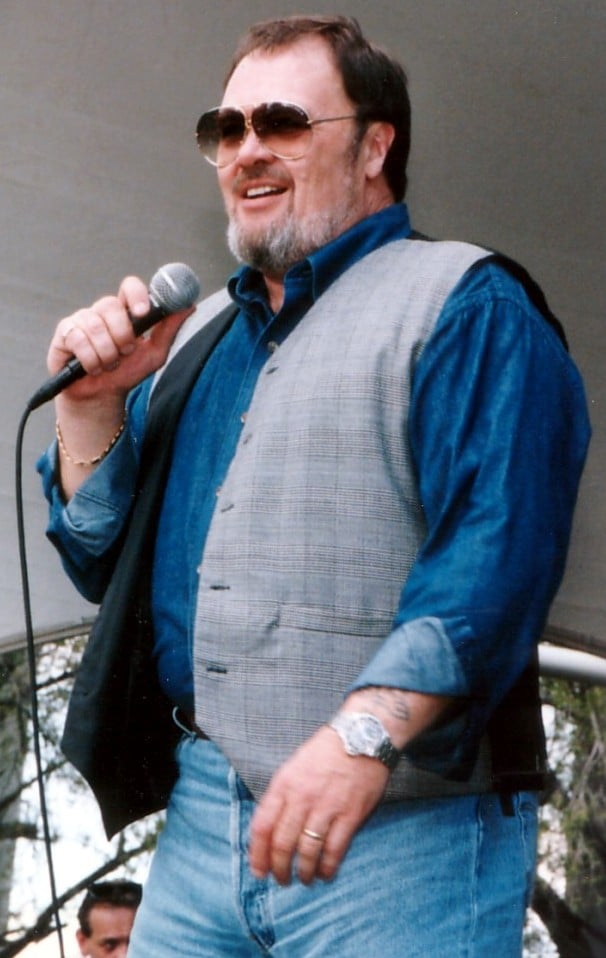
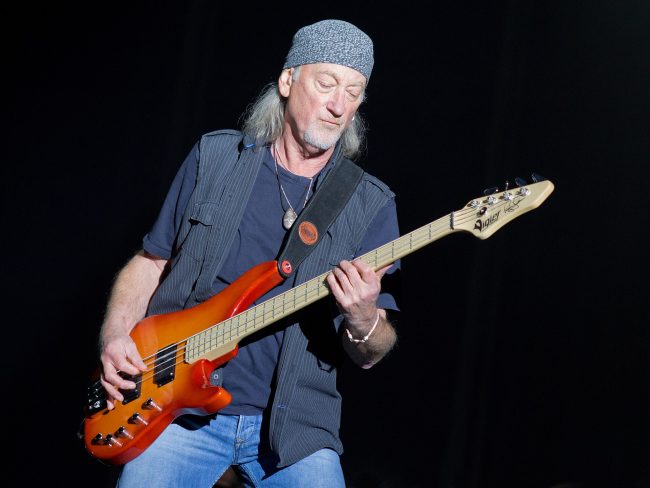
Image via Wikipedia | David Clayton-Thomas
📋 Table of Contents [+]
Early Life and Origins of David Clayton-Thomas
David Clayton-Thomas came into the world through a wartime union that shaped his complicated identity from the start.
His father, Fred Thomsett, was a Canadian soldier stationed in Britain during World War II.
His mother, Freda, was an English music student who met Fred while she was entertaining troops at a London hospital during the war.
When the war ended, the family relocated to Toronto, Canada, and it was there that young David spent his formative years.
By his early teens, life had gone seriously sideways.
He later described himself as a brawling street kid, a petty thief who had slipped through the cracks of the system before he was 14.
Music reached him before anything else could, and it became the framework around which he rebuilt his life.
He absorbed American rhythm and blues through records and radio, drawn to the raw emotive power that would become the foundation of his own sound.
The contrast between his English birthplace and his Canadian upbringing gave him an outsider’s perspective on North American music that few of his contemporaries could replicate.
💡 Did You Know?
David Clayton-Thomas legally changed his surname from Thomsett during his early career in Toronto. The stage name he created would eventually appear on Grammy Award certificates, on albums that sold tens of millions of copies worldwide, and on setlists at the world’s most iconic venues.
Toronto’s Yonge Street and the Club Years
In the early 1960s, David Clayton-Thomas planted himself on Toronto’s Yonge Street, the city’s legendary entertainment strip and one of the most competitive proving grounds for live musical talent in North America.
He was mentored there by Ronnie Hawkins, the rockabilly king who had turned Toronto’s club scene into something that genuinely rivalled what was happening in the American South.
Night after night in those packed clubs, he forged a vocal style of uncommon authority, steeped in the blues tradition and equally capable of drawing on soul and R&B with explosive results.
He fronted several local groups during this period, beginning with a band called The Shays before leading The Bossmen, one of the earliest Canadian rock bands to weave significant jazz influences into their sound.
His path was never clean.
A criminal record in Canada created legal obstacles that would follow him across the border.
He was deported from the United States after overstaying his travel visa, a setback that could have ended the ambitions of a less determined performer.
In 1967, he made the pivotal decision to relocate to New York City, where the music scene was at one of its most explosive creative peaks.
It was there that his particular combination of blues grit and soulful power would finally find the audience it deserved.
How David Clayton-Thomas Joined Blood, Sweat & Tears
The connection that would change everything came through a chance encounter in the clubs of New York City.
Folk singer Judy Collins happened to hear David Clayton-Thomas performing one evening at an uptown venue and was so struck by his voice that she told her friend Bobby Colomby about him.
Colomby was the drummer and co-founder of Blood, Sweat & Tears, a band that had released their debut Columbia Records album, Child Is Father to the Man, before their original lineup began to fracture.
Colomby was impressed enough with Clayton-Thomas’s vocal talent to invite him to join the reformed lineup.
When the new group debuted at the Cafe Au Go-Go in Greenwich Village, the chemistry between the singer and the band was immediate and impossible to ignore.
The key elements were all in place: a horn section that could swing and roar, a rhythm section that never let the groove slip, and at the center of it all, a voice that could strip the paint off the walls.
For David Clayton-Thomas, accepting that invitation transformed him from a respected Toronto club performer into one of the most celebrated frontmen of his generation.
The Grammy-Winning Self-Titled Album
Released in December 1968, the self-titled Blood, Sweat & Tears album established itself immediately as a landmark in late-1960s rock music.
The album topped the Billboard chart for seven consecutive weeks and remained on the chart for an extraordinary 109 weeks in total.
It sold ten million copies worldwide, making it one of the best-selling records of its era.
At the 1970 Grammy Awards, the album claimed five trophies, including Album of the Year and Best Contemporary Vocal Performance, Male.
That latter award was a direct recognition of the extraordinary contribution David Clayton-Thomas had made as the record’s frontman and driving vocal presence.
The album spawned three massive hit singles: “You’ve Made Me So Very Happy,” “Spinning Wheel,” and “And When I Die,” each of which broke into the top tier of the Billboard Hot 100.
The combination of brass arrangements, rock drive, jazz improvisation, and the singular voice of David Clayton-Thomas created a sound unlike anything else in American popular music at the time.
Its influence can be traced through generations of rock and soul artists who discovered it and understood immediately what they were hearing.
💡 Did You Know?
The Blood, Sweat & Tears self-titled album won the Grammy for Album of the Year in 1970, beating out The Beatles’ Abbey Road, which was also nominated that year. It remains one of the most discussed Grammy outcomes of the rock era, a result that still surprises listeners who discover it for the first time.
Woodstock and Global Stardom
Blood, Sweat & Tears performed at the legendary Woodstock festival in August 1969, cementing their status as one of the defining acts of a generation.
With David Clayton-Thomas at the microphone, they headlined at some of the world’s most prestigious venues: the Royal Albert Hall in London, the Metropolitan Opera House, the Hollywood Bowl, Madison Square Garden in New York, and Caesars Palace in Las Vegas.
They also performed at the Newport Jazz Festival, a fitting stage for a group that had merged rock with the improvisational tradition of American jazz so convincingly.
The band’s Greatest Hits album reportedly sold over seven million copies worldwide.
During the years of peak touring, they played audiences across Europe, Australia, Asia, South America, and throughout North America.
David Clayton-Thomas served as the magnetic center of every performance, a frontman with the physical presence and vocal authority to hold any crowd, on any stage, in any country.
The level of recognition he achieved during this period was extraordinary for any musician, let alone one who had arrived in New York only a year before his debut with the band.
David Clayton-Thomas as a Songwriter and Creative Force
David Clayton-Thomas was not only the voice that defined Blood, Sweat & Tears but also one of the band’s most important creative contributors as a songwriter.
“Spinning Wheel,” which he wrote himself, reached No. 2 on the Billboard Hot 100 and became one of the most instantly recognizable songs of its era.
Its swinging, funky groove was perfectly matched to his soulful delivery, and it has remained a staple of classic rock radio for more than five decades.
On Blood, Sweat & Tears 3, he contributed the original “Lucretia MacEvil,” a blues-drenched, swagger-filled composition that showed a more playful dimension of his songwriting range.
Blood, Sweat & Tears 4 featured two more Clayton-Thomas originals: “Go Down Gamblin’,” which broke into the top 40, and “Lisa Listen to Me.”
His songwriting was earthy and direct, rooted in blues storytelling traditions and shaped by everything he had absorbed in the clubs of Toronto and the streets of New York.
His compositions fit the band’s extraordinary instrumental palette in a way that outside songs rarely managed, because he understood the instrument he was writing for from the inside out.
The Eastern Europe Tour Controversy
In the summer of 1970, Blood, Sweat & Tears undertook a State Department-sponsored tour of Eastern Europe that became one of the most damaging chapters in the band’s history.
The tour ran from June to July of that year under the cultural diplomacy program of the Nixon administration, with the band performing across countries then behind the Iron Curtain.
It later became known that the U.S. government had pressured the band into making the tour in exchange for a residency permit for David Clayton-Thomas, whose criminal record in Canada and prior deportation from the United States had left him in a legally vulnerable position.
American rock fans who opposed the Vietnam War viewed the association with the Nixon government as a betrayal of rock’s countercultural values.
The resulting backlash damaged the band’s reputation significantly on their home turf and hastened a commercial decline from which they never fully recovered.
The full story of this episode was explored in the 2023 documentary What the Hell Happened to Blood, Sweat & Tears?, which brought the controversy to a new generation of listeners.
It stands as a reminder that even the most successful artistic partnerships can be compromised by the political pressures of their moment.
Life After the Storm: BS&T Through the 1970s
Through the 1970s, David Clayton-Thomas maintained a complex and evolving relationship with Blood, Sweat & Tears, departing for solo work and then returning to front the band.
He left in 1972, exhausted by years of relentless touring, and recorded the solo album Harmony Junction for RCA Records in 1974.
He returned to lead Blood, Sweat & Tears on the 1975 Columbia release New City and the 1976 follow-up More Than Ever.
The band released Brand New Day on the ABC label in 1977, and Clayton-Thomas issued a solo album titled Clayton on the same label the following year.
In 1980, Blood, Sweat & Tears released Nuclear Blues on MCA Records with Clayton-Thomas once again as frontman.
Columbia later issued the double live album Blood, Sweat & Tears: Live and Improvised with him leading the band.
Across these years of lineup changes and shifting commercial fortunes, David Clayton-Thomas remained the one voice that most listeners associated with the Blood, Sweat & Tears sound, even as the band’s commercial peak receded into memory.
The Solo Career of David Clayton-Thomas
The solo career of David Clayton-Thomas unfolded in parallel with his work fronting Blood, Sweat & Tears, offering a more intimate window into his blues and jazz influences.
His debut solo album, Harmony Junction, released on RCA Records in 1974, showed a performer comfortable with a wider range of musical contexts than the band recordings had suggested.
His 1978 ABC Records release, Clayton, continued that exploration, leaning into the blues tradition that had first captured his imagination on Toronto’s Yonge Street.
Following his return to Toronto in 2004, he became arguably more productive as a solo artist than he had been at any earlier point in his career.
He assembled an All-Star 10-piece band and released nearly a dozen albums under his own name over the following two decades.
Those recordings showed an artist fully at peace with his roots, exploring new compositions while honoring the blues, soul, and jazz traditions that had defined his sound from the beginning.
His later work earned consistent critical praise, particularly for the sustained power and authority of his voice, which remained a formidable instrument well into his eighties.
💡 Did You Know?
David Clayton-Thomas was inducted into the Canadian Music Hall of Fame in 1996, and his career accumulated record sales estimated at over 40 million copies worldwide. He also wrote a memoir titled Blood, Sweat and Tears, which detailed his rise from a troubled youth on the streets of Toronto to international stardom as one of rock’s most powerful voices.
Return to Toronto: David Clayton-Thomas in His Final Years
In 2004, after spending decades based in New York, David Clayton-Thomas made the decision to return to Toronto, the city that had first shaped his voice and launched his career.
Back in Canada, he threw himself into the most prolific recording phase of his life, working steadily with his All-Star band and connecting with Canadian audiences who had never stopped claiming him as one of their own.
He continued to tour and perform with remarkable energy, his voice remaining a powerful and deeply emotive instrument through his seventies and into his eighties.
Those final years were marked by creative output and stage presence that confounded the expectations of those who assumed his best years were behind him.
He remained an active and committed artist right up to the end, sustained by the blues and jazz traditions that had driven him through more than six decades in classic rock.
The Death and Legacy of David Clayton-Thomas
David Clayton-Thomas died peacefully on the evening of June 24, 2026, at St. Michael’s Hospital in Toronto, at the age of 84.
His publicist Eric Alper confirmed the news to CBC, and while no specific cause of death was publicly disclosed, all reports confirmed the passing was peaceful.
As classic rock news of his death spread, tributes poured in from musicians, critics, and fans across North America and around the world.
His impact on popular music was never limited to the Grammy-winning peak years of 1968 to 1970, though those years produced some of the most memorable recordings in American rock history.
He represented a generation of artists who believed that rock could carry the emotional weight of the blues and the structural sophistication of jazz without losing its visceral power.
The self-titled Blood, Sweat & Tears album he fronted remains one of the most celebrated records in American music history, a landmark that sold ten million copies and introduced listeners to a sound they had never encountered before.
His voice, simultaneously rough and soaring, blues-soaked and soulfully wide open, was a once-in-a-generation instrument that could command any room he walked into.
The records he made with Blood, Sweat & Tears and under his own name will continue to reach new listeners who encounter that voice for the first time and understand immediately what made it extraordinary.
People Also Ask
What is David Clayton-Thomas best known for?
David Clayton-Thomas is best known as the lead vocalist of Blood, Sweat & Tears, whose 1968 self-titled album won five Grammy Awards including Album of the Year. His voice on hit singles “Spinning Wheel,” “You’ve Made Me So Very Happy,” and “And When I Die” defined the jazz-rock sound of the late 1960s and reached audiences of tens of millions worldwide.
How did David Clayton-Thomas die?
David Clayton-Thomas died on June 24, 2026, at St. Michael’s Hospital in Toronto, at the age of 84. His publicist Eric Alper confirmed the death to CBC. No specific cause of death was publicly disclosed, and all reports confirmed the passing was peaceful.
What Grammy Awards did Blood, Sweat & Tears win?
Blood, Sweat & Tears won five Grammy Awards at the 1970 ceremony, including Album of the Year and Best Contemporary Vocal Performance, Male, the latter awarded directly to David Clayton-Thomas. The awards recognized their self-titled 1968 album, which topped the Billboard chart for seven consecutive weeks and sold ten million copies worldwide.
Who wrote “Spinning Wheel”?
David Clayton-Thomas wrote “Spinning Wheel,” which appeared on the Blood, Sweat & Tears self-titled album in 1968 and reached No. 2 on the Billboard Hot 100. The song remains one of the most recognizable recordings of the jazz-rock era and one of the most enduring compositions of his career.
What was David Clayton-Thomas’s real name?
David Clayton-Thomas was born David Henry Thomsett on September 13, 1941, in Kingston upon Thames, Surrey, England. He legally changed his name to David Clayton-Thomas during his early career as a performer in Toronto, and the stage name became one of the most recognized in classic rock history.
Was David Clayton-Thomas Canadian?
David Clayton-Thomas was British-born but grew up in Toronto, Canada, and spent most of his life there. He is widely regarded as a Canadian artist and was inducted into the Canadian Music Hall of Fame in 1996. He returned to Toronto permanently in 2004 and remained based there until his death in 2026.
Watch: David Clayton-Thomas Live
Essential Listening
The music of David Clayton-Thomas spans six decades and dozens of recordings, but for any new listener the 1968 Blood, Sweat & Tears self-titled album is the essential starting point.
From there, the Greatest Hits collection offers the clearest overview of his commercial peak, while the deeper discography reveals an artist who never stopped pushing his sound forward across the 1970s and beyond.
Affiliate Disclosure: I am an Amazon affiliate and if you purchase through any amazon links on this site i may earn a small commission at no extra charge to you. This helps support classicrockartists.com and allows me to keep providing deep-dive content on the legends of rock. Thank you for your support!
As an Amazon Associate, I earn from qualifying purchases.

Blood, Sweat & Tears (1969)
The Grammy-winning self-titled album
Won 5 Grammy Awards including Album of the Year
Three top-5 singles: Spinning Wheel, You’ve Made Me So Very Happy, And When I Die
Ten million copies sold worldwide

Blood, Sweat & Tears Greatest Hits
The definitive collection of their best work
Over 7 million copies sold worldwide
All essential tracks in one collection
The ideal introduction to Clayton-Thomas’s vocal range

Blood, Sweat & Tears Limited Edition
Collector’s edition with expanded content
Rare alternate takes and bonus material
Expanded liner notes with full band history
For dedicated collectors and longtime fans

What Goes Up: Best of Blood, Sweat & Tears
Career-spanning compilation
Spans the full arc of their recording career
Includes deep cuts beyond the obvious hits
Essential for any classic rock record collection
You Might Also Like
There are voices in rock history that define an era, and there are voices that define a genre, but very few manage both, and fewer still sustain that power across six decades of performing.
David Clayton-Thomas was one of those rare few, a singer who arrived in New York with nothing but a voice and a history of bad decisions, and left it as one of the most decorated and beloved vocalists North America has ever produced.