

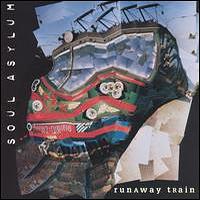
Runaway Train by Soul Asylum reached number five on the US Billboard Hot 100 in 1993 and became the breakthrough single from Grave Dancers Union, the Columbia Records album that brought the Minneapolis band its first mainstream commercial audience after nearly a decade of independent recording.
Written by vocalist Dave Pirner and produced by Michael Beinhorn, the song addressed despair, alienation, and the feeling of being unable to stop a destructive momentum, and its music video became as significant as the recording itself by featuring photographs of real missing persons.
Affiliate Disclosure: As an Amazon Associate I earn from qualifying purchases. This helps support the site at no extra cost to you.
| Song | Runaway Train |
| Artist | Soul Asylum |
| Album | Grave Dancers Union (1992) |
| Written by | Dave Pirner |
| Produced by | Michael Beinhorn |
| Released | 1993 |
| Genre | Alternative Rock, Post-Grunge |
| Chart Peak | #5 US Billboard Hot 100, #7 UK Singles Chart |
Table of Contents
Background and History
Soul Asylum formed in Minneapolis, Minnesota in 1981 under the name Loud Fast Rules, building a following in the Midwest punk and alternative scene through relentless touring and independent releases on Twin/Tone Records.
The band signed to A&M Records in 1988 and released two albums that built their critical reputation without achieving mainstream commercial success, before moving to Columbia Records for Grave Dancers Union.
Producer Michael Beinhorn, who had worked with Red Hot Chili Peppers and Soundgarden, brought a harder, more polished sound to the album than Soul Asylum’s earlier recordings while preserving the emotional directness of Dave Pirner’s songwriting.
Runaway Train emerged as the track most capable of connecting with a mainstream audience, combining Pirner’s confessional lyric with a melodic accessibility that Beinhorn’s production could place on rock radio without compromising the song’s emotional weight.
Runaway Train and the Missing Persons Video
The music video featured photographs and information about real missing persons, an approach that distinguished it from virtually every other rock video of the period and gave the song a social context that extended well beyond its lyrical themes.
The video was directed by Tony Kaye and featured photographs of young people who had disappeared, with contact information for families and law enforcement displayed alongside each image.
Within the first year of the video’s release, twenty-six of the missing persons featured in it had been found, a direct outcome that attracted significant media attention and turned the song’s commercial success into something with genuine humanitarian consequences.
Multiple regional versions of the video were produced for different countries, featuring missing persons from those specific areas, a logistical undertaking that required coordination with law enforcement and advocacy organizations across several countries.
The video won the Grammy Award for Best Music Video, Short Form, and its approach has been cited as one of the earliest and most effective examples of a commercial music product being used to address a social issue through mass media.
Runaway Train and the Recording Story
This tune opens with an acoustic guitar figure that establishes its melodic foundation before Pirner’s vocal enters with the weariness and resignation that the lyric requires from its opening line.
Michael Beinhorn’s production builds the arrangement carefully through verse into chorus, maintaining the acoustic warmth of the opening while adding electric guitar and a fuller rhythm section that gave the track its radio presence without overwhelming the intimacy of Pirner’s delivery.
Pirner’s vocal performance on the track is restrained rather than dramatic, a quality that matched the lyric’s sense of exhausted momentum and distinguished the song from the more theatrical alternative rock of the same period.
The production approach connected to the same post-grunge alternative sound that Live and Collective Soul were navigating simultaneously, placing emotionally direct writing inside a guitar-driven arrangement that maintained rock credibility while reaching pop radio.
The combination of melodic accessibility, emotional honesty, and Beinhorn’s production gave Runaway Train a sound that crossed format boundaries more effectively than Soul Asylum’s previous recordings had managed.
Runaway Train and the Charts
Runaway Train reached number five on the US Billboard Hot 100 and number seven on the UK Singles Chart, the highest chart positions in Soul Asylum’s career and a commercial performance that reflected the song’s crossover from alternative to mainstream radio.
Grave Dancers Union was certified two times platinum in the United States, a commercial achievement that transformed the Minneapolis band from a respected independent act into a mainstream rock presence.
The song’s Grammy Awards, including Best Rock Song for Pirner’s composition and Best Music Video for the missing persons video, added industry recognition to the commercial success and helped sustain the album’s chart position through the second half of 1993.
The chart performance placed Soul Asylum in the same commercial tier as other mid-1990s alternative breakthrough acts, confirming that a band with a decade of independent credibility could translate that foundation into mainstream commercial success when given the right song and production.
Lasting Legacy
Runaway Train is the Soul Asylum recording most immediately recognized by listeners outside their original alternative fanbase and the song that most clearly demonstrates what distinguished the band from their Minneapolis contemporaries.
The missing persons video gave the song a legacy that extended well beyond its chart performance, and the direct humanitarian outcomes of its broadcast established a model for how music video production could be used to address social issues through commercial media distribution.
Soul Asylum continued recording and touring through the 1990s and into the 2000s and beyond, enduring the death of bassist Karl Mueller from cancer in 2005 and continuing as a working band with this song remaining the centerpiece of their live sets.
Dave Pirner’s songwriting on the track, recognized with a Grammy for Best Rock Song, is frequently cited as one of the more effective examples of confessional alternative rock writing in the 1993 commercial landscape.
More than thirty years after its release, Runaway Train endures as the Soul Asylum recording that turned a decade of independent credibility into mainstream commercial success, and as one of the few pop songs whose promotional video produced measurable real-world humanitarian outcomes.
Watch the Official Video
Frequently Asked Questions
FAQ
- What is Runaway Train about?
- Dave Pirner wrote the song about despair, alienation, and the feeling of being unable to stop a destructive momentum. The lyric addresses the experience of knowing something is wrong and feeling powerless to change its direction, using the runaway train as a metaphor for a life or situation that has escaped the control of the person living it.
- What happened with the Runaway Train video and missing persons?
- The music video directed by Tony Kaye featured photographs and information about real missing persons, with contact details for families and law enforcement displayed alongside each image. Within a year of the video’s release, twenty-six of the missing persons featured in it had been found. Multiple regional versions were produced for different countries, featuring missing persons from those specific areas.
- What album is Runaway Train from?
- The song appears on Grave Dancers Union, Soul Asylum’s Columbia Records debut, produced by Michael Beinhorn and released in 1992. The album was certified two times platinum in the United States and transformed the Minneapolis band from a respected independent act into a mainstream rock presence.
- How many Grammys did Runaway Train win?
- The song won two Grammy Awards: Best Rock Song for Dave Pirner’s composition and Best Music Video, Short Form, for the missing persons video. The double win reflected both the quality of the recording and the unprecedented humanitarian impact of its promotional video.
- Is Soul Asylum still together?
- Soul Asylum has continued as a working band through various lineup changes, including the death of bassist Karl Mueller from cancer in 2005. Dave Pirner has remained the constant through multiple incarnations of the band, continuing to record and tour with Runaway Train as the centerpiece of their live performances.
You Might Also Like


With a video that found twenty-six real missing people and a lyric that gave the despair of a generation a melodic form radio could not stop playing, Runaway Train stands as the Soul Asylum recording that turned a decade of independent credibility into mainstream success and proved that a rock song’s promotional reach could produce consequences that lasted well beyond the chart cycle.