

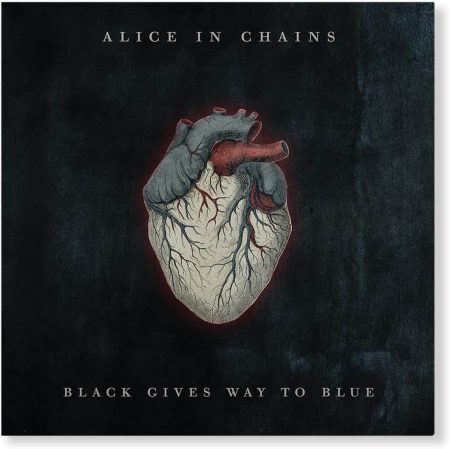
“Alice in Chains Your Decision” arrived as the second single from Black Gives Way to Blue in November 2009, and it went straight to number one on rock radio without a single distorted chord to carry it.
For anyone who had followed this band through the nineties, that chart position meant something far beyond a sales figure.
Quick Navigation
- Alice in Chains Your Decision: A No. 1 Hit Nobody Expected
- The 90s Shadow That Never Left
- After Layne: William DuVall Joins the Band
- Alice in Chains Your Decision: Jerry Cantrell Sings the Wound
- The Acoustic Thread Running Through AIC’s DNA
- Inside the Recording: Studio 606 and Nick Raskulinecz
- Alice in Chains Your Decision: What the Lyrics Say
- Black Gives Way to Blue: The Comeback Album
- Alice in Chains Your Decision: Where It Stands Today
- You Might Also Like
Alice in Chains Your Decision: A No. 1 Hit Nobody Expected
When “Your Decision” was released in late 2009, rock radio had spent years without Alice in Chains on regular rotation.
Layne Staley had been dead for seven years.
The band had not released a studio album since the self-titled record in 1995.
The fact that a quiet, acoustic-driven song could climb to the top of the rock charts told you the hunger was real and the audience had not moved on.
It peaked at No. 1 on the Billboard Hot Rock Songs chart and the Mainstream Rock chart, and it topped the equivalent Canadian rock chart as well.
On the Alternative Songs chart it reached No. 4.
The song also appeared as downloadable content for Rock Band in January 2010 and turned up in CSI, season 10, episode 8, putting it in front of an audience far beyond the rock faithful.
For a band returning after a fourteen-year recording absence, those numbers were not a comeback.
They were a reclamation.
The 90s Shadow That Never Left
To understand what “Your Decision” means, you have to go back to what Alice in Chains were in the nineties.
They emerged from Seattle at the turn of the decade, cutting their teeth on tracks like “Man in the Box” and building a catalog defined by the tension between Jerry Cantrell’s guitar and Layne Staley’s vocals.
While Nirvana brought the anger and Pearl Jam brought the earnestness, Alice in Chains brought something closer to dread.
Their 1992 album Dirt went to places other grunge records would not touch.
The twin-vocal harmonies Cantrell and Staley developed created a sound that felt like two people holding each other up at the edge of something terrible.
That sound defined the band’s identity for a decade, and it also made their silence after 1996 feel permanent.
When Staley died in 2002, many people assumed that was the end.
The music from that decade would remain, and the band would not.
That assumption turned out to be wrong.
After Layne: William DuVall Joins the Band
Layne Staley died on April 5, 2002, found in his Seattle apartment on April 19.
The remaining members, Jerry Cantrell, Mike Inez, and Sean Kinney, did not perform together for several years.
When they began touring again in 2005, they cycled through guest vocalists before finding the right fit in William DuVall, a guitarist and singer from the Atlanta band Comes with the Fall.
DuVall made his first live appearance with Alice in Chains in August 2006.
His voice is not Staley’s voice, and he has never tried to make it so.
What DuVall brought was his own character: warmer in timbre, more direct in phrasing, fully capable of finding the harmonic spaces that Cantrell’s voice leaves open.
On “Your Decision,” DuVall contributes backing vocals and acoustic rhythm guitar.
He does not attempt to dominate the song.
That restraint shows he understood exactly what the track needed and what it did not.
Alice in Chains Your Decision: Jerry Cantrell Sings the Wound
Jerry Cantrell wrote “Your Decision” and sang it.
The song is built on acoustic guitar, and the melody sits in a mid-range that suits Cantrell’s voice without pushing it toward anything strained.
His delivery is measured, almost conversational, which gives the lyric room to settle rather than demand.
Cantrell and the rest of the band have described the song’s themes as being about “choices and their consequences.”
They did not elaborate publicly beyond that, and they did not need to.
Listeners who had followed the band through the nineties understood what those choices referred to.
The song carries the weight of watching someone make decisions that lead away from help.
That subject had been present in Alice in Chains’ music since the early nineties, but “Your Decision” approaches it with a quietness the earlier records never had.
There is grief in the song, but also a hard clarity.
You can offer someone a way out, the lyric says, but you cannot make the choice for them.
The Acoustic Thread Running Through AIC’s DNA
Alice in Chains were never just a heavy band.
The January 1994 Jar of Flies EP was almost entirely acoustic, and it became the first EP in history to debut at No. 1 on the Billboard 200.
Tracks like “Nutshell” and “No Excuses” from those sessions proved the band could hold an audience with restraint as readily as with volume.
“Your Decision” belongs directly to that tradition.
It is not a softer version of a heavier song.
It is a song that could only have worked in this form, one where every note has to earn its place because there is nothing else filling the space.
The clean, deliberate guitar work carries the emotional weight that a distorted track might bury beneath texture and noise.
In that respect, “Your Decision” connects back to the Jar of Flies sessions across a fifteen-year gap and proves that the instinct for restraint survived the long absence.
Inside the Recording: Studio 606 and Nick Raskulinecz
The band recorded Black Gives Way to Blue between October 2008 and March 2009 at two Los Angeles locations.
They began at Studio 606 in Northridge, Dave Grohl’s facility, and later moved to Henson Recording Studios in Hollywood.
Producer Nick Raskulinecz had worked extensively with Foo Fighters and Rush before these sessions.
His understanding of how to capture both loud and quiet sounds within the same record made him a natural choice for an album that needed to hold both extremes without one cancelling the other out.
The band self-funded the initial recording without a label deal in place.
That financial independence gave them creative room that a label-funded session might have narrowed.
The album was completed on March 18, 2009, which was Jerry Cantrell’s birthday and, by coincidence, also the day William DuVall’s son was born.
It was released through Virgin and EMI on September 29, 2009.
Alice in Chains Your Decision: What the Lyrics Say
The song’s message is one of clear-eyed refusal to accept blame for someone else’s choices.
The narrator watches someone spiral and refuses to carry guilt for an outcome they did not cause.
There is no cruelty in that refusal, only honesty.
The lyrical approach matches the acoustic arrangement: no theatrics, no overstatement, just a statement made quietly and left to stand on its own.
That is the title.
Your decision.
The music video, directed by Stephen Schuster and shot at a Malibu mansion, takes a more abstract approach, depicting a party with surreal and unsettling imagery.
The visual language does not map directly onto the lyric, which leaves the song free to carry its own meaning independent of the visuals.
For a band that had spent years at the center of conversations about addiction and loss, choosing that kind of restraint in how they presented the song was its own statement.
Black Gives Way to Blue: The Comeback Album
“Your Decision” was not the only significant track on the record.
“Check My Brain,” the lead single, referenced in its Wikipedia entry as Cantrell’s commentary on his 2003 move from Seattle to Los Angeles, was harder and louder, establishing that the band had not gone all-acoustic.
The album’s title track is a direct tribute to Layne Staley, featuring piano played by Elton John, recorded in Las Vegas in April 2009.
“Last of My Kind” was the only track where DuVall took the lead vocal.
Black Gives Way to Blue debuted at No. 5 on the Billboard 200, selling 126,000 copies in its first week.
It was eventually certified Gold in the United States with over half a million sales.
Metal Hammer gave it a perfect 10 out of 10.
The album did not pretend Staley had never existed.
It acknowledged the loss and moved forward anyway, which is one of the harder things a band in that position can do.
It worked.
Alice in Chains Your Decision: Where It Stands Today
More than fifteen years after its release, “Your Decision” holds its position as one of the standout acoustic tracks in the band’s full catalog.
It sits comfortably alongside the Jar of Flies material without sounding like an imitation of it.
That is not a small achievement for a song recorded when the band had so much to prove.
Jerry Cantrell has continued to build on the foundation this era established, with his solo work and touring in 2025 confirming that his place in rock remains active and relevant.
William DuVall has grown fully into the role the band needed, finding his own place within a group previously defined by another voice.
For anyone discovering Alice in Chains today, “Your Decision” is one of the better entry points: stripped back, emotionally honest, and representative of everything the band does well when they operate without distortion.
Visit aliceinchains.com for the band’s current news, releases, and tour information.
For anyone who lived through grunge the first time, Alice in Chains Your Decision is the song that proved something you hoped was true: that what made this band great had survived everything the nineties put them through.
Disclosure: As an Amazon Associate, ClassicRockArtists.com earns from qualifying purchases at no additional cost to you.
Own a piece of this era: Get Black Gives Way to Blue on Amazon.