

Ian Paice is the one constant in Deep Purple’s history, the drummer who has been present in every lineup the band has ever fielded, from the original 1968 formation all the way through to the current era.
While vocalists, guitarists, and keyboardists have come and gone across more than five decades, Ian Paice has remained at the drum kit, providing the rhythmic foundation that has made Deep Purple one of the most powerful live acts rock has ever produced.
He is not the most celebrated name in the band’s story, and that suits him perfectly.
This is the biography of a musician who understood from the beginning that the drummer’s job was to make everyone else sound better, and who has spent his entire career proving how much that matters.
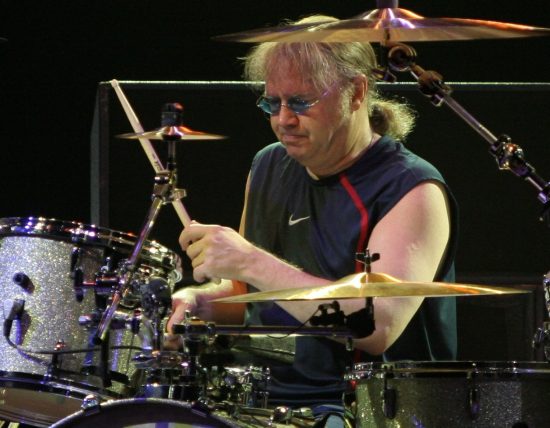
Image credit: Wikimedia Commons
📋 Table of Contents [+]
Early Life and Musical Roots
Ian Anderson Paice was born on June 29, 1948, in Nottingham, England.
When he was three years old, his father’s work took the family to Germany for three years, living in Cologne and Berlin before returning to England when Ian was six.
The family settled in Bicester, near Oxford, where Ian would spend his formative years.
His father, Keith, was a pianist who had played in dance bands before the war, performing big band swing and jazz on the Saturday dinner-and-dance circuit, and that music was always on the record player at home.
Big band swing, piano jazz, and the great vocalists of an earlier era all filtered into Ian’s consciousness before he ever picked up a drumstick, giving him a rhythmic vocabulary far broader than most rock musicians of his generation.
He started out trying the violin, without much success.
As he later recalled, he couldn’t play it properly, so he turned it upside down and started hitting it, which told him everything he needed to know about where his instincts actually lay.
At fifteen, he sold the violin and bought his first proper drum kit, a red glitter Gigster, for £32, and immediately began sitting in with his father’s dance band on the Saturday night circuit.
That early exposure to live performance, playing for an actual audience in a working band context, gave Ian Paice a steadiness and a professional mentality that would define his approach to drumming for the rest of his career.
💡 Did You Know?
Ian Paice is left-handed and plays on a completely left-handed drum setup, one of the very few major rock drummers to do so. Most left-handed drummers either learn to play right-handed or adapt to a mirrored kit. Paice has played left-handed throughout his entire career, which is part of what gives his style its distinctive visual signature on stage.
Georgie and the Rave-Ons Through to The Maze
Ian Paice’s first rock band was Georgie and the Rave-Ons, a local group that played around the Oxford area in the early 1960s.
The band later changed its name to the Shindigs, and it was during this period that Paice first began to build a reputation as an unusually gifted drummer for his age.
He left the Shindigs in 1966 to join MI5, a club band that quickly changed its name to the Maze.
The Maze was a working professional unit that toured seriously, including dates in Germany where the band played in Hamburg, and it was during one of those Hamburg runs that a pivotal moment occurred.
Ritchie Blackmore, who was also in Hamburg at the time, saw Ian Paice play and was immediately struck by what he heard.
Blackmore later said that he had spent about a year looking for Ian Paice after that Hamburg encounter, describing him as an incredible drummer and the motor of the band.
The Maze also featured vocalist Rod Evans, and it was Evans who would make the connection between this working club band and the group that was about to become Deep Purple.
Ian Paice Joins Deep Purple
In early 1968, Rod Evans saw an advertisement in the Melody Maker magazine seeking a vocalist for a new band being assembled by Ritchie Blackmore and Jon Lord.
Evans went to the audition and brought Ian Paice along with him.
When Blackmore saw Evans arrive, he asked whether Ian Paice was still playing with him, and immediately insisted that Paice be given an audition for the drum seat.
Deep Purple had already identified a preferred drummer, but that musician had expressed reservations about the band’s musical direction, and the spot was open.
Ian Paice auditioned and got the job, joining Deep Purple at nineteen years old in March 1968.
He has been the band’s drummer ever since, playing through every lineup change, every dissolution, and every reunion without a single absence from the drum riser.
That record, spanning more than five decades of continuous membership through twelve or more distinct lineup configurations, is without parallel in rock music history.
The Mark I Era: Deep Purple’s First Chapter
The original Deep Purple lineup, which included vocalist Rod Evans and bassist Nick Simper alongside Paice, Blackmore, and Jon Lord, entered the studio quickly and released their debut album, Shades of Deep Purple, in 1968.
The album generated a genuine American hit with a cover of Joe South’s “Hush,” which reached the top five in the United States and established Deep Purple as a commercially viable act in North America.
Paice’s drumming on the Mark I recordings was already fully formed: precise, powerful, and rooted in the jazz and big band traditions his father had passed down to him, but delivered with rock force.
The Mark I lineup recorded three studio albums, including The Book of Taliesyn and the self-titled third record, before personnel changes brought in vocalist Ian Gillan and bassist Roger Glover in 1969.
Ian Paice was the only member retained from the original lineup alongside Jon Lord and Ritchie Blackmore as Deep Purple prepared for its most celebrated chapter.
Ian Paice’s Drumming Style and Influences
Ian Paice is one of the few hard rock drummers whose playing draws explicitly and audibly from jazz and swing traditions rather than treating rock drumming as a separate discipline.
His primary influence was Buddy Rich, the jazz big band drummer widely regarded as the greatest technical drummer in history, and that influence is evident in the speed, clarity, and lightness of touch that Paice brings even to the heaviest passages.
He also absorbed the precision of the best studio drummers of the 1960s, and his ability to lock into a groove without rushing or dragging set him apart from the more instinct-driven approach of many of his hard rock contemporaries.
Steve Morse, who played guitar with Deep Purple for more than two decades, described Paice with a comparison that captured his quality perfectly: “He’s like a real heavy Ringo. He’s just so good on the drums, but doesn’t want to make a big deal about it.”
That combination of jazz-inflected timing, rock power, and absolute absence of ego is exactly what made Ian Paice the ideal drummer for a band as musically ambitious as Deep Purple.
Ritchie Blackmore’s assessment was equally direct: Paice was the motor of the band, the mechanism that made everything else run.
Chad Smith of the Red Hot Chili Peppers is among the more prominent musicians to have publicly named Ian Paice as an influence, a reminder that his impact extends well beyond the classic rock world.
💡 Did You Know?
Ian Paice’s wife Jacky is the twin sister of Jon Lord’s wife Vicky. That made the two longest-serving Deep Purple members not just bandmates but brothers-in-law, a family connection that ran alongside their musical partnership for the entirety of Lord’s time in the band.
Ian Paice and the Mark II Peak
The arrival of Ian Gillan and Roger Glover transformed Deep Purple into a harder, more aggressive band, and Ian Paice’s drumming shifted to match.
The Mark II lineup, featuring vocalist Ian Gillan, guitarist Ritchie Blackmore, keyboardist Jon Lord, bassist Roger Glover, and Paice on drums, recorded Deep Purple in Rock in 1970.
That album, reviewed in the counter-culture newspaper International Times, earned Paice specific praise: the reviewer wrote that “Jon Lord plays very full organ and Ian Paice draws a line along the street which they all follow.”
That image, a drummer drawing a line that everyone else follows, captured something essential about what Paice contributed and why the band needed precisely what he provided.
The Deep Purple in Rock album broke the band in Europe and established the Mark II lineup as one of the most powerful units in hard rock.
Fireball followed in 1971, reaching number one in the UK, and Ian Paice’s drumming on tracks like the title cut showcased the remarkable speed and precision that had impressed Blackmore in Hamburg years earlier.
“Fireball” remains the one track in the Deep Purple catalog for which Paice uses a double bass drum pedal during live performance, a rare deviation from his signature single-bass-drum setup that demonstrates just how demanding that piece actually is.
Machine Head and the Classic Albums
The recording of Machine Head in Montreux, Switzerland in late 1971 produced the album that would define Deep Purple’s legacy for millions of listeners worldwide.
Ian Paice’s drumming throughout Machine Head is a study in economy and impact.
On Smoke on the Water, his drums lock into the bass groove with absolute authority, giving the immortal guitar riff a rhythmic bed that makes it feel both inevitable and unstoppable.
“Highway Star” showcases his ability to sustain speed and power across a full band arrangement without ever losing the groove or letting the tempo drift, a feat that sounds simple but requires the kind of control that only comes from years of disciplined playing.
Machine Head reached the top ten in multiple countries and eventually sold over four million copies in the United States alone.
The Made in Japan live double album, recorded in 1972 during the Machine Head touring cycle, contains what many consider the finest showcase of Ian Paice’s live drumming on record.
The extended drum solo piece “The Mule,” running to nearly nine minutes, demonstrates the full range of his technical vocabulary alongside the instinct for drama and shape that distinguishes great soloists from merely fast ones.
Ian Paice Through the Mark III and IV Eras
When Ian Gillan and Roger Glover departed in 1973 and were replaced by David Coverdale and Glenn Hughes, Ian Paice remained.
The Mark III lineup recorded the Burn and Stormbringer albums in 1974, with Paice adapting his style to suit the different vocal approaches of Coverdale and Hughes and the evolving musical direction that those two new voices brought to the band.
He remained again through Ritchie Blackmore’s departure in 1975 and into the Mark IV era with guitarist Tommy Bolin, playing on Come Taste the Band before Deep Purple dissolved in 1976.
Throughout all of these lineup changes, across four distinct Mark configurations, Paice was never replaced, never asked to leave, and never chose to go.
His presence was the one guaranteed continuity in a band that otherwise resembled a roster constantly in motion, and that consistency was a direct reflection of the trust every version of the band’s leadership placed in him.
Paice Ashton Lord
After Deep Purple’s 1976 dissolution, Ian Paice formed a new group called Paice Ashton Lord with fellow Deep Purple organist Jon Lord, vocalist and pianist Tony Ashton, guitarist Bernie Marsden, and bassist Paul Martinez.
The band recorded one album, Malice in Wonderland, released in 1977, and performed only five live shows before tensions over direction effectively ended the project.
Paice Ashton Lord were reportedly partway through recording a second album when Tony Ashton, who felt most at home in small club settings, decided the arrangement was not working.
The experience was brief but it kept Ian Paice musically active during the gap between Deep Purple’s breakup and his next major project, and the collaboration with Jon Lord maintained the Deep Purple creative relationship in a new form.
Ian Paice with Whitesnake and Gary Moore
In August 1979, David Coverdale invited Ian Paice to join Whitesnake for a Japanese tour in support of the Lovehunter album.
What started as a touring engagement became a three-year stint that produced four albums: Ready an’ Willing, Live in the Heart of the City, Come an’ Get It, and Saints and Sinners.
The Whitesnake lineup that included Paice, Coverdale, and Jon Lord was notable for featuring three members from earlier Deep Purple configurations simultaneously, giving the band a distinctive sense of controlled power that its audience responded to strongly.
Musical differences with Coverdale led Paice to leave Whitesnake in January 1982, and he moved directly into a partnership with guitarist Gary Moore.
His work with Moore produced the album Corridors of Power and several years of touring, a period that kept his skills sharp and his profile active while he waited for the Deep Purple chapter to reopen.
When the call came in 1984 for a full Deep Purple reunion, Ian Paice was already warmed up and ready.
💡 Did You Know?
In April 2026, Ian Paice and his Deep Purple bandmates were hosted by Japanese Prime Minister Sanae Takaichi, who presented each musician with signed Tama drumsticks as a personal gift. Japan has been one of Deep Purple’s most loyal markets since the Made in Japan live album introduced the band to Japanese audiences in 1972, and the Prime Minister’s gesture reflected how deeply the band is embedded in that country’s rock history.
Ian Paice and the 1984 Reunion
Ian Paice was part of the full Mark II reunion in 1984 that brought back Ian Gillan, Roger Glover, Ritchie Blackmore, and Jon Lord alongside him.
The reunion album, Perfect Strangers, was released in October 1984 and proved that the chemistry between the five musicians had not faded during the eight years they had been apart.
Ian Paice’s drumming on Perfect Strangers was exactly what was needed: experienced, focused, and carrying the full weight of the band’s history without sounding like nostalgia.
He has remained with Deep Purple continuously since that reunion, through the departure of Blackmore and his replacement by Steve Morse, through Jon Lord’s retirement in 2002 and his replacement by Don Airey, through Gillan’s various health challenges, and through the eventual complete reshaping of the band’s lineup around its newest guitarist Simon McBride.
As of this writing, Ian Paice is the only remaining original member of Deep Purple still performing with the band, a distinction that carries historical weight that is difficult to fully express.
For the complete picture of every lineup that has featured Ian Paice, the Members of Deep Purple hub documents every era and every transition in detail.
The Deep Purple 2026 tour continues that story, with Ian Paice still driving the machine from behind the kit.
The Drum Kit and Gear Choices
Ian Paice used Ludwig drum kits throughout the 1970s, favoring the large drum configurations that defined the sound of hard rock drumming in that decade.
He switched to Pearl drum kits in 1982, after concluding that Ludwig’s development had stalled while Pearl was offering both better instruments and a more compelling professional relationship.
Pearl has remained his kit of choice ever since, and the company has produced an Ian Paice signature snare drum that reflects his specific preferences for feel and response.
He uses Paiste cymbals, Remo drumheads, and Pro-Mark drumsticks as the core of his setup, choices that have remained consistent across the post-1982 period.
One of his most defining technical choices is his commitment to a single bass drum setup for both live and studio work, avoiding the twin-bass-drum approach that became fashionable in hard rock and metal through the 1980s.
The one exception is “Fireball,” for which he uses a double bass drum pedal because the piece genuinely demands it.
That restraint, using only what the music requires and nothing more, is entirely consistent with the philosophy behind his playing.
The SunflowerJam and Charity Work
Since 2006, Ian Paice has been closely involved with the SunflowerJam, a London-based charity founded by his wife Jacky that works to provide access to complementary and integrated treatments for cancer and other diseases.
Paice serves as a regular member of the SunflowerJam house band at the charity’s annual concert events, and the lineup of fellow musicians who have performed alongside him at these events reads as a cross-section of classic rock royalty.
Performers who have appeared at SunflowerJam concerts with Paice include Robert Plant, Brian May, John Paul Jones, Gary Moore, and Bruce Dickinson, a reflection of the respect in which he is held throughout the rock community.
In November 2007, Ian and Jacky Paice received the ChildLine award at the Classic Rock Awards in recognition of their philanthropic work with the SunflowerJam, presented to them by Bruce Dickinson of Iron Maiden.
It was the first time that particular award had been given, marking their work as genuinely distinctive even among the many charitable initiatives undertaken by musicians of their stature.
Ian Paice’s Legacy and Honors
Ian Paice received a Lifetime Achievement Award at the Buddy Rich 25th Anniversary Memorial Concert at the London Palladium on April 2, 2012, a fitting tribute given that Buddy Rich was his primary drumming influence.
In 2015, he was inducted into the Modern Drummer Hall of Fame, recognition from the specialist community of drummers and drum enthusiasts who follow the discipline more closely than most general music listeners.
Rolling Stone magazine ranked Ian Paice 21st on its list of the “100 Greatest Drummers of All Time” in 2016, placing him in the company of the most celebrated percussionists in rock history.
That same year, he was inducted into the Rock and Roll Hall of Fame as a member of Deep Purple, formal recognition of a contribution that spans the entire history of hard rock as a genre.
He has also appeared as a guest musician on a number of high-profile recordings and events, including Paul McCartney’s Run Devil Run album in 1999, where he played on the rock and roll sessions that McCartney recorded in tribute to his late wife Linda.
The list of musicians who have cited Ian Paice as an influence or sought his participation in their projects is extensive, a quiet acknowledgment of what the rock world has always known but rarely stated loudly enough: he is one of the best drummers it has ever produced.
People Also Ask
Is Ian Paice still in Deep Purple?
Yes, Ian Paice is still the drummer for Deep Purple as of 2026. He is the only musician to have been present in every Deep Purple lineup since the band’s formation in 1968, making him the sole original member still performing with the group. Deep Purple continues to tour and record with Paice behind the kit.
What is Ian Paice known for?
Ian Paice is known as the drummer and sole founding member still active in Deep Purple, and for his jazz-inflected hard rock drumming style that draws heavily on the influence of Buddy Rich. He is recognized for his drum solo “The Mule” on the Made in Japan live album, his dazzling technique, and his consistency across more than five decades with one of rock’s most celebrated bands. Rolling Stone ranked him 21st on its list of the 100 Greatest Drummers of All Time in 2016.
Is Ian Paice left-handed?
Yes, Ian Paice is left-handed and plays on a completely left-handed drum setup, which is unusual even among left-handed drummers. Most left-handers either learn to play right-handed or adapt a right-handed kit to their dominant hand. Paice has played in a mirrored left-handed configuration throughout his entire career, which is one of the visually distinctive elements of his stage presence.
What drums does Ian Paice play?
Ian Paice has played Pearl drum kits since 1982, having used Ludwig kits throughout the 1970s. His setup includes Paiste cymbals, Remo drumheads, and Pro-Mark drumsticks. Pearl has produced an Ian Paice signature snare drum to his specifications. He uses a single bass drum setup for virtually all live and studio work, with a double bass drum pedal used only for the track “Fireball.”
How long has Ian Paice been in Deep Purple?
Ian Paice has been in Deep Purple since the band’s formation in March 1968, making his tenure in the band well over fifty-five years as of 2026. He is the only musician to have played in every Deep Purple lineup without exception, including the band’s breakup and reformation period, and he remains the group’s drummer today.
How was Ian Paice ranked on Rolling Stone’s greatest drummers list?
Ian Paice was ranked 21st on Rolling Stone magazine’s list of the “100 Greatest Drummers of All Time” published in 2016. The ranking placed him among the most celebrated percussionists in rock history, recognizing a career that by that point had already spanned nearly fifty years of continuous professional drumming at the highest level.
Watch: Ian Paice and Ian Gillan Interview
Deep Purple legends Ian Paice and Ian Gillan join the Rockonteurs podcast for a candid conversation about the band’s history, their creative process, and what has kept them going for over five decades.
Essential Deep Purple Albums Featuring Ian Paice
Affiliate Disclosure: I am an Amazon affiliate and if you purchase through any amazon links on this site i may earn a small commission at no extra charge to you. This helps support classicrockartists.com and allows me to keep providing deep-dive content on the legends of rock. Thank you for your support!
As an Amazon Associate, I earn from qualifying purchases.

Machine Head
1972 — The Peak of the Mark II Era
Essential listening
Ian Paice’s drumming on Highway Star and Smoke on the Water is the rhythmic backbone of two of rock’s greatest tracks. Essential for any collection.

Deep Purple in Rock
1970 — The Mark II Breakthrough
Essential listening
Paice’s speed and precision on Child in Time and Flight of the Rat made In Rock one of the most demanding drum performances of the era.
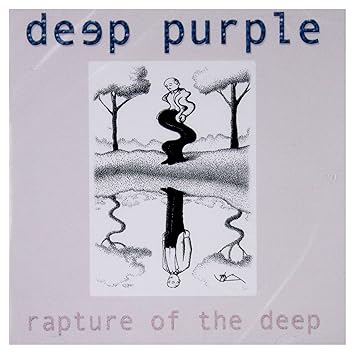
Rapture of the Deep
2005 — The Later Era at Its Best
Essential listening
Ian Paice’s drumming on this late-career high point proves the machine never stopped running. A muscular, confident performance across every track.

The Very Best of Deep Purple
Best-Of Compilation
Essential listening
Every essential Deep Purple track in one place, every one featuring Ian Paice on drums. The ideal starting point for any new listener.
You Might Also Like
Ian Paice has been the heartbeat of Deep Purple for every single year of the band’s existence, a distinction no other member can claim and no other drummer in rock history has matched within a band of comparable longevity and significance.
His Wikipedia biography at wikipedia.org/wiki/Ian_Paice covers additional detail on his full discography and live appearances.
From Nottingham to the Rock and Roll Hall of Fame, from a red glitter drum kit bought for £32 to the stages of the world’s largest arenas, Ian Paice has drawn that line along the street for more than five decades, and every version of Deep Purple has followed it.